

- You must be logged in to add items to the cart.
$69.00
You save (%)
Description
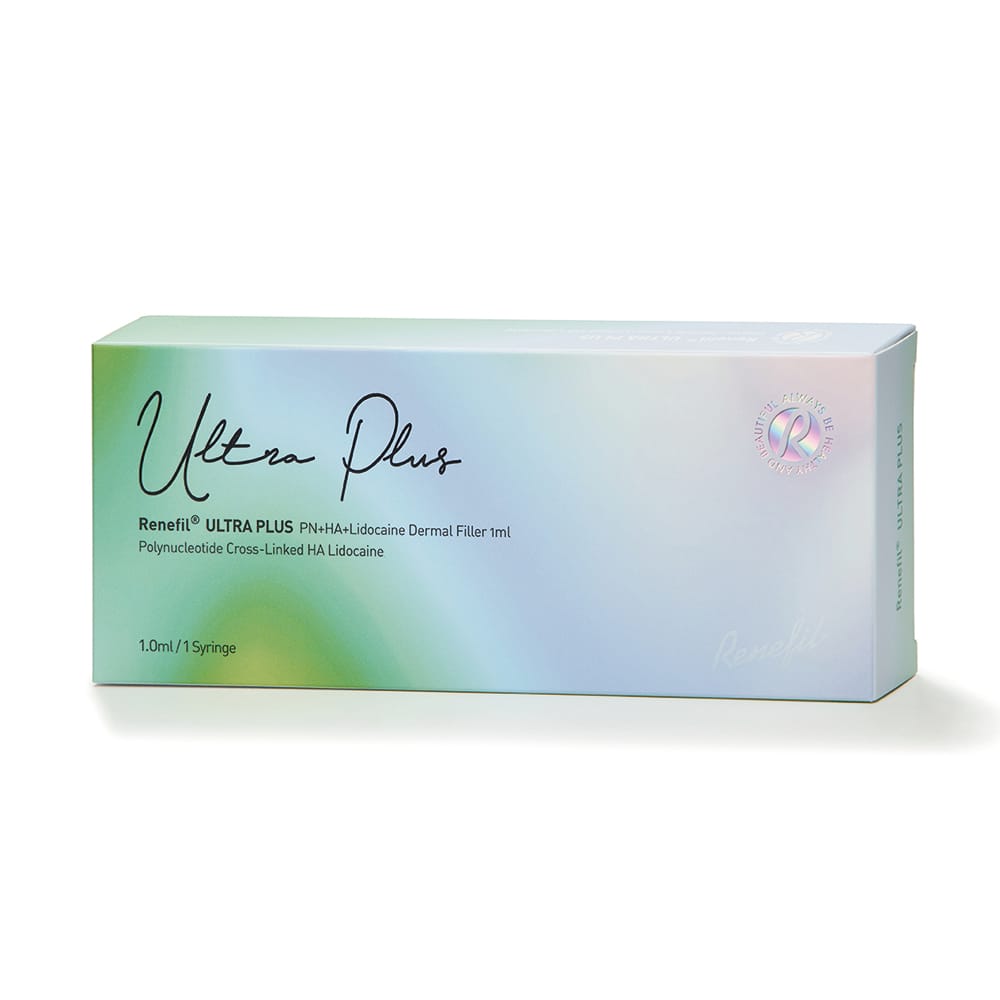
Renefil Ultra Plus is an injectable dermal filler containing cross-linked sodium hyaluronate, sodium polynucleotide, and lidocaine hydrochloride in a cohesive gel. Licensed clinics and healthcare professionals can order Renefil Ultra Plus for professional aesthetic workflows where subcutaneous placement and controlled contour support are required. The supplied pack is 1 ml x 1 syringe for single-patient use, with lot and expiry details available on the carton and syringe labeling.
This product is used by trained clinicians to temporarily soften moderate to severe facial folds, including nasolabial lines, and to restore localized volume in adults. It is intended for professional administration, not self-use, and clinic protocols should govern patient assessment, treatment planning, documentation, and post-procedure follow-up.
Clinic Ordering, Price, and Account Access
Renefil Ultra Plus price is shown after licensed account access, allowing purchasing teams to align quantities with scheduled treatment blocks and internal budget controls. Public pricing is not displayed because this is a professional-use supply item for licensed clinics, med spas, and healthcare practices. Contract tiers, current promotions for eligible accounts, and multi-unit quote requests can be handled during the ordering process.
Clinic teams can buy Renefil Ultra Plus online once account requirements are complete. Ordering should match appointment demand, provider preference, and approved internal protocols for injectable aesthetic products. For broader stocking decisions, practices can browse the wholesale dermal filler selection discussion to frame how HA fillers may be grouped by indication, gel behavior, and procedure type.
Quick tip: Record the product name, batch number, expiry date, treatment area, and administering clinician in the chart at the time of use.
What Renefil Ultra Plus Is and How It Works
Renefil Ultra Plus injection is a hyaluronic acid-based dermal filler formulated with cross-linked sodium hyaluronate and sodium polynucleotide. Cross-linking helps create a viscoelastic HA gel that can provide temporary structural support when placed into appropriate soft-tissue planes. Sodium polynucleotide is a hydrophilic polymer component that contributes to the gel formulation and tissue interface described by the manufacturer.
Lidocaine hydrochloride is included to support comfort during injection. The integrated anesthetic can reduce the need for separate local comfort measures in some clinic workflows, although clinicians should still follow their own assessment and anesthetic protocols. The gel’s cohesive handling is intended to support controlled extrusion, localized lift, and smooth transitions when used with appropriate injection technique.
Renefil Ultra Plus is commonly considered for pronounced fold correction and localized volume restoration where subcutaneous support is indicated. For clinics building a foundational understanding of HA filler categories, the article on hyaluronic acid and non-HA fillers explains broad material differences that may inform formulary conversations.
Professional Applications in Aesthetic Practice
Clinicians use this preparation within comprehensive facial aesthetics programs. Typical professional applications include moderate to severe nasolabial folds, marionette-line support, and localized contour refinement where the injector determines that subcutaneous placement is appropriate. It may also fit treatment plans involving cheek contouring or perioral rejuvenation when a cohesive gel with lidocaine is preferred.
Selection should be based on anatomy, wrinkle depth, tissue quality, prior filler history, treatment goals, and provider training. Older skin, thinner tissue, deep folds, and volume loss may each require different product properties, injection depths, and follow-up plans. The product does not replace individualized clinical judgment, and it should not be selected solely because a patient requests a specific filler name.
Practices that use structured facial assessment, standardized photography, and consistent aftercare instructions tend to manage injectable workflows more efficiently. For procedure planning context, the article on popular facial dermal filler use areas can support staff education around common treatment-region discussions.
Key Features for Treatment-Room Workflow
- Cross-linked HA gel designed for temporary contour support.
- Sodium polynucleotide component within the filler formulation.
- Lidocaine hydrochloride included for procedural comfort.
- Subcutaneous administration by trained healthcare professionals.
- Prefilled 1 ml syringe presentation for single-patient use.
- Batch and expiry identifiers for clinic documentation.
- Cohesive gel handling for controlled placement.
- Professional-use fit for facial fold and contour protocols.
These characteristics can help clinics standardize preparation, chairside setup, and post-use documentation. The single-syringe format also supports appointment-based inventory planning because staff can allocate units to scheduled procedures without opening multi-use containers.
Composition and Ingredients
The active formulation components and anesthetic identified in manufacturer labeling are sodium polynucleotide, cross-linked sodium hyaluronate, and lidocaine hydrochloride. The formulation is supplied as a sterile injectable gel, and clinics should consult the carton and enclosed instructions for the complete excipient list, device components, and handling directions.
| Component | Clinic relevance |
|---|---|
| Cross-linked sodium hyaluronate | Provides the HA gel matrix used for temporary soft-tissue support. |
| Sodium polynucleotide | Hydrophilic polymer included in the hybrid filler formulation. |
| Lidocaine hydrochloride | Local anesthetic component intended to improve injection comfort. |
| 1 ml x 1 syringe | Single-patient presentation that supports lot tracking and procedure documentation. |
Ingredient screening should be part of intake. Clinicians should assess relevant allergy history, previous reactions to injectable fillers or local anesthetics, recent procedures, active skin conditions, and any protocol-specific contraindications before treatment.
Packaging, Storage, and Handling
Renefil Ultra Plus is supplied as 1 ml x 1 syringe. Each carton and syringe carry identifiers that support receiving checks, chart documentation, and recall traceability if required. Staff should inspect packaging before use and follow the manufacturer’s instructions for storage, aseptic handling, and disposal of used sharps or syringe components.
Inventory teams should rotate stock by expiry date and reconcile received quantities against purchase records. Units should be stored in the conditions stated by the manufacturer, away from unauthorized access, and separated from products with different handling requirements. When applicable, we support temperature-controlled handling when required and tracked US delivery.
Clinics often group this item with mid-viscosity HA fillers or hybrid filler products in inventory systems. A practical formulary note can include syringe volume, main components, preferred treatment areas, provider restrictions, and any internal training requirements.
Safety, Patient Screening, and Risk Controls
Dermal fillers can cause expected injection-site reactions such as redness, swelling, tenderness, bruising, firmness, itching, discoloration, or mild pain. These effects are generally procedure-related, but duration and severity vary by product, technique, treatment area, and patient factors. Clinics should provide clear aftercare instructions and explain when follow-up is needed.
Serious complications can occur with soft-tissue fillers, including infection, nodules, hypersensitivity reactions, vascular compromise, tissue necrosis, and rare vision-related events after inadvertent intravascular injection. Immediate recognition and established emergency protocols are essential. Treatment should be performed only by trained professionals with strong knowledge of facial anatomy and complication management.
Before use, clinicians should assess active infection or inflammation at the treatment site, history of severe allergy, sensitivity to lidocaine or related anesthetics, bleeding risk, recent dental or facial procedures, immune considerations, and prior filler placement. Practices should document informed consent, product identity, injection site, volume used, and post-treatment guidance.
For a broader patient-education angle that staff may adapt during consultations, see common dermal filler misconceptions. Internal education should never replace the manufacturer instructions, applicable professional standards, or a clinician’s direct assessment.
How Long Results May Last
Duration varies across HA fillers and depends on gel properties, injection plane, treatment site, metabolism, facial movement, and the amount placed. Searchers often ask how long Juvederm Ultra Plus lasts, but that answer should not be applied directly to Renefil Ultra Plus because products differ in formulation, regulatory labeling, and clinical use. For this product, clinics should rely on manufacturer materials, provider experience, and follow-up findings rather than borrowing timelines from another brand.
Patient expectations should be discussed before treatment. Fold softening, contour support, and perceived volume changes are temporary, and maintenance planning may be appropriate based on the clinician’s assessment. Follow-up timing should reflect the treated area, product behavior, and any adverse-event concerns.
Comparable Products and Formulary Fit
Clinics comparing gel feel, lift, and indication fit may review adjacent Renefil options. Renefil Light Plus may suit practices seeking a related product with different handling characteristics, while Renefil Deep Plus can be considered when reviewing the family’s range for other contouring needs. Selection should be tied to anatomy, injection depth, and the provider’s intended treatment plan.
Practices using multiple HA filler brands may also evaluate Juvederm Ultra, Revofil Ultra, or Revofil Plus as part of broader formulary planning. Product comparisons should consider viscosity, cohesivity, syringe size, anesthetic inclusion, labeled use, provider familiarity, and clinic documentation requirements.
For a product-specific editorial angle, Renefil filler workflow context may help staff discuss where the brand fits inside aesthetic consultations. Use internal education materials as support for operational planning, not as substitutes for labeling or professional training.
Authoritative Sources
- FDA dermal filler safety information
- Peer-reviewed review of hyaluronic acid filler properties
- Peer-reviewed overview of polynucleotides in aesthetic medicine
Ordering Summary for Licensed Clinics
Renefil Ultra Plus supports professional facial-aesthetic workflows that require a cohesive HA-based filler with sodium polynucleotide and lidocaine. The 1 ml x 1 syringe format helps clinics plan procedure inventory, document lot details, and prepare treatment rooms efficiently. Sign in with a licensed account to view current clinic pricing, request quantities for scheduled demand, and place orders for US distribution.
This content is for informational purposes only and is not a substitute for professional medical advice.
Frequently Asked Questions
Who can order Renefil Ultra Plus?
Renefil Ultra Plus is intended for licensed clinics, med spas, and healthcare professionals using professional aesthetic protocols. Account requirements must be completed before clinic pricing and ordering tools are available.
What is included in the Renefil Ultra Plus pack?
The supplied configuration is 1 ml x 1 syringe. The carton and syringe include batch and expiry identifiers that support receiving checks, chart documentation, and inventory tracking.
What is Renefil Ultra Plus used for in clinic practice?
It is used by trained clinicians for temporary improvement of moderate to severe facial folds, including nasolabial lines, and for localized volume restoration when subcutaneous support is appropriate.
Does Renefil Ultra Plus contain lidocaine?
Yes. Renefil Ultra Plus contains lidocaine hydrochloride as part of the formulation to support comfort during injection. Clinicians should still screen for relevant anesthetic sensitivities and follow clinic protocols.
How should clinics handle documentation for this filler?
Document the product name, batch number, expiry date, treatment area, volume used, administering clinician, consent, and any follow-up instructions. Keep records aligned with your clinic’s professional standards and local requirements.
Can Renefil Ultra Plus be substituted with another filler?
Substitution should be a clinical decision based on gel properties, treatment area, patient factors, provider training, and approved clinic protocols. Adjacent products may differ in handling, syringe configuration, and intended use.
Specifications
- Main Ingredient: Lidocaine Hydrochloride, Sodium Hyaluronate
- Manufacturer: BMI KOREA
- Drug Class: Dermal Filler
- Generic Name: Sodium polynucleotide + cross-linked sodium hyaluronate + lidocaine hydrochloride
- Package Contents: 1 ml x 1 Syringe
- Storage Requirements: Room Temperature (2℃~25℃)
- Main Usage: Volume Filler, Fine Lines
Here to help
Questions about ordering, delivery or products? You can email our team here or call now at 1-800-630-9757 and be connected with your dedicated Account Manager
Related Products
JALUPRO® PLUS 4ML
Skin Rejuvenation Treatment
$86.00 - $89.00
You save (%)
You save (%)
$339.00
You save (%)
You save (%)
Select options
This product has multiple variants. The options may be chosen on the product page
Juvéderm® SKINVIVE
Dermal Filler
$339.00 - $359.00
You save (%)
You save (%)
$86.00 - $119.00
You save (%)
You save (%)
Related Articles
Hyaluronic Acid Under-Eye Filler: Safety and Workflow
Hyaluronic acid under-eye filler is an injectable soft-tissue filler used by trained aesthetic clinicians to…
Dermal Filler Types: Materials, Uses, and Clinic Fit
Dermal filler types are usually grouped by their base material, tissue behavior, and expected role…
What Is Dysport? Clinical Uses, Safety, and Workflow
For clinic teams asking what is Dysport, the short answer is simple: Dysport is a…
Biostimulators in Aesthetic Care: Selection and Safety
Biostimulators are injectable aesthetic products used to encourage a controlled tissue response, often involving new…
Do You Ovulate on an IUD? Clinic Counseling Points
Clinicians hear the shorthand question do you ovulate on iud, but the practical answer depends…
Vascular Occlusion: Early Signs, Risks, and Clinic Response
A vascular occlusion is a partial or complete blockage of blood flow in a vessel.…
Wrinkles Around the Mouth: Causes and Treatment Options
Wrinkles around the mouth can be softened, not always permanently erased, by matching the line…
Are Knee Gel Injections Painful? Counseling and Safety
Most patients do not describe knee gel injections as severely painful. Clinic teams should set…