
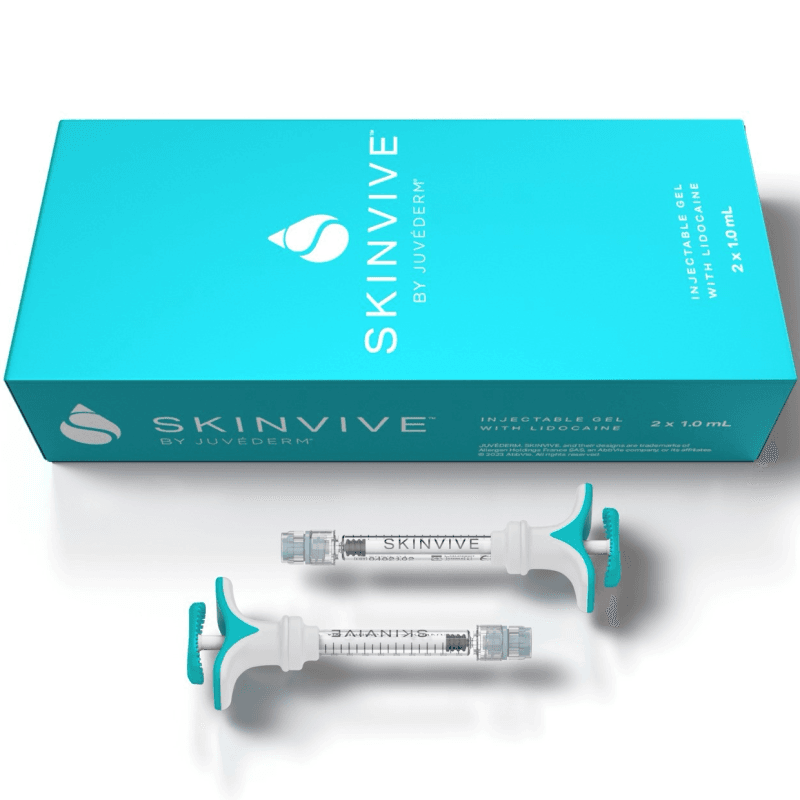
Description
Juvéderm® SKINVIVE is a hyaluronic acid injectable treatment used by trained aesthetic healthcare professionals for intradermal microdroplet placement in the cheeks. Licensed clinics, med spas, and qualified healthcare professionals can order Juvéderm® SKINVIVE for professional treatment-room use and align it with their documentation, consultation, and inventory workflow.
SKINVIVE is positioned differently from traditional volumizing fillers: it is used to improve cheek skin smoothness rather than to create structural lift or contour. For clinics, the practical ordering decision is to match the product selected during checkout with the treatment plan, professional training, storage expectations, and patient-consent materials used in practice.
Juvéderm® SKINVIVE price and clinic ordering details
Clinic teams can view the current Juvéderm® SKINVIVE price during ordering and choose the product configuration shown for the item. Pricing can vary by distributor supply, quantity, and current inventory conditions, so practices should confirm the live cart total before finalizing purchase planning.
Because SKINVIVE is a professional aesthetic injectable, it should be ordered by licensed clinics or healthcare professionals with appropriate scope, training, and treatment documentation. Internal ordering teams should confirm the product name, quantity, storage needs, and receiving workflow before adding it to procedure inventory.
Quick tip: Keep SKINVIVE inventory planning separate from volumizing filler stock because the treatment goal and injection approach are different.
What SKINVIVE is used for in aesthetic practice
SKINVIVE by Juvéderm is an injectable hyaluronic acid gel indicated for intradermal injection to improve skin smoothness of the cheeks in adults over 21. Hyaluronic acid is a naturally occurring substance that binds water; in aesthetic medicine, stabilized HA gels are used in different ways depending on formulation, depth, and injection technique.
In clinic conversations, SKINVIVE is often discussed as a skin-quality treatment rather than a filler for projection. That distinction matters for staff education, patient intake, before-and-after photography, consent forms, and setting expectations during consultation. It is not a replacement for cheek volumization when a patient needs structural support, and it should not be presented as a full-face lift.
Practices that offer a broader injectable menu may place SKINVIVE alongside other HA products in the dermal fillers category, while still separating its protocol from lip, fold, and contouring fillers. A concise explanation helps patients understand why a clinic may recommend skin smoothness treatment, volume restoration, or both depending on assessment.
How SKINVIVE differs from traditional dermal fillers
SKINVIVE is designed for intradermal microdroplet placement, a technique that places small amounts within the skin rather than using deeper placement for contour or projection. Traditional Juvéderm fillers may be selected for specific anatomical goals such as lips, nasolabial folds, cheek volume, or facial contouring, depending on formulation and professional judgment.
This difference is important for supply planning. A clinic may stock SKINVIVE for cheek skin smoothness appointments while also keeping other Juvéderm products for volume, definition, or line correction. For example, practices that need a cheek-volume product may evaluate Juvéderm® Voluma with Lidocaine, while lip or perioral treatment planning may involve different fillers.
| Clinic decision | SKINVIVE consideration |
|---|---|
| Treatment goal | Cheek skin smoothness, not structural lifting |
| Placement concept | Intradermal microdroplet technique by trained professionals |
| Patient expectation | Skin-quality improvement rather than visible volume addition |
| Inventory planning | Separate from contouring, lip, and fold-correction fillers |
Does SKINVIVE work, and how long do results last?
Clinical information from the manufacturer and regulatory materials describes SKINVIVE as an FDA-approved HA microdroplet injectable for improving cheek skin smoothness in adults over 21. Manufacturer-facing materials commonly describe results lasting up to 6 months, although individual outcomes vary with patient factors, injection technique, treatment planning, and follow-up assessment.
For clinics, the stronger operational question is how to document baseline skin texture, patient goals, treatment areas, product quantity used, lot information, and follow-up observations. Standardized photography and chart notes make it easier to evaluate whether the treatment matched the consultation goal.
SKINVIVE should not be positioned as better than filler in general. It is different from many fillers. A volumizing HA filler may be the better fit when lift, contour, or projection is the treatment objective. SKINVIVE may be considered when the assessed goal is cheek skin smoothness and hydration-related skin quality within the labeled use context.
Professional administration and treatment-room workflow
SKINVIVE is for use by appropriately trained healthcare professionals who understand facial anatomy, sterile technique, injection-site assessment, and management of adverse events. Before treatment, clinics should follow their standard intake workflow, including patient history, contraindication screening, current medications, aesthetic history, allergy review, and informed consent.
Procedure-room preparation should support clean handling, accurate product identification, sharps safety, and documentation of lot and expiration information. Staff should avoid mixing SKINVIVE with products or protocols unless supported by manufacturer directions and clinical training. If a clinic uses multiple Juvéderm products, clear labeling and storage organization reduce the risk of selecting the wrong HA filler for a treatment plan.
Clinics adding SKINVIVE to an injectable menu may find it useful to review formulation, safety, and workflow considerations in Juvéderm for clinics. Broader practice education around HA use can also support staff training; see hyaluronic acid in aesthetic medicine for background on why HA remains central to injectable treatment planning.
Storage, receiving, and handling considerations
Follow the product labeling and manufacturer directions for storage, handling, and use. Clinics should receive injectable inventory through trained staff, inspect packaging, record required documentation, and store products according to the labeled conditions. Do not use product from damaged packaging or product that does not match clinic purchasing records.
Operationally, SKINVIVE should be integrated into the same controlled receiving process used for other professional injectables. That includes checking the product identity against the order, keeping treatment-room stock organized, maintaining lot traceability, and ensuring staff know which products are intended for skin-quality treatments versus volumizing indications.
For logistics, orders may use temperature-controlled handling when required and tracked US delivery. Clinic teams should plan receiving around business hours so injectable inventory can be inspected and placed into appropriate storage promptly after arrival.
Safety, side effects, and contraindication screening
As with other injectable HA products, SKINVIVE can cause local injection-site reactions. Commonly discussed reactions for HA injectables include tenderness, swelling, firmness, lumps or bumps, bruising, redness, pain, discoloration, itching, and temporary skin changes near the treated area. Clinics should counsel patients on expected local reactions and provide clear aftercare instructions consistent with product directions and professional standards.
Serious adverse events are uncommon but require readiness. Risks with dermal filler procedures can include infection, inflammatory nodules, hypersensitivity reactions, vascular compromise, tissue injury, scarring, and visual symptoms if filler is inadvertently injected into a blood vessel. Clinics should maintain protocols for urgent assessment, escalation, and emergency management after injectable procedures.
Contraindication and precaution screening should be completed before treatment. Professional labeling for HA fillers generally requires attention to severe allergies, history of anaphylaxis, allergy to product components, bleeding tendency, active infection or inflammation at the treatment site, immune status, pregnancy or breastfeeding considerations, and prior aesthetic procedures in the same area. Individual suitability belongs to the treating clinician.
Medication and supplement review also matters. Anticoagulants, antiplatelet therapy, nonsteroidal anti-inflammatory drugs, and supplements that affect bleeding may increase bruising risk. Clinics should not advise patients to stop prescribed therapy without coordination with the appropriate healthcare professional.
Patient questions clinics should be ready to answer
Patients often ask whether SKINVIVE is a filler, whether it adds volume, how soon they may notice changes, and how long the effect can last. A practical answer is that SKINVIVE is an HA injectable used in microdroplets to improve cheek skin smoothness, while many traditional fillers are selected for volume, contour, or line correction. Results and timing vary, and follow-up assessment should be individualized.
Cost questions should be answered using the clinic’s own treatment plan, required product amount, professional fees, and follow-up policy. Product acquisition price is only one part of patient-facing procedure cost. Practices should avoid quoting a universal Juvéderm cost because treatment areas, product choice, injector expertise, geography, and clinic policies can change the final fee.
Before-and-after discussions should remain realistic. Photography can help demonstrate skin-quality changes, but clinics should avoid implying identical results for every patient. Patient selection, baseline skin condition, age, lifestyle, prior treatments, injection technique, and follow-up care can all influence the visible outcome.
Related Juvéderm products for clinic inventory planning
SKINVIVE can be part of a broader HA injectable portfolio. Clinics that treat lips, folds, cheeks, and facial contouring typically keep separate products for separate treatment objectives. Internal staff should understand which product supports which anatomical area and depth of placement.
For practices evaluating adjacent Juvéderm options, Juvéderm® Ultra may be reviewed for established filler protocols, while Juvéderm® Volbella with Lidocaine may be relevant to clinics planning lip or fine-line treatments. Juvéderm® Volift with Lidocaine and Juvéderm® Volite with Lidocaine may also be considered when building a treatment-specific HA inventory.
Educational content can help new staff understand why Juvéderm remains widely used in aesthetic medicine. The article on Juvéderm treatment popularity explains common reasons clinicians include the brand family in injectable menus. For broader category planning, clinics can review dermal filler articles that discuss treatment areas and product selection themes.
Documentation and compliance points for practices
SKINVIVE should be incorporated into clinic documentation like any professional injectable. Treatment records should identify the product, lot number, expiration date, anatomical area, injection approach, amount used, patient consent, adverse-event counseling, and follow-up plan. Clear records protect continuity of care and support product traceability.
Staff training should cover product recognition, storage rules, patient screening, emergency protocols, and the difference between SKINVIVE and volumizing fillers. Clinics should also keep manufacturer directions available for injectors and update internal protocols when labeling, training materials, or professional standards change.
Why it matters: Product-specific documentation helps prevent mix-ups between skin-quality injectables and structural HA fillers.
Authoritative sources
Regulatory and manufacturer documents should guide professional use, contraindication review, and patient counseling. Useful references include the FDA device approval summary for SKINVIVE by Juvéderm, the official directions for use, and the Allergan Aesthetics SKINVIVE brand information.
This content is for informational purposes only and is not a substitute for professional medical advice.
Frequently Asked Questions
Who can order Juvéderm® SKINVIVE?
Juvéderm® SKINVIVE is intended for licensed clinics, med spas, and qualified healthcare professionals using professional injectable protocols. Clinic documentation, product traceability, and trained administration should be in place before treatment use.
Is SKINVIVE the same as a traditional dermal filler?
SKINVIVE is an HA injectable, but it is used differently from many volumizing fillers. It is placed as intradermal microdroplets to improve cheek skin smoothness rather than to create structural lift or facial contour.
How long does SKINVIVE usually last?
Manufacturer and regulatory materials describe SKINVIVE results lasting up to 6 months. Individual outcomes vary, so clinics should set expectations during consultation and document follow-up findings.
What side effects should clinics discuss before treatment?
Clinics should counsel patients about common injection-site reactions such as swelling, bruising, redness, tenderness, firmness, lumps, pain, discoloration, or itching. They should also screen for contraindications and maintain protocols for rare serious events.
How should clinics store and handle SKINVIVE?
Clinics should follow the labeled storage and handling directions, inspect packaging on receipt, document lot and expiration information, and keep SKINVIVE organized separately from other Juvéderm fillers used for different treatment goals.
Specifications
- Main Ingredient:
- Manufacturer: Juvederm
- Drug Class: Dermal Filler
- Generic Name:
- Package Contents: 1mL x 2 Pre-Filled Syringes
- Storage Requirements: Room Temperature (2℃~25℃)
- Main Usage: Medium - Deep Wrinkle Filler
Here to help
Questions about ordering, delivery or products? You can email our team here or call now at 1-800-630-9757 and be connected with your dedicated Account Manager
Related Products
Evenity® (English Alternative)
Injectable Medication
$1,229.00 - $1,299.00
You save
You save
Intraline® For Men
Dermal Filler
$59.00 - $79.00
You save
You save
RejuvaNAD+ Pro
Injectable Medication
$237.00 - $249.00
You save
You save
Teosyal® RHA 4
Aesthetic Surgery Product
$259.00 - $279.00
You save
You save
Related Articles
Prednisone in Clinical Care: Uses, Risks, and Monitoring
Prednisone is a prescription systemic corticosteroid used to reduce inflammation or suppress immune activity in…
Lip Fillers Swelling Stages: Timeline, Safety, and Follow-Up
Lip fillers swelling stages usually follow a short inflammatory course: swelling appears soon after injection,…
Hypopigmentation of the Skin: Assessment and Care
Hypopigmentation of the skin means one or more areas look lighter than the surrounding skin.…
Radiesse vs Sculptra: Selection Factors for Clinics
Radiesse vs Sculptra is best understood as a comparison between two collagen-stimulating injectables with different…
Hyaluronic Acid Under-Eye Filler: Safety and Workflow
Hyaluronic acid under-eye filler is an injectable soft-tissue filler used by trained aesthetic clinicians to…
Dermal Filler Types: Materials, Uses, and Clinic Fit
Dermal filler types are usually grouped by their base material, tissue behavior, and expected role…
What Is Dysport? Clinical Uses, Safety, and Workflow
For clinic teams asking what is Dysport, the short answer is simple: Dysport is a…
Biostimulators in Aesthetic Care: Selection and Safety
Biostimulators are injectable aesthetic products used to encourage a controlled tissue response, often involving new…