Lip Fillers Swelling Stages: Timeline, Safety, and Follow-Up
Lip fillers swelling stages usually follow a short inflammatory course: swelling appears soon after injection, often peaks during the first 24 to…

Allergan
Hyaluronic Acid Filler
Free shipping on orders over $800
5% off your first order, applied at checkout
Order as a guest or log in. Your medical licence details are collected at checkout and checked against the state board and the NPI registry.
Enter your own figures: the syringes you use per treatment and what you charge per treatment. The table shows your product cost and margin per treatment at each quantity price. It does not suggest doses, prices or treatments.
| Quantity | Price per pack | Cost per unit | Cost per treatment | Margin per treatment |
|---|
Uses today's prices for the selected option before shipping and any other costs. Your figures stay in your browser.
Ships within 24–48 hours
Delivery typically 48–72 hours after shipping, up to 5–7 business days depending on origin and customs. Tracking is emailed when your order ships.
Warm or damaged on arrival?
Send us photos or a video. We investigate and arrange a replacement where needed.
Licence checks
Licences are checked against the state board and the NPI registry.
100% genuine products
In original manufacturer packaging, with lot numbers for full traceability. Lot numbers are shown on your packing slip and invoice.
250 active clinics · Supplying clinics since 2013
“Everything has been easy from ordering to delivery. The prices are good, orders arrive quickly, and the customer service has been great. I would definitely order from MWS again.”
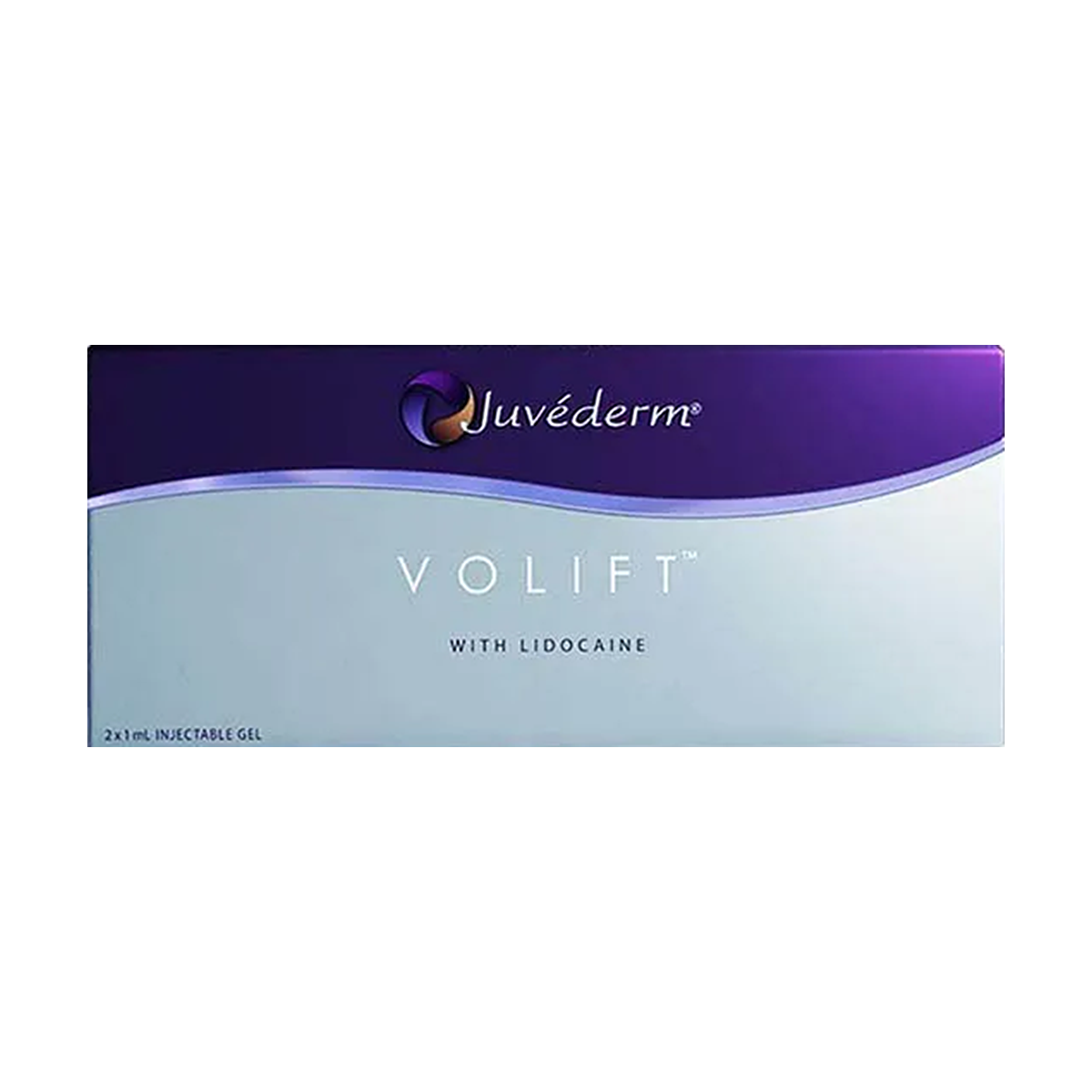
Juvéderm® Volift with Lidocaine is a sterile, injectable hyaluronic acid dermal filler supplied in prefilled syringes for professional aesthetic use. Licensed clinics and healthcare professionals can order Juvederm Volift with Lidocaine in a 2x1ml pack containing 17.5 mg/mL hyaluronic acid gel and 3 mg/mL lidocaine. The format supports treatment-room setup, bilateral planning, and controlled placement by trained injectors.
This filler is used within clinic protocols for contour refinement, correction of deeper skin depressions, and restoration of facial volume when appropriate for the patient and treatment plan. The integrated lidocaine supports comfort during injection, while the smooth gel handling helps experienced clinicians shape and mold the treated area. Med Wholesale Supplies serves licensed facilities with brand-name medical products sourced through vetted distributor channels.
Current prices and quantity breaks are shown on this page, and licensed clinics can order as a guest or with an account. Pricing may vary by order quantity, contract arrangement, and current supply conditions, so teams should use the live account view for replenishment planning rather than relying on historical unit costs.
Each carton contains two 1 mL prefilled syringes, which helps practices plan for paired treatment areas or staged appointments. The included four 30G 1/2 sterile needles reduce the need to pull separate needle inventory for routine setup, although clinicians may choose an appropriate needle or cannula approach based on training, anatomy, and protocol.
For broader category planning, clinics can browse dermal fillers to align Volift with adjacent products used for different planes, tissue needs, and facial zones. The Juvéderm family also helps teams standardize inventory around familiar brand handling characteristics.
Juvéderm® Volift with Lidocaine is a crosslinked hyaluronic acid injectable gel used by trained professionals to address deeper skin depressions and support facial contouring. In aesthetic practice, clinicians commonly evaluate it for pronounced nasolabial folds, marionette regions, perioral contour refinement, and measured volume restoration where a balanced gel is appropriate.
Hyaluronic acid is a naturally occurring polysaccharide that binds water in tissue. In dermal fillers, crosslinking modifies the gel so it can provide temporary structure, lift, and shape after placement. Lidocaine is included in the formulation to help reduce procedural discomfort during injection, without changing the need for careful assessment, aseptic technique, and appropriate anatomical knowledge.
Use depends on the injector’s professional judgment, patient history, tissue quality, injection plane, and treatment goals. Volift may be selected when a clinic needs a filler that balances spread, moldability, and moderate support rather than a very soft superficial product or a highly structural volumizing gel.
The supplied carton is designed for professional workflow. It contains sterile, single-use prefilled syringes and needles, with product identifiers on the carton and syringe labels for inventory control. Teams should record lot and expiry information according to their clinic documentation process.
| Attribute | Clinic detail |
|---|---|
| Product type | Sterile injectable hyaluronic acid dermal filler with lidocaine |
| Hyaluronic acid concentration | 17.5 mg/mL crosslinked hyaluronic acid gel |
| Lidocaine concentration | 3 mg/mL lidocaine hydrochloride monohydrate |
| Pack size | Two 1 mL prefilled syringes per carton |
| Included needles | Four single-use 30G 1/2 sterile needles |
| Buffer | Phosphate buffer, approximately pH 7.2 |
| Use setting | Licensed professional clinical environments |
Quick tip: Match syringe allocation to the planned facial zones before the room is prepared.
Volift’s prefilled syringe presentation supports efficient setup in busy aesthetic practices. Staff can verify the carton, check the expiry date, prepare sterile accessories, and document the lot before the clinician opens the device for a single patient session. The syringe format also helps maintain consistency between rooms when standardized protocols are used.
As with other injectable fillers, the product should be handled using aseptic practices and used only by appropriately trained professionals. Each syringe is single-use and intended for one patient, one session. Any decision to use the supplied needle or a cannula should reflect clinician training, treatment area, vascular considerations, and the clinic’s safety protocol.
When required, orders are managed with temperature-controlled handling and tracked US delivery. Clinics should receive and store products according to manufacturer instructions and internal inventory controls, including separation of opened materials, expiry rotation, and reconciliation of used syringes after procedures.
Dermal filler safety depends on product selection, injection technique, anatomy, patient screening, and post-procedure monitoring. Common localized reactions may include mild irritation, swelling, itching, redness, tenderness, bruising, or discomfort at the injection site. These reactions are often self-limited, but clinics should provide clear aftercare instructions and escalation guidance.
More serious filler risks can occur, including infection, nodules, inflammatory reactions, vascular compromise, tissue injury, and visual symptoms if material is inadvertently injected into or compresses a blood vessel. Clinicians should follow current professional guidance for prevention, recognition, and urgent management of vascular events. Patients with relevant allergies, active infection, inflammation at the intended site, bleeding risk, immune considerations, or prior filler complications require individualized evaluation before treatment.
The lidocaine component also matters during screening. A history of sensitivity to lidocaine or related local anesthetics should be assessed before use. Clinics should document prior aesthetic procedures, medications that may increase bruising risk, and any contraindications or precautions identified during consultation.
Authoritative safety information for soft tissue fillers is available from the FDA dermal filler safety information, MedlinePlus dermal filler information, and the Juvéderm manufacturer information.
How long results last can vary by treated area, injection amount, tissue movement, metabolism, patient factors, and technique. Searchers often ask about duration because HA fillers are temporary and gradually break down over time. Clinics should set expectations during consultation and avoid guaranteeing a specific result or timeline.
Volift may be incorporated into maintenance plans when the clinician determines that repeat treatment is appropriate. The two-syringe carton supports practical planning for facial balancing, but the number of syringes used should reflect assessment rather than a fixed package-driven approach.
Before-and-after documentation, consent, photography, lot tracking, and follow-up notes can help standardize outcomes and support quality review within the practice. These operational steps are especially useful when multiple injectors share the same inventory.
Volift is often considered a mid-depth HA filler for folds, contour transitions, and moderate volume needs. It differs from softer gels selected for fine lines or delicate lip texture, and from firmer gels used when stronger projection or structural support is needed. Choosing among products should reflect treatment area, desired tissue effect, and injector experience.
For delicate lip and superficial perioral work, clinics may evaluate Juvéderm® Volbella with Lidocaine. For midface lift and more substantial volume restoration, Juvéderm® Voluma with Lidocaine may be more appropriate. For lower-face definition and contour support, practices may consider Juvéderm® Volux with Lidocaine.
Volift Retouch may fit clinics that need smaller syringe planning for refinements; review Juvéderm® Volift Retouch with Lidocaine when a lower-volume presentation is preferred. For injectable skin-quality protocols rather than fold correction, Juvéderm® Volite with Lidocaine may fit a different treatment objective.
Reliable filler inventory requires more than carton counts. Practices should align product selection with the procedures most often performed, injector preferences, training coverage, and expected seasonal demand. Volift’s 2x1ml configuration can help clinics forecast usage for common fold and contour sessions while keeping a consistent HA filler option on hand.
Documentation should capture patient assessment, informed consent, injection sites, amount used, lot number, expiry, adverse events if any, and follow-up recommendations. These records support continuity when patients return for maintenance or when another clinician reviews prior treatment.
For protocol planning across the category, the article on Juvéderm formulations, safety, and workflow can help teams map product roles. Clinics building a wider service menu may also find common facial filler uses useful for training discussions and inventory planning.
Hyaluronic acid fillers remain widely used in aesthetic medicine because they can provide temporary, adjustable soft tissue support across multiple facial regions. Their clinical value depends on matching gel properties to the target plane and treatment goal. Volift’s 17.5 mg/mL HA concentration and lidocaine-containing formulation place it within the HA filler class used for professional contour and fold correction workflows.
For teams reviewing mechanism and class behavior, hyaluronic acid in aesthetic medicine provides additional background. When selecting between brands or gel families, focus on rheology, indication fit, injector familiarity, safety protocols, and documentation needs rather than price alone.
Use the live account view to confirm carton configuration, current cost, and replenishment quantities before submitting a purchase. If your practice orders several Juvéderm products, grouping related items can simplify receiving and inventory rotation.
Staff should inspect received cartons, reconcile quantities against the order, and store products according to manufacturer guidance. If a substitution is needed for a scheduled procedure, the clinical lead should confirm that the alternative matches the intended treatment plane, tissue effect, and patient-specific plan.
This content is for informational purposes only and is not a substitute for professional medical advice.
It is used by trained professionals for correction of deeper skin depressions, contour refinement, and facial volume restoration when appropriate for the treatment plan. Common clinic uses include nasolabial folds, marionette regions, perioral contouring, and selected midface volume work.
Each carton contains two 1 mL prefilled syringes and four single-use 30G 1/2 sterile needles. The gel contains 17.5 mg/mL hyaluronic acid and 3 mg/mL lidocaine in a phosphate buffer.
Duration varies by treatment area, injection technique, amount placed, tissue movement, metabolism, and patient factors. Clinics should set expectations during consultation rather than guarantee a fixed result timeline.
Common localized reactions can include redness, swelling, bruising, itching, irritation, tenderness, or discomfort at the injection site. More serious risks, including vascular compromise or infection, require prompt clinical recognition and management.
Selection depends on the treatment area, tissue plane, desired support, and injector experience. Volift is often used for moderate folds and contour transitions, while Volbella, Voluma, and Volux may suit delicate, volumizing, or lower-face structural objectives respectively.
Verified professional accounts can sign in to view current pack details and pricing. Practices should use the live account view for ordering decisions because costs may vary by quantity, contract terms, and supply conditions.

MWS Customer Service Team
Our customer service team helps you choose the right pack, label option and quantity for your clinic, and sets up your first order.
Monday to Friday, 9am to 6pm ET
Why clinics order from MWS
Built for licensed clinics
Licences are checked against the state board and the NPI registry.
Every pack option named
Each option names its dosage and pack size, so you know which pack you are ordering.
Volume pricing up front
Quantity tiers are shown on the product, before you order.
Cold-chain packing
Refrigerated lines ship in thermo-packaging with enough ice packs to hold temperature for up to 10 days.
“The customer care team was very efficient in offering hand-held guidance to choose the most cost-effective options.”
Cannulas, needles and hyaluronidase for filler work.

Lip fillers swelling stages usually follow a short inflammatory course: swelling appears soon after injection, often peaks during the first 24 to…

Radiesse vs Sculptra is best understood as a comparison between two collagen-stimulating injectables with different materials and clinic workflows. Radiesse is a…
Hyaluronic acid under-eye filler is an injectable soft-tissue filler used by trained aesthetic clinicians to soften tear-trough hollowness or shadowing when anatomy…