
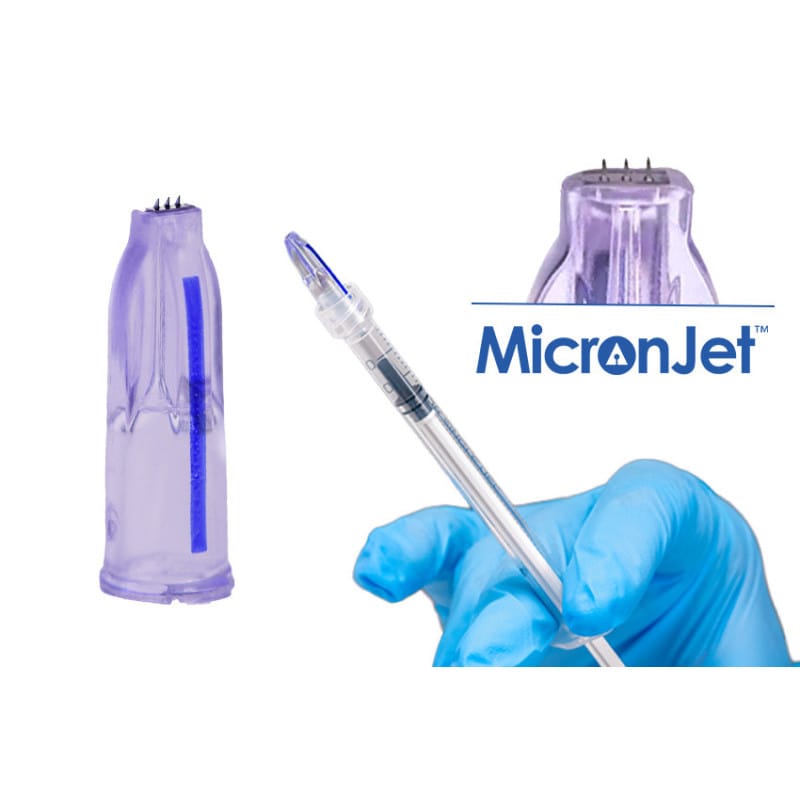
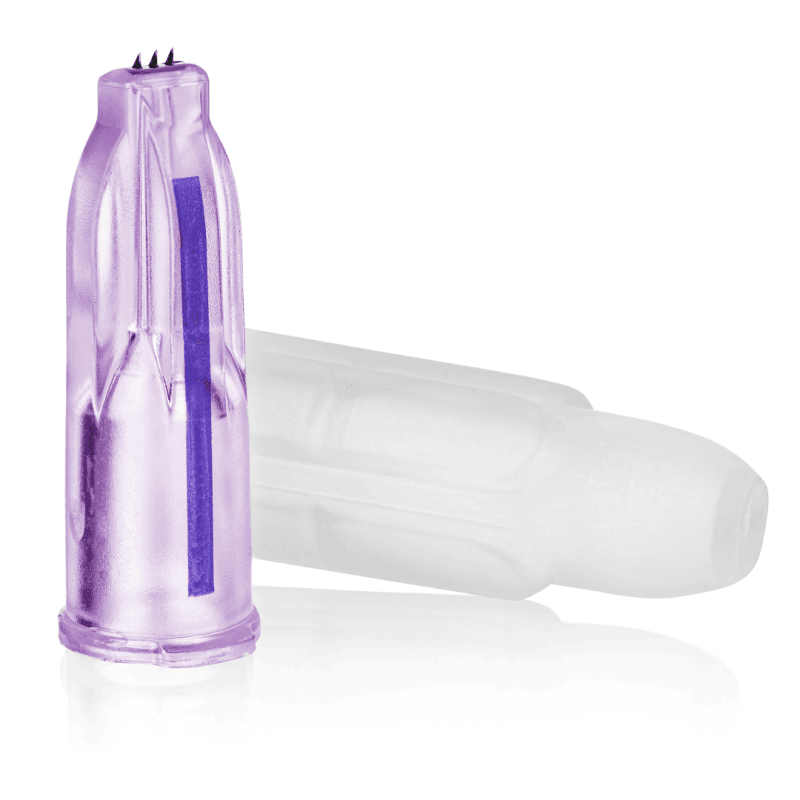
MicronJet™ 600
Order MicronJet™ for Clinics
Medical Device
Price range: $11.99 through $319.00
You save
Description
MicronJet™ 600 is a sterile single-use microneedle device for precise intradermal administration in professional care settings. Licensed clinics and healthcare professionals can order MicronJet™ 600 for treatment-room workflows that require shallow dermal placement, controlled handling, and traceable sterile packs.
The device is designed to help clinicians deliver small volumes just beneath the skin surface while maintaining procedural control. Its short microneedle array supports consistent intradermal access, which can be useful in aesthetic, dermatologic, wellness, and training environments that already include intradermal techniques.
MicronJet™ 600 Price, Pack Selection, and Clinic Ordering
MicronJet™ 600 price is available to verified professional accounts after sign-in. Clinics can align purchases with procedure volume, staff training needs, and site-level inventory controls. Available pack counts include 1 or 30 per box, giving smaller practices and higher-volume teams a practical way to stock the device without changing the clinical role of each sterile unit.
Order planning should account for protocol demand, provider preference, and storage space for sealed sterile packs. Multi-location practices may standardize the device across sites when lead clinicians validate technique and documentation requirements. For broader supply planning, teams can browse professional Medical Devices used alongside aesthetic and dermatologic workflows.
Quick tip: Match the box quantity to expected procedure volume and training use, not only to the next appointment date.
What the Intradermal Microneedle Device Does
MicronJet™ 600 is an intradermal microneedle device. Intradermal means the target plane is within the dermis, the skin layer just below the epidermis. The microneedle array creates a shallow, controlled pathway that helps form a uniform wheal and supports even dispersion without the deeper penetration associated with conventional needles.
In practice, the device helps reduce tissue deflection because the needles are very short and fine. That design can support steadier placement across treatment areas and operators when staff are trained on the manufacturer’s instructions for use. The platform is not a medication and does not determine which substance should be administered; the clinic’s clinical protocol and licensed provider remain responsible for product selection, dosing decisions, and suitability assessment.
Clinics evaluating MicronJet 600 or NanoPass MicronJet 600 terminology should align internal protocols with the exact model and labeling supplied with the shipment. Product names and model designations may appear differently in training materials, procurement files, or manufacturer documentation, so lot records and staff instructions should follow the packaging received by the facility.
How Clinics Use MicronJet™ 600 in Professional Workflows
Clinics deploy this sterile microneedle device when a protocol calls for reliable shallow placement. Typical professional applications include aesthetic skin-quality procedures involving dermal micro-dosing, dermatologic workflows where uniform intradermal delivery is preferred, and regenerative or wellness pathways that require controlled superficial administration by trained staff.
The device can also support training environments because it offers a predictable target plane. New staff should still be supervised until competency is documented. Technique validation, aseptic handling, injection angle, skin preparation, and disposal steps should be built into the facility’s standard operating procedures rather than treated as informal preferences.
Practices that offer mesotherapy-style services may integrate MicronJet™ 600 into selected protocols after clinical review. For adjacent procedure planning, see Mesotherapy and the related article on mesotherapy for hair, which can help teams think through treatment-program context without replacing product-specific instructions.
Key Device Features
- Micro-needle array: supports a consistent intradermal pathway for shallow delivery.
- Controlled depth: short needles help position fluid just beneath the epidermis.
- Reduced insertion force: fine geometry supports smoother skin entry during professional use.
- Low tissue disruption: may help limit trauma compared with some conventional needle approaches.
- Sterile single-use format: supports aseptic workflow and straightforward disposal.
- Clear handling cues: device design supports visual and tactile control during placement.
- Broad protocol fit: suited to clinic-administered intradermal procedures after staff validation.
- Traceable packaging: sealed packs typically include lot and expiry details for inventory records.
These features matter most when clinics need repeatable technique across multiple providers. They do not replace training, aseptic preparation, or clinical judgment. Each unit should be attached, used, and discarded according to the manufacturer’s instructions for use and the facility’s sharps policy.
Benefits for Treatment-Room Efficiency
A single-use microneedle device simplifies several operational decisions. Staff do not need to reprocess the device between clients, and sealed sterile packs can be counted, rotated, and assigned to procedure rooms with standard inventory controls. The format also supports consistent documentation because each unit can be tied to lot and expiry information at the time of use.
For providers, the primary practical benefit is controlled intradermal access. When technique is standardized, the device can help reduce repeat passes caused by uncertain depth or excessive tissue movement. A comfort-forward entry profile may also improve the treatment-room experience, although individual sensation varies by site, product administered, and patient factors.
Why it matters: Consistent dermal placement helps clinics train staff and audit procedures more reliably.
Composition, Sterility, and Packaging
MicronJet™ 600 is built from medical-grade components suited for professional administration. Needle elements are produced from stainless steel selected for strength and precision. Each unit is supplied sterile and intended for single use, with a protective cap and sealed packaging that support clean transfer into the clinical field.
Packaging typically displays lot, expiry, and manufacturer information that should be recorded according to clinic policy. Staff should inspect each unit before use and avoid using any pack that appears opened, damaged, or otherwise unsuitable for sterile handling. The device should be stored in a clean, dry supply area according to the label and the facility’s inventory procedures.
| Clinic consideration | Practical use |
|---|---|
| Pack counts | 1 or 30 per box for low-volume, training, or higher-volume needs. |
| Use status | Sterile and single-use; discard after the procedure. |
| Traceability | Record lot and expiry information according to clinic policy. |
| Handling | Maintain aseptic technique and follow the instructions for use. |
Professional Handling, Training, and Documentation
Before adding MicronJet™ 600 to a protocol, clinics should confirm that providers understand intradermal administration, device attachment, skin preparation, and disposal requirements. The device is intended to support technique; it does not make an untrained operator competent. Staff training should include supervised practice, procedure documentation, and review of any product being delivered through the device.
Documentation should be practical and consistent. Many clinics record the procedure name, treatment area, administered product, device lot, expiry, provider, and any immediate observations. Multi-site groups may use the same fields across locations to simplify audits, recalls, and supply forecasting.
For needle alternatives, accessory planning, and device-based procedure supplies, browse Cannulas and Needles. Clinics comparing broader clinical equipment categories can also evaluate Braun products when building treatment-room supply lists.
Safety and Professional Precautions
MicronJet™ 600 should be used only by trained healthcare professionals within an appropriate clinical protocol. Standard precautions include hand hygiene, skin antisepsis, sterile handling, and immediate disposal in an approved sharps container. Do not reuse the device, resterilize it, or use it if the sterile barrier has been compromised.
Patient selection, treatment area, administered substance, and injection depth should be determined by the responsible clinician. Contraindications or precautions may depend on the medication, biologic, aesthetic product, or other substance being administered, as well as the patient’s skin condition and medical history. Clinics should follow the product label for the administered material and document any adverse event according to internal policy.
Microneedle devices can reduce some handling challenges associated with conventional needles, but they do not eliminate procedural risks. Possible concerns include local discomfort, bleeding, bruising, infection, inadequate placement, or product-specific reactions. Staff should know when to stop a procedure, escalate to the supervising clinician, and provide appropriate post-procedure instructions.
Availability, Substitutions, and Related Choices
MicronJet™ 600 is available for professional ordering through verified clinic accounts. Supply planning should consider usage patterns, training sessions, and the number of providers who use intradermal techniques. When your clinic standardizes on a specific model or box count, record that preference in procurement notes so purchasing staff select the correct device at reordering.
If a planned configuration does not meet a procedure need, the substitute should be chosen by the lead provider after reviewing clinical compatibility. Alternative delivery tools may change depth, tissue interaction, and operator technique. For protocols that call for topical or injectable aesthetic programs, Cytocare may be relevant to separate product planning, while the device decision remains specific to the administration method.
Related categories can support contingency planning without turning substitution into a one-for-one exchange. Use Cannulas and Needles for needle and cannula alternatives, and Medical Devices for broader clinical supplies used in professional workflows.
US Logistics and Clinic Supply Planning
Med Wholesale Supplies serves licensed clinics and healthcare professionals with brand-name medical products sourced through vetted distributors and verified supply channels. For MicronJet™ 600 orders, clinics can plan around reliable US logistics and tracked account-based purchasing. Temperature-controlled handling when required and tracked US delivery may be used as part of order movement and documentation.
Procurement teams should maintain a reorder point based on average procedure volume, training demand, and box count. Store sealed sterile packs away from treatment-room contamination risks, rotate inventory by expiry, and remove any compromised packs from usable stock. These steps help protect both clinical workflow and traceability records.
Authoritative Sources
Microneedle and medical-device handling should be grounded in device labeling, professional training, and established safety principles. The following sources provide general medical-device and microneedle context; they do not replace the instructions supplied with your shipment.
Ready to equip your team? Sign in to order MicronJet™ 600 for your facility and align pack selection with your professional intradermal protocols.
This content is for informational purposes only and is not a substitute for professional medical advice.
Frequently Asked Questions
What is MicronJet™?
MicronJet™ is a sterile single-use microneedle device designed for intradermal administration in professional care settings. It helps trained clinicians place small volumes into the shallow dermal plane with controlled handling.
Who can order MicronJet™ from Med Wholesale Supplies?
MicronJet™ is intended for licensed clinics, med spas, aesthetic practices, and healthcare professionals with verified professional accounts. Account approval allows clinic teams to view current pricing and order suitable pack quantities.
What pack sizes are available for MicronJet™?
The current content identifies pack counts of 1 or 30 per box. Clinics can choose a quantity based on procedure volume, provider training needs, and inventory rotation practices.
How should clinics handle MicronJet™ before use?
Keep units in their sealed sterile packaging until use, inspect the sterile barrier, record lot and expiry information as required, and discard each device after a single procedure according to sharps policy and the instructions for use.
Can MicronJet™ replace standard needles or cannulas in every protocol?
No. MicronJet™ is for intradermal microneedle administration, while standard needles and cannulas may be appropriate for different depths or techniques. The lead clinician should determine device choice for each protocol.
What does MicronJet 600 mean?
MicronJet 600 is a model designation associated with the MicronJet platform. Clinics should match training materials and procurement notes to the exact product and labeling supplied with their order.
Specifications
- Main Ingredient:
- Manufacturer: NanoPass Technologies
- Drug Class: Medical Device
- Generic Name: Stainless Steel Micro-needles
- Package Contents: 1 needle | 30 Needles
- Storage Requirements: Room Temperature (2℃~25℃)
- Main Usage:
Here to help
Questions about ordering, delivery or products? You can email our team here or call now at 1-800-630-9757 and be connected with your dedicated Account Manager
Related Products
Evenity® (English Alternative)
Injectable Medication
$1,229.00 - $1,299.00
You save
You save
Intraline® For Men
Dermal Filler
$59.00 - $79.00
You save
You save
RejuvaNAD+ Pro
Injectable Medication
$237.00 - $249.00
You save
You save
Teosyal® RHA 4
Aesthetic Surgery Product
$259.00 - $279.00
You save
You save
Related Articles
Prednisone in Clinical Care: Uses, Risks, and Monitoring
Prednisone is a prescription systemic corticosteroid used to reduce inflammation or suppress immune activity in…
Lip Fillers Swelling Stages: Timeline, Safety, and Follow-Up
Lip fillers swelling stages usually follow a short inflammatory course: swelling appears soon after injection,…
Hypopigmentation of the Skin: Assessment and Care
Hypopigmentation of the skin means one or more areas look lighter than the surrounding skin.…
Radiesse vs Sculptra: Selection Factors for Clinics
Radiesse vs Sculptra is best understood as a comparison between two collagen-stimulating injectables with different…
Hyaluronic Acid Under-Eye Filler: Safety and Workflow
Hyaluronic acid under-eye filler is an injectable soft-tissue filler used by trained aesthetic clinicians to…
Dermal Filler Types: Materials, Uses, and Clinic Fit
Dermal filler types are usually grouped by their base material, tissue behavior, and expected role…
What Is Dysport? Clinical Uses, Safety, and Workflow
For clinic teams asking what is Dysport, the short answer is simple: Dysport is a…
Biostimulators in Aesthetic Care: Selection and Safety
Biostimulators are injectable aesthetic products used to encourage a controlled tissue response, often involving new…