
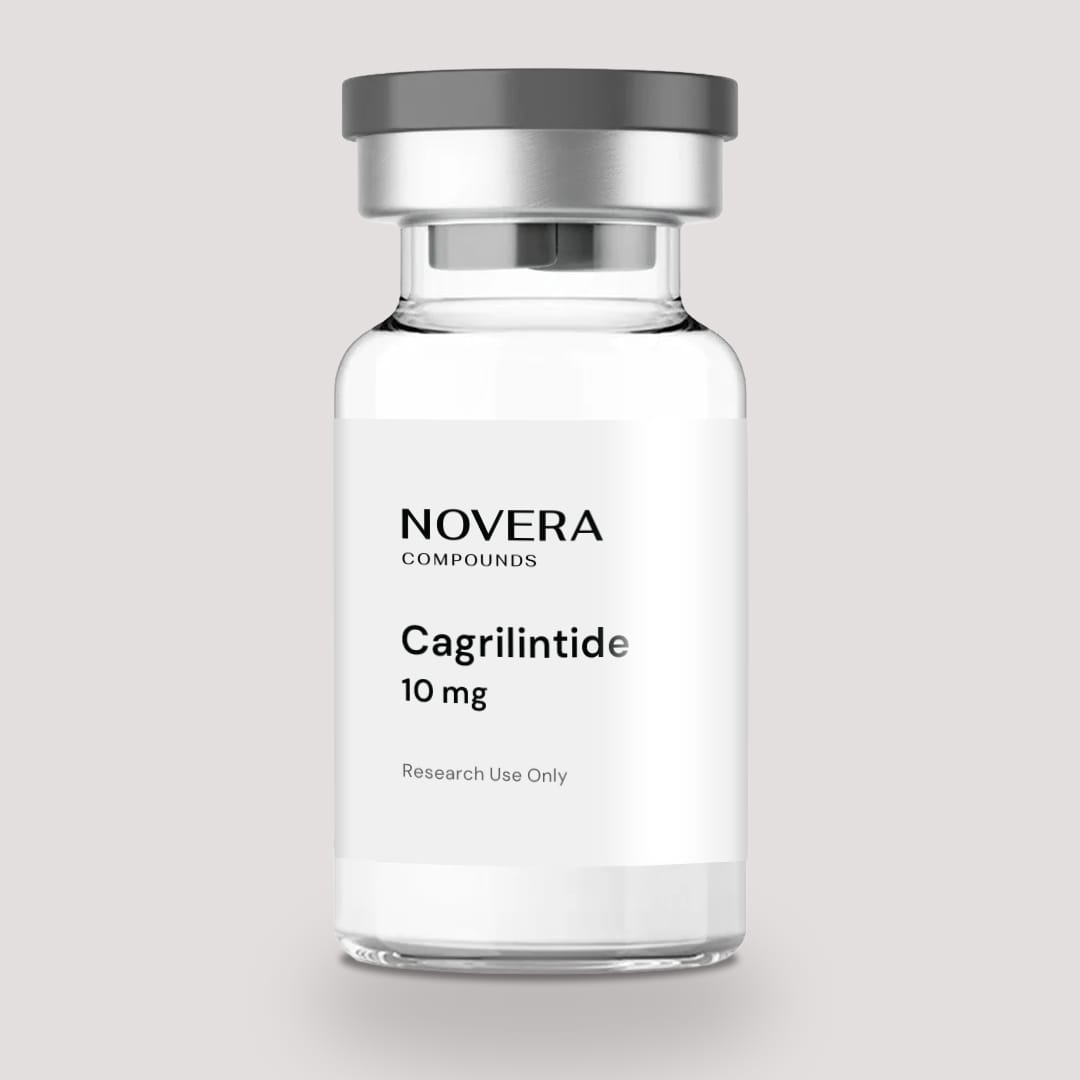
Cagrilintide 5mg+Semaglutide 5mg
Order Cagrilintide 5mg+Semaglutide 5mg for Clinics
$119.00
You save
Description
Cagrilintide 5mg+Semaglutide 5mg is a dual-ingredient product for licensed clinics and healthcare professionals evaluating weight-management and metabolic-care protocols. The stated strength combines 5 mg cagrilintide with 5 mg semaglutide, so clinic teams should align purchasing, storage, preparation, and treatment-room documentation with the exact materials received.
This product is intended for professional supply planning, not consumer self-selection. Cagrilintide and semaglutide may appear in specialty, investigational, or other nonstandard supply formats, so clinics should verify product status, route, concentration, handling instructions, and responsible clinical oversight before adding it to medication inventory.
Price, Strength, and Clinic Ordering
Clinics can order Cagrilintide 5mg+Semaglutide 5mg for professional-use inventory and view current price information during purchasing. The practical buying decision starts with the 5 mg plus 5 mg strength, then moves to whether the supplied format fits the clinic’s storage capacity, preparation workflow, staff training, and patient-monitoring process.
Account intake for wholesale medical supply commonly includes practice verification and professional-use requirements. Because this combination is not operationally identical to a standard branded semaglutide pen, clinic staff should align the ordered strength with internal medication records, administration checklists, refrigerator mapping, and waste procedures before treatment-room use.
For formulary planning, many practices review this product alongside broader weight loss products and pharmaceutical supplies. That comparison helps separate active-ingredient rationale from practical questions such as carton handling, inventory segregation, and documentation burden.
Quick tip: Match the 5 mg plus 5 mg strength to the clinic’s medication record before stock is released for use.
What the Combination Is Used For in Practice
Cagrilintide is an amylin-pathway agent, while semaglutide is a GLP-1 receptor agonist, an incretin-based medicine that affects appetite, satiety, and glucose-related signaling. Together, the combination is discussed in obesity and weight-management care because the two components act through different appetite and satiety pathways.
Clinical teams commonly ask whether cagrilintide can be taken with semaglutide. The answer depends on the exact supplied product, the clinical protocol, and the overseeing clinician’s assessment. A fixed combination or co-formulation should not be treated as an automatic substitute for semaglutide alone, because tolerability, dose progression, administration steps, and follow-up monitoring may differ.
Current clinical discussion of cagrilintide with semaglutide includes adults with overweight or obesity. Clinics should distinguish that evidence context from the operational status of the product being ordered, including whether the package, instructions, and supporting documents clearly identify the intended professional-use framework. For broader GLP-1 obesity-care context, the article on Wegovy and GLP-1 therapy may help staff compare established semaglutide workflows.
Cagrilintide vs Semaglutide: Practical Differences
The key difference is mechanism. Semaglutide works through GLP-1 receptor activity, while cagrilintide is associated with amylin-related satiety signaling. Combining them may change appetite effects, gastrointestinal tolerability, follow-up needs, and counseling language compared with using a single GLP-1 product.
For clinics, the comparison is also operational. Semaglutide-only products may have familiar staff workflows, clearer device expectations, and established counseling templates. A cagrilintide and semaglutide combination may require more careful staff orientation if preparation, concentration, route, or carton contents differ from the clinic’s existing injectable process.
Why it matters: Different mechanisms can mean different monitoring needs, even when the treatment goal is weight management.
| Comparison point | Clinic significance |
|---|---|
| Active pathways | Cagrilintide is amylin-related; semaglutide is GLP-1 based |
| Workflow fit | The combination may not match standard semaglutide-only processes |
| Tolerability | Gastrointestinal and appetite-related effects may affect continuation |
| Documentation | Strength, preparation, lot, expiry, and route should be recorded consistently |
| Substitution | Do not substitute for other obesity medicines without clinical and operational review |
Forms, Packaging, and Preparation Checks
Market presentations of cagrilintide and semaglutide combinations are not standardized in the same way as familiar branded pen products. The product name and strength do not by themselves define device format, concentration after preparation, volume per administration, diluent requirements, beyond-use dating, or included materials.
Receiving staff should inspect carton integrity, lot data, expiry, and alignment between the outer packaging and the internal container label. Before the product enters inventory, the team should record the exact strength, route instructions, storage terms, and any preparation steps in the same system used for other clinic injectables.
| Item to verify | What the clinic should document |
|---|---|
| Strength | 5 mg cagrilintide plus 5 mg semaglutide |
| Presentation | Current vial, device, or container format stated on materials |
| Preparation status | Whether the product is ready for use or requires preparation |
| Route | Route stated in the accompanying instructions |
| Pack contents | Carton contents, lot number, expiry, and included materials |
Clinics should avoid assuming a pen, fixed concentration, included diluent, or uniform carton contents unless the current product materials state those attributes. This is especially important in multi-site practices where inventory may move between rooms or staff groups.
Administration Workflow for Licensed Settings
Published discussions of cagrilintide and semaglutide combination therapy commonly describe subcutaneous use, often in weekly treatment models. The actual clinic workflow should follow the instructions supplied with the product in hand and the clinic’s approved professional protocol.
The product name alone does not determine reconstitution, injection volume, titration, needle selection, or timing changes. Staff should use a standardized checklist so each administration event includes identity verification, strength review, preparation record, lot capture, expiry check, and post-visit follow-up instructions.
- Verify strength and route before first clinic use.
- Separate similar injectable stock to reduce selection errors.
- Record preparation steps when preparation is required.
- Capture lot, expiry, and administration details in the medication record.
- Align follow-up timing with the clinic’s monitoring protocol.
Teams developing obesity-care services may also find weight loss injection workflow content useful when building staff training and visit templates around injectable therapies.
Storage, Handling, and Delivery Logistics
Storage requirements depend on the exact formulation, container, and preparation status. Clinics should verify refrigeration range, light protection, excursion limits, and any use-after-opening or post-preparation window from the materials received instead of assuming all semaglutide-related products share the same storage rules.
Where cold-chain support is needed, orders are handled with temperature-controlled handling when required and tracked US delivery, subject to product-specific storage instructions. On receipt, staff should document delivery condition, carton integrity, lot traceability, and transfer into the appropriate storage area.
Refrigerator organization matters because obesity-care clinics may stock several injectables with similar names, strengths, or containers. Separate bins, clear dating labels, and a second check before preparation can reduce selection errors. The clinic-focused article on semaglutide refrigeration can support internal cold-chain documentation standards.
Side Effects, Warnings, Interactions, and Monitoring
Safety planning should account for both components. Semaglutide-class effects are often gastrointestinal, and cagrilintide-related satiety effects may add to appetite suppression or intake changes. Commonly discussed effects include nausea, vomiting, diarrhea, constipation, abdominal discomfort, reduced appetite, early satiety, fatigue, and injection-site complaints depending on the product format.
More serious concerns include persistent severe abdominal pain, dehydration from ongoing vomiting or diarrhea, hypersensitivity reactions, gallbladder symptoms, and clinically important glucose changes when other antidiabetic medicines are part of the regimen. Semaglutide labels also include boxed-warning context regarding thyroid C-cell tumors observed in rodents, so thyroid tumor history and MEN2 history are typically part of GLP-1-class screening.
Monitoring should go beyond weight change. Clinics may track tolerance, hydration, dietary intake, gastrointestinal symptoms, glucose context, concurrent diabetes medications, and timing around procedures because delayed gastric emptying can affect peri-procedural planning. Any specific instructions accompanying the product should take priority over class-level assumptions.
Interaction review commonly focuses on delayed gastric emptying and overlapping adverse effects. Oral medicines with narrow timing requirements may require closer clinical review, and duplicate incretin-based therapy should be avoided unless deliberately addressed in the clinic protocol. For broader semaglutide counseling context, see Ozempic and obesity-management discussion.
Inventory Planning and Substitution Controls
Cagrilintide 5mg+Semaglutide 5mg should be treated as its own inventory item. It should not be interchanged automatically with standalone semaglutide, Wegovy, Ozempic, tirzepatide, retatrutide, or another weight-management product because active ingredients, route instructions, concentration, storage, device format, and documentation needs may differ.
If a clinic is adding the combination to an existing GLP-1 workflow, the safest operational approach is to update staff training before the first treatment-room use. Medication records, consent language, adverse-event escalation steps, refrigerator maps, and ordering controls should identify the combination clearly enough to prevent confusion with single-agent stock.
Practices comparing established and emerging metabolic therapies can review Zepbound and Wegovy differences for class-level decision support. That type of comparison helps teams separate clinical rationale from product-format and staff-workflow differences.
Related Products and Professional Alternatives
Alternative stocking decisions depend on whether the clinic prioritizes semaglutide familiarity, labeled obesity-device workflow, a different incretin pathway, or a specific internal protocol. The decision should consider clinical rationale and operational burden together, not only the headline ingredient profile.
| Related choice | Key distinction | Clinic planning note |
|---|---|---|
| Semaglutide | Single GLP-1 pathway | May fit clinics already trained on semaglutide-based protocols |
| Wegovy Flextouch 1mg | Branded obesity-focused semaglutide product | May support clinics that prefer established device workflows |
| Tirzepatide | Different incretin-based pathway profile | Useful for practices comparing broader metabolic-care approaches |
| Retatrutide | Emerging multi-pathway therapy context | Requires careful status, documentation, and protocol review |
Related products should be selected by active ingredient, strength, treatment protocol, handling requirements, and the clinic’s ability to monitor tolerability. A combination product can be clinically interesting while still requiring more detailed operational controls than a familiar single-agent product.
Authoritative Sources
For peer-reviewed combination data, see the peer-reviewed trial report on cagrilintide and semaglutide in adults with overweight or obesity.
For semaglutide class safety details, see the MedlinePlus semaglutide injection reference.
This content is for informational purposes only and is not a substitute for professional medical advice.
Frequently Asked Questions
What is Cagrilintide 5mg+Semaglutide 5mg?
It is a dual-ingredient product containing 5 mg cagrilintide and 5 mg semaglutide. Clinics evaluate it for professional weight-management and metabolic-care protocols because the ingredients act through different appetite and satiety pathways.
Can clinics use cagrilintide with semaglutide?
Use depends on the exact product materials, clinical protocol, and responsible professional oversight. A combination product should not be treated as interchangeable with semaglutide alone because administration steps, tolerability, monitoring, and documentation may differ.
What is the difference between cagrilintide and semaglutide?
Semaglutide is a GLP-1 receptor agonist, while cagrilintide is associated with amylin-related satiety signaling. The different mechanisms are why clinics may review the combination separately from single-agent GLP-1 products.
How should clinics store Cagrilintide 5mg+Semaglutide 5mg?
Storage should follow the materials received with the product, including refrigeration range, light protection, excursion limits, and any post-preparation or use-after-opening window. Clinics should document lot, expiry, and storage location at receipt.
What side effects should clinic protocols address?
Protocols commonly address nausea, vomiting, diarrhea, constipation, abdominal discomfort, reduced appetite, early satiety, fatigue, dehydration risk, hypersensitivity reactions, gallbladder symptoms, and glucose changes when other diabetes medicines are involved.
Can this product replace semaglutide, Wegovy, or Ozempic in inventory?
It should not be substituted automatically. Active ingredients, strength, route instructions, concentration, storage, device format, and documentation requirements may differ, so clinic leadership should approve any change before use.
Specifications
- Main Ingredient: Peptides
- Manufacturer:
- Drug Class:
- Generic Name: Cagrilintide 5mg + Semaglutide 5mg
- Package Contents: 1 vial
- Storage Requirements:
- Main Usage: Weight Loss
Here to help
Questions about ordering, delivery or products? You can email our team here or call now at 1-800-630-9757 and be connected with your dedicated Account Manager
Related Products
Prolia® (International English)
Prescription Medication
$529.00 - $549.00
You save
You save
Evenity® (English Alternative)
Injectable Medication
$1,229.00 - $1,299.00
You save
You save
Intraline® For Men
Dermal Filler
$59.00 - $79.00
You save
You save
RejuvaNAD+ Pro
Injectable Medication
$237.00 - $249.00
You save
You save
Related Articles
Prednisone in Clinical Care: Uses, Risks, and Monitoring
Prednisone is a prescription systemic corticosteroid used to reduce inflammation or suppress immune activity in…
Lip Fillers Swelling Stages: Timeline, Safety, and Follow-Up
Lip fillers swelling stages usually follow a short inflammatory course: swelling appears soon after injection,…
Hypopigmentation of the Skin: Assessment and Care
Hypopigmentation of the skin means one or more areas look lighter than the surrounding skin.…
Radiesse vs Sculptra: Selection Factors for Clinics
Radiesse vs Sculptra is best understood as a comparison between two collagen-stimulating injectables with different…
Hyaluronic Acid Under-Eye Filler: Safety and Workflow
Hyaluronic acid under-eye filler is an injectable soft-tissue filler used by trained aesthetic clinicians to…
Dermal Filler Types: Materials, Uses, and Clinic Fit
Dermal filler types are usually grouped by their base material, tissue behavior, and expected role…
What Is Dysport? Clinical Uses, Safety, and Workflow
For clinic teams asking what is Dysport, the short answer is simple: Dysport is a…
Biostimulators in Aesthetic Care: Selection and Safety
Biostimulators are injectable aesthetic products used to encourage a controlled tissue response, often involving new…