
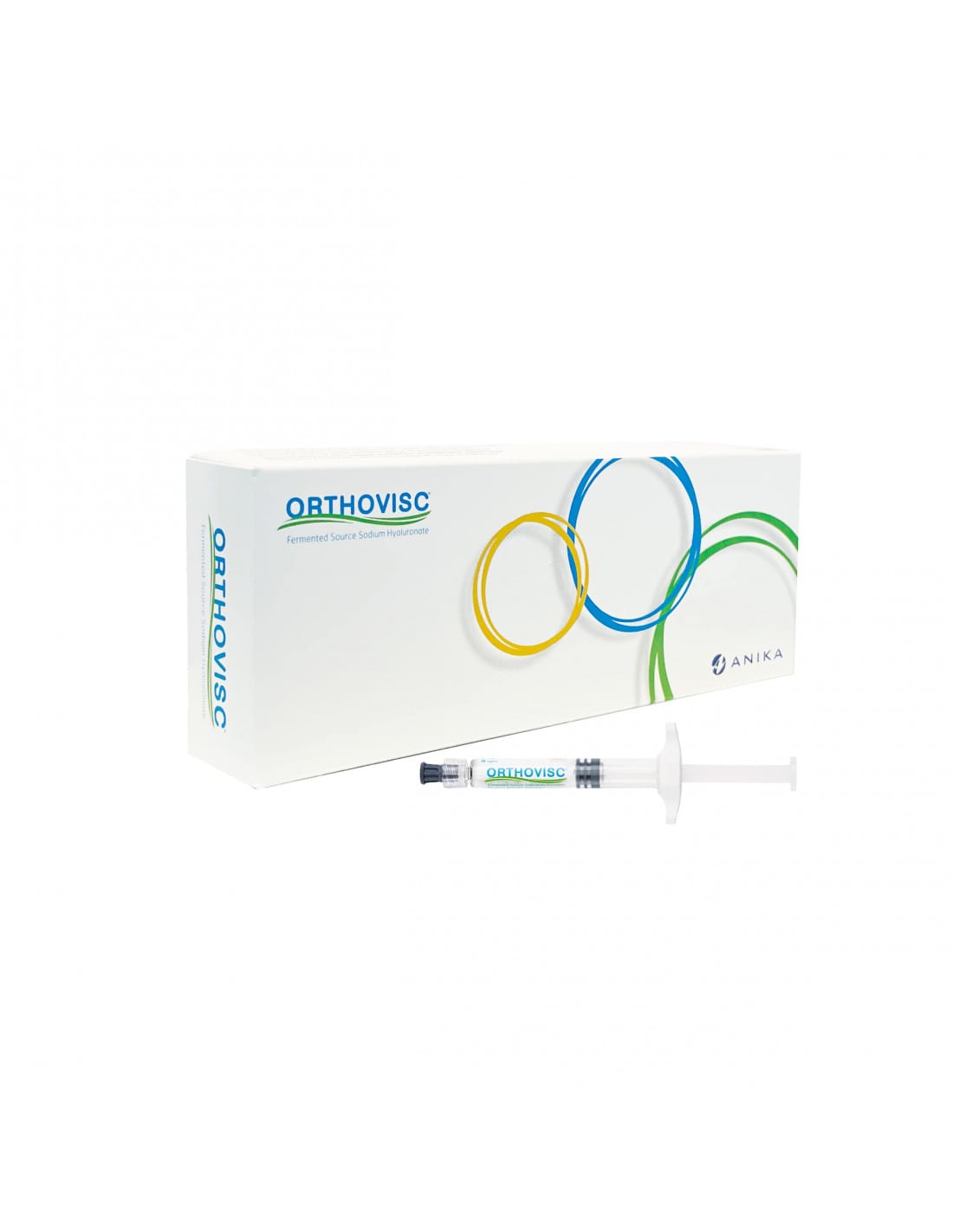
Orthovisc® (English)
Order Orthovisc® Online for Clinics
Hyaluronic Acid-Based Filler
$52.00
You save
Description
Orthovisc® (English) is a high molecular weight hyaluronan supplied as a sterile intra-articular injection for professional knee osteoarthritis care. Licensed clinics and healthcare professionals can order Orthovisc online in the 30 mg/2 mL syringe format, with English-language packaging that supports treatment-room identification, charting, and inventory control. The prefilled syringe presentation helps teams maintain a consistent setup for scheduled viscosupplement injection visits.
Orthovisc 30 mg/2 mL Syringe for Clinic Use
Orthovisc contains hyaluronan, also called sodium hyaluronate, a substance related to components naturally found in synovial fluid. In clinical use, viscosupplementation adds hyaluronan into the knee joint space to support lubrication and shock absorption when osteoarthritis has reduced normal joint fluid quality. Orthovisc is used by trained healthcare professionals as part of a supervised musculoskeletal care plan, not as a self-administered product.
The supplied configuration is a 2 mL prefilled syringe labeled 15 mg/mL, providing Orthovisc 30 mg/2 mL for intra-articular administration. The English packaging, visible lot number, and expiration date support medication room checks, procedure documentation, and recall readiness. For clinics building a broader joint injection program, the Orthopedic Injections category includes adjacent viscosupplement and procedure-related inventory.
Orthovisc is commonly positioned after conservative measures have not provided adequate relief for knee osteoarthritis. Those measures may include activity modification, physical therapy, bracing, and simple analgesics, depending on the supervising clinician’s protocol. Product selection, injection timing, and follow-up intervals should remain aligned with the manufacturer’s labeling and the facility’s clinical standards.
Price, Contract Purchasing, and US Distribution
Clinics can view current Orthovisc price information after account access and product selection. Public cost figures can vary by contract tier, order volume, release schedule, and facility purchasing workflow, so pricing is best handled through the secure ordering process. Teams comparing Orthovisc injection cost against other hyaluronan options should also account for syringe count per treatment course, visit templates, and formulary requirements.
Med Wholesale Supplies serves licensed clinics and healthcare professionals with brand-name medical products sourced through vetted distributors and verified supply channels. Orthovisc clinic supply can be coordinated for US distribution, including temperature-controlled handling when required and tracked US delivery. Purchasing teams can align reorder points with injection calendars to reduce last-minute pulls and support continuity for scheduled procedure days.
Quick tip: Keep lot and expiry records with the procedure documentation until inventory reconciliation is complete.
How Orthovisc Fits Knee OA Injection Protocols
Orthovisc is a hyaluronic acid injection used to relieve knee pain associated with osteoarthritis in appropriate patients under clinician supervision. It is not a steroid injection and does not replace an individualized evaluation of joint disease, mechanical symptoms, infection risk, or other causes of pain. In practice, orthopedic, rheumatology, and sports medicine teams may use it within a stepwise knee OA pathway after evaluating prior response to conservative therapies.
The product is administered directly into the knee joint by a qualified professional using aseptic technique. Facilities should follow their own consent, timeout, site-preparation, and post-procedure observation processes. Educational discussion of treatment design and clinic expectations can be supported by internal resources such as Orthovisc viscosupplementation for knee OA and Orthovisc knee injection considerations.
Some common operational questions involve how many injections are used, how long symptom improvement may last, and what activity precautions follow an injection. Those decisions depend on the labeled regimen, the clinician’s assessment, and the patient’s response. Clinics should avoid implying a guaranteed duration of benefit; instead, document baseline symptoms, functional goals, follow-up timing, and any adverse events after each visit.
Key Features
- High molecular weight hyaluronan for intra-articular use by trained professionals.
- Orthovisc syringe format supplied as a sterile, ready-to-use prefilled unit.
- 30 mg/2 mL presentation with 15 mg/mL labeling.
- English-language packaging for clear identification in clinic storage areas.
- Single-patient use format that supports aseptic procedure workflow.
- Lot number and expiration dating for traceability and inventory audits.
- Non-surgical viscosupplement option for knee osteoarthritis care pathways.
- Useful for orthopedic, rheumatology, sports medicine, and outpatient procedure settings.
Professional Applications and Workflow Fit
Orthopedic clinics may schedule Orthovisc injections in dedicated procedure blocks, while rheumatology practices may integrate the product into ongoing inflammatory and degenerative joint care workflows. Sports medicine teams may use the product in non-operative knee OA programs when the supervising clinician determines that viscosupplementation is appropriate. For broader service-line planning, the Rheumatology category can help teams evaluate related professional-use products.
The prefilled syringe reduces preparation steps compared with products requiring transfer from a vial or reconstitution. Staff can stage the unopened unit with standard injection supplies, confirm the product name and expiry, and document the lot at the time of administration. The format also supports consistent training across multi-site groups that use shared checklists and electronic health record templates.
Inventory managers should estimate demand based on scheduled consultation volume, approved treatment plans, and series-based visit patterns. Multi-location groups may benefit from central tracking of lot movement and reorder thresholds. The Orthovisc brand catalog can be used to review current brand-specific items without relying on informal substitutions.
Composition, Mechanism, and Dose Context
The active component is hyaluronan, listed as sodium hyaluronate in a sterile aqueous vehicle. Hyaluronan is a viscoelastic polymer that contributes to synovial fluid properties. In osteoarthritic knees, synovial fluid can lose viscosity and elasticity; viscosupplementation is intended to supplement those properties within the joint space.
Each Orthovisc 30 mg/2 mL syringe reflects the labeled concentration and volume used in professional administration. The exact Orthovisc dose and frequency should follow the manufacturer’s instructions and the facility’s protocol. Clinics should not alter the injection schedule or combine products in the same treatment course without clinician review and appropriate documentation.
Because hyaluronan products differ in concentration, volume, molecular weight, source, and labeled regimen, they should not be treated as automatically interchangeable. Formulary leads should compare the active ingredient, syringe configuration, course design, storage requirements, and patient-specific factors before changing brands. A practical comparison of class considerations is available in Orthovisc and Synvisc comparison guidance.
Packaging, Storage, and Handling
Orthovisc (English) is supplied as an individual sterile prefilled syringe for single-patient use. The secondary packaging is intended to protect the syringe before use and provide product identification for receiving, storage, and clinical documentation. Facilities should keep units sealed until procedure setup and should not use any syringe if the packaging is damaged, opened, or outside acceptable dating.
Store and handle Orthovisc according to the current manufacturer labeling and your facility’s standard operating procedures. Receiving staff should verify the product name, English labeling, lot number, and expiration date before the unit enters usable inventory. Procedure staff should complete a final check before administration and retain the relevant identifiers in the medical record or inventory system.
Aseptic handling is essential because the product is injected into a joint space. Clinics should use established sterile preparation steps, appropriate skin antisepsis, and single-use handling practices. Any concerns about product integrity, visible contamination, packaging damage, or temperature excursion should be escalated before the unit is released for clinical use.
Safety, Warnings, and Monitoring
Orthovisc should be administered only after a clinician evaluates the knee and the patient’s overall suitability for viscosupplementation. Hyaluronan injections are generally avoided when there is infection or skin disease at the injection site, suspected joint infection, or a known hypersensitivity to product components. The clinician should also consider anticoagulant use, bleeding risk, prior injection reactions, and other relevant medical history before treatment.
Commonly reported local reactions with intra-articular hyaluronan products can include pain, swelling, warmth, bruising, stiffness, or fluid accumulation around the injected knee. These effects are often procedure-related, but clinics should monitor severity and duration. Serious reactions are uncommon but may include significant inflammatory response, allergic reaction, or signs concerning for infection.
Patients are often advised by their treating clinician to avoid strenuous or prolonged weight-bearing activity for a short period after injection. That instruction should be individualized and documented in the discharge note. Staff should provide clear escalation guidance for fever, worsening redness, severe swelling, increasing pain, drainage, or other symptoms that require prompt clinical evaluation.
Why it matters: Safety screening protects the treatment course and helps distinguish expected post-injection soreness from complications.
Comparable Viscosupplement Options
Clinics may evaluate Orthovisc alongside other knee OA hyaluronan products when building a formulary. Differences may include treatment-course structure, syringe volume, concentration, manufacturer labeling, and practitioner preference. Internal education on brand-to-brand decision points is available through Orthovisc versus Synvisc.
Related product choices include Hyalgan English single syringe, Durolane 3 mL 20 mg English, and Synvisc Classic prefilled syringes. These links are for product evaluation and procurement planning; clinical substitution should follow the responsible provider’s protocol and any facility formulary controls.
When reviewing alternatives, compare the labeled regimen rather than only the per-syringe cost. A product with a different course structure can change scheduling, staffing, documentation, and total episode cost. Pharmacy, purchasing, and clinical leads should agree on accepted substitutions before inventory teams release a different brand for a scheduled visit.
Ordering Documentation and Inventory Planning
Before placing an order, confirm the exact product name, English packaging preference, strength, volume, and quantity needed for the upcoming clinic schedule. Orthovisc wholesale purchasing works best when procurement teams coordinate with procedure leads and forecast demand by location. This reduces expired stock risk while keeping adequate units available for active treatment plans.
Receiving teams should record shipment contents, lot details, and expiration dates as soon as inventory arrives. Units should then be stored in the designated medication or procedure supply area according to the label. For multi-site groups, centralized purchasing can help standardize approved products while local logs track use by room, date, and clinician.
For clinics expanding injectable service lines beyond viscosupplementation, the Pharmaceuticals category provides a broader professional purchasing path. Keep product selection tied to the clinical protocol and avoid substituting look-alike or same-class items without appropriate review.
Authoritative Sources
- Manufacturer information for Orthovisc knee OA use
- FDA information on viscosupplementation for knee osteoarthritis
- AAOS patient education on viscosupplementation for knee arthritis
Ready to align Orthovisc supply with your clinic schedule? Sign in to view current contract terms, confirm the 30 mg/2 mL syringe configuration, and coordinate ordering with your facility’s inventory controls.
This content is for informational purposes only and is not a substitute for professional medical advice.
Frequently Asked Questions
What is Orthovisc used for in clinic practice?
Orthovisc is a high molecular weight hyaluronan injection used by healthcare professionals for knee osteoarthritis pain in appropriate patients. It is administered into the knee joint as part of a supervised viscosupplementation protocol.
What Orthovisc syringe strength is supplied?
This Orthovisc (English) item is described as a 30 mg/2 mL prefilled syringe with 15 mg/mL labeling. Clinics should confirm the product name, strength, volume, lot number, and expiry during receiving and before procedure setup.
How should clinics evaluate Orthovisc price?
Orthovisc price can vary by contract terms, order volume, and purchasing workflow. Clinics should view current pricing through account access and consider the full treatment-course structure, not only the per-syringe cost.
Can Orthovisc be substituted with another hyaluronan product?
Substitution should be approved by the responsible clinical lead and aligned with formulary rules. Hyaluronan products can differ in concentration, volume, molecular weight, course schedule, and labeling, so they should not be treated as automatically interchangeable.
What safety checks matter before Orthovisc administration?
Clinics should screen for infection at the injection site, suspected joint infection, hypersensitivity to components, relevant bleeding risk, prior injection reactions, and other clinical factors. Administration should follow aseptic technique and facility procedure standards.
What should staff document after an Orthovisc injection?
Documentation commonly includes product name, strength and volume, lot number, expiration date, injection site, clinician, patient response, discharge instructions, and any adverse event. Facilities should follow their own medical record and inventory policies.
Specifications
- Main Ingredient: Cross-Linked Hyaluronic Acid 20Mg / Ml
- Manufacturer: Across Co Ltd.
- Drug Class: Osteoarthritis Treatment
- Generic Name: Cross-Linked Hyaluronic Acid
- Package Contents: 1 mL x 2 Pre-Filled Syringes
- Storage Requirements: Room Temperature (2℃~25℃)
- Main Usage:
About the Brand
Orthovisc
Orthovisc is a top-tier medical brand that provides efficient comfort to patients afflicted with knee osteoarthritis. It functions as a viscosupplement, administered through injection into the knee joint which acts as lubrication and padding, thereby easing discomfort and advancing movement. You can secure Orthovisc from our digital platform, medwholesalesupplies.com, for a variety of reasons. To start with, medwholesalesupplies.com is a dependable and credible online source for all your medical supply needs. We ensure that each product featured on our website is of superior quality and adheres to the required regulatory norms. Therefore, when you acquire Orthovisc from our site, rest assured that you're getting a proven and effective solution. In addition, opting for Orthovisc via medwholesalesupplies.com ensures ease of purchase and economy. Our user-friendly platform enables you to compare various options effortlessly, assisting you in choosing the most suitable product. Moreover, we provide attractive price points and discounts, allowing you to obtain the medical aid you necessitate without straining your finances. In conclusion, choosing to buy Orthovisc through medwholesalesupplies.com is a wise decision for patients seeking solace from knee osteoarthritis. With our unwavering commitment to quality, convenience, and economical pricing, we deliver a hassle-free buying experience that guarantees the optimal care you deserve. Look no further than Orthovisc and medwholesalesupplies.com for your pathway to a more painless existence.
Browse Orthovisc Products
Here to help
Questions about ordering, delivery or products? You can email our team here or call now at 1-800-630-9757 and be connected with your dedicated Account Manager
Related Products
Prolia® (International English)
Prescription Medication
$529.00 - $549.00
You save
You save
Evenity® (English Alternative)
Injectable Medication
$1,229.00 - $1,299.00
You save
You save
Intraline® For Men
Dermal Filler
$59.00 - $79.00
You save
You save
RejuvaNAD+ Pro
Injectable Medication
$237.00 - $249.00
You save
You save
Related Articles
Prednisone in Clinical Care: Uses, Risks, and Monitoring
Prednisone is a prescription systemic corticosteroid used to reduce inflammation or suppress immune activity in…
Lip Fillers Swelling Stages: Timeline, Safety, and Follow-Up
Lip fillers swelling stages usually follow a short inflammatory course: swelling appears soon after injection,…
Hypopigmentation of the Skin: Assessment and Care
Hypopigmentation of the skin means one or more areas look lighter than the surrounding skin.…
Radiesse vs Sculptra: Selection Factors for Clinics
Radiesse vs Sculptra is best understood as a comparison between two collagen-stimulating injectables with different…
Hyaluronic Acid Under-Eye Filler: Safety and Workflow
Hyaluronic acid under-eye filler is an injectable soft-tissue filler used by trained aesthetic clinicians to…
Dermal Filler Types: Materials, Uses, and Clinic Fit
Dermal filler types are usually grouped by their base material, tissue behavior, and expected role…
What Is Dysport? Clinical Uses, Safety, and Workflow
For clinic teams asking what is Dysport, the short answer is simple: Dysport is a…
Biostimulators in Aesthetic Care: Selection and Safety
Biostimulators are injectable aesthetic products used to encourage a controlled tissue response, often involving new…