Lip Fillers Swelling Stages: Timeline, Safety, and Follow-Up
Lip fillers swelling stages usually follow a short inflammatory course: swelling appears soon after injection, often peaks during the first 24 to…

Merz Pharma
Calcium Hydroxylapatite Gel Filler
Free shipping on orders over $800
5% off your first order, applied at checkout
Order as a guest or log in. Your medical licence details are collected at checkout and checked against the state board and the NPI registry.
Enter your own figures: the syringes you use per treatment and what you charge per treatment. The table shows your product cost and margin per treatment at each quantity price. It does not suggest doses, prices or treatments.
| Quantity | Price per pack | Cost per unit | Cost per treatment | Margin per treatment |
|---|
Uses today's prices for the selected option before shipping and any other costs. Your figures stay in your browser.
Ships within 24–48 hours
Delivery typically 48–72 hours after shipping, up to 5–7 business days depending on origin and customs. Tracking is emailed when your order ships.
Warm or damaged on arrival?
Send us photos or a video. We investigate and arrange a replacement where needed.
Licence checks
Licences are checked against the state board and the NPI registry.
100% genuine products
In original manufacturer packaging, with lot numbers for full traceability. Lot numbers are shown on your packing slip and invoice.
250 active clinics · Supplying clinics since 2013
“Everything has been easy from ordering to delivery. The prices are good, orders arrive quickly, and the customer service has been great. I would definitely order from MWS again.”
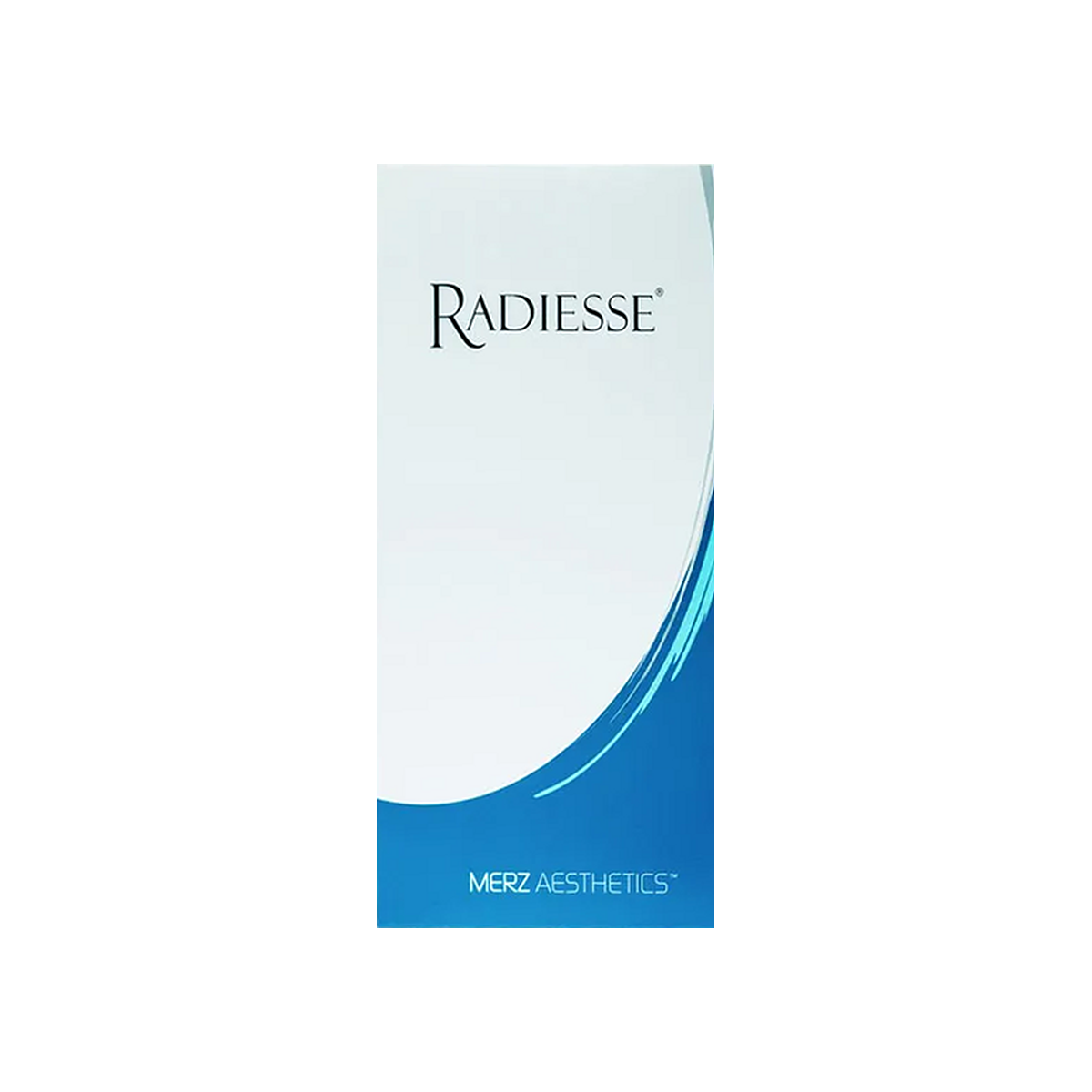
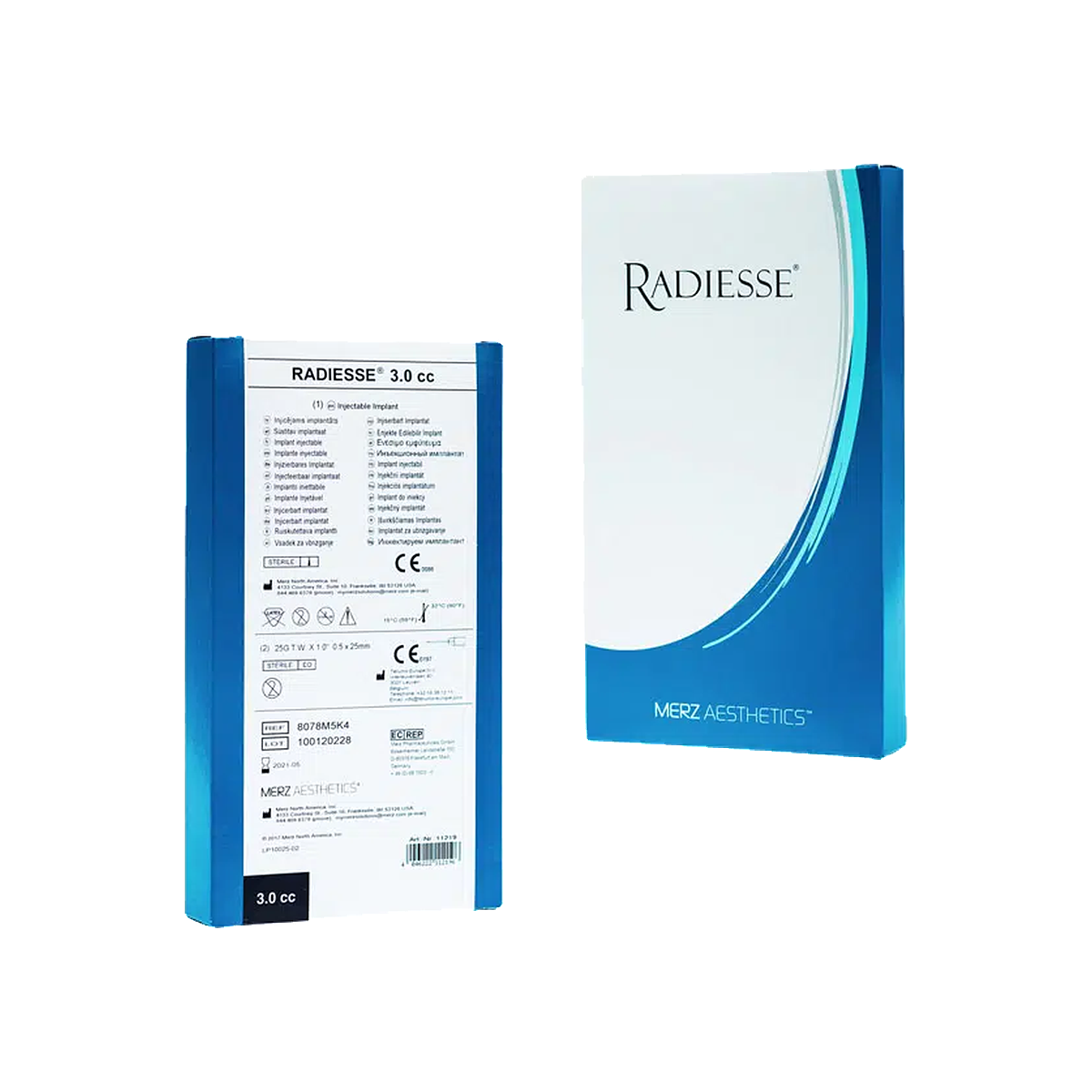
Radiesse® 3 mL is a calcium hydroxylapatite (CaHA) dermal filler supplied as a sterile, lidocaine-free prefilled syringe for professional aesthetic use. Licensed clinics and healthcare professionals can buy Radiesse wholesale in the 3 mL format for structural volumizing, soft-tissue contouring, and larger correction plans. CaHA microspheres sit in a smooth gel carrier, so the material gives lift at placement and also leaves a particle scaffold in the tissue.
The 3 mL syringe suits trained injectors who prefer one unit for multi-area work instead of several smaller syringes. Because this format contains no lidocaine, clinics manage patient comfort through their own anesthesia protocol. Administration calls for aseptic technique, sound facial anatomy knowledge, and case-by-case patient assessment.
We supply licensed clinics, med spas, and medical practices, and professional-use ordering requirements or clinic documentation may apply before an order is approved. Med Wholesale Supplies is a wholesale supplier of aesthetic, orthopedic and medical products to clinics, hospitals and medical professionals, operating since 2013. Practices with steady CaHA demand can request a quotation for budgeting, injector training events, or multi-location purchasing.
A 3 mL unit helps consolidate stock for volume-intensive treatment plans. Facilities that run full-face rejuvenation days, model days, or training sessions can align receipt windows with the procedure calendar. Teams that order Radiesse wholesale often hold the 3 mL size for broader structural cases and keep smaller units for touch-up visits.
Why it matters: Matching syringe volume to the planned protocol reduces part-used units and room setup errors.
Radiesse® is made with synthetic calcium hydroxylapatite microspheres suspended in a biocompatible gel. The gel provides immediate volume after placement. Over time, the gel is absorbed and the CaHA particles remain as a scaffold that may support new collagen formation, according to manufacturer professional information and peer-reviewed reviews of the material.
This behavior is why clinics reach for a calcium hydroxylapatite filler when the goal is structure, projection, and contour rather than fine surface refinement. CaHA is not interchangeable with hyaluronic acid (HA) gels. HA products are often chosen for hydration, flexibility, and reversible shaping, while CaHA is used for firmer support and biostimulatory planning.
Material class shapes injection depth, plane, and aftercare counseling. Clinics building internal protocols can map CaHA against the wider dermal fillers range so each product has a defined role in the treatment menu.
Manufacturer professional information describes Radiesse for subdermal implantation to correct moderate to severe facial wrinkles and folds, such as nasolabial folds, for correction of volume loss in the back of the hands, and for restoration of facial fat loss in people with HIV. Approved indications and available syringe presentations differ between markets, so clinic teams should work from the labeling and instructions for use that arrive with the pack received. Any use beyond the labeled indications is off-label and remains a clinical decision for the treating practitioner; we do not promote off-label use.
In practice, injectors use CaHA for deeper folds, midface support, and jawline or mandibular border definition when anatomy and goals support it. The 3 mL volume is practical when a plan needs broader correction with consistent extrusion from one syringe. Many teams stage treatment: CaHA first for lift and tissue support, then an HA product for softer blending. The Radiesse and Juvéderm Voluma comparison helps frame those class differences during protocol writing.
Patient assessment should cover prior filler placement, skin thickness, facial movement, healing history, and treatment expectations. Only trained healthcare professionals who understand vascular anatomy and adverse-event management should inject this product.
Per the manufacturer’s instructions for use, Radiesse should not be used in the following situations:
Added caution applies for patients on anticoagulants or antiplatelet therapy, patients with a history of nodules or granulomas after filler, and patients with tendency to hypertrophic scarring. Pregnancy, breastfeeding, and patients under the age for labeled use have not been studied for this product. Clinic intake forms should capture these points and the signed consent before any injection.
Expected local reactions after injection include redness, swelling, bruising, tenderness, itching, firmness, and discomfort at the treatment site. These are usually short-lived. Give patients written aftercare notes and a clear route to contact the clinic if symptoms worsen.
Serious risks reported with injectable fillers include infection, persistent nodules, tissue injury, and vascular occlusion. If filler enters or compresses a blood vessel, skin necrosis, stroke-like events, or vision loss can follow, so injectors need an emergency plan and immediate escalation pathway before they treat. Staff should know the signs: severe or unusual pain, blanching, dusky skin color, and any visual change.
Post-procedure monitoring should include direct assessment before the patient leaves and instructions to report increasing swelling, fever, discoloration, or visual symptoms. Record the lot number, expiration date, treatment area, technique, volume placed, and follow-up actions. Adverse events should be documented under clinic policy and reported to the manufacturer or regulator as required.
Each unit contains one 3 mL prefilled syringe. Packaging arrives sealed and labeled with identifying information that supports intake checks and treatment records. Purchasing teams can use SKU 89461 to separate this presentation from other Radiesse formats on internal stock sheets.
Needles or cannulas are chosen by the clinic to match technique and treatment plan and are not included with this syringe. Newer packaging uses an electronic instructions-for-use format reached by scanning the QR code instead of a printed booklet, so make the e-IFU reachable to injectors before the first case.
On receipt, log lot and expiry data, store the product as the manufacturer directs, and keep traceability from purchase through patient charting. Shelving 3 mL, 1.5 mL, and lidocaine-containing units in separate bins helps staff pick the intended syringe during busy procedure days.
The active component is synthetic calcium hydroxylapatite microspheres. The carrier is a biocompatible gel that delivers those particles to the intended plane and supplies initial volume. No lidocaine is present in this format, so topical or local anesthesia follows clinic protocol when a case needs it.
HA gels are water-binding and can be modified with hyaluronidase, which makes them attractive for fine shaping and for areas where reversibility matters in planning. CaHA behaves differently: firmer support, a different onset and duration profile, and no enzymatic reversal. The Sculptra and Radiesse collagen-stimulating filler guide sets out how two biostimulatory materials differ in preparation and timing.
Because of these differences, a CaHA syringe should not be swapped for an HA syringe without clinical review. Technique, plane, needle or cannula choice, and patient counseling all shift with the material.
Clinics that need a smaller unit for lower-volume plans may look at the Radiesse 1.5 mL prefilled syringe. Where integrated anesthesia fits the protocol, Radiesse 1.5 mL with lidocaine is a common alternative. The Radiesse brand range shows the adjacent formats stocked for different procedure volumes.
When the plan calls for collagen stimulation through a different material class, experienced injectors may assess Sculptra 2 vials, which requires reconstitution and a staged session schedule. Background on CaHA behavior over time is covered in how Radiesse supports collagen-focused results.
These products are not ranked against each other. Composition, reversibility, onset, tissue integration, and session planning all differ, and the right unit depends on anatomy, indication, and injector training.
Stock levels move with manufacturer production cycles, lot timing, and distributor allocation. Practices with regular CaHA use should place replenishment orders ahead of high-volume scheduling blocks and training weeks rather than during them.
If a requested quantity cannot be filled as planned, the clinical lead should assess any alternative before substitution. Material class, rheology, injection plane, treatment area, and documentation all affect suitability. Swapping products without protocol review changes handling, patient counseling, and follow-up expectations.
Purchasing staff can fold Radiesse planning into a wider filler stock cycle: current quantities on hand, expiry dates, and the expected procedure mix together show whether the practice needs 3 mL syringes, smaller units, HA volumizers, or a collagen-stimulating product.
This content is for general informational purposes only and is not a substitute for professional medical advice, diagnosis, or treatment. Always consult a qualified clinician or pharmacist about your situation, and seek urgent care or call your local emergency number for severe or worsening symptoms.
Radiesse® 3 mL is intended for licensed clinics, med spas, aesthetic practices, and healthcare professionals. Professional account verification and clinic documentation may be required before ordering.
Each unit contains one sterile 3 mL prefilled syringe. Based on the current product information, needles or cannulas are selected separately by the clinic according to technique preference.
This Radiesse® 3 mL presentation is described as lidocaine-free. Clinics that use local comfort measures should follow their own anesthesia protocols and the manufacturer’s instructions for use.
The 3 mL syringe is practical for larger correction plans and multi-area structural work. Smaller Radiesse presentations may fit lower-volume procedures or sessions where less product is planned.
Duration varies by treatment area, injection technique, patient factors, and clinical plan. Radiesse provides immediate volume from the gel carrier and may support collagen formation over time, but follow-up expectations should be set by the treating clinician.
Radiesse is not simply better or worse than HA fillers; it serves a different role. CaHA is often selected for structure and collagen-focused planning, while HA fillers may be preferred for softer contouring or areas where reversibility is important.
Clinics should document the product name, lot number, expiration date, injection sites, technique, quantity used, adverse-event notes, and post-treatment instructions according to their internal medical protocols.

MWS Customer Service Team
Our customer service team helps you choose the right pack, label option and quantity for your clinic, and sets up your first order.
Monday to Friday, 9am to 6pm ET
Why clinics order from MWS
Built for licensed clinics
Licences are checked against the state board and the NPI registry.
Every pack option named
Each option names its dosage and pack size, so you know which pack you are ordering.
Volume pricing up front
Quantity tiers are shown on the product, before you order.
Cold-chain packing
Refrigerated lines ship in thermo-packaging with enough ice packs to hold temperature for up to 10 days.
“The customer care team was very efficient in offering hand-held guidance to choose the most cost-effective options.”
Cannulas, needles and hyaluronidase for filler work.

Lip fillers swelling stages usually follow a short inflammatory course: swelling appears soon after injection, often peaks during the first 24 to…

Radiesse vs Sculptra is best understood as a comparison between two collagen-stimulating injectables with different materials and clinic workflows. Radiesse is a…
Hyaluronic acid under-eye filler is an injectable soft-tissue filler used by trained aesthetic clinicians to soften tear-trough hollowness or shadowing when anatomy…