
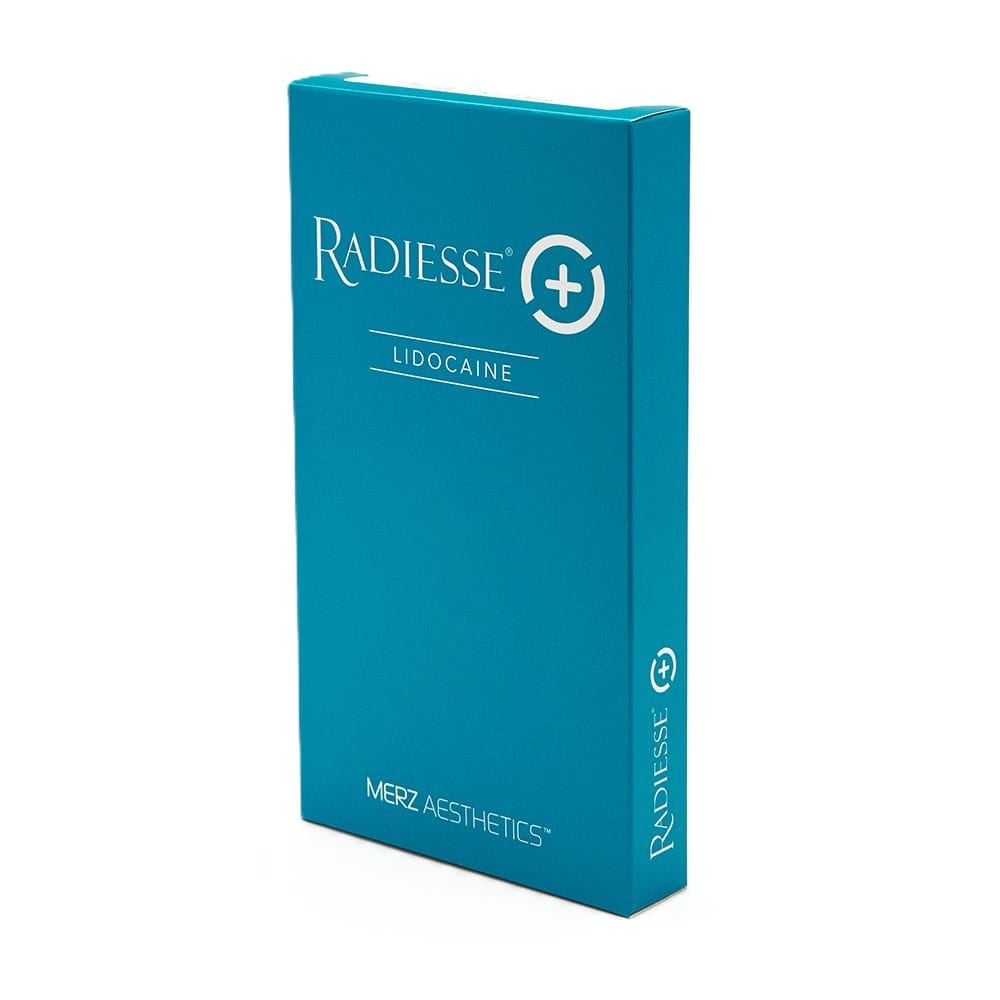
Radiesse® 1.5 mL w / Lidocaine
Order Radiesse® 1.5 mL with Lidocaine for Clinics
Dermal Filler
$264.00
You save
Description
Radiesse® 1.5 mL w / Lidocaine is a calcium hydroxylapatite dermal filler supplied in a prefilled syringe for professional aesthetic use. Licensed clinics, med spas, and healthcare professionals can order this Radiesse 1.5 mL prefilled syringe for treatment-room workflows that require a cohesive CaHA gel with integrated lidocaine. Each unit supports sterile, single-use handling and includes accessories for initial clinical setup.
This format is used by trained injectors for subdermal placement according to product labeling, anatomical assessment, and clinic protocol. The 1.5 mL volume helps practices plan single-area correction, multi-zone refinement, or sequential appointments without changing the familiar handling profile of the Radiesse® line.
Radiesse® 1.5 mL with Lidocaine Price and Clinic Ordering
Clinics can sign in to view the current Radiesse 1.5 mL Lidocaine price and place professional-use orders. Larger practices may request quantity-based quotes when planning recurring aesthetic schedules, provider training days, or seasonal procedure demand. The displayed cost should be evaluated alongside pack size, syringe volume, lidocaine content, and the supplies your team normally uses for preparation.
Radiesse 1.5 mL wholesale planning is usually driven by expected procedure mix rather than a single unit cost. A practice that performs contouring and fold-correction sessions may maintain a different par level than a clinic focused on hand rejuvenation or lower-face definition. Inventory managers should also account for appointment cadence, provider preference, lot tracking, and internal sign-off before setting reorder quantities.
Quick tip: Align unit counts with scheduled treatment categories, not only with historical monthly usage.
What Radiesse® Is and How the CaHA Matrix Works
Radiesse® is a calcium hydroxylapatite filler. CaHA refers to calcium hydroxylapatite microspheres suspended in a smooth gel carrier. After professional injection into appropriate tissue planes, the gel provides immediate volume support while the CaHA particles act as a structural scaffold within the treated area.
The integrated anesthetic is lidocaine hydrochloride 1.5 mg/mL. Its role is to support procedural comfort during injection, which may reduce the need for separate anesthetic steps in some clinic workflows. Technique, injection depth, and the decision to use a needle or cannula remain clinical choices that should follow training and manufacturer guidance.
For additional class background, your team can review collagen support with Radiesse®. Providers comparing biostimulatory filler approaches may also find Sculptra® and Radiesse® filler differences useful when standardizing consultation language and product selection criteria.
Professional Applications and Treatment-Room Fit
In professional aesthetic settings, clinicians use Radiesse® with lidocaine for structural volumization and contour refinement within labeled indications and training. Common clinic programs may include correction of age-related folds, midface support, lower-face definition, and dorsal hand rejuvenation when appropriate for the patient and protocol.
The Radiesse filler 1.5 mL with Lidocaine format can be practical for clinics that want a familiar syringe volume for defined correction plans. A 1.5 mL syringe may support focused treatment in one area or careful product allocation across adjacent zones, depending on the injector’s assessment. The cohesive gel matrix supports controlled placement, shaping, and molding after administration by trained professionals.
Technique should be individualized by a qualified clinician. Providers should avoid treating areas or depths outside labeling, training, or medical-director guidance. Staff should also screen for relevant contraindications, discuss expected local reactions, and document product lot information in the treatment record.
Key Features for Licensed Practices
- CaHA microspheres: Calcium hydroxylapatite particles suspended in an aqueous gel carrier.
- Integrated lidocaine: Lidocaine hydrochloride 1.5 mg/mL supports injection comfort.
- Prefilled syringe: 1.5 mL glass syringe designed for single-use professional administration.
- Included needles: Two 27G thin-wall needles are supplied for initial setup flexibility.
- Controlled handling: Cohesive gel behavior supports precise placement by trained injectors.
- Traceable packaging: Lot number and expiry are printed on the external label.
- Clinic documentation: Unit information can be recorded during intake and treatment charting.
- Professional-use format: Sealed components support sterile treatment-room routines.
Composition, Pack Contents, and Syringe Details
Each unit contains one 1.5 mL prefilled glass syringe of Radiesse® with lidocaine. The product combines CaHA microspheres with an injectable gel carrier and lidocaine hydrochloride 1.5 mg/mL. The pack includes two 27G thin-wall needles, which can help standardize tray preparation for providers who use needle-based techniques.
| Attribute | Clinic-relevant detail |
|---|---|
| Product type | Calcium hydroxylapatite dermal filler with lidocaine |
| Presentation | 1 x 1.5 mL prefilled glass syringe |
| Anesthetic | Lidocaine hydrochloride 1.5 mg/mL |
| Accessories | 2 x 27G thin-wall needles |
| Use format | Sterile, single-use professional administration |
| Traceability | Lot and expiry shown on packaging |
Newer packaging may use an electronic instructions-for-use format instead of a printed booklet. Staff should scan the QR code and make the e-IFU accessible to injectors before treatment-room use. This step is especially important when clinics receive updated packaging or onboard new providers.
Handling, Documentation, and Inventory Workflow
Clinic teams should inspect the sealed packaging during intake and record the lot number and expiry according to internal policy. The syringe should remain in its packaging until preparation for a scheduled procedure. Do not use a unit if packaging integrity is compromised, if the product appears inconsistent with expected presentation, or if clinic verification steps are incomplete.
Radiesse 1.5 mL clinic supply can be organized around provider calendars, treatment categories, and reorder thresholds. A single standardized syringe size can simplify par-level planning across rooms, reduce confusion during setup, and support consistent documentation. We can support order status records, invoice lot details, and temperature-controlled handling when required and tracked US delivery.
Professional administration requires sterile technique, appropriate anatomical knowledge, and post-procedure monitoring consistent with clinic protocol. Staff should keep manufacturer instructions available for needle attachment, preparation, injection technique, and disposal. Sharps and used syringes should be handled according to the facility’s regulated medical waste process.
Safety Considerations, Reactions, and Contraindication Checks
Radiesse® should be administered only by trained healthcare professionals who understand facial and hand anatomy, vascular risk, and filler complication management. Common local reactions may include swelling, redness, bruising, tenderness, irritation, itching, firmness, or discomfort at the injection site. These reactions are often expected with injectable fillers, but clinics should provide clear aftercare instructions and escalation guidance.
Serious complications can occur with dermal filler injections, including vascular compromise, tissue injury, infection, nodules, hypersensitivity reactions, or unintended product placement. Intravascular injection is a critical risk for injectable fillers and requires immediate recognition and management. Providers should evaluate medical history, treatment area, prior procedures, active skin conditions, and product suitability before administration.
Radiesse® is not a reversible hyaluronic acid filler. This distinction matters when selecting candidates, counseling patients, and developing complication protocols. Clinics that use both CaHA and HA fillers should train staff on differences in rheology, duration expectations, and management pathways rather than treating all filler categories the same.
Why it matters: Product class affects placement strategy, counseling, and complication response planning.
Comparable Products and Related Choices
Clinics that want a non-lidocaine 1.5 mL format can evaluate the Radiesse® 1.5 mL prefilled syringe. Practices with higher-volume contouring programs may consider the Radiesse® 3 mL syringe when a larger presentation better matches provider workflow and scheduled treatment volume.
When comparing filler categories, product selection should reflect injection plane, tissue characteristics, treatment objective, and provider training. The Radiesse® and Juvéderm® Voluma comparison explains practical differences between CaHA and HA-based approaches. Clinics that stock HA volumizers may also review Juvéderm® Voluma with Lidocaine for an adjacent lidocaine-containing option.
For brand-focused standardization, the Radiesse® brand assortment can help procurement teams keep related items organized. Maintaining a defined assortment can reduce ordering errors, support staff training, and make documentation more consistent across multiple providers.
Ordering Requirements and Supply Planning
Radiesse® 1.5 mL w / Lidocaine is intended for licensed clinics and healthcare professionals. Account review helps ensure the order aligns with professional-use requirements and clinic documentation needs. Practices can sign in to view current terms, request larger-count quotes, and coordinate purchasing roles across locations.
Before placing a bulk order, confirm the exact product name, syringe volume, lidocaine-containing format, and planned procedure mix. A clinic that alternates between CaHA and HA fillers should label storage areas clearly and train staff to differentiate products during room setup. This reduces the risk of pulling the wrong filler for a scheduled treatment.
If your facility uses a specific cannula, needle gauge, or tray layout, confirm compatibility before use. Included 27G thin-wall needles may not replace every provider’s preferred technique. Medical directors should define acceptable accessories, preparation steps, and documentation fields before staff standardize the product in routine workflows.
Authoritative Sources
- Official Radiesse® injectable implant instructions for use
- FDA information on approved dermal fillers
This content is for informational purposes only and is not a substitute for professional medical advice.
Frequently Asked Questions
What is Radiesse® 1.5 mL with Lidocaine?
Radiesse® 1.5 mL with Lidocaine is a calcium hydroxylapatite dermal filler supplied as a 1.5 mL prefilled syringe with lidocaine hydrochloride 1.5 mg/mL. It is intended for administration by trained healthcare professionals according to labeling and clinic protocol.
How much is 1.5 cc of Radiesse®?
The 1.5 mL syringe is equivalent to 1.5 cc. Clinics should plan usage based on treatment area, injector assessment, and the product amount documented for each procedure.
How can clinics view the Radiesse® 1.5 mL Lidocaine cost?
Licensed clinic accounts can sign in to view current pricing and request quotes for larger quantities. Final purchasing decisions should account for syringe volume, lidocaine-containing format, appointment volume, and internal inventory targets.
What are common downsides or risks of Radiesse®?
Common local reactions can include swelling, redness, bruising, tenderness, irritation, itching, or firmness. Serious filler complications, including vascular compromise, infection, nodules, or tissue injury, require prompt professional assessment and should be covered in clinic protocols.
Does the pack include needles?
Yes. The supplied pack contains one 1.5 mL prefilled glass syringe and two 27G thin-wall needles. Providers should still confirm that the included accessories match their technique and manufacturer guidance before treatment-room use.
Is Radiesse® with lidocaine the same as a hyaluronic acid filler?
No. Radiesse® is a calcium hydroxylapatite filler, while products such as Juvéderm® and some other volumizers are hyaluronic acid fillers. The classes differ in composition, handling, reversibility considerations, and clinical planning.
How should clinics document Radiesse® units after receiving them?
Staff should record lot number, expiration date, product name, and syringe format according to clinic policy. Treatment records should also capture the administered product, area treated, provider, and any relevant procedure notes.
Specifications
- Main Ingredient: Synthetic Calcium Hydroxylapatite
- Manufacturer: Merz Pharma
- Drug Class: Aesthetic Surgery Product
- Generic Name: Calcium Hydroxylapatite Gel Filler
- Package Contents: 1.5 mL x 1 Pre-Filled Syringe
- Storage Requirements: Room Temperature (2℃~25℃)
- Main Usage: Anti Ageing
About the Brand
Radiesse
Med Wholesale Supplies is thrilled to present Radisse, a renowned name in the medicinal sector revered for its exceptional dermal filler quality. Radisse excels in offering a vast array of products tailored to revitalize and replenish your skin's volume - delivering a natural and youthful aesthetic for all patients. Touted for its enduring impact and outstanding outcomes, Radiesse remains a preferred choice for patients and healthcare professionals alike. We are delighted to feature Radiesse products available for purchase via our digital platform, Medwholesalesupplies.com. Unlock the potential of Radiesse injections with Med Wholesale Supplies, a leading provider of premium cosmetic products. Radiesse is renowned for its long-lasting results, making it a top choice for facial rejuvenation. Learn how long Radiesse lasts and why it's trusted by professionals worldwide. Our detailed insights and high-quality Radiesse products will help you achieve exceptional results for your patients. Explore Radiesse at Med Wholesale Supplies and elevate your practice today!
Browse Radiesse Products
Here to help
Questions about ordering, delivery or products? You can email our team here or call now at 1-800-630-9757 and be connected with your dedicated Account Manager
Related Products
Evenity® (English Alternative)
Injectable Medication
$1,229.00 - $1,299.00
You save
You save
Intraline® For Men
Dermal Filler
$59.00 - $79.00
You save
You save
RejuvaNAD+ Pro
Injectable Medication
$237.00 - $249.00
You save
You save
Teosyal® RHA 4
Aesthetic Surgery Product
$259.00 - $279.00
You save
You save
Related Articles
Prednisone in Clinical Care: Uses, Risks, and Monitoring
Prednisone is a prescription systemic corticosteroid used to reduce inflammation or suppress immune activity in…
Lip Fillers Swelling Stages: Timeline, Safety, and Follow-Up
Lip fillers swelling stages usually follow a short inflammatory course: swelling appears soon after injection,…
Hypopigmentation of the Skin: Assessment and Care
Hypopigmentation of the skin means one or more areas look lighter than the surrounding skin.…
Radiesse vs Sculptra: Selection Factors for Clinics
Radiesse vs Sculptra is best understood as a comparison between two collagen-stimulating injectables with different…
Hyaluronic Acid Under-Eye Filler: Safety and Workflow
Hyaluronic acid under-eye filler is an injectable soft-tissue filler used by trained aesthetic clinicians to…
Dermal Filler Types: Materials, Uses, and Clinic Fit
Dermal filler types are usually grouped by their base material, tissue behavior, and expected role…
What Is Dysport? Clinical Uses, Safety, and Workflow
For clinic teams asking what is Dysport, the short answer is simple: Dysport is a…
Biostimulators in Aesthetic Care: Selection and Safety
Biostimulators are injectable aesthetic products used to encourage a controlled tissue response, often involving new…