
Description
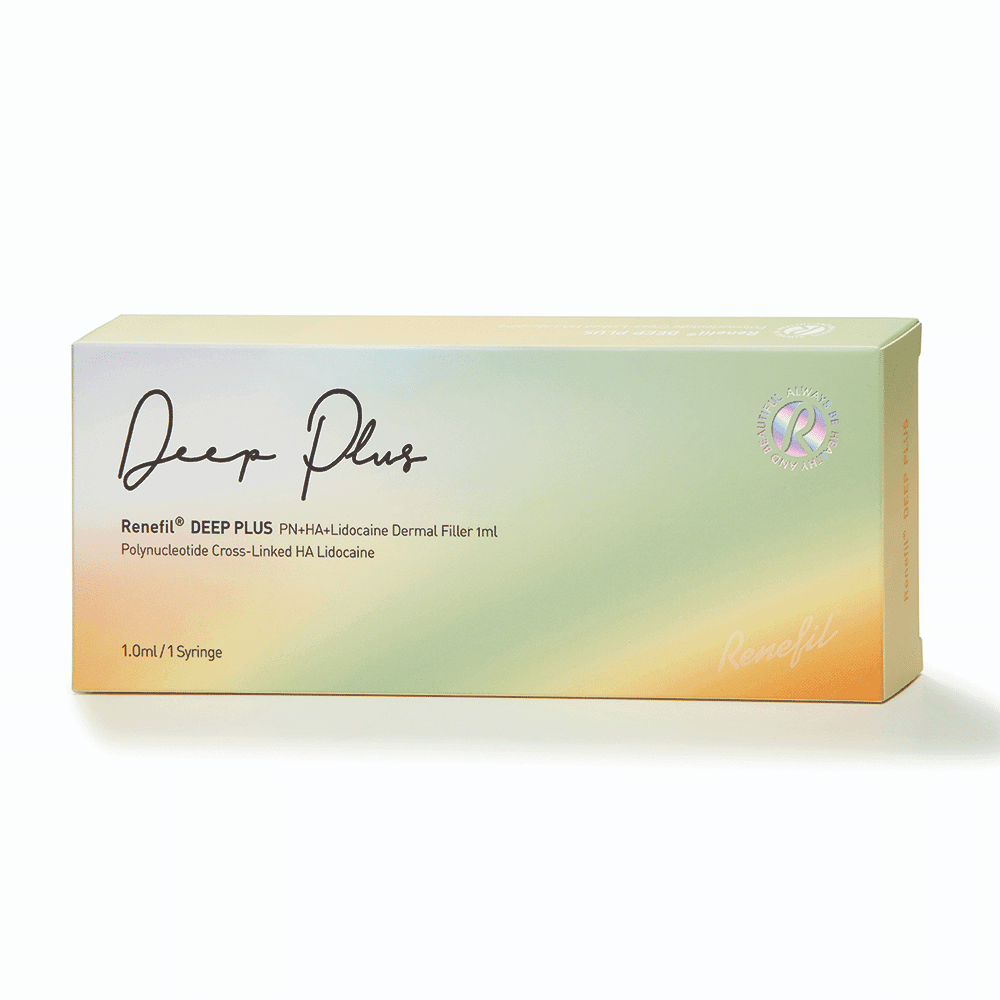
Renefil Deep Plus is a professional injectable dermal filler that combines cross-linked hyaluronic acid with polynucleotides in a cohesive gel. Licensed clinics, med spas, and healthcare professionals can order Renefil Deep Plus for treatment-room use in deep wrinkle correction, facial contouring, and selected volume work. The formulation includes 0.3% lidocaine, which can help reduce procedural discomfort during administration by trained injectors.
This HA-PN filler is intended for professional intradermal or subdermal injection according to clinical technique, treatment plan, and anatomical site. The hyaluronic acid component provides structure and hydration, while polynucleotides support tissue quality by promoting regenerative processes and collagen remodeling. Its handling profile is designed for controlled extrusion, precise placement, and predictable molding in established aesthetic workflows.
Clinic Ordering, Price Access, and Professional Documentation
Renefil Deep Plus price visibility is managed through professional account access. Sign in to view current purchasing information, contract tiers, and volume terms available to your clinic. Account verification helps ensure that professional-use injectables are supplied to licensed clinics and healthcare teams with appropriate documentation.
Use your ordering workflow to match inventory quantities with scheduled treatment blocks, injector preference, and clinic protocols. Multi-site practices may benefit from assigning purchasing roles and keeping approval records consistent across locations. We support B2B clinic ordering with vetted supply channels, lot traceability, and practical documentation for inventory control.
When planning replenishment, consider the pace of consultations, staged facial contouring sessions, and follow-up timing. Demand can vary by injector specialty and the number of areas treated per appointment. For teams building a broader filler formulary, the article on types of dermal fillers for facial volume can help frame selection by clinical goal rather than brand alone.
What Renefil Is and How It Works
Renefil Deep Plus dermal filler uses a hybrid composition: cross-linked hyaluronic acid plus polynucleotides. Hyaluronic acid is a water-binding molecule used in many soft-tissue fillers to support volume and hydration. Cross-linking helps stabilize the HA gel so it can provide structure after injection.
Polynucleotides are biopolymer chains used in aesthetic medicine to support tissue quality. In this formulation, they complement the HA gel by supporting regeneration-oriented processes and collagen synthesis. That combination makes Renefil Deep Plus HA PN filler relevant for clinics that want both contour support and skin-quality support within one professional injectable.
The cohesive gel texture supports controlled extrusion through appropriate injection tools. Experienced injectors can use that handling characteristic during deep wrinkle correction, fold support, and contour refinement. Product performance still depends on facial assessment, injection depth, volume placed, anatomy, and aftercare instructions provided by the clinic.
Professional Applications and Treatment-Room Fit
Clinicians use Renefil Deep Plus for deep wrinkles, midface volumization, facial contour refinement, and selective lip enhancement. Common treatment areas include the cheeks, jawline, nasolabial folds, and lips. The product may fit staged treatment plans alongside neuromodulators or skin-quality procedures when sequencing is planned by qualified professionals.
Renefil Deep Plus for deep wrinkles is most relevant when a clinic needs a filler with structural support and smooth handling. The cheeks and jawline often require careful facial mapping, attention to vascular anatomy, and a plan for symmetry. Nasolabial fold work may require volume support in adjacent areas rather than direct fold filling alone, depending on assessment.
For clinical teams reviewing expected outcomes and documentation language, dermal filler before-and-after assessment discusses how to evaluate aesthetic results responsibly. Staff education should also address common misconceptions; dermal filler myths and misconceptions is useful for aligning consultation language with realistic, safety-conscious expectations.
Key Features for Injectors
- Hybrid HA-PN composition: combines cross-linked hyaluronic acid with polynucleotides.
- 0.3% lidocaine: supports procedural comfort during professional administration.
- Deep wrinkle focus: suited to folds, contouring, and selected volumization work.
- Cohesive gel texture: supports controlled extrusion and precise placement.
- Facial volume support: relevant for cheeks, jawline, and contour definition.
- Workflow compatibility: can be integrated into established clinic mapping protocols.
- Professional-use supply: intended for trained healthcare providers in clinical settings.
Quick tip: Align each filler order with injector technique, planned anatomical areas, and compatible procedural supplies.
Composition and Ingredient Roles
This injectable filler contains cross-linked hyaluronic acid gel, polynucleotides, and 0.3% lidocaine. The HA component supports tissue projection and hydration by attracting water within the placed gel matrix. Polynucleotides support tissue revitalization pathways, while lidocaine helps improve comfort during injection.
Excipients and buffers are typical for stabilized HA filler systems. Clinics should rely on the manufacturer’s insert for full composition information, contraindications, administration precautions, and lot-specific details. Staff responsible for receiving product should verify packaging integrity, lot number, and expiration date before placing units into inventory.
The formulation should not be treated as interchangeable with every HA filler simply because it contains hyaluronic acid. Gel cohesivity, injection force, depth, molding behavior, and clinical indication vary across products. Training records and internal protocols should reflect the exact filler used in each treatment area.
Handling, Storage, and Supply Planning
Renefil Deep Plus is supplied for injection by qualified healthcare professionals. Follow the package insert for storage conditions, aseptic handling, and preparation before use. Maintain traceability by recording lot and expiration information in clinic inventory systems and patient treatment records.
Professional injectables should be handled within the clinic’s infection-control and sharps-safety procedures. Use appropriate sterile technique, approved disposal containers, and clinic-specific protocols for treatment-room setup. If your facility standardizes adjunct tools across injectors, confirm that needles, cannulas, and accessories match the planned technique and product handling requirements.
US distribution supports practical inventory planning for aesthetic practices, and orders may use temperature-controlled handling when required and tracked US delivery. Receiving staff should inspect shipments promptly, follow any storage instructions, and escalate concerns before product is placed into use. For education on technique-adjacent supplies and patient instructions, post-treatment care essentials for dermal fillers can support staff training materials.
Safety, Cautions, and Clinical Responsibility
Dermal fillers are medical procedures and should be administered only by trained clinicians with knowledge of facial anatomy, injection planes, adverse-event recognition, and emergency response. Potential reactions may include injection-site pain, swelling, redness, bruising, tenderness, itching, firmness, nodules, asymmetry, or temporary discoloration. More serious complications can occur if filler is inadvertently injected into a blood vessel.
Clinicians should assess patient history, prior filler exposure, allergies, active skin infection, inflammatory conditions, and medication factors that may affect bruising or healing. Treatment should be deferred when clinically appropriate, such as during active infection at the intended injection site. Any unexpected pain, blanching, vision changes, skin color change, or signs of vascular compromise require urgent clinical evaluation under the clinic’s protocol.
Renefil Deep Plus lidocaine content should be considered when reviewing anesthetic exposure and relevant allergy history. Product suitability, injection volume, placement depth, and sequencing with other aesthetic procedures must be determined by qualified professionals. Clinics should maintain adverse-event procedures, staff training records, and patient consent documentation aligned with applicable professional standards.
Benefits in Practice
Renefil Deep Plus injectable filler can help clinics manage cases requiring deep wrinkle support, contour balancing, and facial volume refinement. The cohesive texture can aid controlled placement, while the lidocaine component supports comfort during the procedure. Expected in-practice longevity commonly ranges from 6 to 12 months, influenced by injection plan, anatomical site, individual metabolism, and post-treatment factors.
Its hybrid HA-PN profile may be useful for practices that build protocols around both structural correction and skin-quality support. Scheduling can be coordinated with neuromodulator visits or skin-improvement programs, but timing should be planned by the treating clinician. Avoid presenting duration or outcome expectations as guaranteed; response depends on anatomy, technique, and follow-up care.
For clinics considering how Renefil fits into an aesthetic portfolio, Renefil filler for facial enhancement provides brand-specific context. Use educational content to support team consistency, not as a replacement for hands-on training, manufacturer instructions, or professional judgment.
Comparable Products and Formulary Choices
Clinics evaluating Renefil Deep Plus often compare adjacent fillers by depth, cohesivity, intended treatment area, lidocaine content, and injector handling preference. Within the same product family, Renefil Ultra Plus may be reviewed for practices that need a related Renefil option, while Renefil Light Plus may fit lighter correction needs within a tiered filler approach.
Alternative HA-based products may also support formulary planning. Dermalax Deep Plus with Lidocaine is relevant when clinics are comparing deep filler handling with anesthetic included. Revofil Plus and Revofil Ultra can be considered when evaluating different gel characteristics for contouring, folds, or volume-focused protocols.
Substitution should be clinical, not purely commercial. If your preferred filler is not selected for a case, review indication scope, injection plane, rheology, practitioner training, and documentation before changing products mid-series. Consistent charting helps the clinic track outcomes, adverse events, and patient-specific product history over time.
Inventory Controls and Clinic Workflow
Strong inventory controls help aesthetic practices avoid treatment interruptions and documentation gaps. Assign receiving responsibilities, confirm lot details at intake, and keep expiration dates visible in stock management systems. Clinics with multiple injectors should standardize how product use is recorded after each procedure.
Before treatment sessions, staff should prepare only the supplies needed for the planned protocol. Confirm that consent, photography standards, aftercare instructions, and emergency materials are available before injection begins. Team members should also know how to identify product packaging, document the exact filler used, and route questions to the supervising clinician.
When case volume rises, build reorder points around appointment schedules rather than last-unit counts alone. Seasonal aesthetic demand, training days, and promotional treatment events can change usage patterns quickly. Account-level planning can reduce rushed purchasing and support consistent product selection across the practice.
Authoritative Sources
For broader regulatory and clinical background on soft-tissue fillers, consult current professional and regulator materials used by your clinic. The FDA’s general cosmetic device information and safety communications can help practices review adverse-event awareness, while manufacturer instructions remain the primary source for product-specific handling and use.
Clinics should train staff to rely on current package inserts, professional society guidance, and internal medical protocols. External education is useful for context, but it does not replace credentialed injector training or facility-specific safety procedures.
This content is for informational purposes only and is not a substitute for professional medical advice.
Frequently Asked Questions
Who can order Renefil Deep Plus?
Renefil Deep Plus is intended for licensed clinics, med spas, and healthcare professionals. Professional account verification may be required before viewing purchasing terms or completing clinic orders.
What is Renefil Deep Plus used for in clinics?
Clinicians use it for deep wrinkle correction, facial contouring, midface volume support, and selected lip enhancement. Treatment areas may include cheeks, jawline, nasolabial folds, and lips, depending on assessment and technique.
Does Renefil Deep Plus contain lidocaine?
Yes. The supplied product information states that Renefil Deep Plus contains 0.3% lidocaine to help reduce procedural discomfort during professional injection.
How long do results usually last in practice?
Typical in-practice longevity may range from 6 to 12 months. Duration depends on injection plan, anatomical site, patient metabolism, product placement, and follow-up factors.
How should clinics handle Renefil Deep Plus after receipt?
Receiving staff should inspect packaging, record lot and expiration details, and follow storage and aseptic handling instructions from the manufacturer’s insert. Use clinic protocols for traceability and sharps safety.
What products are commonly compared with Renefil Deep Plus?
Clinics may compare Renefil Deep Plus with related Renefil fillers and other HA-based fillers with lidocaine. Selection should be based on treatment area, gel characteristics, injector training, and protocol fit.
Specifications
- Main Ingredient: Cross-Linked Hyaluronic Acid, Polynucleotides
- Manufacturer: BMI KOREA
- Drug Class: Dermal Filler
- Generic Name: Cross-linked hyaluronic acid (HA); Polynucleotides (PN)
- Package Contents: 1mL x 1 Pre-Filled Syringe
- Storage Requirements: Room Temperature (2℃~25℃)
- Main Usage: Volume Filler
Here to help
Questions about ordering, delivery or products? You can email our team here or call now at 1-800-630-9757 and be connected with your dedicated Account Manager
Related Products
Evenity® (English Alternative)
Injectable Medication
$1,229.00 - $1,299.00
You save
You save
Intraline® For Men
Dermal Filler
$59.00 - $79.00
You save
You save
RejuvaNAD+ Pro
Injectable Medication
$237.00 - $249.00
You save
You save
Teosyal® RHA 4
Aesthetic Surgery Product
$259.00 - $279.00
You save
You save
Related Articles
Prednisone in Clinical Care: Uses, Risks, and Monitoring
Prednisone is a prescription systemic corticosteroid used to reduce inflammation or suppress immune activity in…
Lip Fillers Swelling Stages: Timeline, Safety, and Follow-Up
Lip fillers swelling stages usually follow a short inflammatory course: swelling appears soon after injection,…
Hypopigmentation of the Skin: Assessment and Care
Hypopigmentation of the skin means one or more areas look lighter than the surrounding skin.…
Radiesse vs Sculptra: Selection Factors for Clinics
Radiesse vs Sculptra is best understood as a comparison between two collagen-stimulating injectables with different…
Hyaluronic Acid Under-Eye Filler: Safety and Workflow
Hyaluronic acid under-eye filler is an injectable soft-tissue filler used by trained aesthetic clinicians to…
Dermal Filler Types: Materials, Uses, and Clinic Fit
Dermal filler types are usually grouped by their base material, tissue behavior, and expected role…
What Is Dysport? Clinical Uses, Safety, and Workflow
For clinic teams asking what is Dysport, the short answer is simple: Dysport is a…
Biostimulators in Aesthetic Care: Selection and Safety
Biostimulators are injectable aesthetic products used to encourage a controlled tissue response, often involving new…