
$69.00
You save
Description
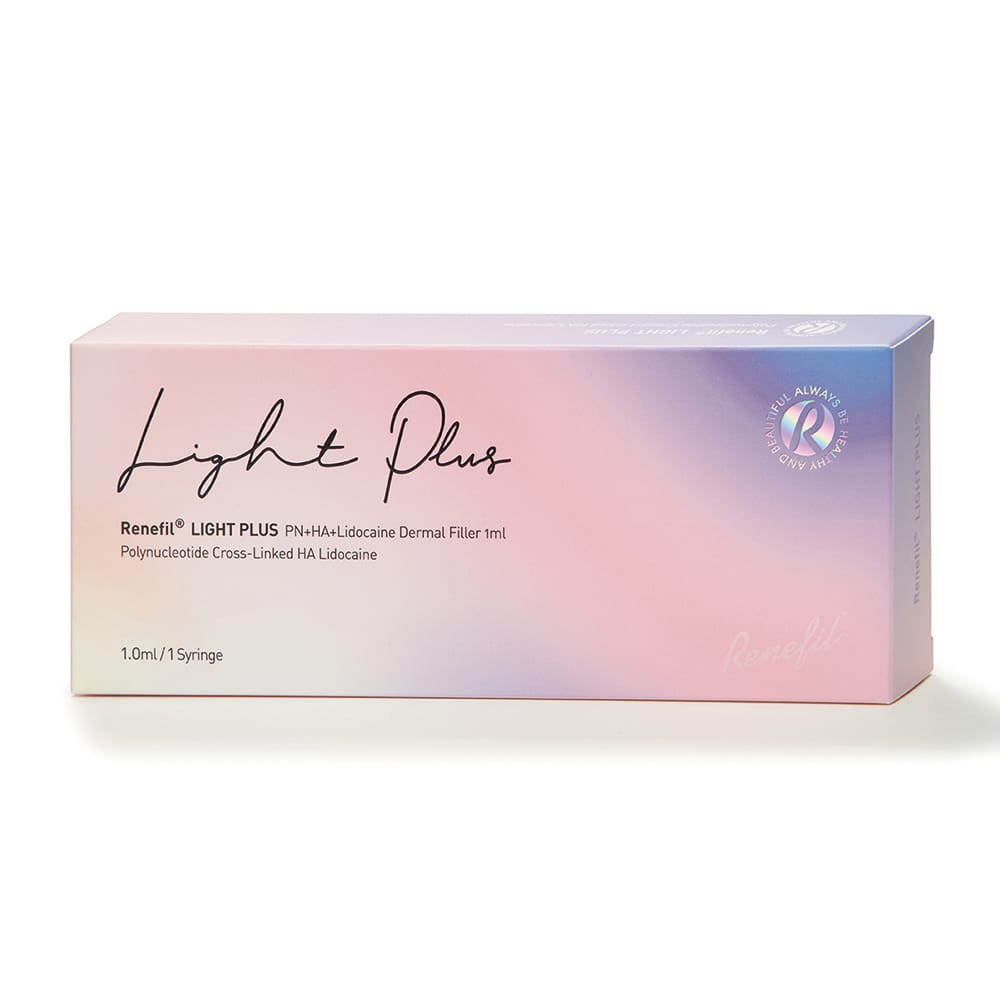
Renefil Light Plus® is an injectable dermal filler supplied as a sterile, prefilled 1 mL syringe for professional soft-tissue injection. Licensed clinics, med spas, and healthcare professionals can order Renefil Light Plus for treatment-room use, with practical documentation points such as lot number, expiration date, and single-use packaging available on the labeled unit. The formulation combines cross-linked hyaluronic acid, polynucleotide sodium, and lidocaine hydrochloride 0.3% for clinic protocols that require controlled placement and improved injection comfort.
Practices commonly evaluate this product for facial contouring and fold-correction workflows where a balanced HA gel and integrated anesthetic are useful. Med Wholesale Supplies serves professional accounts with US distribution, verified supply-channel controls, and account-based ordering for clinic inventory teams.
Renefil Light Plus Price and Professional Account Ordering
Renefil Light Plus price access is available to verified professional accounts after sign-in. Current unit cost can vary by order size, contract tier, and lot availability, so clinics should use the account portal to view the applicable pricing for the 1 mL syringe configuration before building a case schedule or replenishment request.
This is a B2B aesthetic product intended for licensed healthcare settings, not direct self-use. Maintain active clinic credentials and purchasing documentation on file to help avoid order delays. If your facility stocks several HA fillers, align the requested quantity with appointment volume, treatment-zone mix, and expected replacement cycles. Broader category planning can be supported through the dermal fillers category and the skin boosters category.
Quick tip: Match purchase quantities to scheduled injector days and internal lot-rotation practices.
What Renefil Light Plus Is and How It Works
Renefil Light Plus is a hybrid HA and PN dermal filler. Cross-linked hyaluronic acid forms a viscoelastic gel matrix that supports localized volume restoration and contour definition after injection by a trained professional. Hyaluronic acid is a naturally occurring molecule that binds water, which is why HA-based fillers are widely used for tissue support and shaping.
Polynucleotide sodium is included as an additional component that may support hydration balance and dermal quality through tissue-conditioning mechanisms described in aesthetic literature. Claims around PN effects should remain protocol-based and evidence-aware, because treatment response depends on patient selection, injection technique, facial anatomy, and post-procedure care.
Lidocaine hydrochloride 0.3% is incorporated for local anesthetic effect during administration. The anesthetic may reduce injection discomfort and can help clinics streamline setup compared with workflows that rely heavily on separate topical numbing. Practices should still screen for anesthetic sensitivities and follow their internal consent, allergy, and emergency-readiness procedures.
Professional Applications and Treatment-Room Fit
Clinics use Renefil Light Plus for targeted correction of moderate to pronounced nasolabial folds and for selected perioral or midface contouring workflows when consistent with practitioner training and internal protocols. The product is placed into facial soft tissue by professional injection. It should be selected according to anatomy, desired correction, patient history, and the injector’s assessment of depth, support, and tissue mobility.
The 1 mL prefilled syringe format supports predictable appointment planning and helps standardize tray setup. A single-use sterile presentation also simplifies documentation because the lot and expiry can be recorded during receiving, charting, and pre-procedure checks. For clinics refining technique selection across HA and PN products, the educational article on Renefil filler use in facial enhancement may help staff frame product differences without replacing hands-on training.
Renefil Light Plus can fit into staged rejuvenation programs where a clinic uses different gel characteristics across facial zones. It may be paired in inventory planning with firmer or softer HA options, depending on whether the treatment goal is subtle contour refinement, fold correction, or stronger structural support. Final product selection belongs to the qualified injector after reviewing contraindications, treatment history, and desired correction.
Key Features for Clinic Inventory
- Cross-linked HA gel designed to support localized structural lift and contouring.
- Polynucleotide sodium component for protocols focused on tissue quality and hydration support.
- Lidocaine hydrochloride 0.3% to improve comfort during professional injection.
- Sterile, prefilled 1 mL syringe presentation for single-use treatment-room handling.
- Controlled extrusion profile intended to support precise placement by trained injectors.
- Clear lot and expiration labeling for receiving, chart documentation, and rotation.
- Practical fit for clinics already familiar with common HA filler workflows.
- Useful adjunct to broader facial rejuvenation and fold-correction inventories.
Composition, Packaging, and Label Checks
Renefil Light Plus contains cross-linked hyaluronic acid, polynucleotide sodium, and lidocaine hydrochloride 0.3%. Ingredient ratios, inactive components, and any manufacturer-specific handling instructions should be confirmed against the carton and syringe label at the time of receipt and before treatment-room use.
The product is supplied as 1 mL x 1 syringe. Each unit is sterile and single-use. Clinics should inspect packaging integrity, confirm the lot number and expiration date, and document the administered product according to internal policy. The lidocaine content should be visible in pre-procedure checks so staff can identify patients with relevant anesthetic history or sensitivities.
Keep inventory organized by lot and expiry to support first-expiring, first-out rotation. Store the unit according to manufacturer labeling and segregate any damaged, questionable, or temperature-excursion-affected product until it is evaluated under clinic policy. Orders may use temperature-controlled handling when required and tracked US delivery.
Handling, Storage, and Workflow Considerations
Dermal fillers require professional handling from receiving through administration. Staff should verify the product identity, syringe volume, expiration date, packaging condition, and anesthetic inclusion before stocking. During treatment setup, the syringe should remain protected until the injector is ready to use it, and any single-use item should be discarded according to sharps and biohazard procedures after administration.
Renefil Light Plus integrates well into clinics that maintain standardized filler trays, consent forms, photography protocols, and post-treatment instruction sheets. Because the product includes lidocaine, many teams build allergy screening and local anesthetic review into the intake process. Documentation should connect the treatment area, injected amount, lot number, expiry, and injector name to the patient record.
For practical clinic operations, inventory teams often plan fillers by gel behavior and facial zone rather than by brand alone. The article on wholesale dermal fillers for aesthetic practices can support purchasing discussions around category breadth, professional sourcing, and clinic stock management.
Safety, Precautions, and Professional Assessment
Renefil Light Plus should be administered only by trained healthcare professionals familiar with facial anatomy, aseptic injection technique, vascular-risk recognition, and management of filler-related adverse events. HA dermal fillers can cause expected local reactions such as tenderness, swelling, bruising, redness, firmness, itching, or temporary discomfort at the injection site. These effects are often procedure-related, but clinics should explain expected aftercare and escalation steps before treatment.
Serious filler complications are uncommon but can include infection, nodules, hypersensitivity reactions, vascular occlusion, skin necrosis, and visual compromise if product enters or compresses a blood vessel. Immediate recognition and response are critical. Practitioners should maintain appropriate emergency protocols and use caution in areas with higher vascular risk.
Contraindication and precaution screening should include active infection or inflammation at the treatment site, relevant allergy history, prior filler complications, bleeding risk, recent procedures, immune status, pregnancy or lactation considerations under clinic policy, and lidocaine sensitivity. Review concurrent therapies or supplements that may increase bruising risk. The FDA’s dermal filler safety information reinforces the importance of professional administration, informed consent, and prompt evaluation of concerning symptoms.
Benefits in Practice
Renefil Light Plus supports a streamlined appointment because the syringe is prefilled, sterile, and includes lidocaine. Smooth extrusion may improve control during linear threading, fanning, or small localized deposits when used within the injector’s trained technique. The 1 mL presentation can also help clinics plan procedure allocation without opening a larger format for a small treatment area.
The combination of HA and PN gives practices a product that can sit between classic volumizing fillers and skin-quality-focused protocols. For clinics that already use HA platforms, staff onboarding may be straightforward because preparation, documentation, and treatment-room handling resemble familiar filler workflows. Patient communication should remain balanced: describe the intended correction, potential reactions, and follow-up expectations without promising a fixed result.
For post-procedure instruction consistency, the article on post-treatment care for dermal fillers can help teams align general aftercare language with their own clinical protocols.
Related Renefil and HA Filler Choices
Clinics may choose different Renefil presentations based on desired support, tissue depth, and treatment area. For greater projection or firmer structural support, Renefil Deep Plus may be evaluated by injectors who need a related product with a different clinical role. For practices building a broader Renefil assortment, Renefil Ultra Plus can be considered as part of a multi-product formulary.
Adjacent HA choices may also help clinics tailor protocols. Restylane Skinboosters Vital Light with Lidocaine may be relevant for teams comparing skin-quality approaches, while Revofil Fine can support discussions around fine-line-focused filler selection. Product decisions should be based on training, label information, treatment goals, and internal governance.
When evaluating before-and-after expectations, avoid using dramatic image outcomes as a substitute for clinical assessment. The article on assessing dermal filler results can help clinics frame photography, follow-up timing, and realistic communication.
Comparable Products and Substitution Planning
Supply planning should account for scheduled procedure volume and the possibility that a preferred filler configuration may be temporarily limited by lot timing. If your clinic needs an alternate product, choose within the same broad category only after reviewing rheology, injection depth, anesthetic content, contraindications, and staff familiarity. Substitution should never be automatic when a different gel behavior could change the treatment plan.
Practices often keep more than one HA filler on hand to support varied facial zones. A softer product may be preferred for delicate correction, while a more cohesive or lifting product may be selected for structural support. Keep substitution notes in the inventory file so purchasing staff and injectors understand why a related product is stocked.
Educational material on common dermal filler misconceptions may help staff address unrealistic expectations while keeping patient-facing explanations accurate and conservative.
Authoritative Sources
Ready to add Renefil Light Plus to your clinic inventory? Sign in with a verified professional account to view current pricing, confirm the 1 mL syringe configuration, and coordinate purchasing with your filler schedule.
This content is for informational purposes only and is not a substitute for professional medical advice.
Frequently Asked Questions
Who can order Renefil Light Plus?
Renefil Light Plus is intended for licensed clinics, med spas, and healthcare professionals using dermal fillers in professional treatment settings. Account verification and clinic documentation may be required before pricing and purchasing access are shown.
What is included in one unit of Renefil Light Plus?
The supplied configuration is 1 mL x 1 sterile, prefilled syringe. The formula contains cross-linked hyaluronic acid, polynucleotide sodium, and lidocaine hydrochloride 0.3%. Clinics should confirm carton and syringe labeling at receipt and before administration.
What treatment workflows is Renefil Light Plus used for?
Clinics use Renefil Light Plus in professional facial soft-tissue injection workflows, including targeted correction of nasolabial folds and selected perioral or midface contouring when appropriate under injector judgment and clinic protocol.
How should clinics document Renefil Light Plus use?
Typical documentation includes product name, syringe volume used, treatment area, lot number, expiration date, injector, and any relevant patient screening notes such as lidocaine sensitivity or prior filler history.
What should clinics consider before substituting another filler?
Substitution should consider gel behavior, intended depth, treatment zone, anesthetic content, staff training, patient history, and expected correction. Related fillers may not perform the same way even when they are in the HA category.
Specifications
- Main Ingredient: Lidocaine Hydrochloride, Sodium Hyaluronate
- Manufacturer: BMI Korea
- Drug Class: Dermal Filler
- Generic Name: Sodium polynucleotide + cross-linked sodium hyaluronate + lidocaine hydrochloride
- Package Contents: 1 ml x 1 Syringe
- Storage Requirements: Room Temperature (2℃~25℃)
- Main Usage: Volume Filler
Here to help
Questions about ordering, delivery or products? You can email our team here or call now at 1-800-630-9757 and be connected with your dedicated Account Manager
Related Products
Evenity® (English Alternative)
Injectable Medication
$1,229.00 - $1,299.00
You save
You save
Intraline® For Men
Dermal Filler
$59.00 - $79.00
You save
You save
RejuvaNAD+ Pro
Injectable Medication
$237.00 - $249.00
You save
You save
Teosyal® RHA 4
Aesthetic Surgery Product
$259.00 - $279.00
You save
You save
Related Articles
Prednisone in Clinical Care: Uses, Risks, and Monitoring
Prednisone is a prescription systemic corticosteroid used to reduce inflammation or suppress immune activity in…
Lip Fillers Swelling Stages: Timeline, Safety, and Follow-Up
Lip fillers swelling stages usually follow a short inflammatory course: swelling appears soon after injection,…
Hypopigmentation of the Skin: Assessment and Care
Hypopigmentation of the skin means one or more areas look lighter than the surrounding skin.…
Radiesse vs Sculptra: Selection Factors for Clinics
Radiesse vs Sculptra is best understood as a comparison between two collagen-stimulating injectables with different…
Hyaluronic Acid Under-Eye Filler: Safety and Workflow
Hyaluronic acid under-eye filler is an injectable soft-tissue filler used by trained aesthetic clinicians to…
Dermal Filler Types: Materials, Uses, and Clinic Fit
Dermal filler types are usually grouped by their base material, tissue behavior, and expected role…
What Is Dysport? Clinical Uses, Safety, and Workflow
For clinic teams asking what is Dysport, the short answer is simple: Dysport is a…
Biostimulators in Aesthetic Care: Selection and Safety
Biostimulators are injectable aesthetic products used to encourage a controlled tissue response, often involving new…