

- You must be logged in to add items to the cart.
Description
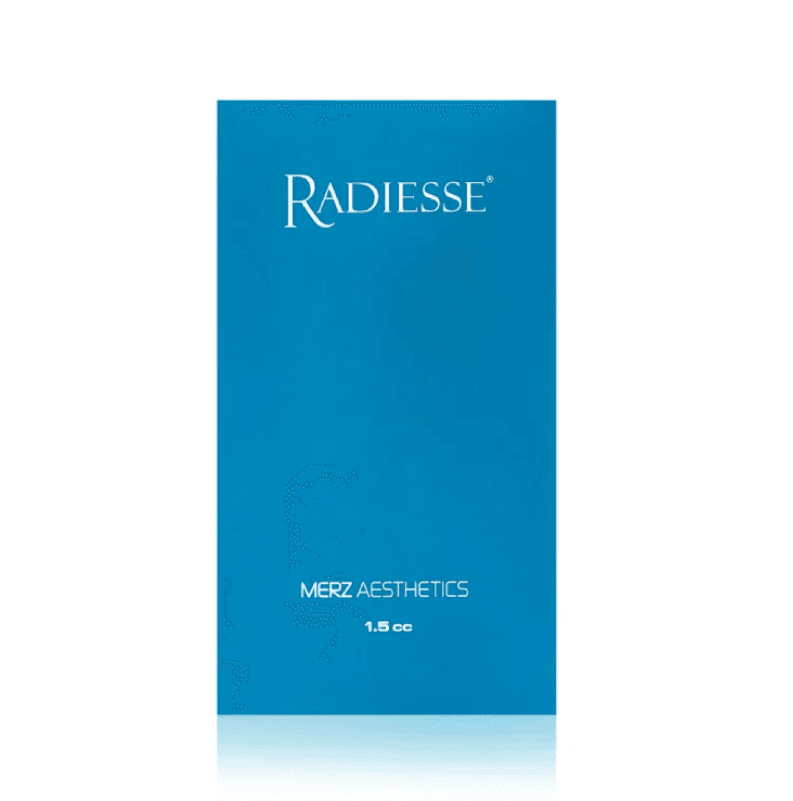
Radiesse® 1.5 mL is a calcium hydroxylapatite (CaHA) injectable filler supplied in a prefilled syringe for trained healthcare professionals. Licensed clinics, med spas, and aesthetic practices can order Radiesse 1.5 mL for professional facial contouring, tissue volumization, and dorsal hand correction protocols. The unit includes one 1.5 mL syringe and two sterile 27 G 1/2" needles for aseptic treatment-room use.
This presentation is intended for subdermal and deep dermal placement by qualified injectors. CaHA microspheres are suspended in a gel carrier, giving the product a cohesive handling profile for structural support and contour definition. Med Wholesale Supplies serves licensed clinics and healthcare professionals with brand-name medical products sourced through vetted distributors and verified supply channels.
Clinic Ordering, Price, and 1.5 mL Syringe Details
Clinics can sign in to view the current Radiesse 1.5 mL price, request allocation support, and manage reorders through their account dashboard. The 1.5 mL size is also described as 1.5 cc, because 1 mL equals 1 cc. Each unit contains one prefilled syringe with 1.5 mL of product, which helps purchasing teams plan inventory by treatment area, appointment mix, and provider preference.
Account verification is required for professional ordering. Your team can use purchase history and product documentation to align restocking with clinic protocols, staff training, and anticipated procedure volume. For practices standardizing around the brand, the Radiesse brand selection can help staff review related presentations without changing the core CaHA workflow.
Radiesse is not measured in toxin-style units. Treatment planning is typically discussed in mL or syringes, with the actual amount determined by the injector’s assessment, treatment area, anatomy, and clinic protocol. Purchasing staff should avoid converting dermal filler volume into neuromodulator units, because the products are planned and documented differently.
Professional Applications and Treatment-Room Fit
Clinicians use this class of injectable filler for structural facial contouring, volumization of tissue deficits, and dorsal hand correction. Common professional workflows may include midface contouring, lower-face definition, cheek support, chin projection, jawline refinement, and correction of moderate-to-severe facial folds such as nasolabial folds. Technique, plane, injection device, and total volume remain clinical decisions for trained providers.
The Radiesse 1.5 mL syringe suits practices that want a cohesive, sculptable filler for defined contour rather than a very soft, superficial gel. Providers may use needle or cannula techniques based on anatomical plan and operator preference. Typical room workflow includes consultation documentation, marking, aseptic preparation, injection, molding when appropriate, and post-procedure assessment.
Radiesse can sit alongside hyaluronic acid fillers in a clinic inventory, because different filler classes offer different handling characteristics. Practices that provide multi-product aesthetic plans often maintain a broader Radiesse 1.5 mL with lidocaine option for protocols where an anesthetic-containing variant is preferred. Product choice should follow clinic policy, injector training, and patient-specific assessment.
How Calcium Hydroxylapatite Filler Works
Radiesse is a calcium hydroxylapatite filler. CaHA microspheres are suspended in a gel carrier that provides immediate volume and contour after placement. Over time, the microspheres can act as a scaffold that supports neocollagenesis, meaning new collagen formation in the treated tissue. This biostimulatory profile is why many clinics position CaHA fillers for structural support and longer-term skin-quality planning.
The handling profile differs from many hyaluronic acid fillers. HA gels are often selected for hydration, flexibility, and reversibility considerations, while CaHA is commonly chosen for firmer support and contour definition. A concise clinical discussion of this class is available in the Radiesse collagen biostimulation article.
CaHA filler selection should account for the treatment area, depth, tissue quality, patient history, and the injector’s experience. This product is not a substitute for surgical lifting, skin resurfacing, or neuromodulator treatment when those interventions are more appropriate. It is best integrated into a broader aesthetic plan that defines the objective for each area before product is opened.
Key Features for Professional Inventory
- Calcium hydroxylapatite microspheres suspended in a smooth gel carrier
- One prefilled syringe containing 1.5 mL of product
- Two sterile 27 G 1/2" needles included in the carton
- Single-use, sterile packaging for aseptic clinical workflows
- Manufacturer labeling with lot and expiry for traceability
- Cohesive rheology for structural placement and contour control
- Professional-use format suited to trained injectors
- SKU: 81459
The carton supports predictable unit-of-use inventory control. Staff can record lot and expiry details at receipt, store product according to manufacturer instructions, and document the device used during the procedure. Newer packaging does not include a printed instruction booklet; the instructions are provided as an e-IFU accessible by scanning the QR code.
Composition, Packaging, and Handling
This product contains CaHA microspheres suspended in a gel vehicle. The active structural component is calcium hydroxylapatite, a well-characterized bioceramic used in aesthetic medicine. Practices should consult the current manufacturer instructions for complete composition, approved use details, contraindications, warnings, and technique-specific handling information.
Each unit is supplied as a single professional-use package containing 1 x 1.5 mL prefilled syringe and 2 x 27 G 1/2" needles. The syringe and needles are intended for sterile, single-use procedures. Do not use packaging that appears damaged, opened, or inconsistent with expected manufacturer labeling, and quarantine any questionable unit according to clinic policy.
Inventory teams should store and handle the product in line with the manufacturer’s current instructions. During procurement, our logistics process supports temperature-controlled handling when required and tracked US delivery. Receipt checks should include product name, presentation, lot number, expiry date, carton condition, and internal documentation requirements before the unit is released for treatment-room use.
Safety, Contraindications, and Adverse Reactions
Radiesse should be administered only by trained professionals who understand facial and hand anatomy, injection planes, vascular risk, aseptic technique, and management of complications. Providers should screen for contraindications and risk factors using the manufacturer’s current instructions and clinic protocols. Patient history, prior filler placement, active infection, inflammatory skin conditions, bleeding risk, allergies, and planned procedures can all affect suitability.
Expected transient reactions may include irritation, tenderness, swelling, redness, bruising, firmness, itching, discoloration, or small lumps at injection sites. Providers should counsel patients on normal post-procedure observations and signs that require follow-up. More serious complications can occur with injectable fillers, including vascular compromise, tissue injury, infection, nodules, granulomatous reactions, or visual symptoms if product is inadvertently injected into or near a vessel.
Clinic teams should maintain written protocols for filler emergencies, documentation, adverse event escalation, and post-procedure communication. Product placement in high-risk areas requires appropriate training and clinical judgment. For a broader regulator-backed discussion of dermal filler risks and patient counseling points, consult the FDA’s current dermal filler safety information through its medical device safety materials.
Workflow Benefits for Aesthetic Practices
Clinics value the 1.5 mL format because it can support common bilateral contouring plans while preserving unit-level traceability. The cohesive gel can be molded after placement when clinically appropriate, helping trained injectors refine contour and transition zones. The included needles reduce basic setup friction, although providers may select alternative devices if supported by technique, labeling, and clinic standards.
Radiesse can help consolidate filler inventory for practices that treat facial volume loss, lower-face structure, and hands. It may be especially useful in clinics that prefer a defined support product alongside softer HA fillers. Clear internal protocols help staff prepare the room, verify documentation, record lot information, and support efficient turnover without reducing clinical safeguards.
Quick tip: Keep CaHA and HA filler protocols clearly separated in training materials so staff do not confuse volume planning, reversibility considerations, or emergency steps.
Radiesse 1.5 mL, Radiesse with Lidocaine, and Larger Presentations
Radiesse 1.5 mL is the non-lidocaine presentation described here. Radiesse plus 1.5 mL with lidocaine refers to a related formulation that includes lidocaine for comfort-focused protocols when the anesthetic-containing variant is appropriate. Clinics that use both should keep ordering, storage, and treatment documentation clear so staff select the correct syringe for each procedure.
Some practices also stock larger presentations for higher-volume clinic needs. The Radiesse 3 mL presentation may be useful for clinics that plan broader inventory coverage, while the 1.5 mL unit can remain practical for targeted cases and controlled restocking. Selection should follow expected procedure volume, expiry management, and injector preference.
For comparative planning across biostimulatory fillers, many teams also evaluate poly-L-lactic acid products. The Sculptra and Radiesse comparison outlines key class differences, and Sculptra 2 vials may be considered when a clinic’s protocol calls for a different collagen-stimulating approach.
Comparable Products and Adjacent Choices
Radiesse and hyaluronic acid fillers are not interchangeable by default. HA products may be preferred for certain areas, softer tissue integration, or protocols where the clinic values an HA-specific profile. CaHA may be preferred when the provider wants structural support and contouring control. The correct choice depends on indication, anatomy, tissue quality, and the injector’s treatment plan.
For a side-by-side class discussion, the Radiesse and Juvederm Voluma comparison may help staff understand why clinics often keep both filler types available. Practices that use HA volumizers can also evaluate Juvederm Voluma with lidocaine as an adjacent product for appropriate HA-based contouring protocols.
Training teams should avoid choosing a filler only by syringe size or headline indication. The practical decision includes depth, tissue movement, desired lift, reversibility considerations, adverse-event planning, and whether a biostimulatory effect is part of the clinical objective. Documenting those criteria helps purchasing staff align inventory with the procedures actually performed.
Authoritative Sources
NIH MedlinePlus dermal fillers information
Sign in to source Radiesse 1.5 mL for your clinic, view current account pricing, and coordinate restocking for professional-use inventory.
This content is for informational purposes only and is not a substitute for professional medical advice.
Frequently Asked Questions
How many mL are in one Radiesse 1.5 mL syringe?
One syringe contains 1.5 mL of product. The same volume may be described as 1.5 cc because 1 mL equals 1 cc.
Is Radiesse measured in units?
No. Radiesse is generally planned and documented by mL or syringe volume, not toxin-style units. The amount used depends on anatomy, treatment area, technique, and the injector’s professional assessment.
What is Radiesse plus 1.5 mL with lidocaine?
Radiesse plus 1.5 mL with lidocaine is a related presentation that includes lidocaine. Clinics may choose it when their protocols call for an anesthetic-containing CaHA filler option.
What comes in the Radiesse 1.5 mL carton?
The pack contains one 1.5 mL prefilled syringe and two sterile 27 G 1/2 inch needles. Manufacturer labeling includes lot and expiry information for clinic traceability.
Who can order Radiesse 1.5 mL from Med Wholesale Supplies?
Radiesse 1.5 mL is offered for licensed clinics, med spas, and healthcare professionals with account verification. Professional-use documentation and clinic ordering requirements may apply.
How should clinics handle Radiesse after receipt?
Clinics should inspect carton condition, product name, lot number, expiry date, and manufacturer labeling at receipt. Store and handle the syringe according to the current manufacturer instructions and internal clinic policy.
Specifications
- Main Ingredient: Synthetic Calcium Hydroxylapatite
- Manufacturer: Merz Pharma
- Drug Class: Aesthetic Surgery Product
- Generic Name: Calcium Hydroxylapatite Gel Filler
- Package Contents: 1.5 mL x 1 Pre-Filled Syringe
- Storage Requirements: Room Temperature (2℃~25℃)
- Main Usage: Volume Filler
About the Brand
Radiesse
Med Wholesale Supplies is thrilled to present Radisse, a renowned name in the medicinal sector revered for its exceptional dermal filler quality. Radisse excels in offering a vast array of products tailored to revitalize and replenish your skin's volume - delivering a natural and youthful aesthetic for all patients. Touted for its enduring impact and outstanding outcomes, Radiesse remains a preferred choice for patients and healthcare professionals alike. We are delighted to feature Radiesse products available for purchase via our digital platform, Medwholesalesupplies.com. Unlock the potential of Radiesse injections with Med Wholesale Supplies, a leading provider of premium cosmetic products. Radiesse is renowned for its long-lasting results, making it a top choice for facial rejuvenation. Learn how long Radiesse lasts and why it's trusted by professionals worldwide. Our detailed insights and high-quality Radiesse products will help you achieve exceptional results for your patients. Explore Radiesse at Med Wholesale Supplies and elevate your practice today!
Browse Radiesse Products
Here to help
Questions about ordering, delivery or products? You can email our team here or call now at 1-800-630-9757 and be connected with your dedicated Account Manager
Related Products
JALUPRO® PLUS 4ML
Skin Rejuvenation Treatment
$86.00 - $89.00
You save (%)
You save (%)
$339.00
You save (%)
You save (%)
Select options
This product has multiple variants. The options may be chosen on the product page
Juvéderm® SKINVIVE
Dermal Filler
$339.00 - $359.00
You save (%)
You save (%)
$86.00 - $119.00
You save (%)
You save (%)
Related Articles
Hypopigmentation of the Skin: Assessment and Care
Hypopigmentation of the skin means one or more areas look lighter than the surrounding skin.…
Radiesse vs Sculptra: Selection Factors for Clinics
Radiesse vs Sculptra is best understood as a comparison between two collagen-stimulating injectables with different…
Hyaluronic Acid Under-Eye Filler: Safety and Workflow
Hyaluronic acid under-eye filler is an injectable soft-tissue filler used by trained aesthetic clinicians to…
Dermal Filler Types: Materials, Uses, and Clinic Fit
Dermal filler types are usually grouped by their base material, tissue behavior, and expected role…
What Is Dysport? Clinical Uses, Safety, and Workflow
For clinic teams asking what is Dysport, the short answer is simple: Dysport is a…
Biostimulators in Aesthetic Care: Selection and Safety
Biostimulators are injectable aesthetic products used to encourage a controlled tissue response, often involving new…
Do You Ovulate on an IUD? Clinic Counseling Points
Clinicians hear the shorthand question do you ovulate on iud, but the practical answer depends…
Vascular Occlusion: Early Signs, Risks, and Clinic Response
A vascular occlusion is a partial or complete blockage of blood flow in a vessel.…