
$109.00
You save
Description
Intraline® Spiral S2938 is a sterile PDO spiral thread supplied for professional aesthetic use by licensed clinics and healthcare professionals. This 29G format is referenced in 38 mm and 50 mm lengths and is supplied as a 20-thread unit for treatment-room inventory planning. Clinics use the coiled screw-type profile when compact soft-tissue support and a spring-like thread structure fit the supervising practitioner’s protocol.
Med Wholesale Supplies serves professional accounts with brand-name medical products sourced through vetted supply channels. Licensed clinics can buy Intraline Spiral S2938 for supervised thread-lift workflows, view current account pricing after sign-in, and plan replenishment around usage by zone, practitioner preference, and scheduled procedure volume.
Clinic Ordering, Price, and Account Access
Intraline Spiral S2938 price and account terms are shown to signed-in professional accounts. Clinics can use the displayed pack information to align purchasing with expected case volume, staff training, and internal stocking rules. The 20-thread presentation supports predictable allocation when a practice uses repeatable thread counts across similar treatment patterns.
New accounts complete professional verification before purchasing. This step helps limit access to appropriate clinic users and supports traceable sourcing for professional-use devices. Because prescription status is not specified for this device, ordering language should remain tied to clinic account requirements, product documentation, and facility protocols rather than consumer prescription pathways.
For wider configuration planning, clinics can browse the professional threads category after confirming the S2938 specification against the intended technique. Teams that manage several treatment rooms may also group replenishment around planned sessions, receiving checks, and lot-record documentation.
What the S2938 Spiral Thread Is
The S2938 device is a polydioxanone thread in a spiral, or screw-type, configuration. PDO is a synthetic absorbable polymer with a long history in medical suturing. In aesthetic thread systems, it is used as a temporary implanted material that gradually breaks down through hydrolytic pathways and is resorbed by the body over time.
The spiral geometry distinguishes this format from straight mono threads. The coiled structure creates a spring-like profile around the needle, giving practitioners a thread option intended for localized tissue contact in compact planes. Intraline Spiral S2938 PDO threads may be selected when a clinic wants a coiled format rather than a simple monofilament or a barbed lifting design.
The Intraline portfolio includes mono, spiral, double spiral, and cog-style formats. That range lets practices match thread design to the treatment objective, the anatomical zone, and the provider’s training. For a broader brand view, the Intraline product range can help teams organize formats by gauge, length, and handling preference.
Professional Applications and Treatment-Room Fit
Clinics often reserve spiral PDO threads for facial contouring and soft-tissue support protocols where subtle three-dimensional scaffolding is desired. Common professional goals include localized contour refinement, support in fine-line zones, and adjunctive use with broader aesthetic treatment plans. The device should be placed only by trained personnel working within their facility’s clinical protocols.
S2938 PDO threads can fit focused areas where a 29G platform and compact thread profile are preferred. Practitioners may combine spiral threads with mono threads in layered approaches, or pair them with cog formats when a plan requires a different lifting mechanism. The choice depends on tissue characteristics, placement plane, treatment objective, and the supervising clinician’s judgment.
Teams building a shared training language can use educational content such as how PDO threads work to support staff orientation. That type of background is useful for understanding broad thread mechanics, while the final product selection remains a clinical and procedural decision.
Key Specifications and Practical Features
Intraline Spiral S2938 is best evaluated by its format, gauge, length references, and pack quantity. These details influence handling, treatment-room preparation, inventory rotation, and how the device is assigned within a clinic’s thread portfolio.
| Attribute | Clinic relevance |
|---|---|
| Thread material | Polydioxanone, an absorbable synthetic polymer used in medical suturing and aesthetic thread systems. |
| Thread design | Spiral, screw-type architecture for a spring-like profile in soft tissue. |
| Gauge platform | 29G, supporting compact placement strategies when appropriate for the protocol. |
| Length references | 38 mm and 50 mm variants for site-specific planning. |
| Pack format | 20 sterile threads to support clinic inventory and session planning. |
| Use pattern | Single-use professional insertion with sterile handling and facility documentation. |
Quick tip: Record gauge, length, lot, and expiry information during receiving so treatment-room staff can reconcile inventory before procedure days.
How the Spiral Format Differs from Other Threads
Spiral threads are not the same as mono or cog threads. A mono thread is typically used for straightforward thread placement where a simple linear profile is preferred. A cog thread has barbs or projections designed for stronger mechanical engagement. A spiral thread sits between these categories by offering a coiled structure that may provide spring-like contact in selected tissue planes.
This distinction matters when clinics standardize protocols. A provider may choose a spiral thread for localized support, use mono threads for broader fine-line strategies, or reserve cog threads for more structural lifting objectives. The S2938 specification gives clinics a 29G spiral option within that decision framework.
When a different spiral specification is needed, Intraline Spiral S3038 offers an alternative gauge profile. For clinics that prefer a dual-coil design, Intraline TS2638 Double Spiral may support a different handling and placement preference.
Composition, Absorption, and Mechanism
The active material is polydioxanone, commonly abbreviated as PDO. It is a biocompatible, biodegradable polymer used in absorbable sutures and thread systems. The S2938 thread contains no added pharmacologic agent based on the supplied product information; its clinical role is tied to the implanted thread structure and the tissue response that follows placement.
After insertion, PDO remains temporarily in situ and is gradually metabolized. Clinics should describe expected timelines and outcomes conservatively, since visible results depend on placement technique, tissue quality, number of threads, adjunct procedures, and individual healing response. The product should not be positioned as a substitute for clinical assessment, informed consent, or procedure-specific risk screening.
Providers may use educational review materials such as Intraline applications in aesthetic care to support internal discussion about product families and treatment planning. Educational content should complement, not replace, hands-on training and manufacturer instructions.
Packaging, Sterile Handling, and Storage
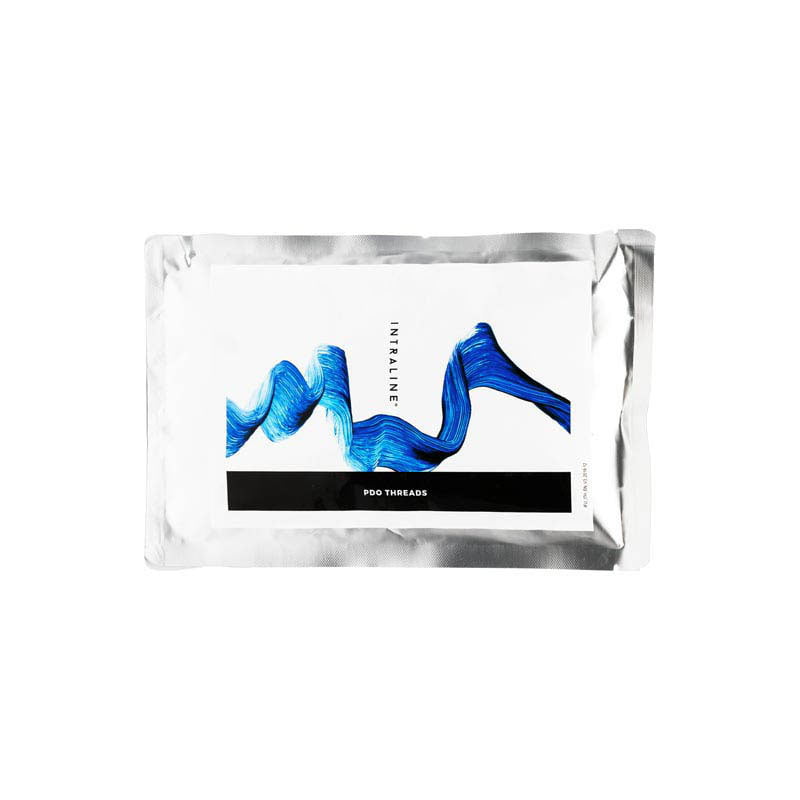
Each unit contains 20 sterile spiral threads in the S2938 configuration. The packaging is designed to maintain sterility before use and to support lot and expiry identification for clinic records. Staff should inspect the sterile barrier before opening and should not use any thread if packaging is damaged or sterility may be compromised.
Each thread is intended for single use. Opened, unused, or partially handled devices should be managed according to clinic policy and applicable infection-control procedures. The sterile presentation supports efficient procedure setup, but it does not replace aseptic technique, trained placement, sharps handling, and post-procedure monitoring.
Storage should follow manufacturer recommendations. In general clinic practice, thread packs should be protected from moisture, direct sunlight, and unnecessary handling. Keep cartons organized so older lots are used before newer lots when expiry dates allow. For logistics planning, Med Wholesale Supplies supports temperature-controlled handling when required and tracked US delivery.
Documentation and Inventory Workflow
Thread procedures require practical recordkeeping. Clinics should document the product name, thread type, gauge, length, lot number, expiry date, treatment area, number of threads used, and the practitioner responsible for placement. Consistent records support internal quality checks, adverse-event review, and repeat treatment planning.
The 20-thread pack size can simplify forecasting for practices that use defined thread counts in common zones. Inventory leads can estimate use by treatment room, practitioner, and calendar block, then replenish before high-volume procedure days. Receiving staff should reconcile delivered quantities against the order and store packs in the designated device area.
Clinics that use PDO threads alongside other aesthetic modalities may also coordinate inventory with fillers, skin boosters, and contouring treatments. For practices developing combined facial contouring protocols, Intraline and hyaluronic acid filler planning provides related context for multimodal aesthetic workflows.
Safety, Contraindication Screening, and Patient Counseling
PDO thread placement is an invasive aesthetic procedure and should be performed only by trained healthcare professionals. Before treatment, clinics should follow their screening process for medical history, skin condition, infection risk, bleeding tendency, medication use, prior procedures, and suitability for thread implantation. Individual contraindications and precautions should be determined by the supervising clinician and any manufacturer instructions available to the practice.
Expected transient effects can include erythema, swelling, bruising, tenderness, and temporary discomfort at insertion sites. More significant risks may include infection, thread visibility or palpability, asymmetry, irregular contour, dimpling, extrusion, nerve irritation, vascular injury, or dissatisfaction with the aesthetic outcome. Staff should give patients procedure-specific aftercare instructions and clear directions for reporting symptoms that may require clinical evaluation.
Technique, tissue plane, anatomical knowledge, and sterile handling are central to risk reduction. Clinics should maintain training standards for practitioners who perform thread procedures and should keep emergency escalation pathways in place. For a focused discussion of procedural concerns, see thread-lift risks and challenges.
Comparable Products and Substitution Planning
Substitutions should be guided by clinical intent, not by gauge alone. If a planned S2938 pack is not the best fit for a case, the provider should decide whether another spiral, a double spiral, a mono thread, or a cog thread better matches the treatment goal. Changing thread type can change handling, tissue engagement, and expected procedural effect.
For adjacent choices, clinics may evaluate Intraline Spiral formats, the 30G S3038 option, or the TS2638 double-spiral configuration. Where a different polymer platform is preferred, PCLA Screw 29G provides a screw-type alternative outside the PDO material platform described for S2938.
Maintain internal substitution notes so staff understand which thread formats are interchangeable within a protocol and which require clinician approval. This is especially important when multiple providers share stock across treatment rooms or when a practice updates its thread-lift technique.
Authoritative Sources
Intraline manufacturer information
This content is for informational purposes only and is not a substitute for professional medical advice.
Frequently Asked Questions
What is Intraline® Spiral S2938 used for in clinics?
Intraline® Spiral S2938 is a sterile PDO spiral thread used by trained professionals in aesthetic thread procedures. Clinics may select it for localized soft-tissue support, facial contouring protocols, and compact placements where a 29G spiral format fits the treatment plan.
How many threads are in one S2938 unit?
Each S2938 unit contains 20 sterile spiral threads. The configuration is referenced as a 29G platform with 38 mm and 50 mm length options for clinic planning.
How should clinics store and handle these threads?
Store packs according to manufacturer recommendations, protected from moisture, direct sunlight, and unnecessary handling. Inspect sterile barriers before use, document lot and expiry details, and do not use any thread if packaging integrity is compromised.
Is S2938 the same as a mono or cog thread?
No. S2938 is a spiral, or screw-type, PDO thread. Mono threads have a simpler linear profile, while cog threads are designed for stronger mechanical engagement. The supervising clinician should choose the format that matches the treatment objective and placement technique.
Who can order Intraline® Spiral S2938 from Med Wholesale Supplies?
Med Wholesale Supplies serves licensed clinics, med spas, and healthcare professionals. Professional account verification may be required before purchasing professional-use aesthetic devices such as PDO threads.
Specifications
- Main Ingredient: Polydioxanone (Pdo)
- Manufacturer: Intraline
- Drug Class: Medical Device
- Generic Name: Polydioxanone (Pdo)
- Package Contents: 20 pcs
- Storage Requirements: Room Temperature (2℃~25℃)
- Main Usage:
About the Brand
Intraline
Counted among the cream of the crop in the medical sphere, Intraline is famed for its extensive array of groundbreaking, top-notch products tailored for the health sector. From cutting-edge dermal fillers to industry-leading PDO threads, Intraline has carved out a niche for itself as a credible entity within aesthetic medicine. A major distinguishing factor for Intraline lies in its unwavering dedication to delivering safe and result-oriented solutions for both health practitioners and patients. We, at medwholesalesupplies.com, take pride in featuring Intraline products for sale. Our digital platform is crafted to simplify the procurement process, providing a convenient shopping experience for medical professionals. Be it dermal fillers or PDO threads you're in search of, you can confidently rely on our platform to bring you the finest Intraline products, competitively priced. Thanks to our secure payment gateway and dependable shipping options, we offer you the peace of mind that comes with knowing you're investing wisely in the finest products for your practice. Shopping for Intraline products via medwholesalesupplies.com presents numerous advantages. First off, you're guaranteed authentic Intraline products, directly sourced from the manufacturer, attesting to their quality and safety. Furthermore, our compelling prices coupled with bulk buying options equate to significant cost savings while ensuring a consistent inventory of Intraline products for your practice. With our speedy, trusted shipping methods, you can comfortably expect to receive your Intraline items promptly. Choose medwholesalesupplies.com, your trusted source for premier Intraline solutions tailored to your health requirements.
Browse Intraline Products
Here to help
Questions about ordering, delivery or products? You can email our team here or call now at 1-800-630-9757 and be connected with your dedicated Account Manager
Related Products
Prolia® (International English)
Prescription Medication
$529.00 - $549.00
You save
You save
Evenity® (English Alternative)
Injectable Medication
$1,229.00 - $1,299.00
You save
You save
Intraline® For Men
Dermal Filler
$59.00 - $79.00
You save
You save
RejuvaNAD+ Pro
Injectable Medication
$237.00 - $249.00
You save
You save
Related Articles
Prednisone in Clinical Care: Uses, Risks, and Monitoring
Prednisone is a prescription systemic corticosteroid used to reduce inflammation or suppress immune activity in…
Lip Fillers Swelling Stages: Timeline, Safety, and Follow-Up
Lip fillers swelling stages usually follow a short inflammatory course: swelling appears soon after injection,…
Hypopigmentation of the Skin: Assessment and Care
Hypopigmentation of the skin means one or more areas look lighter than the surrounding skin.…
Radiesse vs Sculptra: Selection Factors for Clinics
Radiesse vs Sculptra is best understood as a comparison between two collagen-stimulating injectables with different…
Hyaluronic Acid Under-Eye Filler: Safety and Workflow
Hyaluronic acid under-eye filler is an injectable soft-tissue filler used by trained aesthetic clinicians to…
Dermal Filler Types: Materials, Uses, and Clinic Fit
Dermal filler types are usually grouped by their base material, tissue behavior, and expected role…
What Is Dysport? Clinical Uses, Safety, and Workflow
For clinic teams asking what is Dysport, the short answer is simple: Dysport is a…
Biostimulators in Aesthetic Care: Selection and Safety
Biostimulators are injectable aesthetic products used to encourage a controlled tissue response, often involving new…