
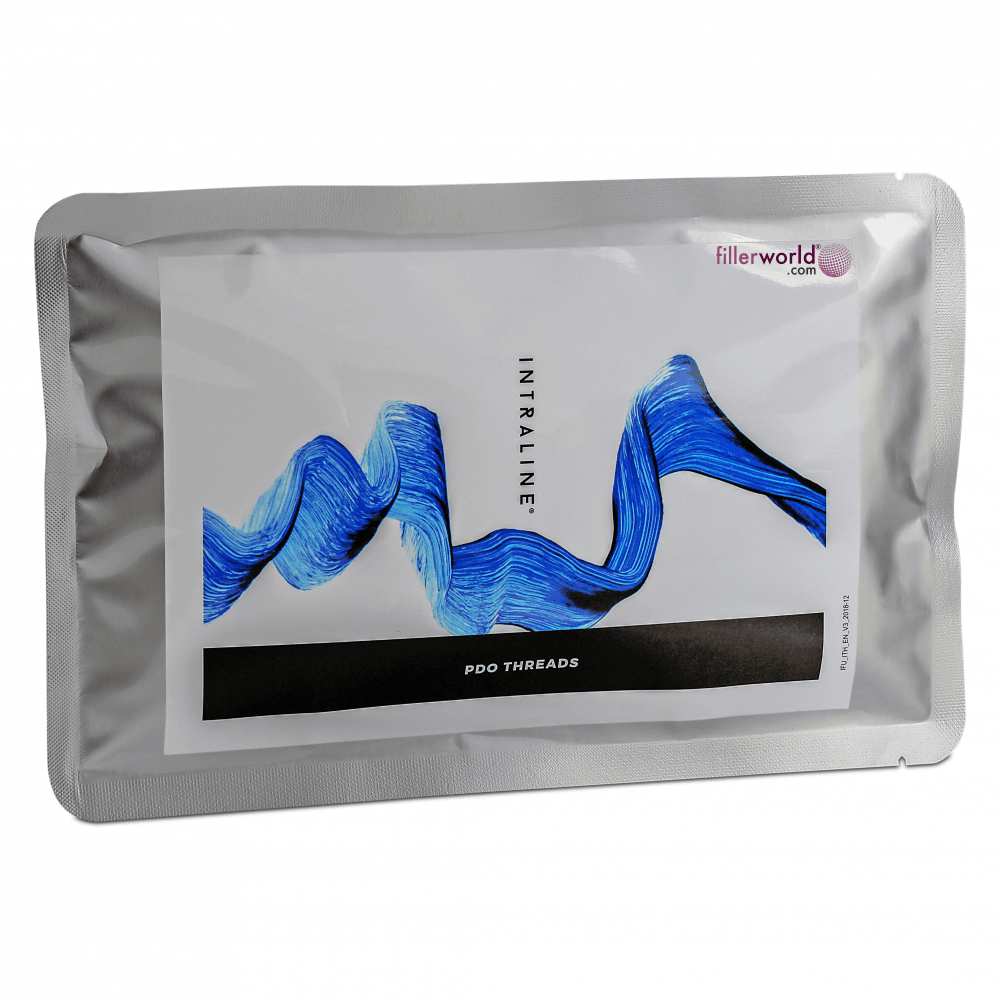
Intraline® Spiral 30G 25,4 30 7-0
Order Intraline® Spiral 30G 25.4 7-0 for Clinics
Medical Device
$123.00
You save
Description
Intraline® Spiral 30G 25.4 7-0 is a sterile, single-use PDO thread preloaded in a fine 30G needle for professional aesthetic procedures. Licensed clinics, med spas, and healthcare professionals can order this spiral PDO thread for controlled placement in delicate facial areas. The 25.4 and 7-0 configuration supports fine, targeted work where atraumatic handling and precise vector planning matter.
This format is intended for trained practitioners using established thread protocols. The spiral geometry gives the smooth PDO filament a coiled profile, which can provide gentle tissue engagement while supporting collagen-focused rejuvenation over time. It is best managed as part of a documented treatment-room workflow with aseptic technique, lot tracking, and practitioner-led patient assessment.
Price, Ordering, and Clinic Account Use
Clinic-specific pricing for Intraline® Spiral 30G 25.4 7-0 is available after account sign-in. Practices can view current cost details, align orders with case volume, and coordinate replenishment across thread formats used in routine aesthetic schedules. Account verification may apply because this is a professional-use device for licensed clinical settings.
When ordering, match the gauge, length designation, and 7-0 thread caliber to the protocol your practitioner intends to perform. The 30G needle suits fine access points and detailed placement, while the spiral construction is commonly selected for subtle tissue support rather than high-tension lifting. Teams managing multiple thread types can browse the broader Intraline product family to keep brand-specific inventory organized.
Quick tip: Record the product designation and lot information before treatment-room setup so documentation stays consistent across providers.
Professional Use and Treatment-Room Fit
Intraline® Spiral 30G 25.4 PDO threads are used in percutaneous aesthetic workflows that address mild laxity, fine contour softening, and localized skin-quality concerns. Practitioners place the thread subdermally, usually along planned vectors that correspond to the patient’s anatomy and the clinic’s thread-lift protocol. The thread provides immediate mechanical presence, then gradually resorbs as the local tissue response develops.
PDO means polydioxanone, an absorbable polymer also used in surgical suture materials. In aesthetic thread procedures, PDO threads are used for temporary structural support and stimulation of fibroblastic activity, which is associated with collagen remodeling. Results and suitability depend on tissue quality, vector design, technique, patient selection, and the number and type of threads placed.
Clinics often use spiral threads for superficial tightening tasks, selective contour refinement, and delicate zones where a fine needle is preferred. Common professional-use areas may include midface softening, perioral lines, jawline refinement, forehead lines, and selective neck creases when the practitioner determines that a spiral PDO thread is appropriate. For foundational technique context, see PDO threads and how they work.
Key Device Features
- Spiral PDO profile: A coiled filament supports gentle engagement in soft tissue.
- Fine 30G needle: The needle format supports precise entry in delicate facial regions.
- 7-0 thread caliber: The fine thread designation suits detail-oriented aesthetic work.
- Absorbable PDO material: Polydioxanone gradually resorbs after placement.
- Sterile single-use format: Individual sterile packaging supports aseptic clinical handling.
- Preloaded delivery: The thread arrives in the needle for efficient room setup.
- Protocol compatibility: Spiral threads can be integrated with other rejuvenation treatments when sequenced by the practitioner.
- Inventory clarity: Gauge, thread style, and caliber help staff distinguish this item from mono, double spiral, and cog configurations.
Composition, Mechanism, and Handling Basics
Intraline® Spiral 30G 25.4 7-0 is a device-only PDO thread format. It does not contain a pharmaceutical active ingredient. The clinical effect comes from the thread’s temporary mechanical presence, the practitioner’s placement technique, and the tissue response that follows implantation.
The thread material is polydioxanone monofilament, and the needle is stainless steel. The unit is sterile and intended for one patient procedure only. Do not reuse, resterilize, or use the device if the sterile barrier is compromised. Staff should inspect packaging, expiration, lot number, and product designation before opening the sterile unit.
| Attribute | Clinic relevance |
|---|---|
| Thread style | Spiral PDO thread for subtle engagement and localized support |
| Needle gauge | 30G for fine placement and small entry points |
| Thread caliber | 7-0 for delicate soft-tissue work |
| Use format | Sterile, single-use device for trained professionals |
| Storage approach | Keep clean, dry, protected from contaminants, direct light, and excessive heat |
Procedure Planning and Patient Selection Considerations
Spiral PDO thread 30G 25.4 formats are best reserved for cases where the clinician wants controlled placement, fine tissue handling, and subtle contour support. They are not a substitute for surgical lifting and should not be positioned as a solution for advanced laxity. Assessment should include skin thickness, degree of laxity, previous aesthetic treatments, scarring history, medication history, and expectations.
Practitioners should avoid placing threads through infected, inflamed, or compromised tissue. Caution is appropriate in patients with bleeding tendencies, active skin disease, unrealistic expectations, or conditions that could affect wound healing. Clinics should follow the manufacturer’s instructions for use, professional training standards, and their own escalation protocols for adverse events.
Thread procedures require informed consent, pre-procedure photography when appropriate, sterile preparation, and clear aftercare instructions. Staff should standardize chart notes for product type, thread count, placement zones, lot number, and any adjunct treatments performed during the same visit.
Safety, Adverse Events, and Clinical Precautions
PDO thread procedures can be associated with expected short-term effects such as tenderness, swelling, bruising, redness, or a pulling sensation near the insertion area. Practitioners should counsel patients about normal post-procedure changes and define when follow-up is needed. More significant concerns can include infection, thread visibility, asymmetry, dimpling, migration, extrusion, nerve irritation, or persistent pain.
Risk reduction begins with careful patient selection, sterile technique, appropriate anatomical depth, conservative vector planning, and recognition of danger zones. Clinicians should use caution near vascular, neural, and thin-tissue areas, particularly when combining threads with fillers or other injectables. Combination plans should be sequenced by protocol so swelling, tissue tension, and vascular safety are considered before adding volume or biostimulatory products.
Document any unexpected response and manage complications according to clinic policy and the practitioner’s scope of practice. Patients should be instructed to contact the clinic promptly for increasing pain, spreading redness, drainage, fever, marked asymmetry, or visible thread exposure. For additional clinic-facing risk discussion, review thread lift risks and challenges.
Storage, Sterile Barrier, and Inventory Control
Store Intraline® Spiral 30G 25.4 7-0 in a clean, dry area away from direct light, contaminants, and excessive heat. Keep units in their original packaging until use. The sterile barrier should be checked before transfer to the treatment area, and compromised packaging should be discarded rather than opened.
Inventory teams should separate thread styles by gauge, length, and design to reduce selection errors. Label-facing storage, first-expiry-first-out rotation, and procedure-room pick lists can help staff distinguish this fine spiral format from longer spiral threads or stronger lifting designs. When handling needs apply, orders can be supported with temperature-controlled handling when required and tracked US delivery.
For broader device procurement, clinics can coordinate threads with related procedural supplies in the medical devices category. Keep accessory selection aligned with practitioner preference, sterile technique, and the procedure protocol used by your clinic.
How Spiral Threads Compare With Other PDO Formats
Spiral threads occupy a different role from mono and cog thread formats. Mono threads are often selected for fine supportive mesh patterns and skin-quality protocols. Spiral threads add a coiled profile around the needle, which may provide more localized tissue engagement than a straight smooth filament. Cog or barbed threads are typically chosen when stronger mechanical anchoring is required for lifting vectors.
The Intraline® Spiral 30G 25.4 7-0 format is therefore most relevant when the treatment plan calls for fine placement and subtle support. It should not be selected simply because it is a PDO thread; gauge, length, thread design, treatment zone, and tissue thickness all affect the appropriate choice. Practitioner training should define which cases need a fine spiral thread and which need longer, double spiral, or cog configurations.
Clinical teams wanting a deeper brand-specific discussion can review Intraline applications in anti-aging treatments. For combination planning with fillers, Intraline and hyaluronic acid dermal fillers discusses how contouring strategies may be coordinated in aesthetic workflows.
Related Intraline® Thread Options
Practices that use several thread formats may keep alternative lengths and gauges on hand for different facial zones. If the 30G 25.4 7-0 format is too fine or short for a particular vector, another spiral configuration may better match the intended treatment area. Final selection should remain protocol-led and practitioner-directed.
- Intraline Spiral S3038 30G 38mm/50mm may support longer fine-gauge spiral planning.
- Intraline Spiral S2938 29G 38mm/50mm offers a nearby spiral format with a different gauge designation.
- Intraline TS2650 Double Spiral 26G 50/70mm may fit cases requiring a double spiral configuration.
- Intraline Spiral 29G 50/70 6-0 provides another spiral option for practices standardizing multiple lengths.
Keep related products separated in storage and clearly identify the intended thread for each procedure. Staff should not substitute a different gauge, length, or design unless the practitioner confirms that the change fits the treatment plan.
Documentation, Training, and Clinic Workflow
PDO thread services benefit from a consistent workflow. Before treatment, document the patient assessment, consent, planned vectors, product type, and any planned adjunct therapies. During setup, confirm that the sterile package is intact and that the selected product matches the practitioner’s plan. After treatment, document the placement areas, thread count, lot number, and patient instructions.
Training should cover facial anatomy, sterile technique, vector marking, insertion depth, complication recognition, and aftercare communication. New providers should perform procedures only under appropriate professional supervision and within the clinic’s scope and credentialing standards. A standardized thread cart can reduce room turnover time while keeping sterile handling steps clear.
Why it matters: A consistent setup process reduces product-selection errors and supports traceable clinical records.
Authoritative Sources
For manufacturer information about Intraline thread families, refer to Intraline manufacturer information. For general background on suture materials and absorbable polymers, see NCBI: Suture Materials. General device safety and regulatory context is available from FDA Medical Devices.
This content is for informational purposes only and is not a substitute for professional medical advice.
Frequently Asked Questions
Who can order Intraline® Spiral 30G 25.4 7-0?
This product is intended for licensed clinics, med spas, and healthcare professionals using professional aesthetic thread protocols. Account verification or professional-use documentation may apply before clinic pricing and ordering are available.
What is the practical role of a 30G 25.4 spiral PDO thread?
The 30G 25.4 spiral format is used for fine, controlled placement in delicate soft-tissue areas. The spiral PDO profile supports subtle tissue engagement and collagen-focused rejuvenation when used by trained practitioners.
How should clinics store this PDO thread?
Store units in a clean, dry area away from direct light, contaminants, and excessive heat. Keep the sterile package intact until use, inspect the barrier before opening, and discard any compromised unit.
Can this thread be substituted with another Intraline® format?
Substitution should be practitioner-directed. Gauge, length, thread design, and caliber affect handling and clinical fit, so staff should confirm any change against the planned treatment zone and protocol.
What documentation should be captured during use?
Clinics should document the product designation, lot number, expiration, treatment areas, thread count, practitioner, consent, and aftercare instructions. Consistent charting supports traceability and follow-up.
Specifications
- Main Ingredient: Polydioxanone (Pdo)
- Manufacturer: Intraline
- Drug Class: Medical Device
- Generic Name: Polydioxanone (Pdo) Thread
- Package Contents: 20 pcs
- Storage Requirements: Room Temperature (2℃~25℃)
- Main Usage:
About the Brand
Intraline
Counted among the cream of the crop in the medical sphere, Intraline is famed for its extensive array of groundbreaking, top-notch products tailored for the health sector. From cutting-edge dermal fillers to industry-leading PDO threads, Intraline has carved out a niche for itself as a credible entity within aesthetic medicine. A major distinguishing factor for Intraline lies in its unwavering dedication to delivering safe and result-oriented solutions for both health practitioners and patients. We, at medwholesalesupplies.com, take pride in featuring Intraline products for sale. Our digital platform is crafted to simplify the procurement process, providing a convenient shopping experience for medical professionals. Be it dermal fillers or PDO threads you're in search of, you can confidently rely on our platform to bring you the finest Intraline products, competitively priced. Thanks to our secure payment gateway and dependable shipping options, we offer you the peace of mind that comes with knowing you're investing wisely in the finest products for your practice. Shopping for Intraline products via medwholesalesupplies.com presents numerous advantages. First off, you're guaranteed authentic Intraline products, directly sourced from the manufacturer, attesting to their quality and safety. Furthermore, our compelling prices coupled with bulk buying options equate to significant cost savings while ensuring a consistent inventory of Intraline products for your practice. With our speedy, trusted shipping methods, you can comfortably expect to receive your Intraline items promptly. Choose medwholesalesupplies.com, your trusted source for premier Intraline solutions tailored to your health requirements.
Browse Intraline Products
Here to help
Questions about ordering, delivery or products? You can email our team here or call now at 1-800-630-9757 and be connected with your dedicated Account Manager
Related Products
Evenity® (English Alternative)
Injectable Medication
$1,229.00 - $1,299.00
You save
You save
Intraline® For Men
Dermal Filler
$59.00 - $79.00
You save
You save
RejuvaNAD+ Pro
Injectable Medication
$237.00 - $249.00
You save
You save
Teosyal® RHA 4
Aesthetic Surgery Product
$259.00 - $279.00
You save
You save
Related Articles
Prednisone in Clinical Care: Uses, Risks, and Monitoring
Prednisone is a prescription systemic corticosteroid used to reduce inflammation or suppress immune activity in…
Lip Fillers Swelling Stages: Timeline, Safety, and Follow-Up
Lip fillers swelling stages usually follow a short inflammatory course: swelling appears soon after injection,…
Hypopigmentation of the Skin: Assessment and Care
Hypopigmentation of the skin means one or more areas look lighter than the surrounding skin.…
Radiesse vs Sculptra: Selection Factors for Clinics
Radiesse vs Sculptra is best understood as a comparison between two collagen-stimulating injectables with different…
Hyaluronic Acid Under-Eye Filler: Safety and Workflow
Hyaluronic acid under-eye filler is an injectable soft-tissue filler used by trained aesthetic clinicians to…
Dermal Filler Types: Materials, Uses, and Clinic Fit
Dermal filler types are usually grouped by their base material, tissue behavior, and expected role…
What Is Dysport? Clinical Uses, Safety, and Workflow
For clinic teams asking what is Dysport, the short answer is simple: Dysport is a…
Biostimulators in Aesthetic Care: Selection and Safety
Biostimulators are injectable aesthetic products used to encourage a controlled tissue response, often involving new…