
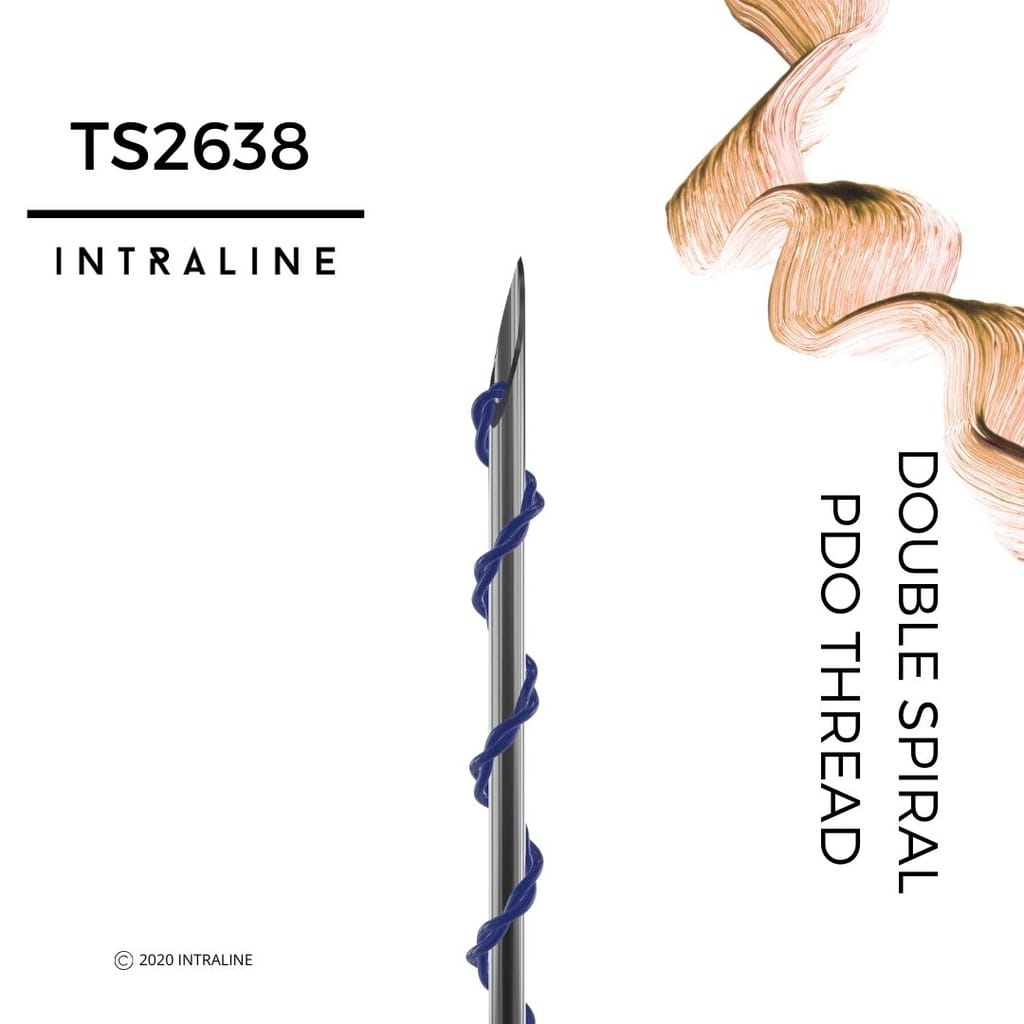
INTRALINE® PDO Threads TS2638- Double Spiral 26G 38/50mm 7-0,6-0 (20 pack)
Buy Wholesale INTRALINE® PDO Threads TS2638
Medical Device
$99.00
You save
Description
INTRALINE® PDO Threads TS2638- Double Spiral 26G 38/50mm 7-0,6-0 (20 pack) is an absorbable polydioxanone thread product for professional facial rejuvenation and skin-support procedures. Licensed clinics and healthcare professionals can order this 20 pack for treatment-room stock when the TS2638 double spiral format fits their trained protocol. The practical decision is whether the listed 26G 38/50mm configuration, sterile handling needs, and documentation workflow match the clinic’s planned thread procedures.
Clinic Ordering, Price, and SKU Selection
Clinics evaluating INTRALINE® PDO Threads TS2638 wholesale should match the product name, TS code, gauge, dimensions, and pack count before adding the item to procedure inventory. Similar thread descriptions can appear across supplier catalogs, but TS2638 identifies this specific double spiral configuration with the listed 26G 38/50mm format and 7-0,6-0 sizing notation.
Current price should be assessed at the SKU level rather than by comparing broad terms such as spiral, screw, or tornado thread. A lower-cost alternative is not automatically equivalent if the thread style, gauge, length notation, sterility information, or intended procedural role differs. For clinic purchasing, the strongest comparison is the exact code on the carton and the item recorded in the treatment-room inventory system.
Professional accounts may be reviewed for clinic or healthcare-business use before restricted procedural supplies are released for purchase. We supply brand-name medical products through vetted distributors and verified supply channels for licensed clinics, which helps support traceability when teams need documentation for receiving, storage, and patient records.
For broader device sourcing and adjacent procedure supplies, the Medical Devices category can help clinics place TS2638 within a professional-use supply workflow.
Product Configuration and Pack Details
INTRALINE TS2638 is a double spiral PDO thread. PDO, or polydioxanone, is an absorbable suture material that gradually breaks down in tissue over time. In aesthetic practice, spiral or screw-style threads are commonly selected when a clinician wants more surface area than a straight mono thread and a localized skin-support effect is part of the treatment plan.
| Attribute | Listed detail |
|---|---|
| Brand | INTRALINE |
| Series code | TS2638 |
| Thread style | Double Spiral PDO thread |
| Listed gauge and dimensions | 26G, 38/50mm |
| Listed sizing notation | 7-0, 6-0 |
| Pack size | 20 pack |
| Use setting | Professional clinic use |
The code matters as much as the descriptive thread name. Clinics that stock multiple PDO formats often separate TS codes, dimension notation, and pack counts in their inventory software and shelf labels. That reduces the risk of selecting the wrong thread when spiral, mono, cog, or lifting-thread products are stored near each other.
Market presentation and labeling may vary, so the carton, pouch, and instructions for use should be treated as the controlling references at receipt and before treatment setup. If the clinic uses several INTRALINE products, the INTRALINE brand range can provide useful context for separating thread families and compatible aesthetic stock.
Professional Use and Treatment-Room Fit
TS2638 is generally positioned for professional facial rejuvenation and skin-support procedures performed by trained injectors or physicians within their scope of practice. Depending on technique, double spiral threads may be considered for selected facial or neck areas where subtle support, contour refinement, or collagen stimulation is the clinical objective. They are not interchangeable with every thread type and do not replace surgical lifting, volumizing fillers, or more mechanically lifting thread designs.
Clinics usually separate three questions before choosing this kind of device: what the thread is made from, what the spiral geometry is intended to contribute, and what level of lift or support can reasonably be expected. A double spiral thread is typically chosen for a different role than a smooth mono thread or a cog thread. It may support tissue response and localized structure, but it should sit within a broader treatment plan rather than serve as a universal laxity solution.
Timeline expectations require careful clinical language. The PDO material is temporary and absorbable, while visible outcomes can change as early swelling settles and collagen remodeling progresses. In practice, clinicians often discuss a months-based, non-permanent effect that varies by treatment area, technique, tissue quality, thread count, and combination therapy.
For general background on thread categories and mechanism, the clinic article what PDO threads are and how they work can help staff align product selection with procedure planning.
Administration Workflow and Documentation
Administration is technique-dependent and should follow the manufacturer’s instructions for use, aseptic standards, and the clinician’s completed training pathway. Absorbable threads are placed as part of an in-office aesthetic procedure after the treatment zone, vector, tissue plane, entry strategy, and exclusion criteria have been assessed. Product copy cannot replace hands-on training or product-specific instruction.
- Pre-procedure planning: confirm indication fit, exclusions, consent, photography protocol, and aftercare instructions.
- Tray setup: protect the sterile barrier and verify the TS2638 code before opening.
- Placement planning: match thread design to the tissue plane and support goal.
- Post-placement review: document tolerance, bleeding, symmetry, and immediate observations.
Double spiral configurations are often selected when a clinician wants more than a basic mono-thread effect but does not intend to use a more aggressive lifting thread. Final thread count, anatomical area, and placement depth depend on training, clinic protocol, and the patient-specific treatment plan. The SKU decision should therefore include both product dimensions and the practitioner’s established technique.
Documentation should connect the device used to the patient record. Many clinics record the product code, anatomical area, number of threads, lot number, expiry date, immediate reaction, and aftercare advice. That process supports continuity of care, internal quality review, and later inventory reconciliation if follow-up questions arise.
Why it matters: Thread geometry can influence handling, placement planning, and the intended tissue-support effect.
Storage, Handling, and Inventory Control
Storage and handling should follow the carton, pouch, and instructions for use supplied with the product. Clinics typically keep thread stock in a clean, dry, controlled environment, protect the sterile barrier from puncture or compression, and avoid using packs that are expired, wet, damaged, or otherwise compromised.
Receiving workflows should capture the exact TS code, pack count, batch number, expiry date, and condition of the packaging. Temperature-controlled handling when required and tracked US delivery may be used as part of the logistics process, but the clinic still needs a receiving check before stock enters the procedure room.
Lot and expiry tracking are especially important for procedural devices. Many practices log the product code before the item leaves central stock, then reconcile that information with the treatment record. Where sterile single-use components are supplied, they should not be reprocessed or shared between cases.
Similar-looking thread boxes should be separated by code and dimension. A shelf map, first-expiry-first-out rotation, and a second check before tray setup can reduce avoidable product-selection errors in a busy aesthetic practice.
Quick tip: Keep TS2638 shelf labels separate from mono, cog, triple, and longer spiral thread formats.
Contraindications, Warnings, and Monitoring
Contraindications and procedural exclusions can vary by market and manufacturer instructions, so supplied labeling remains the primary reference. In day-to-day practice, clinicians commonly screen for active infection or inflammation at the treatment site, broken or irritated skin, uncontrolled bleeding risk, impaired healing, known sensitivity to device materials, and cases where a minimally invasive thread procedure is unlikely to meet the clinical goal.
Monitoring does not end once the thread is placed. Teams usually watch for disproportionate pain, blanching, unexpected asymmetry, visible or palpable irregularities, persistent puckering, and early signs of infection or tissue compromise. If a concern falls outside expected post-procedure effects, the case should move promptly into the clinic’s escalation pathway.
- Before treatment: assess medical history, medications, prior procedures, and realistic treatment goals.
- During treatment: monitor tissue response, bleeding, comfort, and placement tolerance.
- After treatment: document early findings and provide clear follow-up instructions.
Clinics should also distinguish between a technically possible case and an appropriate one. When tissue quality is poor, skin is inflamed, or expectations do not match what a spiral PDO thread can reasonably provide, deferring treatment or choosing another modality may be safer.
Adverse Effects, Interactions, and Clinical Cautions
Common short-term effects after absorbable thread procedures may include tenderness, swelling, bruising, redness, tightness, and mild surface irregularity. These effects are often transient, but intensity and duration can vary by treatment area, placement depth, number of threads used, and the patient’s baseline healing response.
More significant problems can include infection, persistent pain, dimpling that does not settle, thread visibility, extrusion, migration, contour irregularity, or inflammatory reactions that require clinical management. Because outcomes depend heavily on technique and patient selection, clinics should not treat any absorbable thread as risk-free.
PDO threads do not create drug interactions in the same way systemic medicines do, but medication history can change procedural risk. Anticoagulants, antiplatelet therapy, systemic corticosteroids, immunosuppressive treatment, and other therapies affecting bleeding, healing, or infection risk may require additional clinical assessment before placement.
Recent fillers, biostimulatory injectables, chemical peels, laser treatments, and energy-based procedures can also affect planning in the same anatomical zone. Timing matters because tissue irritation, edema, or altered anatomy can complicate placement and make early post-procedure findings harder to interpret. The internal article on thread-lift risks and challenges may help teams build stronger consent and follow-up workflows.
How TS2638 Compares With Other Thread Choices
Double spiral PDO threads sit between simpler surface-support threads and more mechanically lifting designs. They are not automatically better than other options; the right choice depends on tissue quality, treatment goals, clinician technique, and whether the plan calls for subtle support, more pronounced repositioning, or volume-based correction.
| Option | Typical role in practice | Selection considerations |
|---|---|---|
| Mono PDO threads | Surface support and collagen-focused protocols | Often chosen when a lighter thread profile is preferred |
| Double spiral PDO threads | Localized support with a spiral thread geometry | Useful when the planned protocol calls for more surface area than a mono thread |
| Cog or barbed threads | Mechanical lifting or repositioning | May suit stronger lift goals but require different technique and risk review |
| Injectables or biostimulators | Volume support or collagen stimulation without thread placement | Useful when the main deficit is volume, contour loss, or a non-thread approach |
Clinics comparing nearby INTRALINE formats can review INTRALINE TS2650 Double Spiral 26G 50/70mm when a longer listed format is being considered, or INTRALINE Spiral S2938 29G 38mm/50mm for a different spiral-thread presentation. Product substitution should always be based on the exact printed specifications and clinician protocol, not name similarity alone.
For practices considering a different thread architecture, INTRALINE PDO Triple TR2650 may be relevant to procurement review. The article on INTRALINE applications in anti-aging treatments can also help staff understand how brand-specific products may be positioned across aesthetic protocols.
Professional Concerns About PDO Threads
Some surgeons and aesthetic clinicians are cautious about PDO threads because results are technique-sensitive, temporary, and highly dependent on patient selection. Concerns often focus on overpromising lift, using threads in tissue that will not respond well, or performing procedures without enough complication-management experience. Those concerns do not make every thread procedure inappropriate, but they do reinforce the need for training, conservative case selection, and clear consent.
Clinics also receive questions about whether PDO threads can be reversed or removed. Absorbable PDO threads are designed to break down over time, but removal can be difficult once threads are placed in tissue and may not be appropriate in every case. If a complication occurs, management should follow the clinician’s training, manufacturer guidance, and the clinic’s escalation pathway; removal decisions belong with an appropriately trained healthcare professional.
Different types of PDO threads serve different procedural roles. Smooth mono threads, spiral or screw threads, double spiral formats, cog threads, and other lifting designs can vary in texture, configuration, handling, and mechanical effect. TS2638 should therefore be chosen for the specific role its double spiral 26G 38/50mm configuration serves in the clinic’s protocol.
Authoritative Sources
For neutral background on thread-lift treatment considerations, the American Society of Plastic Surgeons provides a general thread lift reference. For product-specific selection, contraindications, handling, and technical use, the manufacturer’s supplied labeling and instructions for use should remain the clinic’s primary references.
This content is for informational purposes only and is not a substitute for professional medical advice.
Frequently Asked Questions
Who can order INTRALINE® PDO Threads TS2638?
This product is intended for licensed clinics, med spas, aesthetic practices, and healthcare professionals using absorbable thread products within professional training and clinic protocols. Business or credential documentation may be reviewed for professional-use purchasing.
What does TS2638 identify?
TS2638 identifies the INTRALINE double spiral PDO thread configuration listed as 26G 38/50mm with 7-0,6-0 sizing notation in a 20 pack. Clinics should match this code to the carton, pouch, and inventory record before use.
How should clinics store and handle this 20 pack?
Follow the carton, pouch, and instructions for use. Keep packs in a clean, dry, controlled area, protect the sterile barrier, rotate stock by expiry date, and do not use damaged, wet, opened, or expired packs.
Are double spiral PDO threads the same as mono or cog threads?
No. Double spiral threads, mono threads, and cog or barbed threads can differ in structure, handling, and intended procedural role. The correct choice depends on training, tissue assessment, treatment goal, and the manufacturer’s instructions for use.
Can PDO threads be removed if there is a problem?
PDO threads are absorbable, but removal after placement can be difficult and is not always appropriate. Unexpected pain, infection signs, extrusion, persistent dimpling, or tissue concerns should be assessed promptly by a trained clinician using the clinic’s escalation pathway.
Specifications
- Main Ingredient: Polydioxanone (Pdo)
- Manufacturer: Mecobi Co. Ltd.
- Drug Class: Medical Device
- Generic Name: Polydioxanone (Pdo) Thread
- Package Contents: 20 threads
- Storage Requirements: Room Temperature (2℃~25℃)
- Main Usage:
About the Brand
Intraline
Counted among the cream of the crop in the medical sphere, Intraline is famed for its extensive array of groundbreaking, top-notch products tailored for the health sector. From cutting-edge dermal fillers to industry-leading PDO threads, Intraline has carved out a niche for itself as a credible entity within aesthetic medicine. A major distinguishing factor for Intraline lies in its unwavering dedication to delivering safe and result-oriented solutions for both health practitioners and patients. We, at medwholesalesupplies.com, take pride in featuring Intraline products for sale. Our digital platform is crafted to simplify the procurement process, providing a convenient shopping experience for medical professionals. Be it dermal fillers or PDO threads you're in search of, you can confidently rely on our platform to bring you the finest Intraline products, competitively priced. Thanks to our secure payment gateway and dependable shipping options, we offer you the peace of mind that comes with knowing you're investing wisely in the finest products for your practice. Shopping for Intraline products via medwholesalesupplies.com presents numerous advantages. First off, you're guaranteed authentic Intraline products, directly sourced from the manufacturer, attesting to their quality and safety. Furthermore, our compelling prices coupled with bulk buying options equate to significant cost savings while ensuring a consistent inventory of Intraline products for your practice. With our speedy, trusted shipping methods, you can comfortably expect to receive your Intraline items promptly. Choose medwholesalesupplies.com, your trusted source for premier Intraline solutions tailored to your health requirements.
Browse Intraline Products
Here to help
Questions about ordering, delivery or products? You can email our team here or call now at 1-800-630-9757 and be connected with your dedicated Account Manager
Related Products
Evenity® (English Alternative)
Injectable Medication
$1,229.00 - $1,299.00
You save
You save
Intraline® For Men
Dermal Filler
$59.00 - $79.00
You save
You save
RejuvaNAD+ Pro
Injectable Medication
$237.00 - $249.00
You save
You save
Teosyal® RHA 4
Aesthetic Surgery Product
$259.00 - $279.00
You save
You save
Related Articles
Prednisone in Clinical Care: Uses, Risks, and Monitoring
Prednisone is a prescription systemic corticosteroid used to reduce inflammation or suppress immune activity in…
Lip Fillers Swelling Stages: Timeline, Safety, and Follow-Up
Lip fillers swelling stages usually follow a short inflammatory course: swelling appears soon after injection,…
Hypopigmentation of the Skin: Assessment and Care
Hypopigmentation of the skin means one or more areas look lighter than the surrounding skin.…
Radiesse vs Sculptra: Selection Factors for Clinics
Radiesse vs Sculptra is best understood as a comparison between two collagen-stimulating injectables with different…
Hyaluronic Acid Under-Eye Filler: Safety and Workflow
Hyaluronic acid under-eye filler is an injectable soft-tissue filler used by trained aesthetic clinicians to…
Dermal Filler Types: Materials, Uses, and Clinic Fit
Dermal filler types are usually grouped by their base material, tissue behavior, and expected role…
What Is Dysport? Clinical Uses, Safety, and Workflow
For clinic teams asking what is Dysport, the short answer is simple: Dysport is a…
Biostimulators in Aesthetic Care: Selection and Safety
Biostimulators are injectable aesthetic products used to encourage a controlled tissue response, often involving new…