

- You must be logged in to add items to the cart.
Description
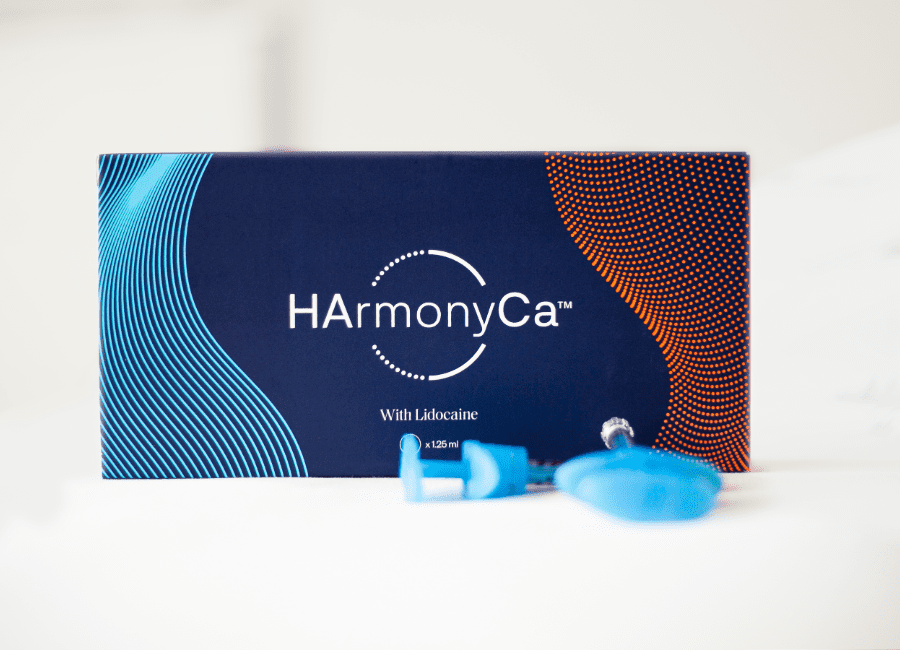
HArmonyCA™ is a hybrid injectable dermal filler for facial soft tissue augmentation by trained healthcare professionals. Licensed clinics can order HArmonyCA™ for treatment-room use when a protocol calls for both hyaluronic acid support and calcium hydroxyapatite scaffold activity in one product class. The sterile injectable presentation is intended for professional administration, with lot and expiry documentation supporting clinic inventory control.
This filler combines cross-linked hyaluronic acid, often shortened to HA, with calcium hydroxyapatite microspheres, often shortened to CaHA. HA provides immediate soft-tissue support, while CaHA can support collagen formation over time under appropriate clinical supervision. That dual-material design makes the product relevant for practices building mid-to-lower face contouring, skin-support, and facial harmonization programs.
HArmonyCA™ price, account access, and clinic ordering
Approved clinic accounts can view current HArmonyCA™ price information after sign-in. Public pricing may be limited because wholesale terms, volume tiers, and purchasing arrangements can vary by facility. Administrators should use the account portal to evaluate current cost, order history, and restock planning before assigning the product to a recurring aesthetic protocol.
When assessing HArmonyCA cost, include more than the unit acquisition price. Clinics commonly account for case selection, injector time, compatible supplies, staff training, consent documentation, photography workflows, and follow-up scheduling. This approach gives medical directors and purchasing teams a practical view of the total program cost rather than a single syringe figure.
Orders are intended for licensed clinics, med spas, aesthetic practices, and healthcare professionals. Professional-use documentation may be required before purchasing, and order details may be reviewed to support appropriate clinic supply. We provide brand-name products through vetted distribution channels, with reliable US logistics for qualified professional accounts.
Quick tip: Align reorder thresholds with booked treatment volume, not only historical unit use.
What HArmonyCA™ is and how it works
HArmonyCA™ is a hyaluronic acid calcium hydroxyapatite filler designed for facial soft tissue augmentation. The HA gel component helps restore contour and support tissue immediately after placement. The CaHA microspheres provide a scaffold that can encourage neocollagenesis, which is the formation of new collagen, over time.
The product differs from a purely HA filler because it combines immediate volumizing characteristics with a biostimulatory component. It also differs from collagen-stimulating products that do not rely on HA for prompt contour support. For a broader clinical comparison of filler classes, your team can use hyaluronic acid and non-hyaluronic acid fillers to support internal education and consultation planning.
Administration should follow manufacturer instructions for injection plane, technique, and precautions. HArmonyCA injectable dermal filler is not a general skin-care product, topical treatment, or patient self-use item. It belongs in professional aesthetic workflows led by qualified injectors who can assess anatomy, vascular risk, tissue quality, and patient suitability before treatment.
Professional applications and treatment-room fit
Clinics use hybrid fillers when a plan calls for both contour restoration and longer-term structural support. Typical professional workflows may involve midface support, cheek shaping, jawline refinement, and lower-face harmonization, depending on assessment and manufacturer guidance. Treatment selection should remain individualized, because anatomy, skin laxity, prior procedures, and aesthetic goals affect whether this product is appropriate.
HArmonyCA™ can fit staged aesthetic programs where clinicians combine fillers, neuromodulators, skin boosters, energy-based devices, or threads. Sequencing should be determined by medical judgment, because treatment timing may affect swelling, tissue response, photography, and follow-up interpretation. Practices building a broader injectable menu can browse the professional dermal fillers category for adjacent filler classes.
For training and protocol design, teams should define patient selection criteria, documentation steps, injection roles, and escalation procedures before the product is placed into routine use. Consistent photography, consent language, batch records, and post-treatment instructions can help standardize care across injectors. A practical filler selection framework is available in types of dermal fillers.
Key features for clinic evaluation
- Hybrid composition using cross-linked hyaluronic acid and calcium hydroxyapatite microspheres.
- Dual-phase profile for immediate soft-tissue support and collagen-supportive scaffold activity.
- Professional injectable product intended for administration by qualified healthcare providers.
- Relevant to midface, lower-face, and contour-support workflows when clinically appropriate.
- Sterile presentation intended for single-patient use according to manufacturer instructions.
- Packaging includes lot and expiry information for traceability and stock rotation.
- Integrates with structured aesthetic programs that also use other injectable or device-based modalities.
- Requires careful technique, anatomy knowledge, and adherence to official precautions.
Composition and clinical rationale
The two main material components are cross-linked hyaluronic acid gel and calcium hydroxyapatite microspheres. HA is widely used in dermal fillers because it attracts water and provides a gel matrix for contour support. CaHA is used in aesthetic injectables for scaffold-based support and collagen stimulation over time.
In a hybrid filler, the components are designed to complement each other. The HA portion supports the immediate contouring effect that clinicians and patients can assess soon after treatment. The CaHA portion can contribute to progressive tissue support, which may be useful when a protocol aims to address both volume change and skin-support needs.
This combined mechanism is one reason clinicians may evaluate HArmonyCA™ alongside other HA and collagen-supportive products. For teams discussing material differences, calcium hydroxylapatite filler principles can help frame why CaHA-containing products behave differently from standard HA-only fillers.
Packaging, storage, and handling
HArmonyCA™ is supplied in a clinic-ready sterile presentation for professional use. Each unit should be inspected on receipt and before use. Do not use any injectable if the outer packaging, sterile barrier, labeling, or syringe integrity appears compromised.
Store the product according to the manufacturer’s labeled instructions. Keep units segregated by lot and expiry date, and use a first-expiry, first-out process for routine inventory control. Clear storage labeling helps reduce selection errors when multiple filler types are held in the same treatment area.
Receiving teams should document arrival condition, lot number, expiry date, and storage placement. When required, temperature-controlled handling and tracked US delivery support professional receiving records. Clinical staff should also confirm that treatment-room supplies are ready before opening sterile materials.
Safety, precautions, and post-procedure monitoring
Injectable dermal fillers carry risks that require trained assessment and prompt clinical response. Common post-injection effects can include temporary swelling, redness, tenderness, bruising, firmness, itching, and localized discomfort. These events should be discussed during consent and distinguished from symptoms that may suggest a more serious complication.
Serious risks may include infection, inflammatory nodules, tissue compromise, vascular occlusion, visual disturbance, allergic reaction, or delayed inflammatory response. Practitioners should understand facial vascular anatomy, aspiration and injection-technique considerations where applicable, product-specific precautions, and emergency management pathways. Patients should receive clear instructions on when to contact the clinic urgently after treatment.
Contraindications and cautions should be taken from the official instructions for use. Clinics should screen for relevant medical history, active infection or inflammation at the treatment site, previous filler reactions, immune or inflammatory conditions, anticoagulant use, pregnancy or breastfeeding considerations, and recent aesthetic procedures as appropriate. Product choice and timing should remain under clinician direction.
Because HArmonyCA™ contains CaHA as well as HA, treatment planning should account for the product’s longer structural intent. Reversibility and management strategies may differ from HA-only filler protocols. Staff should not assume that every hybrid filler complication can be managed identically to a standard HA gel procedure.
Inventory workflow and documentation
HArmonyCA™ is best integrated into a defined clinic workflow. Purchasing teams should coordinate with injectors before adding it to standard stock, especially when protocols already include HA fillers, CaHA fillers, collagen stimulators, and skin boosters. Clear categorization helps staff choose the correct product class for each scheduled procedure.
Recommended documentation includes treatment indication, assessment notes, consent, injection areas, product identity, lot number, expiry date, quantity used, and post-care instructions. This record supports clinical continuity, adverse event review, recall readiness, and multi-site stock oversight. It also helps administrators understand which procedures drive reorder demand.
Practices can reduce room turnover delays by preparing compatible needles, cannulas, antiseptic supplies, marking tools, and emergency materials before appointment start. Training should cover storage, sterile handling, disposal, product differentiation, and escalation steps. For broader educational context, HArmonyCA filler treatment concepts may help teams communicate category expectations consistently.
How it compares with Sculptra, Profhilo, and other fillers
HArmonyCA™ is not the same as Sculptra. HArmonyCA™ combines HA with CaHA in a hybrid injectable filler, while Sculptra is generally discussed as a poly-L-lactic acid biostimulatory treatment. The difference matters operationally because product handling, treatment planning, onset expectations, injection technique, and follow-up cadence can vary by material class.
HArmonyCA™ is also not directly interchangeable with Profhilo. Profhilo is commonly positioned as a skin-quality and hydration-focused injectable rather than a contouring filler with CaHA scaffold activity. Whether one product is preferable depends on the clinical goal: contour support, skin quality, tissue firmness, patient history, and anatomical assessment.
Clinics comparing HArmonyCA™ with HA-only fillers, CaHA fillers, and collagen-supportive injectables should avoid broad superiority claims. Instead, evaluate intended use, injection plane, reversibility considerations, patient selection, expected tissue response, and staff familiarity. A related discussion of collagen and hyaluronic acid approaches can support staff education without replacing product labeling.
Comparable products and adjacent choices
For clinics building a hybrid or biostimulatory menu, HArmonyCA™ may be evaluated alongside CaHA and collagen-supportive injectables. Radiesse 3 mL is a relevant CaHA-based product to consider when the protocol requires a different handling profile or treatment objective. Selection should remain tied to label guidance, injector experience, and medical director oversight.
Practices may also consider collagen-supportive soft-filler options for patients whose treatment plan emphasizes tissue support and skin quality. Karisma Rh Collagen Softfiller Biorestitutivo Face can be reviewed as an adjacent product class within aesthetic program planning. These products should not be substituted automatically, because composition and intended use may differ.
For category-level planning, the dermal filler education category provides additional professional reading. Use internal education materials to guide product conversations, but rely on official instructions, training, and clinical judgment for technique and patient selection.
Authoritative sources for professional review
Clinics should base administration, contraindication screening, storage, and adverse-event procedures on the manufacturer’s current instructions for use. Professional society guidance on injectable filler safety can also inform clinic protocols, complication preparedness, and consent standards.
Peer-reviewed literature on HA fillers, CaHA fillers, and hybrid injectable materials can help medical teams understand mechanism, tissue response, and reported safety considerations. Published evidence should be interpreted in context, including study design, patient selection, technique, follow-up duration, and product-specific labeling.
Important: HArmonyCA™ is for professional medical use only. Only qualified practitioners should administer injectable dermal fillers. Follow manufacturer technique guidance, local professional requirements, and clinic medical-director protocols.
This content is for informational purposes only and is not a substitute for professional medical advice.
Frequently Asked Questions
Who can order HArmonyCA™ for clinic use?
HArmonyCA™ is intended for licensed clinics, med spas, aesthetic practices, and qualified healthcare professionals. Account documentation may be required before purchase, and the product should only be administered by trained injectors following manufacturer guidance.
How much does HArmonyCA™ cost?
Current HArmonyCA™ price information is available to approved professional accounts after sign-in. Clinic cost can vary with wholesale terms, volume arrangements, and purchasing history, so administrators should review current account pricing before planning treatment margins.
Is HArmonyCA™ the same as Sculptra?
No. HArmonyCA™ is a hybrid HA-CaHA dermal filler, while Sculptra is generally discussed as a poly-L-lactic acid biostimulatory treatment. They differ in material composition, handling, treatment planning, and expected clinical use.
Is HArmonyCA™ better than Profhilo?
Not necessarily. HArmonyCA™ and Profhilo are used for different aesthetic objectives. HArmonyCA™ combines HA support with CaHA scaffold activity, while Profhilo is commonly positioned for skin quality and hydration-focused protocols. Clinicians should select based on assessment and labeling.
What storage and handling steps should clinics follow?
Store HArmonyCA™ according to the manufacturer’s labeled instructions. Inspect packaging before use, document lot and expiry information, rotate stock by expiry date, and do not use any unit with compromised packaging or questionable integrity.
What safety issues should injectors discuss before treatment?
Injectors should discuss expected injection-site reactions such as swelling, bruising, redness, tenderness, and firmness, as well as serious risks including infection, nodules, vascular compromise, visual symptoms, allergic reaction, and delayed inflammation. Screening and consent should follow professional standards and product instructions.
Specifications
- Main Ingredient: Hyaluronic Acid
- Manufacturer: Allergan
- Drug Class: Dermal Filler
- Generic Name: Hyaluronic Acid
- Package Contents: 1.25 mL x Syringes
- Storage Requirements: Room Temperature (2℃~25℃)
- Main Usage:
Here to help
Questions about ordering, delivery or products? You can email our team here or call now at 1-800-630-9757 and be connected with your dedicated Account Manager
Related Products
JALUPRO® PLUS 4ML
Skin Rejuvenation Treatment
$86.00 - $89.00
You save (%)
You save (%)
$339.00
You save (%)
You save (%)
Select options
This product has multiple variants. The options may be chosen on the product page
Juvéderm® SKINVIVE
Dermal Filler
$339.00 - $359.00
You save (%)
You save (%)
$86.00 - $119.00
You save (%)
You save (%)
Related Articles
Hypopigmentation of the Skin: Assessment and Care
Hypopigmentation of the skin means one or more areas look lighter than the surrounding skin.…
Radiesse vs Sculptra: Selection Factors for Clinics
Radiesse vs Sculptra is best understood as a comparison between two collagen-stimulating injectables with different…
Hyaluronic Acid Under-Eye Filler: Safety and Workflow
Hyaluronic acid under-eye filler is an injectable soft-tissue filler used by trained aesthetic clinicians to…
Dermal Filler Types: Materials, Uses, and Clinic Fit
Dermal filler types are usually grouped by their base material, tissue behavior, and expected role…
What Is Dysport? Clinical Uses, Safety, and Workflow
For clinic teams asking what is Dysport, the short answer is simple: Dysport is a…
Biostimulators in Aesthetic Care: Selection and Safety
Biostimulators are injectable aesthetic products used to encourage a controlled tissue response, often involving new…
Do You Ovulate on an IUD? Clinic Counseling Points
Clinicians hear the shorthand question do you ovulate on iud, but the practical answer depends…
Vascular Occlusion: Early Signs, Risks, and Clinic Response
A vascular occlusion is a partial or complete blockage of blood flow in a vessel.…