
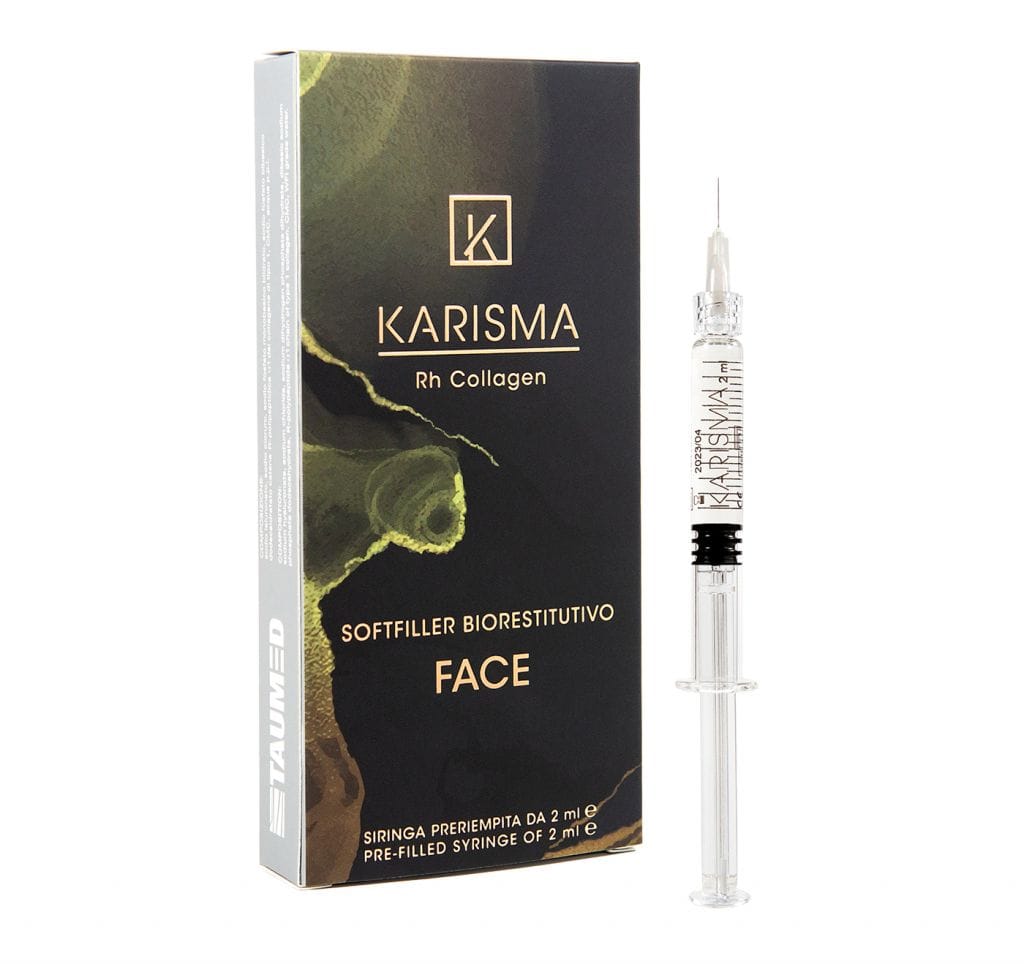
Karisma RH Collagen Softfiller Biorestitutivo Face
Order Karisma RH Collagen Softfiller for Clinics
Dermal Filler
$139.00
You save
Description
Karisma RH Collagen Softfiller Biorestitutivo Face is an injectable facial soft-tissue filler supplied in a sterile, pre-filled 2 mL syringe for professional use. Licensed clinics, med spas, and healthcare professionals can order Karisma RH Collagen Softfiller for protocols that require controlled superficial placement and single-patient sterile handling. The formulation combines recombinant human collagen, high-molecular-weight hyaluronic acid, and carboxymethylcellulose in a cohesive matrix designed for facial aesthetic workflows.
Med Wholesale Supplies serves licensed clinical accounts with authentic, brand-name medical products sourced through vetted distributors and verified supply channels. This product is intended for qualified injectors who can assess anatomy, patient suitability, injection plane, aseptic technique, and post-procedure monitoring according to training and local professional requirements.
Price Access and Clinic Ordering
Clinic accounts can sign in to view current Karisma RH Collagen Softfiller price tiers and add the 2 mL syringe presentation to internal requisitions. Contract and volume pricing may apply for qualified accounts, which helps multi-provider practices align purchasing with scheduled aesthetic sessions and projected utilization. The clinic-facing SKU for this item is 89964.
The single-syringe format supports predictable room preparation because no compounding or reconstitution is required before use. Staff should reconcile lot number and expiry information at receiving, document the unit according to clinic policy, and reserve each sterile syringe for one patient only. If your team is building a larger injectable program, the dermal fillers category can help staff plan adjacent filler inventory without mixing unrelated treatment classes.
Quick tip: Align replenishment with provider schedules so sterile single-use stock is available before treatment days.
Professional Use and Treatment-Room Fit
Karisma RH Collagen Softfiller is used in professional facial aesthetic workflows focused on subtle correction and dermal support. Common protocol areas include fine dynamic lines, delicate perioral definition, lip border refinement, and the appearance of post-acne or atrophic scars. It may also fit broader skin quality strategies when a clinician wants a collagen-forward injectable with hydration support.
This RH collagen face filler injectable sits between conventional volume-focused fillers and regenerative skin-quality protocols. Its handling profile supports precise superficial or intradermal placement by trained injectors, rather than broad volumization in deeper planes. Clinics may integrate it alongside skin boosters when the treatment plan calls for hydration, matrix support, and staged facial rejuvenation under professional oversight.
Expected visible changes depend on patient factors, baseline skin quality, treatment technique, and the overall protocol. Many aesthetic practices use collagen-supportive injectables as part of staged care rather than as a single isolated procedure. Duration and outcome timelines should be discussed by the treating clinician using the manufacturer’s instructions, patient history, and clinic experience with comparable materials.
Composition and How the Matrix Works
The formula contains three functional components: recombinant human collagen, high-molecular-weight hyaluronic acid, and carboxymethylcellulose. Recombinant human collagen supports dermal matrix pathways within the treated tissue environment. Hyaluronic acid is a hydrating polysaccharide that contributes water-binding capacity and viscoelastic behavior. Carboxymethylcellulose helps modulate viscosity and supports a cohesive injectable matrix.
In practice, the tri-component structure gives injectors a product designed for controlled microdeposits and smooth superficial distribution. The collagen component differentiates Karisma Biorestitutivo Face from products based only on hyaluronic acid, while the HA and carboxymethylcellulose components contribute hydration and handling balance. For teams comparing material classes, the article on collagen and hyaluronic acid in wrinkle-focused protocols explains how these ingredients differ in aesthetic planning.
| Component | Practical role in clinic use |
|---|---|
| Recombinant human collagen | Supports collagen-related dermal matrix pathways in a professional injectable protocol. |
| High-molecular-weight hyaluronic acid | Provides hydration and viscoelasticity suitable for controlled superficial work. |
| Carboxymethylcellulose | Modulates rheology and helps maintain a cohesive injectable environment. |
Key Features for Licensed Practices
- Sterile, pre-filled 2 mL syringe for professional administration.
- Single-use presentation intended for one patient only.
- Multi-component matrix with rh-collagen, hyaluronic acid, and carboxymethylcellulose.
- Designed for superficial or intradermal placement by qualified injectors.
- Cohesive handling profile for controlled microdeposits.
- No compounding or reconstitution required before use.
- Lot and expiry information support receiving, traceability, and inventory control.
- Suitable for clinic protocols focused on subtle facial correction and dermal support.
The practical value for clinical teams is consistency. A ready-to-use syringe can simplify setup, reduce preparation variability, and help staff maintain sterile workflow discipline. The final technique, injection plane, amount used, and treatment sequencing remain clinical decisions for the trained provider.
Handling, Storage, and Inventory Planning
Store and handle Karisma RH Collagen Softfiller according to the manufacturer’s documentation supplied with the unit. Staff should keep the sterile barrier intact until use, inspect packaging before a procedure, and avoid using any syringe if sterility appears compromised. Receiving teams should document lot and expiry information before the product enters treatment-room inventory.
For multi-room practices, allocate stock by provider schedule, treatment type, and expected follow-up demand. Single-use injectable inventory should be separated from opened ancillary supplies and managed with first-expiry-first-out rotation. US distribution and temperature-controlled handling when required and tracked US delivery support practical receiving workflows for licensed clinics.
Ancillary supplies should match the clinic’s protocol, training, and product documentation. When microneedle or injection adjuncts are used elsewhere in a skin-quality program, maintain separate procedure checklists so staff do not confuse device workflows with filler administration. Documentation should include product identity, quantity used, anatomical area, lot number, expiry, and any immediate response noted during observation.
Safety, Risks, and Cautions
Common immediate responses after dermal injections can include temporary discomfort, redness, swelling, pinpoint bleeding, bruising, tenderness, itching, or localized firmness at injection points. These reactions are usually self-limited, but clinics should provide appropriate aftercare instructions and escalation guidance. Any signs of vascular compromise, infection, hypersensitivity, unusual pain, blanching, or delayed inflammatory response require prompt clinical assessment.
As with any injectable soft-tissue filler, safe use depends on trained administration, aseptic technique, careful facial anatomy assessment, and appropriate patient selection. Contraindications and precautions should be reviewed against the manufacturer’s instructions and the patient’s medical history before treatment. Avoid injecting into areas with active infection or inflamed skin, and use caution in patients with relevant allergy history, bleeding risk, immune concerns, or recent procedures that may affect tissue response.
Clinics should maintain emergency protocols for injection-related adverse events and ensure staff understand escalation pathways. The FDA’s dermal filler safety information emphasizes that soft-tissue fillers should be administered by appropriately trained healthcare professionals and that complications, while uncommon, can be serious. For operational education across injectable categories, the article on Karisma injection technology provides product-adjacent context for clinical teams.
How It Compares with Other Skin-Quality Injectables
Karisma RH Collagen dermal filler is collagen-forward, while many nearby injectables emphasize hyaluronic acid hydration, amino-acid support, or other biostimulatory pathways. It should not be judged simply as better or worse than another product such as Profhilo; the right choice depends on anatomy, indication, desired tissue effect, injector technique, and the treatment plan. Karisma may be selected when a clinic wants a soft filler with rh-collagen plus HA hydration in a superficial facial protocol.
Practices comparing collagen and hydration-focused materials often review products with different rheology, injection patterns, and protocol intervals. Profhilo Structura may be considered in skin-quality planning where its specific product profile fits provider goals. Jalupro Super Hydro offers another injectable option used in aesthetic skin protocols. These products are not interchangeable solely by category; staff should follow each manufacturer’s documentation and the treating clinician’s plan.
For collagen-focused comparison, clinics may also evaluate adjacent products such as Nithya Stimulate when mapping procedure goals to available materials. The article on Nithya collagen injections can help teams understand how collagen-supportive options are positioned in aesthetic practice.
Technique Considerations for Professional Injectors
Injection technique should follow the manufacturer’s instructions, injector training, and clinic protocols. Karisma is intended for precise superficial or intradermal placement, and technique variables may include anatomical area, tissue thickness, needle or cannula choice, injection pattern, and staged treatment planning. Do not substitute social media demonstrations or patient-facing summaries for formal product documentation and hands-on professional training.
Before treatment, the provider should assess facial anatomy, previous filler history, skin condition, contraindications, and treatment goals. During treatment, staff should maintain aseptic setup and prepare for routine injection responses. After treatment, document the product used and provide observation or follow-up instructions consistent with clinic policy.
Clinics that combine Karisma with energy-based devices, threads, boosters, or other injectables should define sequencing clearly. Treatment spacing and combination decisions should be made by qualified clinicians because tissue response can vary by device type, product class, and patient history. For broader collagen-stimulation context, the article on AestheFill and collagen stimulators may support team education when differentiating product classes.
Ordering Documentation and Receiving Workflow
Professional-use ordering may require account verification and clinic documentation before purchasing. Once signed in, authorized staff can view current cost information, allocate units to locations, and align purchase quantities with scheduled procedures. This helps centralized teams manage inventory while individual providers maintain consistent treatment-room access.
Receiving staff should inspect outer packaging, confirm the product name and syringe quantity, record lot and expiry, and store the unit according to manufacturer instructions. If multiple injectable brands arrive together, separate them by product class and procedure type before stocking treatment rooms. Clear labeling reduces selection errors and supports traceability if a patient chart or internal audit later requires product confirmation.
For teams planning a broader injectable supply program, education on sourcing and ancillary products can reduce last-minute substitutions. The article on Jalupro and collagen-production science offers related reading on another collagen-supportive aesthetic category.
Authoritative Sources
- FDA dermal fillers safety information
- PubChem record for hyaluronic acid
- PubChem record for carboxymethylcellulose
This content is for informational purposes only and is not a substitute for professional medical advice.
Frequently Asked Questions
Who can order Karisma RH Collagen Softfiller?
Karisma RH Collagen Softfiller is intended for licensed clinics, med spas, and qualified healthcare professionals. Account verification or professional-use documentation may be required before ordering.
What is included with the Karisma RH Collagen Softfiller unit?
The supplied presentation is a sterile, pre-filled 2 mL syringe intended for single-patient professional use. Staff should document the lot number and expiry date during receiving and charting.
How is Karisma different from Profhilo or other skin boosters?
Karisma is a collagen-forward soft filler containing recombinant human collagen, hyaluronic acid, and carboxymethylcellulose. Products such as Profhilo follow different formulation and protocol concepts, so selection depends on provider goals, anatomy, and manufacturer instructions.
How should clinics handle and store this syringe?
Clinics should follow the manufacturer’s storage and handling instructions supplied with the product. Keep the sterile barrier intact until use, inspect packaging before treatment, and reserve each syringe for one patient only.
What side effects should injectors discuss before treatment?
Common injection-site reactions may include temporary redness, swelling, tenderness, bruising, itching, pinpoint bleeding, or localized firmness. Clinics should also counsel on urgent warning signs such as severe pain, blanching, infection, or suspected vascular compromise.
How long do Karisma results last?
Duration can vary by patient factors, treatment area, injection technique, and the broader protocol. The treating clinician should set expectations using the manufacturer’s instructions, patient history, and clinic experience with collagen-supportive injectables.
Can Karisma be combined with other aesthetic treatments?
Combination plans may be appropriate in some professional protocols, but sequencing should be determined by a qualified clinician. Consider tissue response, prior procedures, product class, and device timing before combining fillers, boosters, threads, or energy-based treatments.
Specifications
- Main Ingredient: Hyaluronic Acid
- Manufacturer: Taumedika SRL
- Drug Class: Dermal Filler
- Generic Name: Rh COLLAGEN, HYALURONIC ACID, CARBOXYMETHYLCELLULOSE
- Package Contents: 2 mL x 1 Pre-Filled Syringes
- Storage Requirements: Room Temperature (2℃~25℃)
- Main Usage: Scaring/ Fine Line Filler
Here to help
Questions about ordering, delivery or products? You can email our team here or call now at 1-800-630-9757 and be connected with your dedicated Account Manager
Related Products
Evenity® (English Alternative)
Injectable Medication
$1,229.00 - $1,299.00
You save
You save
Intraline® For Men
Dermal Filler
$59.00 - $79.00
You save
You save
RejuvaNAD+ Pro
Injectable Medication
$237.00 - $249.00
You save
You save
Teosyal® RHA 4
Aesthetic Surgery Product
$259.00 - $279.00
You save
You save
Related Articles
Prednisone in Clinical Care: Uses, Risks, and Monitoring
Prednisone is a prescription systemic corticosteroid used to reduce inflammation or suppress immune activity in…
Lip Fillers Swelling Stages: Timeline, Safety, and Follow-Up
Lip fillers swelling stages usually follow a short inflammatory course: swelling appears soon after injection,…
Hypopigmentation of the Skin: Assessment and Care
Hypopigmentation of the skin means one or more areas look lighter than the surrounding skin.…
Radiesse vs Sculptra: Selection Factors for Clinics
Radiesse vs Sculptra is best understood as a comparison between two collagen-stimulating injectables with different…
Hyaluronic Acid Under-Eye Filler: Safety and Workflow
Hyaluronic acid under-eye filler is an injectable soft-tissue filler used by trained aesthetic clinicians to…
Dermal Filler Types: Materials, Uses, and Clinic Fit
Dermal filler types are usually grouped by their base material, tissue behavior, and expected role…
What Is Dysport? Clinical Uses, Safety, and Workflow
For clinic teams asking what is Dysport, the short answer is simple: Dysport is a…
Biostimulators in Aesthetic Care: Selection and Safety
Biostimulators are injectable aesthetic products used to encourage a controlled tissue response, often involving new…