
Price range: $129.00 through $139.00
You save
Description
Sunekos® is an intradermal skin booster used by licensed aesthetic clinics and healthcare professionals in bio-revitalization protocols. It combines non-crosslinked hyaluronic acid with a defined amino acid complex for treatment-room use where hydration, elasticity, and dermal quality are the primary goals. Clinics can order Sunekos® through a professional account, view current cost details, and select the version that matches their protocol and documentation needs.
The product is administered by trained clinicians using micro-injections in the superficial to mid-dermis. It is generally positioned for subtle skin quality improvement rather than bulk volumization, which makes it a practical choice for delicate areas, staged rejuvenation plans, and combination programs. Professional assessment, aseptic technique, informed consent, and aftercare planning should guide every treatment course.
Sunekos® Price, Versions, and Clinic Ordering
Sunekos® price and contract terms can vary by version, order quantity, and account arrangement. Sign in with a verified clinic account to view current professional pricing, available versions, and purchasing terms for your facility. This keeps procurement aligned with the exact product selected for the treatment schedule rather than relying on public treatment-cost estimates.
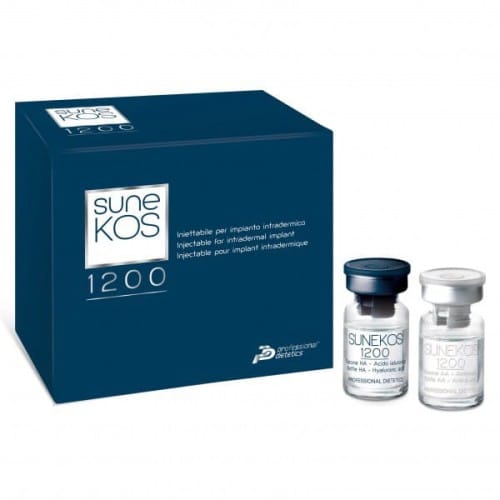
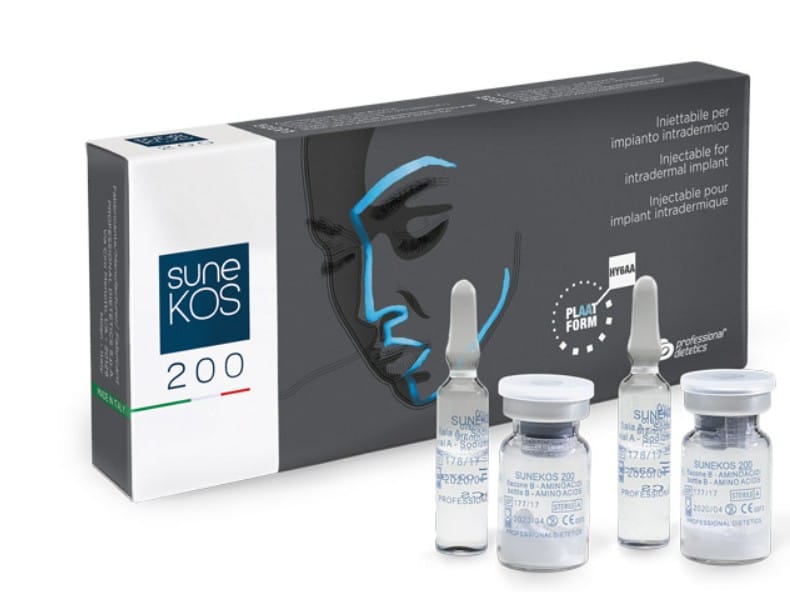
Clinics commonly evaluate Sunekos 200, Sunekos 1200, and related line extensions according to tissue area, skin quality objective, and how the product will be sequenced with other modalities. Sunekos 200 is often associated with delicate tissue planning and conservative hydration goals, including periorbital workflows. Sunekos 1200 may be reserved for structural support requirements or staged regimens when the clinical plan calls for a different level of support within the same family.
For clinics building recurring bio-revitalization programs, inventory planning should account for consultation volume, treatment cadence, version preference, and clinician training. Keep lot numbers and expiry dates recorded in your internal system so staff can trace product use by patient chart, treatment date, and version. Our professional supply workflow supports US distribution with temperature-controlled handling when required and tracked US delivery.
How This Skin Booster Works in Professional Protocols
Sunekos® combines hyaluronic acid with amino acids to support the extracellular matrix, the dermal support environment involved in firmness, elasticity, and tissue hydration. Non-crosslinked hyaluronic acid helps attract and retain water within the treated tissue plane, while the amino acid complex is used to support remodeling processes associated with collagen and elastin formation. The intended aesthetic effect is skin quality improvement with a low-volumization profile.
In practice, clinicians use Sunekos injections for areas such as the face, neck, décolleté, and hands when the treatment goal is hydration, texture refinement, and support for visibly lax or photodamaged skin. Its role differs from a lifting filler or a biostimulatory volumizer. It can be placed into a broader plan that includes mesotherapy products, device-based treatments, neuromodulators, or soft-tissue fillers when timing and suitability are clinically appropriate.
Quick tip: Build treatment-room checklists around version, anatomical area, lot number, expiry, consent, injection map, and aftercare instructions.
Professional Applications and Treatment Areas
Typical clinic applications include dermal quality enhancement, hydration-focused rejuvenation, visible photodamage management, and support for mature or lax skin. The product is often selected when the desired endpoint is smoother-looking, more elastic skin without the contour change expected from volumizing fillers. Conservative placement and measured spacing are especially important in mobile or thin tissue areas.
Sunekos under eye protocols receive frequent interest because the periorbital area has fine tissue planes and limited tolerance for excessive volume. Clinicians considering Sunekos 200 under eyes should evaluate skin thickness, laxity, edema tendency, vascular anatomy, prior filler history, and patient expectations before treatment. The product should not be treated as a simple substitute for tear-trough filler, as the clinical objective and risk profile are different.
Many clinics place this therapy within broader skin booster programs to standardize consultation, photography, consent, post-care, and follow-up timing. For additional background on professional protocol planning, the article on Sunekos treatment advances can support staff education and service positioning.
Sunekos® Compared With Fillers, Sculptra, and Profhilo
Sunekos® is not automatically better than fillers; it serves a different purpose. Hyaluronic acid fillers are generally selected for contour, projection, fold correction, or structural support, while Sunekos® is used when skin hydration, texture, and dermal quality are the central goals. A clinic may use both product types in a staged plan, but the injection plane, endpoint, and consent discussion should remain distinct.
Sunekos® also differs from Sculptra-style biostimulatory treatment. Sculptra is commonly discussed as a collagen-stimulating approach for broader volume restoration over time, while Sunekos® is positioned as a hyaluronic acid and amino acid skin booster with low volumizing intent. Neither category should be framed as universally superior; selection depends on anatomy, laxity, prior procedures, risk tolerance, and the aesthetic plan.
When clinics compare Sunekos® with Profhilo, the decision usually centers on handling, protocol preference, tissue behavior, and desired treatment endpoint. Profhilo is often categorized as a bio-remodeling hyaluronic acid treatment, while Sunekos® adds an amino acid complex. For a practical comparison mindset, staff may also review Jalupro and Profhilo treatment selection when building a broader skin-quality menu.
Key Features for Licensed Clinics
- Intradermal route for trained clinician administration by micro-injection.
- Hyaluronic acid plus amino acid complex for dermal quality support.
- Low-volumization profile for hydration-first treatment planning.
- Useful across face, neck, décolleté, hands, and selected delicate areas.
- Fits staged aesthetic plans involving fillers, devices, or skin conditioning.
- Version selection supports area-specific and protocol-specific workflows.
- Lot and expiry information supports inventory traceability.
- Professional-only use within clinic documentation and aseptic procedure standards.
- Sealed supply from vetted distributor channels for licensed facilities.
- Compatible with structured follow-up and photography protocols.
Composition and Handling Basics
The core components are non-crosslinked hyaluronic acid and an amino acid complex. Hyaluronic acid is used in aesthetic medicine because it binds water and contributes to tissue hydration. The amino acid component is intended to nourish dermal remodeling activity within bio-revitalization protocols. No added volumizing crosslinkers are indicated for this line in the supplied information.
Excipients may include sterile water for injection and buffer components suitable for intradermal use. Always inspect the carton, label, lot number, expiry date, and pack insert before preparing the treatment room. Do not use a unit with compromised packaging, unclear identification, or storage concerns. Staff should follow the manufacturer’s handling guidance and the clinic’s internal asepsis policy.
Inventory teams should store units according to the manufacturer’s stated conditions and separate them by version to reduce selection errors. Keep product documentation accessible for clinicians, injectors, and compliance staff. If your clinic uses several regenerative or skin-quality products, shelf organization by category and treatment area can reduce retrieval mistakes during busy sessions.
Clinic Workflow, Documentation, and Staff Controls
Sunekos® fits best in clinics that already use structured injectable workflows. Before treatment, staff should document the indication for skin-quality work, anatomical areas, relevant medical history, previous aesthetic procedures, and expected endpoint. Consent should distinguish skin booster effects from filler effects so the patient understands that the goal is hydration and quality rather than significant volume replacement.
During treatment preparation, clinicians should confirm product version, injection plan, sterile field, needle or cannula supplies if applicable to clinic protocol, emergency readiness, and post-care instructions. After treatment, chart notes should capture treatment area, technique, amount used according to the clinician’s protocol, lot number, expiry date, and immediate observations. Photography and follow-up timing help evaluate progress across a series.
Clinics offering broader injectable services may align Sunekos® with education on mesotherapy clinical uses, risks, and workflow. That type of staff reference is especially useful when teams standardize consultation language, contraindication screening, injection-room setup, and post-procedure escalation steps.
Safety, Contraindications, and Clinical Precautions
Sunekos® should be used only by appropriately trained healthcare professionals. As with other intradermal injectable procedures, expected local reactions may include redness, tenderness, swelling, bruising, itching, or small injection-site marks. These effects are usually procedure-related, but clinicians should provide aftercare instructions and explain when a patient should contact the clinic.
Screening should address active skin infection, inflammation at the intended site, known hypersensitivity to product components, recent procedures in the same area, tendency toward significant swelling or bruising, and medical factors that may increase injection risk. Patients using anticoagulants or medicines that affect bleeding should be assessed according to clinic policy and clinician judgment. Treatment should be deferred when the skin or overall clinical picture is unsuitable.
More serious complications are uncommon but possible with injectable aesthetic procedures. Clinics should maintain protocols for infection control, vascular event recognition, allergic reaction management, documentation, and referral when needed. Periorbital treatment requires particular caution because the anatomy is delicate and swelling can be cosmetically significant. Product choice, injection depth, volume strategy, and spacing should be individualized by the treating clinician.
Packaging, Supply, and Inventory Planning
The Sunekos® line is offered in multiple versions, and contents or accessories can vary by version. Review the current professional ordering information before booking patients or building a treatment bundle. Product labels include lot and expiry information, which supports procurement records, internal audits, and chart-level traceability.
For multi-provider clinics, centralizing injectable inventory controls can reduce waste and improve treatment consistency. Assign responsibility for receiving, storage checks, expiry rotation, and version separation. Clinics with multiple locations should coordinate purchasing cadence so each site carries the versions used in its own protocols rather than overstocking products that do not match local service demand.
If a specific version is temporarily constrained, consider whether another product in the same or adjacent category fits the clinical objective before altering a scheduled plan. Substitutions should be based on tissue needs, mechanism, handling, clinician familiarity, and consent language. Do not substitute solely on price if the treatment endpoint or safety considerations differ.
Related Products and Adjacent Choices
Clinics that want to stay within the same family may assess Sunekos Performa for refined protocols, or Sunekos Body when body-area planning is part of the service menu. These choices should be evaluated by version, tissue area, handling, and the objective of the treatment series.
For a different skin-conditioning approach, Rejuran Healer may be considered in clinics that use polynucleotide-based regenerative concepts. Collagen-supportive alternatives such as Nithya Stimulate or Karisma RH Collagen Softfiller Biorestitutivo Face may also fit selected protocols when the clinician is seeking a different mechanism or tissue response.
Product comparison should remain protocol-led. Review the active components, treatment area, expected endpoint, adverse-event profile, visit cadence, staff training, and documentation needs for each product. A well-built clinic menu makes clear which therapies target hydration, which focus on structural contour, and which are used for collagen-supportive remodeling.
Ordering Requirements for Professional Accounts
Sunekos® is supplied for licensed clinics, med spas, aesthetic practices, and qualified healthcare professionals. Account verification is required before product release so the ordering process aligns with professional-use requirements. Authorized buyers can sign in to view current cost, order quantities, version availability, and account-specific purchasing terms.
Order planning should connect purchasing with the clinic calendar. Confirm how many treatment series are scheduled, which providers use each version, and whether any upcoming training or service launch will change demand. Keep receiving records, invoices, lot details, and treatment logs organized for internal quality management.
For clinics expanding a skin-quality category, staff education is as important as procurement. The science-focused article on Jalupro and collagen stimulation can help teams compare amino acid and collagen-supportive concepts without treating every booster as interchangeable.
Authoritative Sources
For product-specific administration, handling, contraindication, and adverse-event details, use the manufacturer pack insert and technical materials supplied with the unit. Clinic protocols should also reflect applicable professional standards, local scope-of-practice rules, and internal medical direction. Because publicly accessible manufacturer and regulator links can change, retain current documentation with each received shipment and train staff from the materials provided with the product.
This content is for informational purposes only and is not a substitute for professional medical advice.
Frequently Asked Questions
Who can order Sunekos® from Med Wholesale Supplies?
Sunekos® is intended for licensed clinics, med spas, aesthetic practices, and healthcare professionals. A verified professional account is required before ordering and viewing current clinic pricing.
What does Sunekos® treatment do in clinic protocols?
Sunekos® is used as an intradermal skin booster to support hydration, elasticity, and dermal quality. It is generally chosen for subtle skin rejuvenation rather than major volume correction.
Is Sunekos® the same as a dermal filler?
No. Sunekos® contains non-crosslinked hyaluronic acid plus amino acids and is used for skin quality support. Traditional fillers are usually selected for contour, projection, or structural volume.
Which Sunekos® version should a clinic choose?
Version choice depends on treatment area, tissue quality, protocol design, and clinician preference. Many clinics consider Sunekos 200 for delicate-area planning and reserve other versions for different support goals.
How should clinics handle Sunekos® inventory?
Clinics should follow the manufacturer’s storage instructions, keep units sealed until use, rotate by expiry, and record lot and expiry details in procurement and treatment documentation.
Can Sunekos® be combined with other aesthetic treatments?
Clinicians may sequence Sunekos® with fillers, device-based treatments, neuromodulators, or other skin boosters when appropriate. Timing, treatment area, and patient suitability should guide the plan.
Specifications
- Main Ingredient: Hyaluronic Acid, Amino Acids
- Manufacturer: Professional Dietetics S.r.l.
- Drug Class: Dermal Filler
- Generic Name: Sunekos® 1200: Hyaluronic Acid Gel | Sunekos® 200: Amino Acids and Sodium Hyaluronate Gel
- Package Contents: Sunekos® 1200: 1.5 mL | Sunekos® 200: 3 mL
- Storage Requirements: Room Temperature (2℃~25℃)
- Main Usage: Hydration
Here to help
Questions about ordering, delivery or products? You can email our team here or call now at 1-800-630-9757 and be connected with your dedicated Account Manager
Related Products
Prolia® (International English)
Prescription Medication
$529.00 - $549.00
You save
You save
Evenity® (English Alternative)
Injectable Medication
$1,229.00 - $1,299.00
You save
You save
Intraline® For Men
Dermal Filler
$59.00 - $79.00
You save
You save
RejuvaNAD+ Pro
Injectable Medication
$237.00 - $249.00
You save
You save
Related Articles
Prednisone in Clinical Care: Uses, Risks, and Monitoring
Prednisone is a prescription systemic corticosteroid used to reduce inflammation or suppress immune activity in…
Lip Fillers Swelling Stages: Timeline, Safety, and Follow-Up
Lip fillers swelling stages usually follow a short inflammatory course: swelling appears soon after injection,…
Hypopigmentation of the Skin: Assessment and Care
Hypopigmentation of the skin means one or more areas look lighter than the surrounding skin.…
Radiesse vs Sculptra: Selection Factors for Clinics
Radiesse vs Sculptra is best understood as a comparison between two collagen-stimulating injectables with different…
Hyaluronic Acid Under-Eye Filler: Safety and Workflow
Hyaluronic acid under-eye filler is an injectable soft-tissue filler used by trained aesthetic clinicians to…
Dermal Filler Types: Materials, Uses, and Clinic Fit
Dermal filler types are usually grouped by their base material, tissue behavior, and expected role…
What Is Dysport? Clinical Uses, Safety, and Workflow
For clinic teams asking what is Dysport, the short answer is simple: Dysport is a…
Biostimulators in Aesthetic Care: Selection and Safety
Biostimulators are injectable aesthetic products used to encourage a controlled tissue response, often involving new…