

- You must be logged in to add items to the cart.
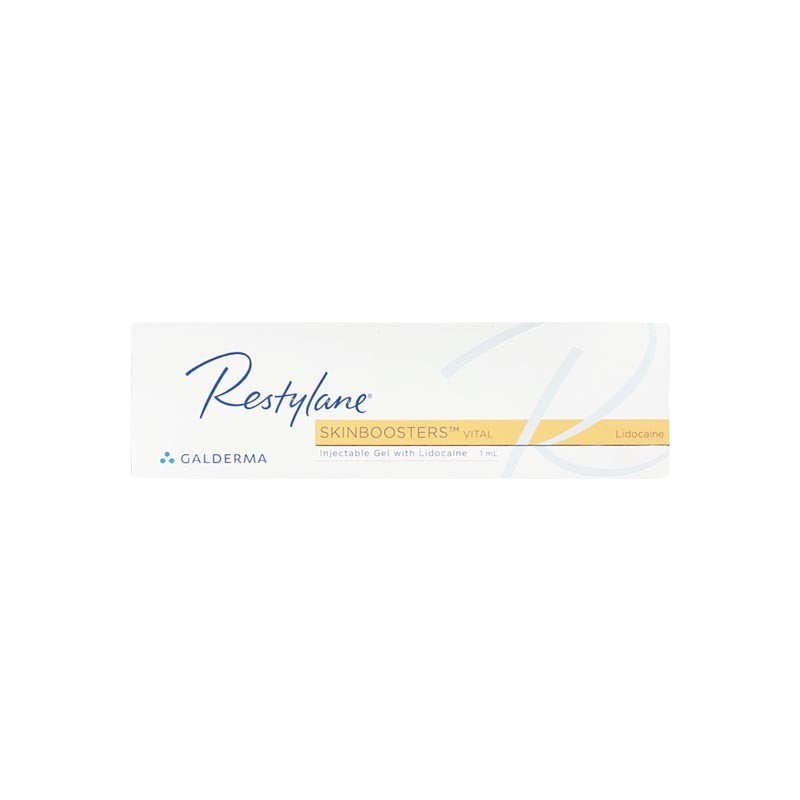
Restylane® Skinboosters Vital w/Lidocaine
Order Restylane® Skinboosters Vital w/Lidocaine for Clinics
Derma Filler
$169.00
You save (%)
Description
Restylane® Skinboosters Vital w/Lidocaine is a sterile injectable hyaluronic acid skin booster for intradermal professional use. Licensed clinics and healthcare professionals can order Restylane Skinboosters Vital w/Lidocaine in a 1 mL prefilled syringe containing hyaluronic acid 20 mg/mL and lidocaine 3 mg/mL. The presentation supports treatment-room setup for microinjection protocols focused on skin quality rather than structural volume.
This preparation is used by trained injectors in aesthetic workflows for hydrated, smoother-looking skin across areas such as the face, neck, décolletage, and hands. Lidocaine is included to help reduce procedure-related discomfort during placement, while the HA gel binds water within superficial dermal tissue. Our US distribution model helps practices plan inventory, documentation, and appointment blocks with reliable US logistics.
Clinic Pricing and Professional Ordering
Clinics can sign in to view the current Restylane Skinboosters Vital w/Lidocaine price and request account-specific terms for routine replenishment. Pricing may depend on account status, order volume, and product allocation at the time of purchase, so procurement teams should align quantities with scheduled aesthetic sessions and expected follow-up visits.
The 1 mL syringe format is practical for providers building hydration-focused treatment plans with repeat visits. For practices purchasing Restylane Skinboosters Vital wholesale or planning a bulk order, lot alignment and expiry rotation are important intake checks. Keep product receiving, storage, and room assignment workflows consistent so clinical staff can trace the syringe used for each treatment record.
Use the Skin Boosters category when evaluating adjacent HA skin-quality products for your service menu. Broader filler planning can be supported through the Dermal Fillers category, especially when hydration visits are sequenced with contouring or lifting appointments.
What This Skinbooster Is and How It Works
Restylane Skinboosters Vital dermal filler is an injectable hyaluronic acid gel intended for intradermal placement by qualified professionals. In this context, intradermal means that small amounts are placed within the skin rather than deeply for projection or structural lift. The goal is to support skin hydration and surface quality through evenly spaced microinjections.
Hyaluronic acid is a water-binding molecule used across many aesthetic injectables. In a skinbooster protocol, the gel is generally placed in small superficial deposits to refresh skin texture and hydration. This differs from volumizing fillers that are selected for contour, projection, or deeper tissue support.
Lidocaine 3 mg/mL is incorporated into the syringe for comfort during administration. The anesthetic component does not replace professional assessment, aseptic technique, or patient-specific planning. It can, however, help injectors maintain a steady treatment pace during multiple microdeposits.
Professional Applications and Treatment-Room Fit
Clinicians may incorporate this hyaluronic acid skin booster with lidocaine into skin-quality programs for the face, neck, décolletage, or hands when appropriate for the patient and practice protocol. It may be used as a standalone hydration-focused visit or staged around other aesthetic services such as light chemical peels, microneedling, or energy-based treatments when clinically suitable.
Restylane Skinboosters Vital injection is often selected when the treatment goal is smoother-looking, more hydrated skin without adding visible volumizing lift. Patient selection, injection depth, spacing, and session cadence should be determined by the treating professional. Document treatment areas, product lot, expiry, needle use, injection technique, and any immediate local response in the clinical record.
For protocol planning around microdroplet hydration, see our Restylane Skinboosters clinical planning article. Additional background on hydration-focused HA placement is available in Restylane Skinboosters Vital and skin hydration.
Key Features and Pack Details
The supplied configuration is designed for clinic intake and efficient room preparation. Staff should verify the outer box, syringe label, lot number, expiry date, and sterile packaging before use. Do not use components if sterile barriers appear compromised or labeling does not match the purchase record.
- Product: Restylane® Skinboosters Vital w/Lidocaine.
- Form: sterile injectable HA gel for intradermal professional use.
- Hyaluronic acid concentration: 20 mg/mL.
- Lidocaine concentration: 3 mg/mL.
- Vehicle: physiological sodium chloride solution at approximately pH 7.
- Pack: 1 x 1 mL prefilled syringe.
- Needles: 3 x 29G sterile needles.
- Use format: single-use syringe and sterile components.
- Labeling: lot number and expiry visible on outer packaging and syringe.
- SKU: 81841.
Quick tip: Assign one staff member to reconcile lot and expiry data during receiving and again before treatment-room setup.
Composition, Handling, and Storage Workflow
Skinboosters Vital with Lidocaine contains hyaluronic acid 20 mg/mL, lidocaine 3 mg/mL, and physiological sodium chloride solution. The formulation is sterile and supplied in a prefilled syringe, which reduces preparation steps compared with products requiring reconstitution or transfer. Clinics should still follow internal handling procedures and the manufacturer’s insert for storage and administration requirements.
Keep the syringe in its original packaging until use to protect labeling and sterile presentation. Storage conditions, room staging, and disposal procedures should follow the product insert and your clinic’s infection-control policies. If a practice handles multiple injectable brands, separate inventory by product name and concentration to reduce selection errors.
We support clinic procurement with temperature-controlled handling when required and tracked US delivery. Receiving staff should inspect shipments promptly, record any temperature or packaging concerns according to clinic policy, and quarantine affected stock until it is cleared for use.
Expected Local Reactions and Safety Checks
Common local effects after intradermal HA injection may include mild irritation, redness, swelling, tenderness, bruising, or small injection-site marks. These effects are usually linked to needle placement and local tissue response. Clinics should explain expected post-procedure reactions according to their consent process and provide escalation instructions for symptoms that are severe, persistent, or unusual.
Before use, clinicians should review contraindications, precautions, allergy history, infection status at the intended treatment area, and any prior injectable reactions. Lidocaine sensitivity is especially relevant because this presentation includes anesthetic in the syringe. Treatment should be deferred or modified when clinical findings make injection inappropriate.
Aseptic technique is essential for every syringe. Use only sterile supplies, avoid reusing needles, and dispose of sharps according to regulated medical waste procedures. Product changes, substitutions, or combination sequencing should be approved by the treating provider rather than handled as a purely purchasing decision.
Vital, Vital Light, and Volumizing Fillers
Restylane Vital and Restylane Vital Light are not interchangeable simply because both belong to the Skinboosters family. Vital contains hyaluronic acid 20 mg/mL in the supplied product, while Restylane Skinboosters Vital Light w/Lidocaine is presented with a lower HA concentration. The choice should reflect tissue quality, treatment area, injector preference, and the clinic’s protocol.
Restylane Vital is a filler-class injectable, but its role differs from lift-focused dermal fillers. Skinboosters are selected for superficial hydration and texture support, whereas products such as Restylane Lyft w/Lidocaine are typically considered for structural lifting needs. Flexible HA fillers, including Restylane Refyne w/Lidocaine, serve different aesthetic objectives within a broader treatment plan.
For practices standardizing the brand across rooms, the Restylane brand collection can help procurement teams review related presentations. Training materials, injector experience, and documented outcomes should guide final product selection for each service line.
How Long Results May Fit a Maintenance Plan
Duration questions are common during consultation, but the answer depends on treatment area, skin condition, injection technique, number of sessions, patient metabolism, and maintenance cadence. Clinics should avoid promising a fixed result window and instead explain how follow-up visits are usually planned within the practice’s skin-quality program.
Many providers position skinboosters as part of recurring maintenance rather than a one-time volumizing intervention. When scheduling repeat visits, align reorder points with the number of syringes typically used per session, expected follow-up intervals, and room capacity. This helps prevent last-minute substitutions and supports consistent patient documentation.
Educational background on the broader category is available in skin booster injections in aesthetic practice. For a wider Restylane portfolio discussion, see Restylane dermal filler treatment planning.
Inventory Planning and Substitutions
Restylane Skinboosters Vital w/Lidocaine 1ml is useful for clinics that want a predictable single-syringe unit for treatment-room setup. Maintain a receiving log that captures quantity, lot, expiry, staff initials, and storage location. Rotate stock by expiry and keep similar Restylane products clearly separated to prevent confusion during busy injection blocks.
If your requested quantity cannot be matched to your planned schedule, discuss substitutions by treatment intent rather than brand name alone. A lighter skinbooster, a standard HA filler, or a lifting product may have very different handling and clinical roles. Provider approval should come before any substitution is assigned to an appointment.
Practices using multiple lidocaine-containing fillers may find it useful to review procedural comfort considerations in lidocaine in dermal filler procedures. This can support staff education without replacing the manufacturer’s instructions for the exact syringe being used.
Authoritative Sources
Use manufacturer materials and regulator-backed safety information when updating clinic protocols, consent language, or training documents. These sources are provided for clinical context and should be read alongside the product insert supplied with the unit.
- Manufacturer information for Restylane Skinboosters
- Manufacturer information for Restylane Skinboosters Vital Lidocaine
- MedlinePlus information on lidocaine
This content is for informational purposes only and is not a substitute for professional medical advice.
Frequently Asked Questions
Is Restylane Skinboosters Vital w/Lidocaine a filler or a skinbooster?
It is an injectable hyaluronic acid product within the filler category, but its clinical role is skin quality support rather than structural lift. It is placed intradermally in small amounts to support hydration and smoother-looking skin.
What is included in one unit?
Each unit includes one 1 mL prefilled syringe of Restylane® Skinboosters Vital w/Lidocaine and three 29G sterile needles. The labeled concentrations are hyaluronic acid 20 mg/mL and lidocaine 3 mg/mL.
How is Vital different from Vital Light?
The supplied Vital product contains hyaluronic acid 20 mg/mL, while Vital Light is presented with a lower HA concentration. Selection should be based on treatment area, tissue assessment, injector preference, and clinic protocol.
Can clinics place bulk orders for this product?
Licensed clinics can sign in to view current ordering information and request volume or contract terms. Procurement teams should plan quantities around scheduled treatment blocks, lot tracking, and expiry rotation.
What reactions should providers discuss before treatment?
Expected local reactions may include redness, swelling, tenderness, bruising, irritation, or injection-site marks. Providers should also review allergy history, lidocaine sensitivity, infection at the treatment site, and any previous injectable reactions.
How should staff handle the syringe before use?
Keep the syringe in its original packaging until treatment-room setup, verify lot and expiry, inspect sterile barriers, and follow the manufacturer’s insert and clinic infection-control procedures. Do not use components if packaging integrity is in question.
Specifications
- Main Ingredient: Highly Concentrated Hyaluronic Acid
- Manufacturer: Galderma
- Drug Class: Aesthetic Surgery Product
- Generic Name: Hyaluronic acid (HA) and Lidocaine
- Package Contents: 1 mL x 1 Pre-Filled Syringe
- Storage Requirements: Room Temperature (2℃~25℃)
- Main Usage: Hydrating Filler
About the Brand
Restylane
Restylane stands as a trusted medical brand, providing an extensive variety of injectable dermal fillers designed to rejuvenate facial appearance and minimize aging signs. These products, infused with hyaluronic acid, are renowned for results that embody natural aesthetics and exhibit prolonged effectiveness. On medwholesalesupplies.com, we present Restylane offerings at market competitive rates, facilitating medical experts in keeping these premium dermal fillers on hand. By choosing to acquire Restylane via medwholesalesupplies.com, medical practitioners stand to gain numerous advantages. To begin with, our online platform simplifies the ordering process and lessens the exertion involved in sourcing these medical essentials. Furthermore, by offering Restylane at wholesale prices, we provide an opportunity for practitioners to achieve monetary savings when making bulk purchases. Finally, we place a high emphasis on customer contentment and guarantee only authentic products on our website. Therefore, when purchasing Restylane from medwholesalesupplies.com, you can rest assured you are obtaining genuine articles. In summary, Restylane represents a reliable medical brand furnishing prime quality dermal fillers to aid in facial revival. Through medwholesalesupplies.com, medical specialists can swiftly secure Restylane products at wholesale prices, saving both time and resources while ensuring product genuineness. Unlock the potential of Restylane, a trusted name in cosmetic fillers, through Med Wholesale Supplies. Whether you're looking to enhance lips with Restylane for lips or seeking the best Restylane filler for various treatments, we have you covered. Explore Restylane prices to find affordable solutions that meet your needs. Our expert-curated selection ensures you can deliver the best results to your clients with confidence. Choose Med Wholesale Supplies for all your Restylane products and more!
Browse Restylane Products
Here to help
Questions about ordering, delivery or products? You can email our team here or call now at 1-800-630-9757 and be connected with your dedicated Account Manager
Related Products
JALUPRO® PLUS 4ML
Skin Rejuvenation Treatment
$86.00 - $89.00
You save (%)
You save (%)
$339.00
You save (%)
You save (%)
Select options
This product has multiple variants. The options may be chosen on the product page
Juvéderm® SKINVIVE
Dermal Filler
$339.00 - $359.00
You save (%)
You save (%)
$86.00 - $119.00
You save (%)
You save (%)
Related Articles
Hypopigmentation of the Skin: Assessment and Care
Hypopigmentation of the skin means one or more areas look lighter than the surrounding skin.…
Radiesse vs Sculptra: Selection Factors for Clinics
Radiesse vs Sculptra is best understood as a comparison between two collagen-stimulating injectables with different…
Hyaluronic Acid Under-Eye Filler: Safety and Workflow
Hyaluronic acid under-eye filler is an injectable soft-tissue filler used by trained aesthetic clinicians to…
Dermal Filler Types: Materials, Uses, and Clinic Fit
Dermal filler types are usually grouped by their base material, tissue behavior, and expected role…
What Is Dysport? Clinical Uses, Safety, and Workflow
For clinic teams asking what is Dysport, the short answer is simple: Dysport is a…
Biostimulators in Aesthetic Care: Selection and Safety
Biostimulators are injectable aesthetic products used to encourage a controlled tissue response, often involving new…
Do You Ovulate on an IUD? Clinic Counseling Points
Clinicians hear the shorthand question do you ovulate on iud, but the practical answer depends…
Vascular Occlusion: Early Signs, Risks, and Clinic Response
A vascular occlusion is a partial or complete blockage of blood flow in a vessel.…