
Price range: $129.00 through $149.00
You save
Description
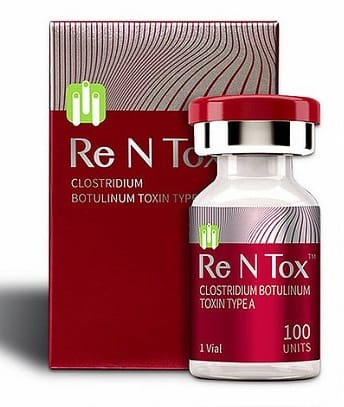
Re N Tox™ 100 U is a botulinum toxin type A powder for injection supplied in a 100U vial for professional administration. Licensed clinics, med spas, and healthcare professionals can order it for aesthetic workflows that require measured unit planning, sterile handling, and clear treatment-room documentation. The vial format supports inventory control, lot tracking, and protocol consistency across trained providers.
Med Wholesale Supplies serves professional accounts with authentic, brand-name medical products sourced through vetted distributors and verified supply channels. Re N Tox 100U vial ordering is intended for clinics that maintain appropriate clinical governance, staff training, consent processes, and documentation standards for neuromodulator procedures.
Re N Tox 100U Vial Details and Clinic Fit
Re N Tox™ is a purified neuromodulator preparation intended for intramuscular administration by trained providers. The active ingredient is botulinum toxin type A, which acts at the neuromuscular junction by inhibiting acetylcholine release. Reduced acetylcholine signaling decreases targeted muscle activity, helping soften dynamic lines caused by repeated facial movement.
The 100 Unit botulinum toxin vial format is useful for practices that map units by treatment area, provider technique, appointment volume, and retreatment interval. A 100U vial is not automatically a high or low amount in clinical practice; the practical relevance depends on the provider’s unit allocation, reconstitution method, treatment areas, and patient-specific assessment. Clinics should follow manufacturer instructions and internal medical protocols for reconstitution, administration, and post-treatment documentation.
Re N Tox botulinum toxin 100U can fit upper-face aesthetic services where temporary muscle relaxation is clinically appropriate. Common professional workflows may involve glabellar, frontalis, and lateral canthus planning, but final treatment design should remain under qualified medical oversight. For broader category browsing, see the pharmaceuticals category.
Price, Account Access, and 100U Ordering
Sign in with a verified professional account to view current Re N Tox 100U price details. Clinic pricing may vary by purchasing profile, volume planning, and account terms shown during ordering. The product SKU for this 100U vial is 89693, which helps purchasing teams align orders, invoices, and inventory records.
Clinics that buy Re N Tox 100U for routine neuromodulator sessions often plan stock around provider schedules, expected unit utilization, and upcoming follow-up visits. Maintaining a documented par level can reduce last-minute substitutions and help the treatment team keep protocols consistent. Multi-provider practices may also standardize vial intake, lot capture, and expiry checks so administration records match inventory movement.
Quick tip: Match the vial quantity ordered to booked treatment demand, staff coverage, and your clinic’s reconstitution policy.
How It Works in Aesthetic Protocols
Botulinum toxin type A temporarily reduces the activity of injected muscles. In facial aesthetics, providers use this effect to address dynamic wrinkles that appear or deepen with expression. The clinical goal is localized muscle modulation, not generalized paralysis, so treatment planning depends on precise anatomy, injection placement, dosing judgment, and follow-up assessment.
Upper-face protocols commonly consider the relationship between the frontalis, corrugator, procerus, and orbicularis oculi muscles. For example, forehead treatment planning requires attention to brow position and compensatory movement patterns. The number of units for a forehead treatment is not universal; it is determined by the clinician’s assessment, the product used, the reconstitution approach, and the desired functional result.
Re N Tox™ can also be incorporated into combination aesthetic plans when medically appropriate. Some clinics sequence neuromodulators with dermal fillers, skin-quality treatments, or energy-based procedures while keeping consent, photography, and treatment notes separate for each modality. For class-level context on commonly used products, review popular botulinum toxin brands.
Key Features for Professional Use
- Botulinum toxin type A preparation for targeted muscle relaxation.
- 100U vial format for unit-based planning and stock control.
- Powder for injection that requires reconstitution before administration.
- Single-use sterile vial intended for professional treatment-room use.
- Lot number and expiration details support charting and reconciliation.
- Compatible with clinic protocols that emphasize precision and repeatability.
- Suitable for documented aesthetic workflows under qualified oversight.
- Storage and handling should follow the manufacturer’s labeled instructions.
The 100U presentation helps teams create consistent appointment templates and maintain predictable inventory movement. Clinics may use intake checklists to record carton condition, lot number, expiry, receipt date, and storage location before transferring the vial into clinical stock.
Composition, Reconstitution, and Handling
The active ingredient in Re N Tox™ is botulinum toxin type A. It is supplied as a neuromodulator powder for injection and must be reconstituted before intramuscular use. Inactive components, stabilizers, and full handling instructions should be confirmed in the manufacturer’s prescribing information or official product insert.
Reconstitution should be performed only by trained personnel using the clinic’s sterile technique standards and the manufacturer’s instructions. Practices should avoid mixing assumptions between brands because dilution volumes, unit behavior, labeling, and technique standards may differ. Staff training should make clear which product is being prepared, how it is labeled after reconstitution, and how long it may be used under the clinic’s policy.
Storage conditions must follow the product label and facility procedures. During logistics, temperature-controlled handling when required and tracked US delivery can support receiving workflows. On receipt, inspect packaging integrity before the product enters stock, and do not use a vial if seals, labeling, or container integrity appear compromised.
Documentation and Inventory Workflow
Re N Tox 100 Units ordering should connect directly to clinic documentation. A complete record commonly includes product name, unit amount administered, dilution reference, treatment area, lot number, expiration date, provider name, consent status, and any relevant post-procedure instructions. Clear documentation supports continuity when patients return for follow-up or see another provider in the same practice.
Inventory teams may prefer a 100U vial when appointment volume is moderate or when providers want smaller unit increments for scheduling control. Higher-volume sites often evaluate multiple neuromodulator vial sizes or brands to reduce waste while preserving protocol consistency. For brand-specific browsing, visit the Re N Tox brand section.
Why it matters: Consistent lot tracking helps connect clinical notes, stock records, and any manufacturer or distributor communications.
Safety, Warnings, and Clinical Oversight
Botulinum toxin products require careful patient selection, anatomical knowledge, and post-treatment monitoring. Expected local effects may include injection-site discomfort, bruising, swelling, headache, temporary weakness near the treated area, or asymmetry. Serious reactions are uncommon but can include symptoms consistent with toxin spread, such as swallowing difficulty, breathing difficulty, speech changes, generalized weakness, or vision changes; urgent medical evaluation is appropriate if severe symptoms occur.
Clinics should screen for factors that may affect suitability, including neuromuscular disorders, infection at the intended injection site, relevant allergies, pregnancy or breastfeeding considerations, and medicines that may influence neuromuscular transmission or bleeding risk. Product selection and treatment planning should remain within the provider’s scope of practice and the facility’s medical protocols.
Because botulinum toxin products are not interchangeable on a simple unit-for-unit basis across brands, switching from one toxin to another should be treated as a clinical decision. Staff should avoid assuming that a unit plan developed for another brand will produce the same effect with Re N Tox™. For a general comparison of neuromodulator choices used in practice, see Xeomin uses and wrinkle-reduction context.
Comparable Neuromodulators and Adjacent Choices
Clinics often evaluate Re N Tox™ alongside other botulinum toxin products to align onset expectations, provider familiarity, stock planning, and patient cohort needs. Product choice may depend on training history, established protocols, formulary preferences, and how the practice documents outcomes over time. Internal comparison should focus on technique consistency rather than unsupported claims of superiority.
Related 100U options include Innotox 100U and Meditoxin 100U. Clinics that need a different vial size may also evaluate Nabota 200UI, while practices with established US brand workflows may keep Botox in their formulary. For additional Korean toxin context, review Meditoxin clinical-use background.
Some practices also ask what Korean clinics use instead of Botox. In a professional formulary discussion, the more useful question is which botulinum toxin products the clinic’s providers are trained to use and document consistently. Brand familiarity, manufacturer guidance, procurement controls, and adverse-event procedures should guide any substitution.
Professional Applications and Patient-Visit Planning
Within aesthetic medicine, Re N Tox 100U powder for injection may be scheduled for dynamic-line treatment sessions that require controlled muscle relaxation. The product is not a substitute for clinical evaluation. Before administration, providers should confirm the treatment goal, assess facial movement, document baseline appearance when appropriate, and discuss expected temporary effects.
Many clinics build neuromodulator visits around standardized steps: intake, medical screening, consent, photography, facial animation assessment, marking, reconstitution confirmation, administration, aftercare counseling, and follow-up scheduling. This structure helps teams answer common patient questions about how many units may be used, how the 100U vial relates to a single visit, and why treatment plans vary between individuals.
For patient-facing education prepared by professional societies, the American Society of Plastic Surgeons provides a general botulinum toxin procedure overview. Clinic teams should use manufacturer information and facility protocols for product-specific instructions.
Availability, Substitutions, and Supply Planning
Re N Tox™ is available for professional account ordering through US distribution. Availability by lot can change with distributor supply and purchasing activity, so clinics should plan ahead for booked treatment volume and avoid relying on last-minute replenishment. If your practice operates multiple sites, align ordering responsibilities with storage capacity and provider schedules.
When a substitution is being considered, the medical director or lead injector should confirm whether the alternative product fits current protocols. Switching toxin brands may require staff retraining, updated consent language, new reconstitution references, and revised documentation templates. Substitution decisions should be recorded so front-desk, inventory, and clinical teams share the same product expectations.
Authoritative Sources
For class-level safety and patient-education context, consult regulator and professional-society materials. These references do not replace the manufacturer’s product-specific instructions or your clinic’s medical protocols.
This content is for informational purposes only and is not a substitute for professional medical advice.
Frequently Asked Questions
Who can order Re N Tox™ 100 U?
Re N Tox™ 100 U is intended for licensed clinics, med spas, and healthcare professionals using botulinum toxin products within appropriate clinical protocols. Account verification may be required before professional pricing and ordering tools are available.
Is a 100U vial a large amount for a clinic?
A 100U vial is a common unit-based format, but whether it is large or small depends on appointment volume, treatment areas, reconstitution practices, and provider technique. Clinics should plan vial use around documented protocols and booked demand.
How should Re N Tox™ be handled before use?
Store and handle Re N Tox™ according to the manufacturer’s labeled instructions and your facility’s procedures. Inspect packaging on receipt, record lot and expiration information, and use sterile technique for reconstitution and administration.
Can Re N Tox™ units be substituted directly for another botulinum toxin brand?
Botulinum toxin products should not be treated as automatically interchangeable on a simple unit-for-unit basis. Any brand switch should be reviewed by the clinic’s qualified medical lead and reflected in training, consent, and documentation processes.
What records should clinics keep for Re N Tox™ treatments?
Typical records include product name, lot number, expiration date, reconstitution reference, units administered, treatment areas, provider name, consent documentation, and any follow-up instructions. Requirements may vary by facility policy and applicable professional standards.
Specifications
- Main Ingredient: Botulinum Toxin A
- Manufacturer: PHARMA RESEARCH PRODUCTS
- Drug Class: Neuromuscular Blockers
- Generic Name: Botulinum Toxin Type A
- Package Contents: 100 U x 1 Vial
- Storage Requirements: Cool Temperature (2℃~8℃)
- Main Usage:
About the Brand
RE N TOX
Discover RE N TOX at Wholesale Prices on MedWholesaleSupplies! RE N TOX is a leading name in the aesthetic medicine industry, known for its advanced and high-quality injectable solutions. You can now conveniently purchase RE N TOX injectables directly from our online platform, medwholesalesupplies.com. Why Choose RE N TOX? RE N TOX is distinguished by its dedication to cutting-edge technology and safety in aesthetic treatments. Whether you're a medical professional seeking to expand your clinic's offerings or an individual looking for premium aesthetic solutions, RE N TOX delivers products that ensure reliable, natural-looking results. RE N TOX Product Line At MedWholesaleSupplies, we proudly offer a comprehensive selection of RE N TOX fillers designed to meet diverse aesthetic needs. Our goal is to provide you with the finest products through a user-friendly online shopping experience, competitive pricing, and exceptional customer service. Here’s a closer look at the RE N TOX offerings: RE N TOX Smooth Ideal for addressing fine lines and minor wrinkles, RE N TOX Smooth provides subtle, natural-looking results that enhance facial features gently. RE N TOX Define Perfect for more pronounced facial contouring and deeper wrinkles, RE N TOX Define delivers long-lasting effects, restoring volume and achieving noticeable improvements. RE N TOX Comfort Featuring added lidocaine for enhanced comfort, this filler is suitable for various facial areas, including the lips and cheeks, ensuring a pain-free treatment experience. RE N TOX Volume Designed for significant volume enhancement, RE N TOX Volume is ideal for augmenting cheekbones, jawlines, and other areas needing substantial enhancement. Purchasing RE N TOX Our platform, medwholesalesupplies.com, is dedicated to providing easy access to RE N TOX products, ensuring that you receive authentic, high-quality injectables at wholesale prices. We cater to aesthetic clinics looking to offer their patients the best in aesthetic treatments while maintaining affordability and authenticity. Why Shop with Us? When you choose to buy RE N TOX from MedWholesaleSupplies, you benefit from the following: Competitive wholesale pricing Reliable and timely delivery Outstanding customer support Assurance of product authenticity Our team is here to assist you with your purchases, ensuring you get the best deals and seamless service. Elevate your practice or personal care routine with RE N TOX, available now at MedWholesaleSupplies.
Browse RE N TOX Products
Here to help
Questions about ordering, delivery or products? You can email our team here or call now at 1-800-630-9757 and be connected with your dedicated Account Manager
Related Products
Evenity® (English Alternative)
Injectable Medication
$1,229.00 - $1,299.00
You save
You save
Intraline® For Men
Dermal Filler
$59.00 - $79.00
You save
You save
RejuvaNAD+ Pro
Injectable Medication
$237.00 - $249.00
You save
You save
Teosyal® RHA 4
Aesthetic Surgery Product
$259.00 - $279.00
You save
You save
Related Articles
Prednisone in Clinical Care: Uses, Risks, and Monitoring
Prednisone is a prescription systemic corticosteroid used to reduce inflammation or suppress immune activity in…
Lip Fillers Swelling Stages: Timeline, Safety, and Follow-Up
Lip fillers swelling stages usually follow a short inflammatory course: swelling appears soon after injection,…
Hypopigmentation of the Skin: Assessment and Care
Hypopigmentation of the skin means one or more areas look lighter than the surrounding skin.…
Radiesse vs Sculptra: Selection Factors for Clinics
Radiesse vs Sculptra is best understood as a comparison between two collagen-stimulating injectables with different…
Hyaluronic Acid Under-Eye Filler: Safety and Workflow
Hyaluronic acid under-eye filler is an injectable soft-tissue filler used by trained aesthetic clinicians to…
Dermal Filler Types: Materials, Uses, and Clinic Fit
Dermal filler types are usually grouped by their base material, tissue behavior, and expected role…
What Is Dysport? Clinical Uses, Safety, and Workflow
For clinic teams asking what is Dysport, the short answer is simple: Dysport is a…
Biostimulators in Aesthetic Care: Selection and Safety
Biostimulators are injectable aesthetic products used to encourage a controlled tissue response, often involving new…