
Price range: $169.00 through $199.00
You save
Description
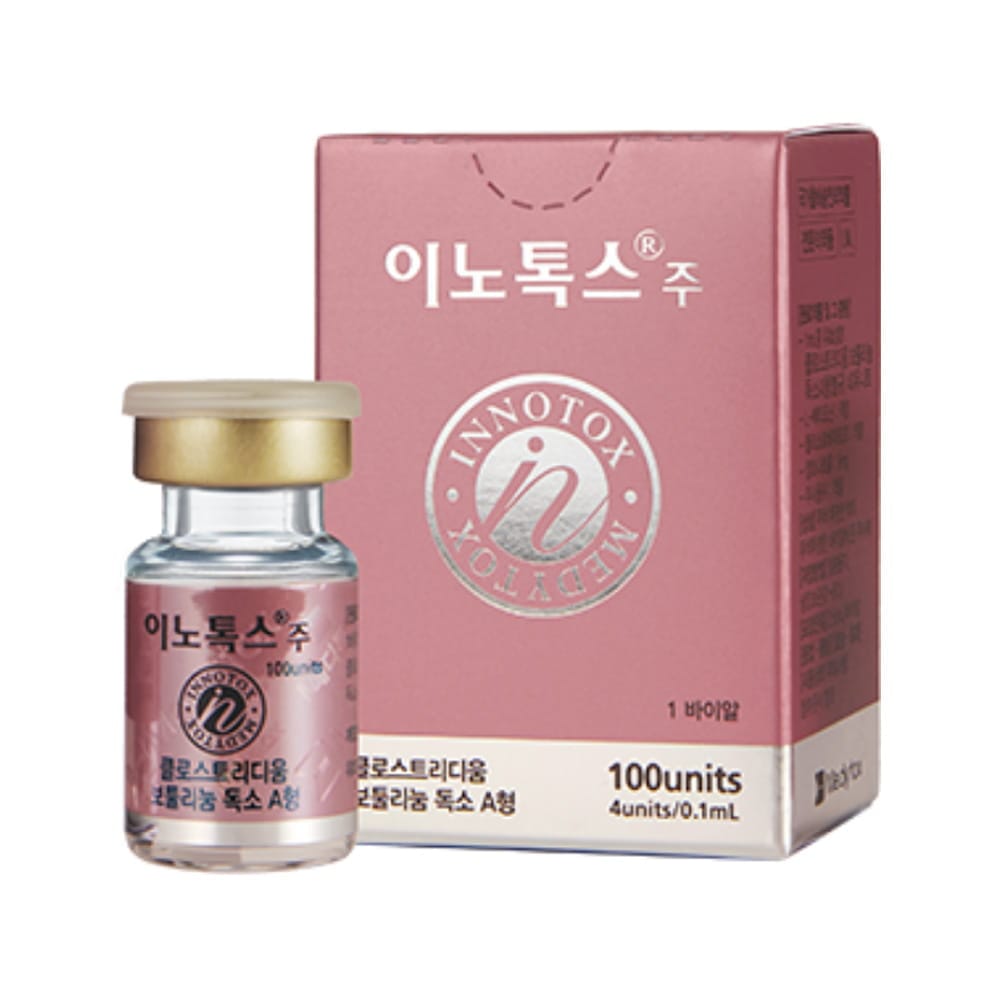
Innotox® 100U is a sterile, ready-to-use liquid botulinum toxin type A preparation for professional intramuscular administration in aesthetic clinic workflows. Licensed clinics, med spas, and healthcare professionals can buy Innotox 100U for treatment-room use when it fits their protocols, staff training, and patient assessment standards. The pre-mixed liquid format helps reduce preparation steps because it does not require on-site reconstitution before draw-up.
Med Wholesale Supplies serves licensed professional accounts with brand-name medical products sourced through vetted distributors and verified supply channels. For clinics standardizing neuromodulator inventory, Innotox 100U offers a 100-unit vial format, clear solution handling, and a preparation profile that can support consistent documentation across sessions.
Innotox 100U Price, Vial Selection, and Clinic Ordering
Clinic accounts can sign in to view the current Innotox 100U price, volume structures, and ordering details. The product is supplied as an Innotox 100U vial, and purchasing teams should match the vial quantity to scheduled procedure volume, trained injector coverage, and internal inventory controls. Pricing may reflect account status, order volume, and contract terms rather than a single public cash price.
Because the product is intended for professional administration, ordering should be tied to established clinic governance. Teams commonly confirm the active product, unit count, lot number, expiration date, storage requirements, and receiving documentation before the vial enters treatment-room inventory. This helps support traceability and reduces preventable workflow errors during busy aesthetic sessions.
Quick tip: Align the number of vials ordered with appointment density and your clinic’s lot-logging process.
What Innotox Is and How It Works
Innotox is a botulinum toxin type A neuromodulator manufactured by Medytox in South Korea. It is supplied as a sterile, pre-mixed liquid solution, which distinguishes it from powder-format toxins that require reconstitution before injection. The ready-to-use format can simplify preparation and reduce variability introduced by dilution steps, while clinical outcomes still depend on anatomy assessment, dosing decisions, placement technique, and appropriate patient selection.
Botulinum toxin type A acts at the presynaptic nerve terminal and limits acetylcholine release. In aesthetic practice, that mechanism supports localized muscle relaxation in targeted facial or contouring protocols under clinician direction. Innotox is described as preservative-free and albumin-free, using non-animal excipients in a buffered saline matrix.
| Attribute | Clinic-relevant detail |
|---|---|
| Product | Innotox® 100U |
| Class | Botulinum toxin type A neuromodulator |
| Format | Ready-to-use liquid injectable solution |
| Unit count | 100 units per vial |
| Manufacturer | Medytox |
| Professional use | For administration by trained healthcare professionals within clinic protocols |
Professional Use in Aesthetic Workflows
Clinics may integrate this preparation into aesthetic neuromodulator protocols for dynamic facial lines and muscle-modulation procedures when appropriate for the clinician’s training and local practice standards. Common workflow areas include the glabellar complex, lateral canthal region, frontalis, perioral muscle groups, brow modulation, and masseter contouring plans. Final treatment mapping, unit placement, and interval planning should remain clinician-led.
The ready-to-inject liquid format can be useful for high-throughput clinic days because staff do not need to complete a reconstitution step before draw-up. It may also support boutique practice models that prioritize careful titration, anatomy mapping, and detailed charting. For additional context on the liquid format, see the internal article on liquid botulinum toxin considerations. For broader sourcing information, the Innotox brand section groups related brand information in one place.
Key Features for Clinic Teams
- Ready-to-use liquid format reduces preparation steps before draw-up.
- 100-unit vial presentation supports familiar neuromodulator inventory planning.
- Preservative-free formulation is designed for professional injection workflows.
- Albumin-free, non-animal excipients reduce exposure to animal-derived stabilizers.
- Clear solution supports visual inspection before administration.
- GMP-controlled manufacturing processes support consistency and quality oversight.
These attributes do not replace clinical judgment or product-specific training. They describe handling and formulation characteristics that may help a clinic decide whether Innotox 100U belongs in its neuromodulator formulary.
Composition and Ingredients
Each Innotox 100 units vial contains botulinum toxin type A in a buffered, preservative-free saline matrix. The formulation described for this product includes botulinum toxin type A, L-methionine, polysorbate 20, and buffered saline at pH 7.0. The excipients function as stabilizers and carriers for the active component.
Because botulinum toxin products are biologic preparations, handling consistency matters. Clinics should use internal receiving and preparation procedures that protect product integrity, reduce unnecessary vial manipulation, and support accurate lot documentation. Staff should also follow the manufacturer’s directions and the clinic’s infection-control policies for sterile injectable handling.
Storage, Handling, and US Logistics
On receipt, staff should inspect the manufacturer packaging, lot number, expiration date, vial appearance, and any temperature guidance that applies to the shipment. The solution should remain clear during normal visual inspection. Do not use a vial if packaging integrity, product appearance, or handling history raises a concern under your clinic’s policies.
Storage and handling should follow the manufacturer’s label and facility procedures. Clinics often assign responsibility for receiving, refrigerator or controlled-storage placement when required, and lot entry in inventory software. Med Wholesale Supplies can support temperature-controlled handling when required and tracked US delivery, helping purchasing teams coordinate replenishment with clinic operating hours and procedure schedules.
Safety, Contraindications, and Monitoring
Botulinum toxin products require professional assessment before administration. Clinicians should evaluate the planned injection area, patient history, neuromuscular conditions, medication profile, prior toxin exposure, pregnancy or breastfeeding considerations, and any infection or inflammation at the intended treatment site. Product suitability and injection planning should be determined by a qualified healthcare professional.
Potential adverse effects can include localized pain, swelling, bruising, redness, headache, temporary eyelid or brow changes, asymmetry, dry eye, and unwanted weakness in nearby muscles. Serious reactions are uncommon but may include hypersensitivity, difficulty swallowing, breathing problems, speech changes, or effects consistent with toxin spread. Clinics should maintain escalation procedures and instruct patients on when urgent medical evaluation is necessary.
Drug and clinical interaction review is also important. Agents that affect neuromuscular transmission, recent use of other botulinum toxin products, and certain muscle-relaxing or antibiotic therapies may influence risk. Documentation should include product name, lot number, dose, injection sites, patient counseling, and any immediate observations after administration.
Is 100U a Lot Compared With Other Toxin Products?
A 100-unit vial is a common professional inventory presentation, but it is not a treatment recommendation by itself. Unit requirements vary by product, treatment area, muscle mass, anatomy, prior response, and clinician technique. A vial may support more than one treatment plan or a single higher-volume protocol depending on clinic policy and patient-specific mapping.
Units should not be treated as automatically interchangeable across brands. Innotox, Botox, Meditoxin, Botulax, Liztox, and other botulinum toxin products may use brand-specific potency standards, formulation approaches, and handling directions. When switching products, clinics should follow training, labeling, and medical leadership guidance rather than assuming a direct one-to-one conversion.
FDA Status and US Professional Access Questions
Search interest often includes whether Innotox is FDA approved in the US or whether clinics can obtain it for US use. Product regulatory status can differ by country and by specific presentation. Clinics should confirm their professional obligations, product sourcing requirements, and internal governance before adding any neuromodulator to a formulary.
For this wholesale offering, Med Wholesale Supplies supports licensed clinic accounts with US distribution and documentation-focused ordering. Purchasing teams should retain invoices, lot information, and receipt records for internal compliance. Regulatory questions about product use, patient consent language, and clinical policies should be handled by the practice’s medical leadership.
Comparable Neuromodulator Choices
Clinics evaluating Innotox 100U may also review other botulinum toxin type A products based on injector familiarity, product format, patient history, and inventory strategy. Meditoxin 100U is another Medytox-associated neuromodulator option. Liztox 100U may be considered by clinics that use Korean botulinum toxin products in aesthetic workflows. Botulax is another related product for practices comparing formulary fit.
Selection should not rely on price alone. Clinics should assess preparation format, storage handling, unit planning, staff training, clinical leadership preference, and documentation requirements. Broader category browsing is available through the pharmaceuticals category, and product-specific education is available in articles on Meditoxin clinical use context and Liztox treatment considerations.
Packaging, Documentation, and Inventory Control
Innotox 100U is supplied in a single-vial format for professional use. Manufacturer packaging displays lot and expiration information for verification at receipt and before administration. The current SKU is 89661, which can help purchasing teams reconcile internal requests with receiving records.
Many clinics build toxin inventory controls around dual checks, vial logs, appointment allocation, and end-of-day reconciliation. A liquid formulation can streamline preparation, but it still requires sterile technique, correct labeling, and trained staff oversight. Practices with multiple locations should coordinate purchasing and transfer policies before distributing vials across sites.
Authoritative Sources
Ready to proceed? Sign in to view current clinic pricing, place a professional account order, and coordinate replenishment for your licensed practice.
This content is for informational purposes only and is not a substitute for professional medical advice.
Frequently Asked Questions
What makes Innotox 100U different from powder-format toxins?
Innotox 100U is supplied as a ready-to-use liquid botulinum toxin type A solution. It does not require on-site reconstitution, which can reduce preparation steps and help standardize draw-up procedures within clinic protocols.
Can clinics in the US order Innotox 100U?
Licensed professional accounts can order Innotox 100U through Med Wholesale Supplies with US distribution support. Clinics should maintain their own documentation, lot records, and clinical governance for professional use.
Are Innotox units the same as Botox units?
Units should not be assumed to convert directly across botulinum toxin brands. Product-specific potency, formulation, handling, and clinical training should guide any formulary change or protocol update.
How should a clinic handle Innotox 100U after receipt?
Staff should inspect packaging, lot number, expiration date, and product appearance, then store and handle the vial according to the manufacturer’s label and facility procedures. Lot logging and controlled inventory access are recommended.
What safety checks matter before professional administration?
Clinicians should assess medical history, neuromuscular conditions, medication profile, prior toxin exposure, treatment-site condition, and patient-specific anatomy before administration. Emergency escalation procedures should be in place for serious reactions.
Specifications
- Main Ingredient: Clostridium Botulinum Toxin Type
- Manufacturer: German Remedies Private Ltd.
- Drug Class: Aesthetic Dermatology
- Generic Name: Clostridium Botulinum Toxin Type A
- Package Contents: 100 U x 1 Vial
- Storage Requirements: Cool Temperature (2℃~8℃)
- Main Usage:
About the Brand
Innotox
Innotox is a prestigious medical brand in high demand that supplies a plethora of products developed for the augmentation and revitalisation of the skin. A significant benefit of Innotox is its availability for purchase via medwholesalesupplies.com. This website has garnered a reputation of trust among medical professionals for securing their requisite supplies and equipment—thus guaranteeing that they can deliver optimal patient care. The availability of Innotox on this platform enables medical practitioners to conveniently integrate this groundbreaking brand into their practice regime. Medwholesalesupplies.com facilitates a simplified and handy purchasing process for Innotox. As a comprehensive resource for medical supplies, the website offers busy healthcare providers an effortless way to select and procure the necessary items. With Innotox being offered on this platform, healthcare professionals can conserve precious time and energy by procuring supplies from a dependable source. Moreover, competitive pricing for Innotox on medwholesalesupplies.com makes it an economical choice for medical personnel seeking to elevate their practice. The provision of Innotox via medwholesalesupplies.com affords healthcare practitioners peace of mind, knowing they are obtaining their supplies from a trustworthy and steady platform. Medwholesalesupplies.com ensures every product comes directly from sanctioned distributors, thereby certifying their authenticity and quality. The availability of Innotox on this reliable platform means that medical professionals can confidently weave this brand into their practice, offering their patients secure and effective solutions to a variety of skin-related concerns.
Browse Innotox Products
Here to help
Questions about ordering, delivery or products? You can email our team here or call now at 1-800-630-9757 and be connected with your dedicated Account Manager
Related Products
Prolia® (International English)
Prescription Medication
$529.00 - $549.00
You save
You save
Evenity® (English Alternative)
Injectable Medication
$1,229.00 - $1,299.00
You save
You save
Intraline® For Men
Dermal Filler
$59.00 - $79.00
You save
You save
RejuvaNAD+ Pro
Injectable Medication
$237.00 - $249.00
You save
You save
Related Articles
Prednisone in Clinical Care: Uses, Risks, and Monitoring
Prednisone is a prescription systemic corticosteroid used to reduce inflammation or suppress immune activity in…
Lip Fillers Swelling Stages: Timeline, Safety, and Follow-Up
Lip fillers swelling stages usually follow a short inflammatory course: swelling appears soon after injection,…
Hypopigmentation of the Skin: Assessment and Care
Hypopigmentation of the skin means one or more areas look lighter than the surrounding skin.…
Radiesse vs Sculptra: Selection Factors for Clinics
Radiesse vs Sculptra is best understood as a comparison between two collagen-stimulating injectables with different…
Hyaluronic Acid Under-Eye Filler: Safety and Workflow
Hyaluronic acid under-eye filler is an injectable soft-tissue filler used by trained aesthetic clinicians to…
Dermal Filler Types: Materials, Uses, and Clinic Fit
Dermal filler types are usually grouped by their base material, tissue behavior, and expected role…
What Is Dysport? Clinical Uses, Safety, and Workflow
For clinic teams asking what is Dysport, the short answer is simple: Dysport is a…
Biostimulators in Aesthetic Care: Selection and Safety
Biostimulators are injectable aesthetic products used to encourage a controlled tissue response, often involving new…