
Price range: $149.00 through $199.00
You save
Description
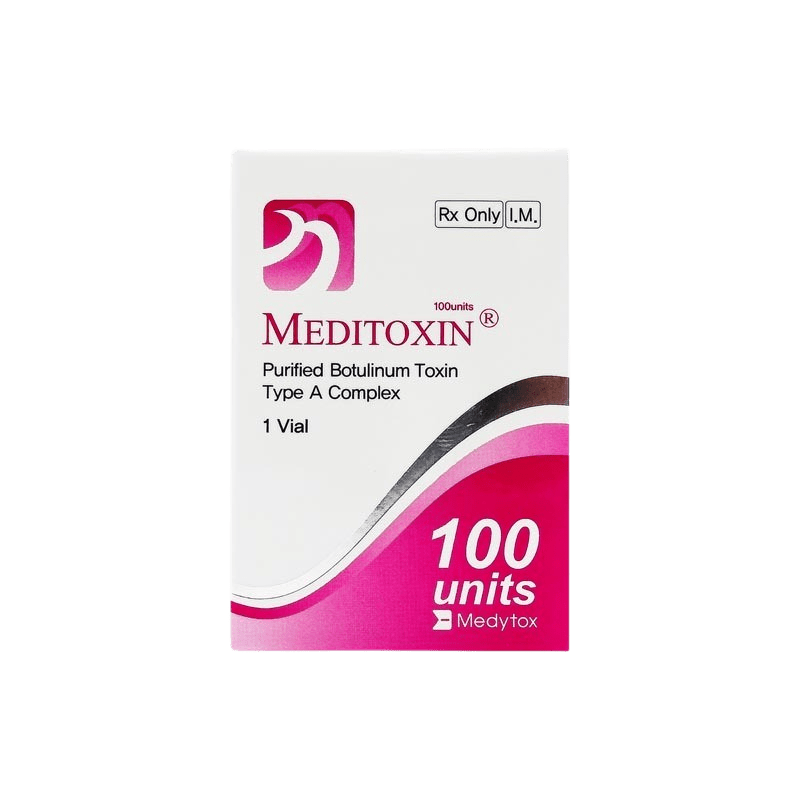
Meditoxin® is a botulinum toxin type A injectable supplied for professional intramuscular use in aesthetic and medical practices. Licensed clinics and healthcare professionals can order Meditoxin 100U for treatment-room protocols that require a single-use neurotoxin vial, clear lot documentation, and controlled inventory handling. Med Wholesale Supplies supports US distribution for professional accounts sourcing brand-name medical products through vetted supply channels.
This preparation is used by qualified injectors to temporarily reduce localized muscle activity by inhibiting acetylcholine release at targeted neuromuscular junctions. In practice, that effect supports aesthetic protocols for dynamic facial lines and selected medical protocols involving focal muscle overactivity, when use is consistent with professional training, labeling, and clinic governance. It should be administered only by appropriately trained healthcare professionals using established screening, reconstitution, aseptic technique, and follow-up procedures.
Meditoxin 100U Price and Clinic Ordering
Clinics can sign in to view current Meditoxin price information, contract terms, and any available volume tiers tied to professional account status. The strength associated with this item is Meditoxin 100 Units, so purchasing teams should match the vial strength in the cart to the procedure protocols and inventory planning approved by the clinic. Pricing can vary by account, order volume, and supply conditions, so the account view is the practical place to reconcile cost with expected case load.
Account verification is required for professional purchasing. Order history, invoices, lot references, and shipment records should be retained with the clinic’s internal documentation so receiving staff, clinical leads, and compliance teams can reconcile product movement across rooms or locations. For broader category planning, purchasing teams may also review the botulinum toxins category to keep formulary discussions organized around comparable neurotoxin presentations.
Facilities that use scheduled treatment blocks often plan vial quantities around injector calendars, anticipated reconstitution workflow, and expected inventory rotation. Avoid ordering solely by projected demand if medical leadership has not confirmed the brand, dose-conversion assumptions, consent language, and training requirements for the protocol. Quick tip: Keep the vial strength, lot number, expiry date, and receiving date together in one inventory record.
What Meditoxin Is and How It Works
Meditoxin Type A contains botulinum toxin type A, a neurotoxin used to produce temporary local chemodenervation. Chemodenervation means a reduction in nerve-driven muscle contraction at the treated site. The product acts at the motor nerve terminal, reducing acetylcholine release and creating a reversible decrease in localized muscle activity.
In aesthetic workflows, clinics use this class of product for dynamic lines caused by repeated muscle movement, such as glabellar complex activity, forehead rhytids, and lateral canthal lines. In medical settings, trained specialists may use botulinum toxin products for selected muscle overactivity presentations when they fall within the clinician’s scope and protocol. Individual treatment plans, injection points, dilution, and follow-up intervals should be determined by qualified professionals, not by procurement staff or patient preference alone.
Onset is commonly observed within several days, with effects often lasting up to four months depending on the treated area, dose strategy, injection technique, and individual response. That general duration supports routine review cycles and follow-up scheduling. Clinics that want broader class context can review our Meditoxin clinical-use discussion for additional professional background.
Professional Applications and Protocol Fit
Meditoxin fits into clinic workflows that already support injectable neuromodulator evaluation, consent, photography, treatment mapping, sterile preparation, and post-procedure instructions. Because botulinum toxin units are product-specific, clinics should avoid assuming direct interchangeability between brands without medical director approval. Any protocol change should include updated staff training, patient-facing consent materials, adverse-event procedures, and inventory controls.
Aesthetic teams commonly organize neurotoxin appointments around consults, facial assessment, injection sessions, and follow-up visits. This structure helps injectors assess baseline muscle activity, document response, and determine whether future treatment intervals remain appropriate. Medical practices using botulinum toxin products for focal overactivity should align treatment records with the applicable indication, clinician scope, and product labeling available to the practice.
Some search and clinic discussions refer to Meditoxin Botox or Botox Meditoxin because both products belong to the botulinum toxin type A class. That wording should not be treated as proof that the products are identical. Brand-specific formulation, approved labeling, handling instructions, and clinic experience all matter when a medical director selects a neurotoxin for a protocol.
Vial Features, Documentation, and Workflow
The Meditoxin vial format supports procedure-room use, aseptic draw-up, and inventory control when handled according to the product documentation. Each unit should be received, stored, prepared, and documented according to the label and the clinic’s internal standard operating procedures. Staff should verify packaging integrity, lot number, expiry date, and required storage conditions before releasing the vial for clinical use.
- Single-use vial presentation supports controlled preparation for professional administration.
- Clear lot and expiry marking helps receiving teams maintain traceability.
- Intramuscular administration allows localized treatment by trained injectors.
- Standardized vial strength supports scheduling, stock counts, and room setup.
- Professional packaging supports movement from storage areas to procedure rooms.
- Label instructions should guide reconstitution media, preparation volume, and handling.
- Clinic protocols should define waste handling, documentation, and post-treatment review.
The product should not be mixed, substituted, or prepared outside the clinic’s authorized procedures. If multiple injectors work from the same inventory, assign responsibility for vial release, reconstitution documentation, and end-of-day reconciliation. These steps support recall readiness, reduce avoidable variation, and help administrators forecast future purchasing needs.
Composition and Clinical Mechanism
The active component is botulinum toxin type A. It reduces acetylcholine release at the neuromuscular junction, producing a temporary local effect on treated muscles. Excipients can vary by presentation, so the product label and accompanying documentation should be used for the complete ingredient list, contraindications, storage requirements, and preparation instructions.
Before treatment, qualified staff should review allergy history, previous neuromodulator exposure, relevant neuromuscular conditions, medication history, pregnancy or lactation considerations when applicable, and any prior unexpected response to botulinum toxin products. Screening should be documented consistently so injectors can identify patients who may need deferral, medical director input, or a different treatment plan.
For clinics comparing active formulations within the category, our Meditoxin brand selection can help separate Meditoxin-specific inventory from other neurotoxin items during purchasing discussions. This is especially useful for multi-site groups that need consistent naming in formularies, training files, and reorder lists.
Safety, Side Effects, and Precautions
Botulinum toxin products are generally well tolerated in professional practice when appropriate patients are selected and injections are performed by trained clinicians. Expected local reactions may include injection-site pain, swelling, redness, bruising, tenderness, or itching. Other reported effects can include headache, dry mouth, fatigue, transient eyelid droop, blurred vision, or discomfort near the treated area.
Serious events have been reported with botulinum toxins, including symptoms consistent with spread of toxin effect. These may include generalized muscle weakness, difficulty swallowing, difficulty speaking, breathing problems, or vision changes. Clinics should maintain procedures for urgent evaluation and escalation if a patient reports symptoms that extend beyond the intended local effect or interfere with breathing, swallowing, or normal function.
Contraindication and precaution review should be completed before administration. Patients with certain neuromuscular disorders, active infection at the injection site, known hypersensitivity to components, or recent exposure to medications that affect neuromuscular transmission may need additional assessment. Medical leadership should define how the practice screens for aminoglycoside antibiotics, muscle relaxants, anticoagulants, antiplatelet therapy, and other factors that may influence treatment risk or bruising.
Botulinum toxin units are not interchangeable across products. A unit of Meditoxin should not be treated as automatically equivalent to a unit of another brand unless the clinic has a medically approved conversion policy. For teams building safety training around alternatives, the Botox reference product can be reviewed as a familiar comparator within the same therapeutic class.
Storage, Handling, and US Logistics
Follow the labeled storage and handling requirements for Meditoxin from receipt through administration. Receiving staff should inspect the package, record lot and expiry information, and place the vial into the correct storage environment without unnecessary delay. If the product requires reconstitution, only the media, volume, technique, and timing approved in the product documentation and clinic SOP should be used.
We coordinate professional-account fulfillment through vetted channels with temperature-controlled handling when required and tracked US delivery. Logistics records should be matched to internal receiving notes so inventory teams can identify which vials are available for scheduled procedures. If a site operates multiple rooms or locations, maintain a transfer log whenever product moves from central storage to a treatment area.
Storage deviations, damaged packaging, unclear labeling, or uncertain chain-of-custody events should be escalated before use. Do not attempt to correct a questionable vial through ad hoc handling decisions. A clear quarantine process protects patients, injectors, and the clinic’s compliance record.
Comparable Neurotoxin Choices
Clinics often evaluate Meditoxin alongside other botulinum toxin type A products to align injector training, handling preferences, onset expectations, and patient communication materials. Differences may include formulation, complexing proteins, storage expectations, preparation steps, vial strength, and the evidence base available to the clinic. Selection should be led by the medical director and supported by consistent documentation.
For Korean botulinum toxin alternatives, teams may review Botulax Korean or Re N Tox during formulary discussions. Clinics that prefer a liquid neuromodulator format can review Innotox 100U, while higher-unit planning may involve Nabota 200UI 1 Vial. Product choice should account for training, preparation workflow, brand familiarity, and the clinic’s consent language.
Questions such as whether Meditoxin is a “good Botox” are better framed clinically: is this botulinum toxin type A product appropriate for the clinic’s protocols, patient population, handling capacity, and injector experience? Botox is a widely recognized brand in the class, but Meditoxin has its own manufacturer, documentation, and clinical-use considerations. The safest comparison is a medically supervised, brand-specific evaluation rather than a casual substitution.
Common Clinic Questions During Evaluation
Clinics often ask whether Meditoxin can be used for the same aesthetic patterns as other botulinum toxin type A products. The class mechanism supports temporary reduction of selected muscle activity, but the exact protocol must be product-specific. Injection mapping, dose selection, dilution, and treatment intervals should be defined by trained clinicians using the product documentation and the practice’s governance process.
Another frequent question is how Meditoxin differs from mesotox techniques. Mesotox generally refers to a technique involving superficial microinjections of diluted botulinum toxin, while Meditoxin is the brand product being prepared and administered. A technique name does not replace product labeling, sterile preparation standards, or medical oversight.
Clinics also ask whether Xeomin is safer than Botox or other toxin products. Safety depends on patient selection, brand-specific labeling, injector technique, dose, medical history, and adverse-event monitoring. A product with fewer or different accessory proteins is not automatically safer for every patient. Medical leadership should evaluate each neurotoxin against the clinic’s protocols and patient risk profile.
Authoritative Sources
For clinical context on botulinum toxin products and Meditoxin, consult authoritative and primary sources alongside the product documentation available to your clinic.
- MedlinePlus: Botulinum toxin injections
- Peer-reviewed comparative study of Meditoxin
- Medytox Meditoxin product information
Ready to proceed? Sign in to confirm professional account access, view current terms, and place Meditoxin 100U into your clinic procurement workflow.
This content is for informational purposes only and is not a substitute for professional medical advice.
Frequently Asked Questions
Who can order Meditoxin 100U?
Meditoxin 100U is intended for licensed clinics, med spas, aesthetic practices, and healthcare professionals using professional purchasing accounts. Account verification and clinic documentation may be required before purchase.
Is Meditoxin the same as Botox?
Meditoxin and Botox are both botulinum toxin type A products, but they are not automatically interchangeable. Clinics should treat each brand as distinct and follow product-specific labeling, training, and medical director guidance.
How should clinics handle Meditoxin vials on receipt?
Receiving staff should inspect packaging, record lot and expiry details, follow labeled storage requirements, and keep the vial within the clinic’s authorized handling process. Any damaged or questionable unit should be quarantined before clinical use.
What side effects should clinics discuss before treatment?
Common effects may include injection-site pain, swelling, redness, bruising, itching, headache, dry mouth, fatigue, eyelid droop, or blurred vision. Serious symptoms such as breathing or swallowing difficulty require urgent clinical evaluation.
Can Meditoxin be substituted for another neurotoxin during a protocol?
Substitution should occur only with medical director approval. Botulinum toxin units are product-specific, and changes may require updated training, consent materials, documentation, and follow-up procedures.
Specifications
- Main Ingredient: Botulinum Toxin Type A
- Manufacturer: Medytox Inc
- Drug Class: Neuromuscular Blockers
- Generic Name: Botulinum Toxin Type A
- Package Contents: 1 Vial
- Storage Requirements: Cool Temperature (2℃~8℃)
- Main Usage:
About the Brand
Meditoxin
Meditoxin is a reputable and highly recognized medical brand known for its efficacy in treating a wide range of health conditions and improving cosmetic appearances. Steadfast in delivering premium quality products, Meditoxin's safety and dependability has put it on the forefront of the medical industry. Some of its key offerings include solutions like botulinum toxin type A, widely used for their muscle-relaxing properties. Your search for Meditoxin ends here at medwholesalesupplies.com as we proudly facilitate the purchase of Meditoxin on our platform. Now, having access to this outstanding medical brand is simpler than ever. Opt for the convenience of online shopping with us and get Meditoxin delivered right to your doorstep. Our platform sets itself apart with competitive pricing, reliable customer service, ensuring a smooth and gratifying buying experience. Be confident when you choose to buy Meditoxin on medwholesalesupplies.com as we guarantee a genuine, authentic product. We source our products strictly from reliable and trustworthy suppliers, ensuring you get the best quality Meditoxin available on the market. Our dedication to customer satisfaction and product authenticity makes us stand out, cementing our position as your preferred destination for all Meditoxin purchases. Do not delay, visit medwholesalesupplies.com right away and relish the ease and dependability of buying Meditoxin online.
Browse Meditoxin Products
Here to help
Questions about ordering, delivery or products? You can email our team here or call now at 1-800-630-9757 and be connected with your dedicated Account Manager
Related Products
Prolia® (International English)
Prescription Medication
$529.00 - $549.00
You save
You save
Evenity® (English Alternative)
Injectable Medication
$1,229.00 - $1,299.00
You save
You save
Intraline® For Men
Dermal Filler
$59.00 - $79.00
You save
You save
RejuvaNAD+ Pro
Injectable Medication
$237.00 - $249.00
You save
You save
Related Articles
Prednisone in Clinical Care: Uses, Risks, and Monitoring
Prednisone is a prescription systemic corticosteroid used to reduce inflammation or suppress immune activity in…
Lip Fillers Swelling Stages: Timeline, Safety, and Follow-Up
Lip fillers swelling stages usually follow a short inflammatory course: swelling appears soon after injection,…
Hypopigmentation of the Skin: Assessment and Care
Hypopigmentation of the skin means one or more areas look lighter than the surrounding skin.…
Radiesse vs Sculptra: Selection Factors for Clinics
Radiesse vs Sculptra is best understood as a comparison between two collagen-stimulating injectables with different…
Hyaluronic Acid Under-Eye Filler: Safety and Workflow
Hyaluronic acid under-eye filler is an injectable soft-tissue filler used by trained aesthetic clinicians to…
Dermal Filler Types: Materials, Uses, and Clinic Fit
Dermal filler types are usually grouped by their base material, tissue behavior, and expected role…
What Is Dysport? Clinical Uses, Safety, and Workflow
For clinic teams asking what is Dysport, the short answer is simple: Dysport is a…
Biostimulators in Aesthetic Care: Selection and Safety
Biostimulators are injectable aesthetic products used to encourage a controlled tissue response, often involving new…