

- You must be logged in to add items to the cart.
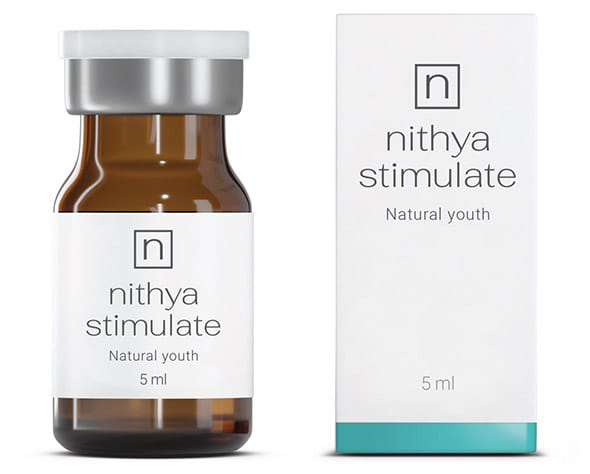
Nithya Stimulate
Order Nithya Stimulate for Clinics
Dermal Filler
$189.00
You save (%)
Description
Nithya Stimulate is a sterile clinic-use collagen biostimulation solution supplied in 5 mL vials for intradermal administration by trained professionals. Licensed clinics, med spas, and healthcare professionals can order Nithya Stimulate vials for structured skin booster and mesotherapy protocols. The 5 mL x 5 vial pack supports treatment-room scheduling, batch documentation, and professional inventory control.
This preparation combines Tetrapeptide-2, sodium hyaluronate, and hydrolyzed collagen for aesthetic workflows focused on hydration support, elasticity, and texture refinement. It is intended for professional handling and clinician-directed placement, not self-administration. Practices commonly use products in this class when building staged protocols for the face, neck, and décolleté.
Nithya Stimulate Price, Pack, and Ordering Details
Sign in to view current Nithya Stimulate price information and clinic purchasing terms. Pack-level visibility helps administrators plan training days, seasonal skin booster campaigns, and maintenance schedules without relying on single-session forecasting. Because the supplied format is 5 mL x 5 vial, teams can align stock counts with room utilization and documented treatment series.
Order details may include clinic documentation or professional-use verification before supply is released. This supports appropriate B2B sourcing for licensed practices and helps maintain traceability from intake through treatment-room use. When your clinic is planning recurring schedules, coordinate orders with expected appointment volume rather than estimating only from product category demand.
Quick tip: Record pack quantity, lot, and expiry information at intake so treatment notes and inventory systems stay aligned.
What Nithya Stimulate Is and How It Works
Nithya Stimulate contains a peptide-hyaluronate-collagen solution formulated for intradermal aesthetic procedures. The formula uses Tetrapeptide-2 to support matrix-focused protocols, sodium hyaluronate to provide water-binding capacity, and hydrolyzed collagen to supply low–molecular weight collagen fragments. These components fit professional skin booster strategies where hydration support and dermal quality are central goals.
In practical clinic language, a collagen stimulator is used to support the skin’s structural environment rather than simply placing volume. Nithya Stimulate is positioned for biostimulation workflows in which controlled superficial placement, treatment spacing, and patient selection are determined by the clinician. The product’s rheology and vial format support precise draw-up and organized intradermal technique by trained staff.
Clinics should avoid turning ingredient claims into guaranteed outcomes. Response can vary by skin quality, age-related changes, treatment history, lifestyle factors, and the broader protocol. Professional assessment remains essential when deciding whether a peptide-forward skin booster, a collagen-focused product, or another aesthetic class best fits the treatment plan.
Professional Applications in Aesthetic Practice
This preparation supports clinic workflows focused on complexion uniformity, hydration support, and textural refinement. Providers may incorporate it into treatment series for the face, neck, or décolleté, or use it as an adjunct around localized concerns where elasticity support is desired. In mesotherapy pathways, it may be selected when a clinic prefers a peptide-hyaluronate-collagen composition.
Nithya Stimulate injectable use should remain within professional protocols and staff competency. Injection depth, spacing, session sequencing, and combination planning depend on clinician judgment, device use, patient factors, and clinic standard operating procedures. If pairing with light needling, energy-based devices, or post-procedure recovery plans, align timing with the treatment rationale and manufacturer guidance available to your practice.
Many clinics build tiered aesthetic menus that separate hydration-led boosters, collagen stimulators, and volumizing products. That separation helps staff explain protocol intent accurately and prevents unrealistic expectations. For broader service planning, administrators may also review skin booster education to support internal training and consultation consistency.
Key Features for Clinic Inventory
- Supplied as 5 mL x 5 vial for professional clinic use.
- Combines Tetrapeptide-2, sodium hyaluronate, and hydrolyzed collagen.
- Designed for intradermal administration by trained healthcare professionals.
- Supports skin booster, mesotherapy, and collagen biostimulation workflows.
- Vial packaging assists draw-up control and documented stock reconciliation.
- Batch and expiry tracking can be integrated into clinic inventory systems.
- Useful for staged protocols, staff training blocks, and appointment clusters.
The format also helps clinics standardize cart setup. Treatment rooms can be stocked according to the day’s schedule, while unused vials remain documented according to internal handling procedures. This reduces setup variability and helps teams maintain consistent product checks before each appointment.
Composition and Ingredient Role
The stated active constituents are Tetrapeptide-2, sodium hyaluronate, and hydrolyzed collagen. Tetrapeptide-2 is used in aesthetic formulations for matrix-oriented support. Sodium hyaluronate is a salt form of hyaluronic acid that binds water and contributes to a hydrated tissue environment. Hydrolyzed collagen provides smaller collagen fragments that can complement peptide-led regimens.
These ingredients do not replace clinical technique. Product selection, placement pattern, and treatment intervals determine how a clinic integrates the formula into a service menu. Teams that use ingredient-led protocols may find it useful to train staff on the difference between hydration support, collagen signaling, and volumization so each product is positioned accurately.
For additional background on peptide-led aesthetic concepts, clinic teams can consult peptides for skin. That type of education is useful for staff alignment, but patient-specific treatment decisions should remain with the licensed provider performing the assessment.
Handling, Documentation, and Treatment-Room Workflow
Nithya Stimulate should be handled as a sterile professional-use aesthetic product. Follow the manufacturer’s instructions, clinic aseptic technique, and any applicable storage requirements used by your practice. If transport conditions require it, coordinate temperature-controlled handling when required and tracked US delivery so receiving staff can reconcile the shipment promptly.
At intake, document product name, pack quantity, lot number, expiry date, and storage location. Before use, confirm that the vial and label match the planned protocol and that the product appearance is acceptable under clinic procedures. After treatment, record the administered product details in the chart according to your practice’s documentation standards.
Efficient workflows often depend on small operational habits. Assigning vials by treatment room, preparing standardized consent packets, and keeping post-care instructions consistent can reduce chair-time variability. These steps do not change clinical decision-making, but they help the team execute a defined protocol with fewer administrative gaps.
Safety, Side Effects, and Professional Precautions
Common local reactions after intradermal aesthetic procedures may include temporary redness, tenderness, swelling, bruising, itching, or a burning sensation. The current product information notes that transient redness or burning can occur and typically subsides within hours. Clinics should document expected local reactions during consent and give clear instructions for contacting the practice if symptoms are severe, persistent, or unusual.
Providers should screen for factors that may affect treatment suitability, including active skin infection, inflammation at the treatment site, known sensitivity to product components, bleeding risk, recent procedures, and relevant medical history. Do not inject into compromised tissue or use the product outside professional training and manufacturer guidance. Emergency procedures should be in place for rare hypersensitivity-type events associated with injectable aesthetic products.
Technique also matters for safety. Intradermal placement should be performed only by trained professionals using appropriate aseptic preparation and injection materials. Staff should avoid casual substitution between collagen stimulators, fillers, and hydration boosters because product behavior, placement goals, and adverse-event management may differ.
How Clinics Use Nithya Stimulate in Protocol Planning
Clinics may schedule this product as part of a structured course rather than a one-off cosmetic add-on. A staged approach can help standardize photography, outcome notes, and follow-up timing. It also helps inventory teams forecast how many packs are needed when several providers run similar protocols during the same campaign.
When planning a protocol, separate clinical decisions from stock decisions. Clinical leads should define treatment areas, candidate profiles, contraindications, aftercare, and escalation steps. Administrators can then map those decisions to appointment blocks, vial allocation, room setup, and reorder thresholds.
Why it matters: Clear protocol ownership reduces variation between providers and improves inventory traceability.
Comparable Clinic Products and Category Fit
Nithya Stimulate sits within a broader group of professional aesthetic products used to support dermal quality. Clinics that want to remain within the Nithya family may evaluate Nithya Shield or Nithya Endless Beauty when building adjacent protocols. Product selection should be based on the intended treatment objective, ingredient profile, and provider experience.
For collagen-focused comparison, some practices review alternatives such as Neauvia Stimulate or Karisma RH Collagen Softfiller Biorestitutivo Face. These products should not be treated as automatic substitutes. Confirm composition, handling, placement approach, and expected clinical role before changing a protocol.
Practices that offer both boosters and fillers can also browse dermal fillers for adjacent menu planning. Fillers and skin boosters may share treatment-room supplies, but their indications, placement strategies, and patient communication points can differ substantially.
Pricing and Budget Planning for Practices
Current Nithya Stimulate cost is visible after sign-in, allowing clinics to plan purchasing around real pack quantity rather than assumptions from online averages. Budget owners may compare collagen stimulator injectable price benchmarks across several products, but the final decision should also account for training, protocol length, documentation time, and expected appointment volume.
Multi-room practices often forecast by campaign rather than by single appointment. A 5-vial pack can be assigned to a training group, launch week, or maintenance schedule, depending on clinic demand. Keep reorder points conservative enough to avoid interrupting staged protocols, especially when multiple providers share the same inventory.
Price should not be the only selection factor. Clinics should weigh product composition, provider familiarity, patient selection criteria, adverse-event procedures, and compatibility with existing SOPs. A lower per-vial cost may not help if it creates extra training complexity or documentation inconsistency.
Availability, Substitutions, and Reorder Planning
Nithya Stimulate is offered for clinic ordering through professional supply channels. Inventory teams should monitor internal usage rates, expiry dates, and upcoming campaign calendars before placing replenishment requests. This is especially important when a product is used in a series, because continuity can matter for both scheduling and documentation.
If a clinic considers substituting another peptide-hyaluronate product, the clinical lead should approve the change before staff modify protocols. Similar category placement does not guarantee identical ingredient behavior, injection characteristics, or patient communication. Document any substitution rationale in the clinic’s internal materials so staff do not mix product roles across treatment menus.
Authoritative and Training Sources
Clinics should rely on manufacturer instructions, professional training materials, and current aesthetic medicine references when finalizing use protocols. Internal SOPs should address aseptic handling, candidate screening, adverse-event response, consent language, lot tracking, and post-procedure communication. Product category articles can support education, but they should not replace hands-on training or professional supervision.
- Manufacturer product literature for Nithya Stimulate composition, handling, and intended professional use.
- Clinic training records for intradermal injection technique and aseptic procedure.
- Peer-reviewed aesthetic medicine references on hyaluronic acid hydration, peptide-containing formulations, and collagen-supportive treatment planning.
- Internal quality-assurance procedures for batch tracking, expiry management, and adverse-event documentation.
Key Details at a Glance
| Product | Nithya Stimulate |
|---|---|
| Format | Sterile solution in professional vials |
| Pack | 5 mL x 5 vial |
| Composition | Tetrapeptide-2, sodium hyaluronate, hydrolyzed collagen |
| Use context | Clinician-directed intradermal skin booster and collagen biostimulation protocols |
| Audience | Licensed clinics, med spas, and healthcare professionals |
| Workflow role | Protocol planning, inventory tracking, and treatment-room administration |
Ready to align clinic stock with upcoming protocols? Sign in to view current pack pricing, confirm professional ordering requirements, and schedule supply around training days or campaign calendars.
This content is for informational purposes only and is not a substitute for professional medical advice.
Frequently Asked Questions
What is Nithya Stimulate used for in clinics?
Nithya Stimulate is used in professional aesthetic workflows as an intradermal skin booster and collagen biostimulation solution. Clinics may incorporate it into protocols focused on hydration support, elasticity, and skin texture refinement.
What is included in the Nithya Stimulate pack?
The supplied pack is 5 mL x 5 vial. This format supports appointment planning, treatment-room allocation, and batch documentation for licensed clinics and healthcare professionals.
Who should administer Nithya Stimulate?
Nithya Stimulate should be administered only by trained healthcare professionals using appropriate intradermal technique and aseptic handling. It is not intended for self-administration.
What side effects can occur after Nithya Stimulate injections?
Temporary local reactions may include redness, burning, tenderness, swelling, bruising, or itching. The current product information notes that transient redness or burning can occur and typically subsides within hours, but clinics should evaluate persistent or unusual symptoms.
How should clinics document Nithya Stimulate use?
Clinics should record the product name, lot number, expiry date, treatment area, quantity used, provider, and any relevant post-procedure notes according to internal SOPs and applicable professional standards.
Can Nithya Stimulate be substituted with another skin booster?
Substitution should be approved by the clinical lead. Products in the same broad category may differ in composition, handling, placement strategy, and protocol role, so staff should not interchange them without documented guidance.
Specifications
- Main Ingredient: Cosmetic Injectable
- Manufacturer: Euroresearch
- Drug Class: Enzyme
- Generic Name: Tetrapeptide-2, sodium hyaluronate, hydrolysed collagen.
- Package Contents: 5 mL x 5 Vial
- Storage Requirements: Room Temperature (2℃~25℃)
- Main Usage: Deep Wrinkle Filler
Here to help
Questions about ordering, delivery or products? You can email our team here or call now at 1-800-630-9757 and be connected with your dedicated Account Manager
Related Products
JALUPRO® PLUS 4ML
Skin Rejuvenation Treatment
$86.00 - $89.00
You save (%)
You save (%)
$339.00
You save (%)
You save (%)
Select options
This product has multiple variants. The options may be chosen on the product page
Juvéderm® SKINVIVE
Dermal Filler
$339.00 - $359.00
You save (%)
You save (%)
$86.00 - $119.00
You save (%)
You save (%)
Related Articles
Lip Fillers Swelling Stages: Timeline, Safety, and Follow-Up
Lip fillers swelling stages usually follow a short inflammatory course: swelling appears soon after injection,…
Hypopigmentation of the Skin: Assessment and Care
Hypopigmentation of the skin means one or more areas look lighter than the surrounding skin.…
Radiesse vs Sculptra: Selection Factors for Clinics
Radiesse vs Sculptra is best understood as a comparison between two collagen-stimulating injectables with different…
Hyaluronic Acid Under-Eye Filler: Safety and Workflow
Hyaluronic acid under-eye filler is an injectable soft-tissue filler used by trained aesthetic clinicians to…
Dermal Filler Types: Materials, Uses, and Clinic Fit
Dermal filler types are usually grouped by their base material, tissue behavior, and expected role…
What Is Dysport? Clinical Uses, Safety, and Workflow
For clinic teams asking what is Dysport, the short answer is simple: Dysport is a…
Biostimulators in Aesthetic Care: Selection and Safety
Biostimulators are injectable aesthetic products used to encourage a controlled tissue response, often involving new…
Do You Ovulate on an IUD? Clinic Counseling Points
Clinicians hear the shorthand question do you ovulate on iud, but the practical answer depends…