
CROMA POLYPHIL™ EYE
Order Croma PhilArt Eye for Clinics
Skin Revitalizing Treatment
$139.00
You save
Description
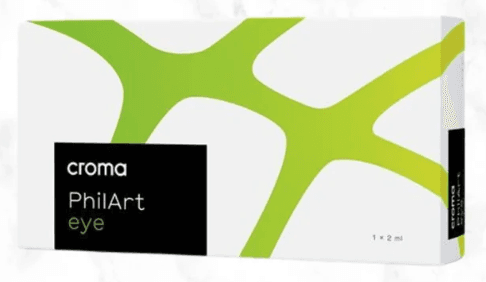
Croma PhilArt Eye is a periocular polynucleotide injectable for professional aesthetic use around the under-eye area. Licensed clinics and healthcare professionals can order the 2 mL x 1 syringe pack for treatment-room protocols that require a dedicated eye-area formulation. Each syringe contains 15 mg/2 mL polynucleotides and is intended for local injection by trained clinicians.
This preparation fits clinics that want a purpose-built periocular option rather than adapting a generalized face skin booster for delicate under-eye tissue. It can be used in staged aesthetic plans, including maintenance visits and protocols scheduled around device-based or injectable procedures. Professional assessment, injection technique, and patient-specific suitability remain central to safe use.
Croma PhilArt Eye Price, Pack, and Ordering Details
Sign in with a professional account to view the current Croma PhilArt Eye price, contract tiers, and available quantity for clinic ordering. The pack specification is 2 mL x 1 prefilled syringe, with a concentration of 15 mg/2 mL polynucleotides. The single-syringe format helps practices forecast usage for under-eye protocols without adding unnecessary multi-unit inventory.
Clinic credentials or professional documentation may be requested before purchase. Once your account is set up, you can route the item to your facility address and receive order confirmation with tracking. Our team works through vetted distributor channels, and shipments use temperature-controlled handling when required and tracked US delivery.
Quick tip: Match ordering quantities to scheduled periocular sessions, staff injector coverage, and expiry-dated inventory rotation.
What Croma PhilArt Eye Is and How It Works
Croma Pharma PhilArt Eye is a sterile injectable preparation developed for the delicate periorbital area. It contains polynucleotides, which are biopolymer fragments used in aesthetic medicine to support tissue quality and skin-conditioning protocols. In clinical practice, providers may position this type of preparation as a skin booster for texture, elasticity, and surface smoothness around the eyes.
The product is not an eye drop and should not be described or handled as an ophthalmic drop. It is an injectable for professional administration in the periocular region. That distinction matters for staff training, consent materials, procedure setup, and patient education, because injection-related precautions differ from topical or ophthalmic products.
Clinics often evaluate Croma PhilArt Eye within the broader Croma injectable portfolio. Practices that use other Croma polynucleotide products may also review Croma PhilArt and Croma PhilArt Next when building face, eye, and staged rejuvenation protocols. For manufacturer-family browsing, the Croma brand catalog can help purchasing teams keep related products organized.
Professional Periocular Applications
Croma PhilArt Eye is used by trained aesthetic clinicians for under-eye and eye-contour protocols where skin quality is the primary focus. It may be selected for tissue-conditioning plans, interval maintenance, or as one component of a broader aesthetic sequence. The under-eye region has thin skin and visible vascularity, so product choice, placement, volume control, and conservative technique are important.
In multimodal workflows, clinics may schedule a polynucleotide injectable around treatments such as light-based procedures, gentle resurfacing, microneedling, radiofrequency, or other injectables. Timing should follow the clinic’s protocol, manufacturer guidance, and the treating professional’s assessment. The goal is to integrate the syringe into a plan without overlapping procedures in a way that increases irritation or makes outcomes hard to assess.
For category planning, Croma PhilArt Eye belongs naturally with professional skin boosters and mesotherapy products. These categories can support purchasing teams that stock periorbital boosters, full-face conditioners, and procedure-supporting injectables for separate treatment pathways.
Key Features for Clinic Workflows
- Periocular focus: formulated for the under-eye area and surrounding tissue.
- Pack configuration: supplied as 2 mL x 1 syringe for single-patient clinical use.
- Concentration: contains 15 mg/2 mL polynucleotides.
- Sterile presentation: intended for trained professional injection using appropriate aseptic technique.
- Inventory control: labeled with lot and expiry information for documentation.
- Protocol flexibility: may be sequenced around other aesthetic procedures when clinically appropriate.
- Handling profile: prefilled syringe format supports efficient room setup.
- Treatment-area specificity: gives practices a dedicated option for delicate periocular tissue.
These features are most useful when clinic teams standardize storage, consent documentation, procedure notes, and post-treatment communication. A dedicated item code for the under-eye area also helps purchasing staff avoid substituting facial products when a periocular-specific preparation is preferred.
Composition and Ingredient Profile
The active component is polynucleotides at 15 mg/2 mL in a sterile injectable solution. Polynucleotides are commonly discussed in aesthetic medicine as regenerative or biostimulatory skin-conditioning ingredients, but product performance depends on appropriate candidate selection, injection method, session spacing, and clinical judgment. Avoid presenting expected results as guaranteed or uniform across patients.
There are no additional actives listed in the supplied product materials. Before use, staff should consult the box, labeling, and any enclosed leaflet for excipients, storage instructions, contraindications, preparation steps, and expiration information. Clinics should also keep lot and expiry details in the treatment record to support traceability.
Packaging, Storage, and Treatment-Room Handling
Each pack contains one 2 mL syringe. The unit arrives sealed for professional storage according to the manufacturer’s instructions. Do not use the syringe if the sterile barrier is compromised, the solution appears abnormal, or the expiry date has passed. Needles, cannulas, antiseptic supplies, and ancillary materials should be selected by the treating clinic based on technique and internal protocol.
Periocular injections require careful aseptic preparation and anatomical awareness. Staff should prepare the room so that product identity, lot number, expiry date, patient identity, and treatment area can be verified before administration. After use, the syringe and sharps should be disposed of according to clinic policy and applicable medical-waste procedures.
Why it matters: Traceable documentation protects clinic workflow, supports inventory audits, and strengthens response procedures if a lot question arises.
Safety, Side Effects, and Professional Precautions
Croma PhilArt Eye should be administered only by qualified professionals trained in periocular injection techniques. Common injection-site reactions may include redness, swelling, tenderness, bruising, or mild discomfort. These effects are typically short-lived, but clinics should provide post-procedure instructions and advise patients when to seek clinical review for persistent, worsening, or unusual symptoms.
Periocular treatments also require caution because the area is anatomically sensitive. Clinicians should assess medical history, skin condition, prior procedures, infection risk, allergies, medications that may increase bruising, and any contraindications described in the manufacturer materials. Active infection, inflamed skin, or unresolved complications from earlier procedures may require deferral or a revised plan.
Do not inject into the eye, and do not use the product as an eye drop. Staff should avoid unsupported claims about permanent correction, guaranteed dark-circle improvement, or filler-like volumization. If a protocol also includes hyaluronic acid filler, lasers, peels, or microneedling, sequence each procedure so inflammation, bruising, and healing can be monitored clearly.
How It Fits With Other Eye-Area Options
Croma PhilArt Eye is best understood as a polynucleotide skin-conditioning injectable for the eye contour, not as a conventional tear-trough filler. Clinics that need structural volume correction may consider a hyaluronic acid product designed for the under-eye region, while practices focused on skin texture may choose a skin booster pathway. The right category depends on assessment findings, staff training, and the intended clinical endpoint.
For adjacent periocular products, purchasing teams may review Plinest Eye as another eye-area polynucleotide option, Jalupro Young Eye for an alternative under-eye injectable category, and Restylane Eyelight when HA-based tear-trough correction is the relevant pathway. These products are not interchangeable by default; each has its own composition, technique, and suitability considerations.
Clinics building a broader service line can also use educational content such as skin booster injection planning and mesotherapy treatment considerations to align purchasing decisions with staff protocols. For eye-area filler planning, the clinic-focused under-eye filler discussion at under-eye filler duration may help teams separate filler expectations from booster use.
Benefits for Aesthetic Practices
- Supports a targeted under-eye service pathway within aesthetic clinics.
- Reduces the need to adapt generalized facial boosters for periocular use.
- Creates a clear inventory item for eye-contour protocols.
- Pairs with staged treatment planning when procedures are appropriately spaced.
- Helps staff document lot, expiry, and treatment-area use consistently.
- Provides a professional syringe format that fits standard injectable workflows.
- Allows purchasing teams to plan periocular stock separately from full-face products.
Operationally, the main benefit is clarity. One dedicated periocular syringe can simplify room preparation, staff communication, and replenishment planning. Clinically, it gives trained injectors a product designed for a high-visibility treatment area where precision and conservative planning matter.
Ordering and Logistics for Licensed Clinics
Licensed clinics, med spas, and healthcare professionals can order Croma PhilArt Eye through a professional account. Sign in to view live pricing, account-level terms, and current ordering quantities. If your practice manages several locations, align ordering with appointment volume, injector availability, and product expiration dates.
For first-time orders, ensure your account information and facility address are current before checkout. Clinic documentation may be requested for professional-use products. After purchase, order confirmations and shipment tracking support receiving, inventory intake, and treatment-room scheduling.
Store incoming units according to the manufacturer’s guidance and separate them from expired or quarantined stock. Staff receiving the shipment should inspect packaging, confirm the product name and pack size, record lot and expiry details, and escalate any discrepancy before the product enters clinical use.
Availability and Substitution Planning
Croma PhilArt Eye is available for professional ordering, but lot-level supply can vary across distributor channels. If your usual quantity is constrained, substitute only after reviewing the clinical purpose, ingredient class, treatment area, and administration technique. Periocular products should not be swapped solely because they appear in the same broad skin-booster category.
When building a substitution pathway, separate polynucleotide eye boosters, HA-based eye fillers, and broader mesotherapy products. This prevents purchasing decisions from unintentionally changing the procedure category. Staff should also update consent templates, procedure notes, and aftercare instructions when a different product is selected.
Authoritative Sources
This content is for informational purposes only and is not a substitute for professional medical advice.
Frequently Asked Questions
Who can order Croma PhilArt Eye?
Croma PhilArt Eye is intended for licensed clinics, med spas, and healthcare professionals using professional aesthetic protocols. A professional account and clinic documentation may be required before ordering.
What is included in one Croma PhilArt Eye pack?
Each pack contains one 2 mL syringe. The supplied concentration is 15 mg/2 mL polynucleotides, and the unit is intended for single-patient professional use.
Is Croma PhilArt Eye an eye drop?
No. Croma PhilArt Eye is a periocular injectable for trained clinical administration. It should not be handled, marketed, or administered as an ophthalmic eye drop.
What side effects should clinics discuss before treatment?
Clinics should discuss injection-site reactions such as redness, swelling, tenderness, bruising, and mild discomfort. Patients should also receive instructions on when to contact the clinic for persistent, worsening, or unusual symptoms.
How should clinics store and document this syringe?
Store the syringe according to the manufacturer’s instructions and keep it sealed until professional use. Record the product name, lot number, expiry date, treatment area, and relevant procedure notes in the clinical record.
Can Croma PhilArt Eye be used with fillers or device treatments?
It may be incorporated into staged aesthetic plans when clinically appropriate. Timing around fillers, lasers, peels, microneedling, or radiofrequency should follow clinic protocol, manufacturer guidance, and the treating professional’s assessment.
Specifications
- Main Ingredient: Polynucleotides
- Manufacturer: Croma Pharma
- Drug Class: Cosmetic Injectable
- Generic Name: Polynucleotides
- Package Contents: 2 mL x 1 Syringe
- Storage Requirements: Room Temperature (2℃~25℃)
- Main Usage: Eye Rejuvenation
Here to help
Questions about ordering, delivery or products? You can email our team here or call now at 1-800-630-9757 and be connected with your dedicated Account Manager
Related Products
Evenity® (English Alternative)
Injectable Medication
$1,229.00 - $1,299.00
You save
You save
Intraline® For Men
Dermal Filler
$59.00 - $79.00
You save
You save
RejuvaNAD+ Pro
Injectable Medication
$237.00 - $249.00
You save
You save
Teosyal® RHA 4
Aesthetic Surgery Product
$259.00 - $279.00
You save
You save
Related Articles
Prednisone in Clinical Care: Uses, Risks, and Monitoring
Prednisone is a prescription systemic corticosteroid used to reduce inflammation or suppress immune activity in…
Lip Fillers Swelling Stages: Timeline, Safety, and Follow-Up
Lip fillers swelling stages usually follow a short inflammatory course: swelling appears soon after injection,…
Hypopigmentation of the Skin: Assessment and Care
Hypopigmentation of the skin means one or more areas look lighter than the surrounding skin.…
Radiesse vs Sculptra: Selection Factors for Clinics
Radiesse vs Sculptra is best understood as a comparison between two collagen-stimulating injectables with different…
Hyaluronic Acid Under-Eye Filler: Safety and Workflow
Hyaluronic acid under-eye filler is an injectable soft-tissue filler used by trained aesthetic clinicians to…
Dermal Filler Types: Materials, Uses, and Clinic Fit
Dermal filler types are usually grouped by their base material, tissue behavior, and expected role…
What Is Dysport? Clinical Uses, Safety, and Workflow
For clinic teams asking what is Dysport, the short answer is simple: Dysport is a…
Biostimulators in Aesthetic Care: Selection and Safety
Biostimulators are injectable aesthetic products used to encourage a controlled tissue response, often involving new…