
$139.00
You save
Description
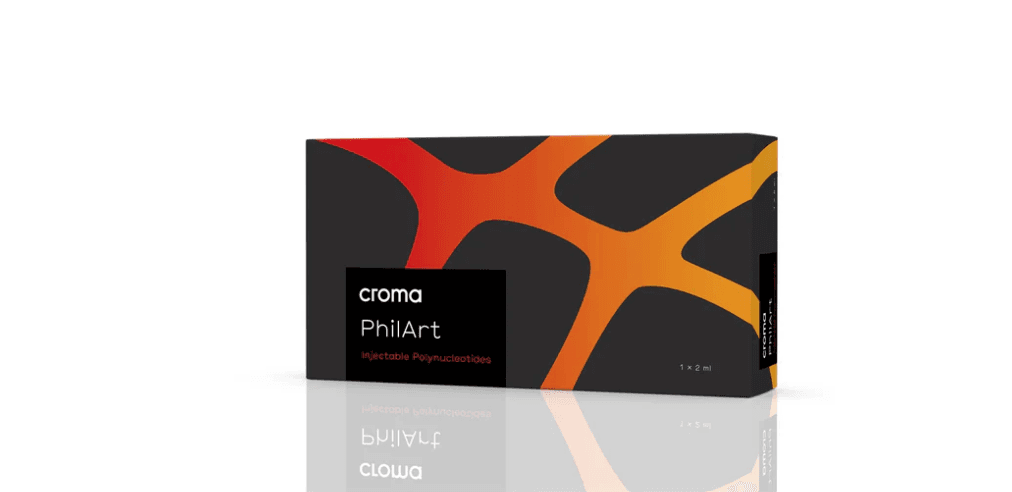
Croma® PhilArt is a purified polynucleotide injectable for professional aesthetic practice. Licensed clinics and healthcare professionals can order Croma PhilArt for treatment-room protocols that use fine-needle microinjections, sterile handling, traceable units, and documented storage. The product fits regenerative skin-quality workflows across face, neck, décolletage, and hand programs when administered by trained clinicians.
Clinics use this preparation to complement skin booster, mesotherapy, and biostimulation menus. Its role is not volumizing like a hyaluronic acid filler; it is selected for polynucleotide-based support of dermal hydration, tissue quality, and gradual, natural-appearing aesthetic planning. Med Wholesale Supplies supports B2B procurement with brand-name medical products sourced through vetted distributor channels for licensed accounts.
Croma PhilArt Price, Account Access, and Clinic Ordering
Croma PhilArt price access is available after clinic account sign-in. Pricing may depend on account status, allocation, volume planning, and the specific Croma presentation selected for your facility. Procurement teams should match the ordered product to the treatment protocol approved by the clinic’s medical director and to the unit details shown during ordering.
Account verification is required before purchase access. This helps ensure that professional-use injectables are supplied to licensed clinics, med spas, and healthcare professionals with appropriate internal controls. Bulk ordering can help facilities standardize stock rotation, reduce repeated receiving tasks, and maintain predictable inventory for scheduled skin-quality programs.
Quick tip: Keep product name, lot number, expiry date, storage condition, and administering clinician details together in your inventory record.
Orders can be planned with temperature-controlled handling when required and tracked US delivery. Consolidating compatible aesthetic supplies on one purchase order can simplify receiving logs, internal reconciliation, and treatment-room restocking.
What This Polynucleotide Injectable Is
Croma® PhilArt is a polynucleotide-based dermal injectable intended for use by qualified medical providers. Polynucleotides are nucleic acid polymers; in aesthetic practice, they are used in biostimulating protocols that aim to support dermal hydration, cellular activity, and extracellular matrix processes. Clinical outcomes depend on patient selection, injection technique, session spacing, and the broader treatment plan.
The preparation is delivered through fine needles into targeted tissue planes according to professional training. It can be incorporated into mesotherapy-style workflows, microdroplet techniques, or other clinician-directed placement methods. The product is commonly positioned as a Croma PhilArt skin booster because it supports skin-quality goals rather than immediate structural volume replacement.
For a concise background on the product family, clinics can review the internal Croma PhilArt product introduction. Facilities building broader regenerative injectable pathways may also browse the skin boosters category and the mesotherapy category for adjacent professional-use options.
Professional Applications in Aesthetic Practice
PhilArt by Croma can be used in clinician-designed skin conditioning programs for the face, neck, décolletage, and hands. It may also support localized texture-refinement plans when the medical provider considers the patient’s skin quality, treatment history, contraindications, and tolerance for injectable procedures. Protocols should be based on training, product instructions, and clinic policy.
Many practices place a Croma PhilArt aesthetic treatment within staged programs. It may be scheduled as a standalone session or coordinated around energy-based devices, threads, neuromodulators, or hyaluronic acid fillers. When combining modalities, sequence and timing should be directed by the treating clinician to reduce avoidable irritation, bruising, or overlapping recovery demands.
The product’s handling profile makes it suitable for practices that already perform microinjection or skin booster procedures. Staff should prepare the treatment room for sterile injectable handling, confirm the correct unit before use, document the lot and expiry, and discard sharps according to local clinical procedures.
Key Features for Clinic Workflows
This Croma PhilArt dermal injectable is selected by aesthetic teams for its polynucleotide formulation, professional-use delivery profile, and compatibility with regenerative treatment planning. It is designed for controlled placement by licensed clinicians rather than retail self-administration.
- Purified polynucleotide matrix for skin-quality and hydration-support protocols.
- Biostimulatory positioning that may support fibroblast and extracellular matrix activity.
- Fine-needle delivery suited to microinjection techniques used by trained providers.
- Clinic-oriented handling for predictable operator control during aesthetic sessions.
- Single-use sterile injectable workflow that supports documentation and accountability.
- Lot and expiry labeling to assist inventory traceability.
- Portfolio fit alongside skin boosters, HA fillers, threads, and device-based procedures.
- Storage range of 2°C to 25°C, with protection from light and no freezing.
Why it matters: Predictable documentation and storage practices help clinics maintain consistent professional standards across repeated treatment cycles.
Composition, Mechanism, and Expected Timing
The formulation centers on highly purified polynucleotides suspended in a sterile aqueous carrier. Unlike volumizing gel fillers, the formulation strategy focuses on biostimulation and hydration support through nucleic acid polymers. It should not be mixed in the same syringe with other agents unless compatibility is documented by the clinic and approved by the medical director.
Results from polynucleotide protocols are generally assessed gradually rather than immediately after placement. Early post-procedure changes may reflect injection-site swelling or hydration shifts, while intended skin-quality effects require time and repeat assessment. Clinics should set realistic expectations in consent discussions and document baseline skin condition before the first session.
Providers often evaluate treatment response using standardized photography, skin-quality grading, patient history, and follow-up notes. Response can vary by age, baseline hydration, sun exposure, smoking history, skin thickness, concurrent treatments, and adherence to aftercare instructions.
Packaging, Storage, and Handling
Croma® PhilArt is supplied as a sterile, single-use injectable unit for professional administration. Keep the unit in its original packaging until use and verify product identity, lot number, expiry date, and package integrity before preparing the treatment area. Do not use a unit if sterility is questionable or the packaging is damaged.
Store at 2°C to 25°C. Protect from light and do not freeze. Staff should maintain stock under the labeled room-temperature range, rotate inventory by expiry date, and record deviations according to clinic policy. After use, dispose of needles, syringes, and contaminated materials through approved sharps and clinical-waste procedures.
Inventory teams can use PhilArt as part of a consistent aesthetic portfolio across multiple treatment rooms. A clear receiving checklist helps ensure that the product moves from delivery intake to approved storage without informal handling or undocumented transfer.
Safety, Contraindications, and Professional Precautions
Administer Croma® PhilArt only by qualified medical providers trained in polynucleotide-based injection techniques. Avoid use in individuals with active skin infection at the treatment site, known hypersensitivity to polynucleotides or formulation components, or any condition in which injectable aesthetic procedures are contraindicated. Pregnancy, lactation, autoimmune disorders, bleeding risk, anticoagulant use, and recent procedures should be evaluated under clinic policy and clinician judgment.
Common injection-related reactions may include temporary redness, swelling, tenderness, bruising, itching, or localized discomfort. More serious concerns can include infection, hypersensitivity reaction, vascular compromise from injection technique, nodules, or prolonged inflammation. Clinics should maintain post-procedure instructions, escalation pathways, and emergency supplies appropriate for injectable aesthetic care.
Staff should confirm patient history, allergies, recent illness, active lesions, and planned procedures before each session. Providers should use aseptic technique, avoid injecting through inflamed or compromised skin, and document adverse reactions in the medical record. Any unexpected or severe reaction requires prompt clinical evaluation.
How It Fits the Croma PhilArt Range
The Croma PhilArt range includes products designed for different aesthetic priorities. Standard Croma® PhilArt supports broad skin-quality protocols, while related formulations may be selected for higher-intensity programs, hair-focused protocols, or delicate periorbital workflows. The correct selection depends on treatment area, skin characteristics, clinician training, and the approved clinic protocol.
For practices considering a stronger adjacent option, Croma® PhilArt Next may fit higher-intensity regenerative planning. Facilities adding a scalp-focused option can review Croma® PhilArt Hair. For delicate periocular programs, Croma® PhilArt Eye is a related product within the same manufacturer family.
Clinics should avoid substituting one product for another without medical director review. Even closely related products can differ in intended area, handling, injection strategy, and patient suitability. Internal protocols should identify which formulation is stocked for each pathway.
Compatible Categories and Portfolio Planning
Croma® PhilArt works best as part of a structured aesthetic inventory plan. Practices that already offer skin boosters can position it as a polynucleotide-based injectable option for patients seeking skin-quality support rather than volume restoration. Clinics with mesotherapy services may find its fine-needle workflow familiar, provided staff have training specific to this formulation.
To evaluate manufacturer-adjacent products, browse the Croma brand portfolio. For product education on a related periocular formulation, the article on Croma PhilArt Eye for delicate eye-area protocols may help staff understand how the range is commonly differentiated.
When planning reorder quantities, consider scheduled treatment cycles, staff capacity, average unit use per clinic day, expiry dating, and expected demand across face, neck, hand, and décolletage programs. Conservative stock planning reduces the risk of over-ordering while preserving continuity for staged appointments.
Documentation and Compliance Considerations
Professional injectable inventory requires disciplined documentation. At receiving, record product identity, supplier details, lot number, expiry date, quantity, storage condition, and the staff member who accepted the order. At administration, link the used unit to the patient chart, consent record, treatment area, injection technique, and treating clinician.
Clinics should also maintain training records for staff who prepare, handle, or administer polynucleotide injectables. Written protocols should address storage, aseptic preparation, patient screening, contraindication review, adverse-event escalation, and sharps disposal. These processes help standardize care across providers and treatment rooms.
Because aesthetic regulations and delegation rules vary by location, clinic leadership should align procurement and administration with local professional requirements. Product selection should remain under the oversight of appropriately qualified healthcare professionals.
Authoritative Sources
Ready to add this polynucleotide line to your aesthetic portfolio? Sign in to view clinic account access, current allocation, and professional ordering details for Croma® PhilArt.
This content is for informational purposes only and is not a substitute for professional medical advice.
Frequently Asked Questions
Who can order Croma® PhilArt?
Croma® PhilArt is intended for licensed clinics, med spas, and healthcare professionals with verified B2B account access. Account review helps ensure the product is supplied for professional aesthetic use and handled under appropriate clinic protocols.
What is Croma® PhilArt used for in clinics?
Clinics use Croma® PhilArt in polynucleotide-based skin-quality protocols for areas such as the face, neck, décolletage, and hands. It is administered by trained clinicians using fine-needle injection techniques and should be matched to the clinic’s approved treatment pathway.
How should Croma® PhilArt be stored?
Store Croma® PhilArt at 2°C to 25°C, protect it from light, and do not freeze it. Keep the unit in its original packaging until use, and document lot number, expiry date, and storage conditions according to clinic policy.
How long does PhilArt take to work?
Polynucleotide protocols are generally assessed gradually rather than immediately after injection. Treatment response depends on patient selection, injection technique, session planning, baseline skin quality, and any combined procedures used by the clinician.
What is Croma® PhilArt Next?
Croma® PhilArt Next is a related product in the Croma PhilArt range that may be considered for higher-intensity regenerative skin-quality programs. Clinics should choose between PhilArt formulations according to training, treatment area, patient suitability, and medical director guidance.
Can Croma® PhilArt be combined with other aesthetic procedures?
Clinicians may incorporate Croma® PhilArt into broader aesthetic plans that include skin boosters, fillers, energy devices, threads, or neuromodulators. Timing, sequence, and suitability should be determined by the treating provider and documented in the treatment plan.
What documentation should clinics keep for Croma® PhilArt?
Clinics should record product identity, lot number, expiry date, storage condition, quantity received, administration details, treatment area, consent, and the treating clinician. These records support traceability, inventory control, and professional accountability.
Specifications
- Main Ingredient: Polynucleotides
- Manufacturer: Croma Pharma
- Drug Class: Skincare Product
- Generic Name: Polynucleotides
- Package Contents: 2mL x 1 Syringe
- Storage Requirements: Room Temperature (2℃~25℃)
- Main Usage: Scaring/ Fine Line Filler
Here to help
Questions about ordering, delivery or products? You can email our team here or call now at 1-800-630-9757 and be connected with your dedicated Account Manager
Related Products
Evenity® (English Alternative)
Injectable Medication
$1,229.00 - $1,299.00
You save
You save
Intraline® For Men
Dermal Filler
$59.00 - $79.00
You save
You save
RejuvaNAD+ Pro
Injectable Medication
$237.00 - $249.00
You save
You save
Teosyal® RHA 4
Aesthetic Surgery Product
$259.00 - $279.00
You save
You save
Related Articles
Prednisone in Clinical Care: Uses, Risks, and Monitoring
Prednisone is a prescription systemic corticosteroid used to reduce inflammation or suppress immune activity in…
Lip Fillers Swelling Stages: Timeline, Safety, and Follow-Up
Lip fillers swelling stages usually follow a short inflammatory course: swelling appears soon after injection,…
Hypopigmentation of the Skin: Assessment and Care
Hypopigmentation of the skin means one or more areas look lighter than the surrounding skin.…
Radiesse vs Sculptra: Selection Factors for Clinics
Radiesse vs Sculptra is best understood as a comparison between two collagen-stimulating injectables with different…
Hyaluronic Acid Under-Eye Filler: Safety and Workflow
Hyaluronic acid under-eye filler is an injectable soft-tissue filler used by trained aesthetic clinicians to…
Dermal Filler Types: Materials, Uses, and Clinic Fit
Dermal filler types are usually grouped by their base material, tissue behavior, and expected role…
What Is Dysport? Clinical Uses, Safety, and Workflow
For clinic teams asking what is Dysport, the short answer is simple: Dysport is a…
Biostimulators in Aesthetic Care: Selection and Safety
Biostimulators are injectable aesthetic products used to encourage a controlled tissue response, often involving new…