
$99.00
You save
Description
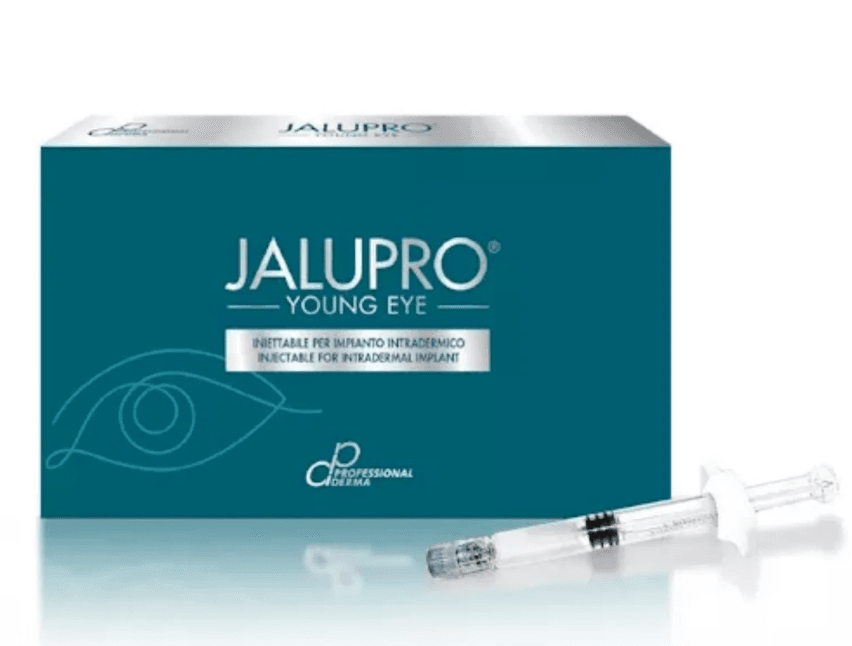
Jalupro® Young Eye is a professional periocular injectable developed for the delicate skin around the eye contour. Licensed clinics and healthcare professionals can order it for treatment-room use when a tissue-quality approach is preferred over strong volumization. Its sterile, professional-use format supports controlled placement, inventory traceability, and integration into aesthetic protocols for the under-eye and periorbital region.
This formulation combines hyaluronic acid with an amino acid complex to support hydration, elasticity, and a smoother-looking eye contour. It is used by trained injectors who understand thin, mobile periocular anatomy and the conservative technique required around the tear trough, lower eyelid, and lateral canthus. Med Wholesale Supplies serves licensed clinics and healthcare professionals with brand-name products sourced through vetted distributors and verified supply channels.
Jalupro® Young Eye Price, Ordering, and Clinic Supply
Clinics can order Jalupro® Young Eye for professional use after account access is in place. Sign in to view current product availability, clinic pricing, and purchasing terms that fit single-site or multi-provider aesthetic practices. Live price and unit selection should be matched to your clinic’s treatment schedule, projected case volume, and internal purchasing policy.
For practices evaluating Jalupro Young Eye cost, the most useful comparison is not only the unit price. Consider the protocol role, the number of sessions planned by the treating clinician, the product’s periocular focus, and whether the treatment plan calls for a skin booster rather than a volumizing filler. Bulk purchasing can simplify stock planning for clinics that routinely perform under-eye revitalization, but final order quantities should reflect trained staff capacity and appointment cadence.
Orders are processed for licensed professional facilities. Clinic documentation or professional-use purchasing requirements may apply, and product handling is coordinated through reliable US logistics. When required by the product and route, our team uses temperature-controlled handling when required and tracked US delivery.
What the Product Does in Periocular Practice
Jalupro® Young Eye is designed for the eye contour, where skin is thin and early textural changes can be highly visible. In professional protocols, it may be selected for hydration support, crepey texture, fine static lines, mild hollowness, and brightness goals around the tear trough and periorbital area. It is not positioned as a replacement for every under-eye filler case; rather, it supports tissue quality when subtle refinement is the clinical objective.
The formulation pairs hyaluronic acid with amino acids. Hyaluronic acid is widely used in aesthetic medicine because it attracts and holds water within tissue, while amino acids provide building blocks relevant to collagen and elastin maintenance. This makes the product useful in staged skin-quality plans, particularly when an injector wants controlled micro-deposits in a high-visibility area.
Clinics that already use skin boosters often place this preparation in a separate periocular category because the orbit requires more conservative dosing, placement, and patient selection than broader facial zones. For wider procedural planning, the mesotherapy category can help teams review adjacent injectable approaches used for tissue hydration and revitalization.
How It Compares With Fillers and Other Eye Treatments
Jalupro® Young Eye and tear trough filler are not interchangeable decisions. A tear trough filler is typically chosen when structural support or volume correction is the main goal. A periocular skin booster is usually considered when tissue hydration, elasticity, texture, and fine-line appearance are the priority. In practice, the medical director or injector should assess orbital anatomy, skin laxity, pigmentation pattern, edema tendency, and previous filler history before choosing a protocol.
Some clinics use Jalupro® Young Eye as a standalone tissue-quality treatment, while others combine it with conservative filler, device-based care, or topical regimens. Combination plans require careful sequencing to avoid over-treatment in the lower eyelid. If volume correction is needed, the product may complement but should not substitute for structural assessment.
For clinics building a broader Jalupro formulary, the Jalupro brand selection includes related professional products for different aesthetic objectives. Practices comparing biostimulation and hydration concepts can also review collagen stimulation with Jalupro for clinical background.
Key Features for Treatment-Room Workflow
- Periocular focus for thin, mobile skin around the eyes.
- Hyaluronic acid and amino acid complex for hydration and tissue-quality support.
- Sterile professional-use presentation for trained injector administration.
- Controlled placement profile suited to conservative eye-area protocols.
- Lot and expiry labeling to support clinic traceability.
- Useful fit for staged under-eye rejuvenation plans.
- Appropriate for subtle refinement when volume is not the primary endpoint.
- Compatible with clinic inventory systems that require documented stock rotation.
Quick tip: Keep periocular products separated in inventory so staff can distinguish eye-area protocols from broader facial skin booster workflows.
Composition and Mechanism
The product’s core components are hyaluronic acid and a curated amino acid complex. Hyaluronic acid contributes moisture retention and viscoelastic support, which can help improve the look of dryness and fine textural change. Amino acids are relevant to extracellular matrix maintenance, including collagen and elastin pathways that influence firmness and elasticity.
The clinical value of this combination depends on professional assessment, injection technique, and appropriate case selection. The periocular area has limited tissue thickness and complex vascular anatomy, so administration should remain within the clinician’s training and the manufacturer’s instructions. Full qualitative composition, excipients, and preparation directions should be checked on the manufacturer’s packaging and accompanying leaflet before use.
Packaging, Traceability, and Storage Handling
Each pack is presented for professional injectable use with labeling that supports lot tracking and expiry review. Clinics should record the lot number in patient records and internal inventory systems according to their normal medical-aesthetic documentation standards. Tamper-evident and sterile packaging should be inspected before the product enters the treatment room.
Storage should follow the manufacturer’s instructions on the outer carton and leaflet. Staff should avoid exposing sterile injectables to uncontrolled conditions, and products should remain in their original packaging until preparation. If a package is damaged, opened unexpectedly, or outside acceptable handling conditions, it should not be used until the clinic’s medical director or quality lead has assessed the issue.
For clinics that stock multiple injectables, separating periocular products from general dermal filler inventory reduces selection errors. Practices that use broader HA-based facial protocols may also evaluate Jalupro Super Hydro as a companion product for non-eye-area treatment planning.
Safety, Risks, and Professional Precautions
Periocular injection requires advanced anatomical knowledge. Expected procedure-related effects may include temporary redness, swelling, tenderness, bruising, or pinpoint bleeding at injection sites. Because the lower eyelid can retain fluid and bruising is highly visible, patient selection and conservative placement are especially important.
Clinicians should screen for relevant contraindications, hypersensitivity history, active infection or inflammation near the treatment site, recent procedures, bleeding tendency, anticoagulant use, pregnancy or lactation considerations, and prior complications with injectables. Treatment should be deferred when the medical assessment identifies a safety concern. Emergency protocols and appropriate supplies should be available in any clinic performing injectable aesthetic procedures.
Patients should receive realistic expectations. A skin booster approach is intended to improve tissue quality and hydration appearance; it does not guarantee correction of structural hollowness, pigmentation, edema, or laxity. Dark circles can have vascular, pigmentary, structural, and lifestyle contributors, so the treatment plan should be tailored rather than product-led.
For broader clinical context on mesotherapy-style procedures, staff can review mesotherapy clinical uses, risks, and workflow. This internal educational content does not replace manufacturer instructions or local professional standards, but it can support staff training discussions.
Protocol Planning and Session Expectations
The number of sessions should be determined by the treating clinician after assessment of skin quality, goals, anatomy, and previous aesthetic treatment history. Search interest often focuses on a fixed Jalupro Young Eye protocol, but clinics should avoid treating a generic schedule as a substitute for individualized professional judgment. The manufacturer’s instructions and clinic medical director guidance should control product preparation, spacing, and retreatment decisions.
Results should be discussed in terms of gradual tissue-quality refinement rather than immediate, high-volume correction. Some visible changes may relate to hydration and skin smoothness, while collagen-supportive goals develop over a longer treatment course. Documentation should include baseline assessment, informed consent, injection map, product lot, expiry, quantity used, and follow-up notes.
For staff education on broader aesthetic skin booster concepts, skin booster injections provides useful background on how these treatments differ from traditional volumizing approaches.
Comparable Products and Formulary Planning
Clinics often compare Jalupro® Young Eye with polynucleotide eye products, HA-based boosters, and conservative tear trough filler strategies. The right choice depends on tissue quality, volume deficit, pigmentation pattern, edema risk, and the treatment endpoint. A skin booster may be favored when hydration and texture are the chief concerns, while other products may be better suited to biostimulatory or structural objectives.
Within adjacent professional eye-area options, Croma PhilArt Eye may be considered when a clinic is evaluating polynucleotide-based approaches for delicate periocular skin. For practices comparing Jalupro with other skin treatment categories, Jalupro and Profhilo treatment considerations can help frame differences in product positioning.
Formulary decisions should also consider injector training, storage requirements, expected appointment volume, and how each product fits existing consent and aftercare documentation. Avoid substituting products automatically across protocols; review the manufacturer’s instructions and medical director guidance before changing a planned treatment course.
Authoritative Sources
Ready to add this periocular preparation to your clinic formulary? Sign in to view current supply details and select the quantity that matches your professional workflow.
This content is for informational purposes only and is not a substitute for professional medical advice.
Frequently Asked Questions
What does Jalupro® Young Eye do?
Jalupro® Young Eye is used by trained aesthetic professionals for periocular tissue-quality support. It is intended to help address hydration, crepey texture, fine lines, and subtle under-eye refinement when a skin booster approach is appropriate.
Is Jalupro® Young Eye the same as tear trough filler?
No. Tear trough filler is generally selected for structural volume support, while Jalupro® Young Eye is positioned as a periocular skin booster focused on hydration and tissue quality. A clinician should decide which approach fits the anatomy and treatment goal.
Can clinics order Jalupro® Young Eye in bulk?
Licensed clinics and healthcare professionals can sign in to view current purchasing terms and clinic supply details. Bulk planning should reflect appointment volume, injector training, storage practices, and expiry management.
How many sessions are needed?
Session count depends on the clinician’s assessment, treatment objective, skin quality, and manufacturer guidance. Clinics should avoid using a fixed public protocol without medical-director review and documented patient-specific planning.
What safety checks matter before periocular injection?
Clinicians should screen for infection or inflammation near the site, hypersensitivity history, bleeding risk, anticoagulant use, prior injectable complications, pregnancy or lactation considerations, and anatomy-related risk before treatment.
Specifications
- Main Ingredient: Cross-Linked Hyaluronic Acid
- Manufacturer: Professional Dietetics S.r.l.
- Drug Class: Cosmetic Injectable
- Generic Name: Cross-Linked Hyaluronic Acid
- Package Contents: 1mL x 1 Pre-Filled Syringe
- Storage Requirements: Room Temperature (2℃~25℃)
- Main Usage: Eye Area Filler
About the Brand
Jalupro
Known for pioneering skincare solutions, Jalupro is a prestigious medical brand that addresses a wide array of skin ailments. Whether you aim to augment skin firmness, minimize wrinkle visibility or refresh your skin, Jalupro stands ready to cater to your needs. With superior ingredients and cutting-edge formulas, Jalupro products unfailingly yield remarkable, enduring effects. Have faith in Jalupro to help accomplish your skincare aspirations. At medwholesalesupplies.com, we make it a walk in the park to acquire Jalupro products electronically. We're a dependable, trustworthy online marketplace supplying medical professionals and skincare gurus with unrivalled access to an extensive selection of medical products, especially Jalupro. By opting to purchase Jalupro on our platform, you'll relish the simplicity of online shopping with the added bonus of doorstep delivery. Featuring an intuitive user interface, browsing and choosing the Jalupro items you require becomes a breeze thereby ensuring a hiccup-free shopping journey. When you opt for Jalupro via medwholesalesupplies.com, rest assured that your purchase will be genuine and verified. Our direct dealings with manufacturers and accredited distributors allow us to supply merchandise of the utmost quality. Our unwavering commitment to client satisfaction and product genuineness distinguishes us from many other retailers. There's no need to take chances with your skin's wellbeing - always choose Jalupro, and make it a point to purchase via medwholesalesupplies.com to benefit from the convenience, quality, and authenticity you are entitled to.
Browse Jalupro Products
Here to help
Questions about ordering, delivery or products? You can email our team here or call now at 1-800-630-9757 and be connected with your dedicated Account Manager
Related Products
Evenity® (English Alternative)
Injectable Medication
$1,229.00 - $1,299.00
You save
You save
Intraline® For Men
Dermal Filler
$59.00 - $79.00
You save
You save
RejuvaNAD+ Pro
Injectable Medication
$237.00 - $249.00
You save
You save
Teosyal® RHA 4
Aesthetic Surgery Product
$259.00 - $279.00
You save
You save
Related Articles
Prednisone in Clinical Care: Uses, Risks, and Monitoring
Prednisone is a prescription systemic corticosteroid used to reduce inflammation or suppress immune activity in…
Lip Fillers Swelling Stages: Timeline, Safety, and Follow-Up
Lip fillers swelling stages usually follow a short inflammatory course: swelling appears soon after injection,…
Hypopigmentation of the Skin: Assessment and Care
Hypopigmentation of the skin means one or more areas look lighter than the surrounding skin.…
Radiesse vs Sculptra: Selection Factors for Clinics
Radiesse vs Sculptra is best understood as a comparison between two collagen-stimulating injectables with different…
Hyaluronic Acid Under-Eye Filler: Safety and Workflow
Hyaluronic acid under-eye filler is an injectable soft-tissue filler used by trained aesthetic clinicians to…
Dermal Filler Types: Materials, Uses, and Clinic Fit
Dermal filler types are usually grouped by their base material, tissue behavior, and expected role…
What Is Dysport? Clinical Uses, Safety, and Workflow
For clinic teams asking what is Dysport, the short answer is simple: Dysport is a…
Biostimulators in Aesthetic Care: Selection and Safety
Biostimulators are injectable aesthetic products used to encourage a controlled tissue response, often involving new…