

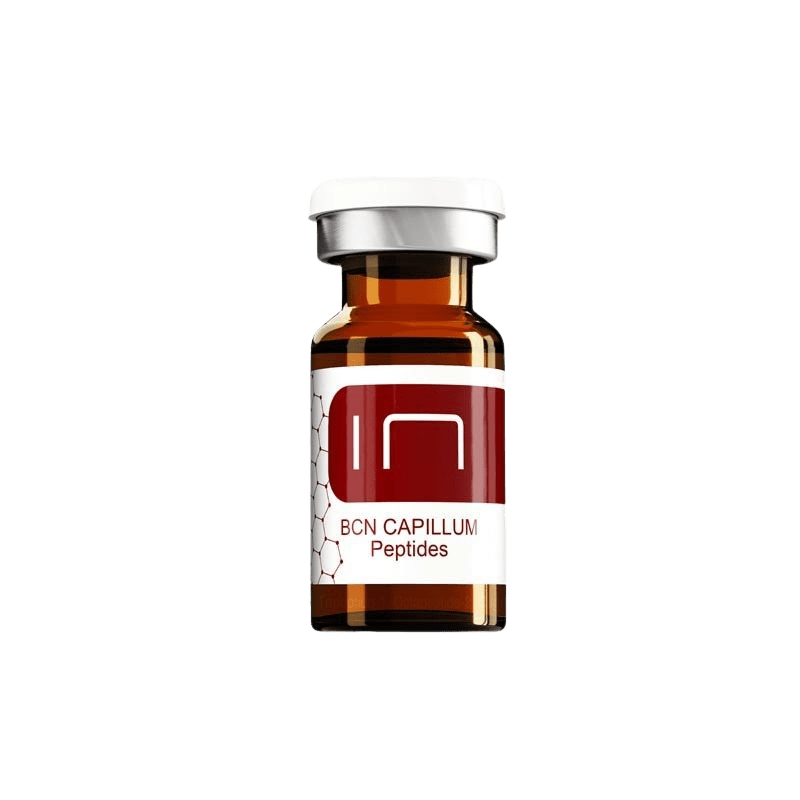
BCN Capillum Peptides
Order BCN Capillum Peptides for Clinics
Hair Regenerating Cocktail
$89.00
You save (%)
Description
BCN Capillum Peptides is a professional-use scalp mesotherapy product supplied as a box of 5 vials of 5 mL for clinic treatment rooms. Licensed clinics and healthcare professionals can order BCN Capillum Peptides for protocols that require vial-based scalp products, sterile handling, staff training, and accurate lot documentation. It is intended for supervised practice workflows, not consumer self-use.
Clinics usually evaluate this product for hair-thinning and alopecia-focused scalp protocols, including pathways where a peptide-based mesotherapy solution fits the clinician’s treatment plan. Current carton labeling, vial presentation, ingredient information, and local professional-use rules should be matched to the clinic’s procedure documents before treatment sessions are scheduled.
BCN Capillum Peptides Price and Clinic Ordering
Clinic buyers can order BCN Capillum Peptides online and view the current wholesale price during procurement. The supplied pack format is BCN Capillum Peptides 5 x 5ml, so cost planning should account for the number of vials needed for the clinic’s scalp mesotherapy schedule, expected patient volume, and any internal wastage controls.
Before adding stock, procurement teams should align the product name, vial count, lot number, expiry date, and insert language with the clinic’s purchasing record. Aesthetic practices often involve both the medical director and the staff member responsible for injectable inventory because scalp products may sit beside skin, body, and facial mesotherapy lines. That separation helps reduce product-selection errors in a busy treatment room.
BCN Capillum Peptides wholesale ordering is designed for professional environments. MedWholesaleSupplies serves licensed clinics and healthcare professionals, with brand-name medical products sourced through vetted distributor and verified supply channels. Clinic documentation or professional-use ordering requirements may apply, especially when a practice is standardizing a new scalp protocol.
Quick tip: Match the box name and vial count to the procedure template before staff open the carton.
Professional Use in Scalp Mesotherapy
BCN Capillum Peptides mesotherapy is generally considered for clinician-led scalp treatment pathways aimed at hair thinning and androgenic alopecia, also called pattern hair loss. The product should be used only within a diagnosis-first workflow, because shedding can reflect hormonal, nutritional, autoimmune, inflammatory, medication-related, or scarring scalp conditions.
Mesotherapy is a superficial intradermal injection technique used by trained professionals for selected aesthetic and medical-aesthetic protocols. Clinics reviewing this product should decide whether it fits a scalp-focused service rather than a skin-only or body-contouring service. The broader mesotherapy category can help teams separate scalp products from other procedure lines during inventory planning.
Technique decisions such as route, depth, session interval, site mapping, and whether the product is paired with microneedling, topical therapy, or other hair-loss measures should follow current manufacturer labeling and the responsible clinician’s judgment. No regimen should be assumed from the product name or from before-and-after marketing claims seen elsewhere.
For clinics building staff protocols, the educational article What Is Mesotherapy provides useful background on workflow, procedure planning, and risk review. It should support, not replace, product-specific labeling and internal clinical governance.
Ingredients, Label Checks, and Pack Verification
Searches for BCN Capillum Peptides ingredients often mention peptide complexes and scalp-supporting components, but the box in hand should be treated as the source document. Ingredient lists displayed by resellers may differ by market, language, manufacturer update, or product presentation. Clinics should rely on the current outer carton, vial label, and insert when updating allergy screening forms or consent language.
The common clinic pack is a BCN Capillum Peptides box of 5 vials, with each vial containing 5 mL. On receipt, staff should inspect the pack before it enters usable inventory. If the outer carton, insert, or vial label does not match the expected product presentation, pause internal release until the purchasing record has been reconciled.
| Clinic check | What to verify |
|---|---|
| Product identity | BCN Capillum Peptides name on the carton and vial label |
| Pack format | 5 vials x 5 mL presentation |
| Traceability | Lot number, expiry date, supplier record, and receiving date |
| Label language | Current insert and market-specific cautions available to staff |
| Physical condition | Seals intact, labeling clear, and solution appearance suitable for professional review |
Questions about the “best peptide” for hair loss should be handled clinically rather than as a product-ranking exercise. A scalp mesotherapy product is only one possible part of a pathway. Diagnosis, alopecia type, scalp condition, concomitant medicines, and patient expectations all affect whether a peptide-containing scalp product is a reasonable choice.
Patient Selection and Documentation Workflow
BCN Capillum Peptides hair loss protocols should start with a documented scalp and medical assessment. Before treatment, clinicians commonly look for active dermatitis, infection, heavy scaling, open lesions, unexplained shedding, traction injury, or signs of scarring alopecia. If hair loss may require medical work-up first, product use should not substitute for diagnosis.
Documentation should connect the product to the indication being addressed, the area treated, the technique used, and any adjunctive products or procedures delivered in the same visit. Baseline photography, severity notes, and planned review intervals help staff judge response more consistently than anecdotal before-and-after comparisons.
Hair-loss complaints can be emotionally significant, so clinic language should remain measured. The product may be considered within a professional scalp-support pathway, but clinics should avoid promising hair regrowth, permanent outcomes, or results that are not supported by the current label and patient assessment. For broader clinic education on hair-focused mesotherapy, mesotherapy for hair discusses how procedure planning may be approached in practice.
Why it matters: Treating the wrong type of alopecia can delay more appropriate medical evaluation.
Storage, Handling, and Treatment-Room Logistics
Follow the storage conditions printed on the current carton and insert. If labeling requires protection from heat, light, or freezing, those instructions should appear in the clinic’s receiving log and inventory standard operating procedure. When required, orders may involve temperature-controlled handling and tracked US delivery.
Staff should visually inspect each vial before use and avoid any vial with compromised sealing, unclear labeling, visible particulate matter, or an unexpected appearance. Aseptic technique is essential because scalp mesotherapy involves barrier disruption. Preparation, administration, and disposal should be performed only by trained personnel working within the clinic’s approved procedure pathway.
Because treatment courses may span several visits, stock rotation matters. Record the lot number, expiry date, date opened if applicable, staff member preparing the product, and visit in which the vial was used. Keeping the outer carton until all vials are documented can make traceability easier if a product question, adverse event, or internal audit occurs.
Practices that carry multiple BCN or mesotherapy products should store scalp-focused stock in a clearly identified location. The BCN brand category can help procurement teams review adjacent items without treating them as substitutes. Similar packaging does not mean the same indication, ingredient profile, vial size, or handling requirement.
Safety, Contraindications, and Monitoring
Clinicians should review the current ingredient list before using BCN Capillum Peptides and avoid use when hypersensitivity to any component is known or suspected. Extra caution is appropriate when the scalp has active infection, uncontrolled inflammation, significant barrier disruption, or unexplained shedding that has not been clinically assessed.
Common short-term reactions after scalp injectable procedures may include stinging, tenderness, redness, pinpoint bleeding, swelling, bruising, itching, and temporary sensitivity at treated sites. These reactions can be procedural rather than unique to one formulation, but they should still be documented and addressed with appropriate aftercare instructions.
Less common but more important concerns include persistent inflammation, infection, worsening dermatitis, nodularity, or a hypersensitivity reaction. If symptoms are disproportionate, progressive, or accompanied by systemic signs, further treatment should be paused and the patient should be evaluated promptly. Internal reporting should distinguish expected post-procedure irritation from a suspected product reaction.
Monitoring should also include the underlying reason for hair loss. Nutritional deficiency, thyroid disease, androgen excess, autoimmune disease, medication effects, traction, and scarring scalp disorders can affect both suitability and response. Authoritative patient-selection background is available from the MedlinePlus hair loss overview and the NIAMS alopecia areata overview.
Interactions, Compatibility, and Combination Protocols
Published interaction data for clinic-use scalp mesotherapy cocktails may be limited. Caution is sensible when patients are using topical irritants, medicated shampoos, topical minoxidil, systemic hair-loss medicines, anticoagulants, corticosteroids, or immunomodulating therapy. Even when a direct pharmacologic interaction is not established, cumulative irritation or bruising risk may affect tolerability.
Compatibility should not be assumed if a clinic is considering mixing vial contents with other injectables, skin boosters, hair fillers, anesthetics, or adjunctive scalp products. Unless compatibility and stability are supported by current manufacturer information, using the product as supplied is the safer operational default.
Scheduling also matters when barrier-disrupting procedures are combined. Microneedling, injections, peels, and aggressive topical regimens can increase scalp irritation when clustered too closely. Clinics should document the sequence of products and procedures used at each visit so any reaction or improvement can be interpreted accurately.
For injection-safety principles that apply across procedure types, the CDC injection safety resource summarizes aseptic practices relevant to clinical preparation and administration.
Related Scalp and Mesotherapy Products
BCN Capillum Peptides is one option within a broader professional hair-loss and scalp-support category. It should not be treated as interchangeable with every injectable, filler, serum, or non-injectable approach. The best comparison depends on diagnosis, clinic capability, visit structure, staff training, and whether the goal is supportive scalp care, chronic medical management, or a regenerative procedure.
| Approach | When clinics may consider it | Operational trade-off |
|---|---|---|
| Topical or systemic hair-loss medicines | Long-term medical management after diagnosis | Requires adherence counseling and drug-specific monitoring |
| PRP protocols | Autologous procedure pathway with suitable equipment | Adds phlebotomy, processing time, and consent needs |
| Microneedling adjuncts | Procedure-focused scalp support in selected patients | Can increase irritation and aftercare complexity |
| Scalp mesotherapy products | Professional-use vial protocols for scalp-focused treatment | Requires product-specific labeling review and injection workflow controls |
Clinics comparing adjacent hair-focused products may review the hair-loss product category, Dr. CYJ Hair Filler, and Nucleofill Hair. These products are not automatic replacements for BCN Capillum Peptides; compare indication fit, format, handling, staff training, and consent language before changing a protocol.
Within the BCN line, products such as BCN Tensis Peptides and BCN Lumen Peptides may support different aesthetic goals. Similar brand naming should prompt careful label review rather than assumption of clinical equivalence.
Availability, Substitutions, and Inventory Planning
Clinic buyers should verify the product presentation at the time of procurement because manufacturer packaging, artwork, and inserts can change. A similar-looking box, another peptide product, or a different mesotherapy cocktail should not be treated as equivalent without comparing indication, ingredient list, vial size, handling instructions, and procedure fit.
Substitution risk increases when clinics use prewritten consent documents, aftercare sheets, or bundled treatment menus. Even a small change in composition or route assumptions can affect allergy screening, patient counseling, and recordkeeping. If the intended item is replaced in a protocol, the safer process is a documented clinical and operational review.
For inventory planning, estimate vial needs against scheduled scalp treatments and avoid overstocking beyond realistic usage before expiry. Separate products by use area, keep receiving records accessible, and train staff to read both the product name and vial volume before preparing a treatment tray. These steps are simple, but they reduce preventable errors in high-volume aesthetic practices.
Authoritative Sources
Hair loss can have multiple medical causes, so professional assessment should guide whether scalp mesotherapy fits a patient’s pathway. The MedlinePlus hair loss overview provides neutral background on common causes and evaluation considerations.
Alopecia areata and other scalp disorders can change treatment selection. The NIAMS alopecia areata overview offers clinically relevant context for differential diagnosis.
Injectable procedure safety depends on aseptic preparation, trained administration, and appropriate sharps practices. The CDC injection safety resource summarizes core injection-safety principles.
This content is for informational purposes only and is not a substitute for professional medical advice.
Frequently Asked Questions
What is BCN Capillum Peptides used for in clinics?
BCN Capillum Peptides is used in professional scalp mesotherapy workflows for hair-thinning and alopecia-focused protocols. Clinics should match use to current product labeling, diagnosis, staff training, and internal procedure documents.
What pack size is supplied for BCN Capillum Peptides?
The common clinic presentation is a box of 5 vials of 5 mL. On receipt, staff should verify the vial count, lot number, expiry date, insert language, and physical condition before releasing the product to inventory.
What are the ingredients in BCN Capillum Peptides?
Ingredient information should be taken from the current carton, vial label, and insert supplied with the box. Reseller ingredient summaries may vary, so clinics should use the packaging on hand for allergy screening and consent documents.
Can BCN Capillum Peptides be mixed with other scalp products?
Mixing should not be assumed. Unless current manufacturer information supports compatibility and stability, clinics should use the vial contents as supplied and document any separate adjunctive products or procedures used in the same visit.
How should clinics store and handle BCN Capillum Peptides?
Follow the storage conditions printed on the current carton and insert. Clinics should inspect vial seals and appearance, use aseptic technique, record lot and expiry data, and keep scalp mesotherapy stock separated from look-alike products.
Does BPC 157 replace BCN Capillum Peptides for hair protocols?
No replacement should be assumed from peptide terminology alone. Product selection for hair loss should be based on diagnosis, labeling, ingredient review, professional scope, and the clinician’s protocol rather than broad claims about any single peptide.
Specifications
- Main Ingredient: Peptide Complex €“ Ha- Biotin €“ Taurine
- Manufacturer: BCN
- Drug Class: Hair Regenerating Cocktail
- Generic Name: Peptides
- Package Contents: 5 mL x 5 Vials
- Storage Requirements: Room Temperature (2℃~25℃)
- Main Usage: Hair Loss
About the Brand
INSTITUTE BCN
INSTITUTE BCN stands as a respected name in the medical industry, offering a vast assortment of premium medical equipment. Be it bandages, syringes, gauzes, or gloves, BCN's comprehensive selection ensures patient safety and superior care. Apt for healthcare professionals or households requiring medical supplies, INSTITUTE BCN is a trusted brand. BCN's extensive collection can be conveniently accessed and purchased on our online platform, medwholesalesupplies.com. This offers a tailored shopping experience, delivering BCN products directly to your location. Offering not just convenience, our online portal also guarantees the authenticity of BCN products at competitive prices. At medwholesalesupplies.com, we highly value the reliability and quality of medical supplies. This is reflected in our procurement selection, sourcing only from trusted brands such as BCN. By choosing to shop on our website, rest assured you are acquiring superior supplies fit for your needs. We invite you to explore the range of BCN products at medwholesalesupplies.com today.
Browse INSTITUTE BCN Products
Here to help
Questions about ordering, delivery or products? You can email our team here or call now at 1-800-630-9757 and be connected with your dedicated Account Manager
Related Products
$339.00
You save (%)
You save (%)
Select options
This product has multiple variants. The options may be chosen on the product page
Juvéderm® SKINVIVE
Dermal Filler
$339.00 - $359.00
You save (%)
You save (%)
$86.00 - $119.00
You save (%)
You save (%)
$72.00
You save (%)
You save (%)
Select options
This product has multiple variants. The options may be chosen on the product page
Related Articles
Are Knee Gel Injections Painful? Counseling and Safety
Most patients do not describe knee gel injections as severely painful. Clinic teams should set…
Hooded Eyes From Botox: Ptosis Risk and Clinic Response
Hooded eyes from Botox usually reflect temporary upper-face muscle imbalance, not a single diagnosis. The…
Wegovy Alternative Options for Obesity Care Workflows
A wegovy alternative is not one single substitute. It may be another prescription anti-obesity medication,…
FDA-Approved Dermal Fillers: Safety and Clinic Use
FDA-approved dermal fillers are soft tissue filler products that the U.S. Food and Drug Administration…
Glabellar Lines: Anatomy, Assessment, and Treatment Planning
Glabellar lines are the vertical frown creases between the eyebrows, often called 11 lines. In…
After Care for Botox: Clinic Instructions and Safety Checks
In clinical practice, after care for botox is the set of written and verbal instructions…
Hyaluronidase in Aesthetic Practice: Safety and Workflow
Hyaluronidase is an enzyme that breaks down hyaluronic acid, a water-binding molecule found in skin,…
Jawline Filler in Aesthetic Care: Safety and Workflow
Jawline filler is a nonsurgical dermal filler approach used to refine lower-face contour, support the…