

- You must be logged in to add items to the cart.
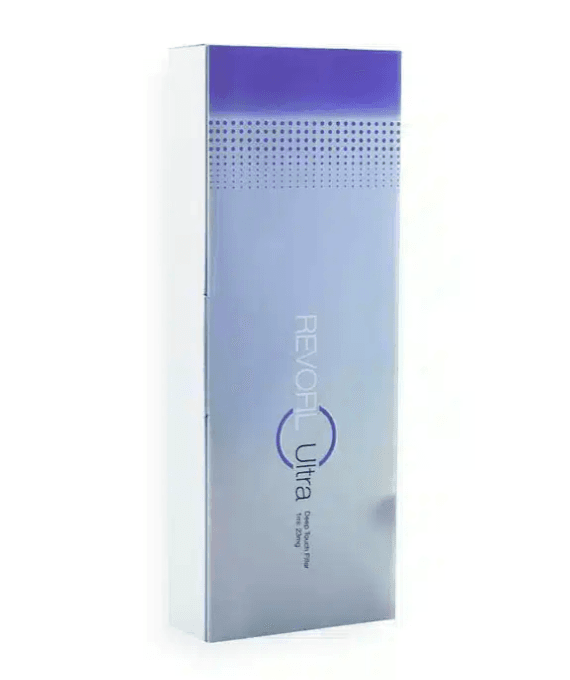
Description
Revofil®Ultra is a cross-linked hyaluronic acid dermal filler formulated with biomimetic peptides for deep volume support, contour refinement, and pronounced fold correction. Licensed clinics and healthcare professionals can order Revofil®Ultra for professional treatment-room use, with each prefilled sterile syringe typically containing 1 mL of gel. Its deep-plane application profile makes it most relevant for practices building structured facial volumization protocols rather than superficial hydration-only plans.
Med Wholesale Supplies serves licensed clinics, med spas, and healthcare professionals with brand-name medical products sourced through vetted distributors and verified supply channels. Clinic documentation or professional-use ordering requirements may apply before account access, contract terms, and current unit availability are shown.
Revofil®Ultra Price, Account Access, and Unit Selection
Revofil®Ultra price information is available after clinic account sign-in, so purchasing teams can view current terms, unit presentation, and ordering quantities in the account environment. This approach helps practices align product selection with treatment calendars, injector preference, and internal approval processes without relying on outdated public price references.
Each syringe is typically supplied as 1 mL of sterile gel. When planning par levels, account for expected consultation volume, common correction patterns, injector technique, and whether the product will be used as a primary deep-volume filler or reserved for selected facial contouring cases. Avoid building purchasing assumptions from keyword variants such as 10 mL unless the active ordering screen and package documentation for the actual unit confirm the presentation.
Quick tip: Match order quantities to scheduled treatment days, staff credentialing, and lot rotation procedures.
What Revofil®Ultra Is and How It Works
Revofil®Ultra is a hyaluronic acid filler designed for structural correction in the deep dermis or subcutaneous plane when administered by trained injectors. Hyaluronic acid is a water-binding polysaccharide used in many soft-tissue fillers because it can provide temporary volume and support within treated tissue. The cross-linked gel structure helps the material maintain shape after placement, while professional injection technique determines the safety and aesthetic quality of the final result.
The formula is enriched with biomimetic peptides, a feature associated with the Revofil portfolio. These peptides are included to support the product’s intended tissue-support profile and firmness characteristics. They do not replace injector assessment, anatomical knowledge, aspiration or cannula decisions, aftercare instructions, or complication protocols.
For a deeper ingredient-focused discussion of this product family, see Revofil filler ingredients and effectiveness. Clinics comparing HA filler behavior across product lines may also review hyaluronic acid in aesthetic medicine for broader class context.
Professional Applications in Aesthetic Practice
This filler supports professional facial contouring and softening of pronounced lines and folds when placed at the appropriate depth. Common clinic-use contexts include midface volume support, nasolabial fold refinement, marionette fold correction, and lower-face contour definition. Lip treatment requests should be assessed cautiously and product choice should follow the injector’s training, the manufacturer’s directions, tissue characteristics, and the patient-specific risk profile.
Revofil®Ultra can be incorporated into staged treatment plans with other HA fillers when rheology, plane of placement, and treatment goals differ by area. For practices building a Revofil-centered formulary, the Revofil brand range can help staff evaluate adjacent products in the same portfolio. When a lighter correction profile is needed, Revofil Fine may be considered for suitable protocols. For moderate correction needs, Revofil Plus offers another Revofil option for professional comparison.
Deep-plane fillers should be integrated into a complete consultation workflow that covers facial anatomy, vascular risk, asymmetry, prior filler history, skin quality, patient expectations, and post-treatment instructions. The product can provide immediate visible volume, but transient swelling, bruising, tenderness, or early asymmetry may affect the first chairside assessment.
Key Features for Clinic Workflows
- Cross-linked HA gel: supports structural volume and contour work in deeper tissue planes.
- Peptide-enriched formulation: aligns with the Revofil portfolio’s biomimetic peptide approach.
- Prefilled sterile syringe: typically supplied as a 1 mL unit for single-use professional administration.
- Deep placement profile: intended for the deep dermis or subcutaneous plane by trained clinicians.
- Controlled extrusion: predictable syringe behavior can support consistent injector workflow.
- Traceable packaging: lot and expiration information support clinic inventory records.
- Professional-use restriction: not appropriate for consumer self-administration.
These features make the product most suitable for practices with established injectable protocols, adverse-event escalation procedures, and injector competency in deep soft-tissue filler placement. Standardized treatment notes, photography routines, and lot documentation help multi-injector teams maintain consistency across locations.
Composition, Packaging, and Handling
The active component is cross-linked hyaluronic acid gel enriched with biomimetic peptides. Full excipient information, needle recommendations, expiration dating, and lot-specific specifications should be confirmed against the manufacturer packaging and technical insert supplied with the unit. If anesthetic content matters for a protocol, verify the presence or absence of lidocaine directly on the printed label for the shipped lot.
The sterile prefilled syringe is intended for single use with aseptic technique. Do not resterilize, share syringes between patients, or use damaged packaging. Clinic teams should record lot number, expiry, treatment area, volume used, injection plane, device or needle/cannula selection, and injector name according to the practice’s documentation standards.
Storage and transport should follow the manufacturer’s instructions for the specific lot. Our logistics process can include temperature-controlled handling when required and tracked US delivery. Receiving teams should inspect outer packaging, reconcile the shipment against the purchase order, and move product into approved storage promptly.
Safety, Contraindications, and Monitoring
Hyaluronic acid dermal fillers should be administered only by trained healthcare professionals who understand facial anatomy and filler complication management. Common post-injection effects may include swelling, redness, bruising, tenderness, itching, firmness, or temporary unevenness at the injection site. These reactions are often local and time-limited, but clinics should give clear aftercare instructions and document patient communication.
Important risks include infection, inflammatory nodules, hypersensitivity reactions, vascular occlusion, tissue ischemia, scarring, and, in rare circumstances, vision-related complications if material enters or compresses critical vessels. Practices should maintain protocols for urgent assessment, hyaluronidase use when clinically appropriate for HA filler complications, referral pathways, and follow-up monitoring.
Contraindication screening should cover active skin infection or inflammation at the treatment site, known hypersensitivity to product components, bleeding risk, anticoagulant use, immune status, pregnancy or breastfeeding considerations, and recent procedures that could affect healing. The final decision to inject, defer, combine, or choose an alternative filler should rest with a qualified clinician after assessment.
For patient education and expectation-setting, clinic staff may find dermal filler misconceptions useful when preparing consultation materials. Internal education should still be based on manufacturer instructions, professional training, and current standards of care.
Ordering and Logistics for Licensed Practices
Create or verify your clinic account to access current procurement terms and ordering information. Once signed in, purchasing staff can review available unit details, coordinate purchasing with treatment schedules, and maintain par levels for recurring injectable appointments. US distribution supports practical inventory planning for single-location and multi-site aesthetic practices.
Because this is a professional injectable, internal controls matter as much as unit selection. Assign purchasing permissions, limit treatment-room access to qualified staff, and separate clinical decision-making from inventory substitution requests. If a preferred lot or unit configuration changes, your account manager can help identify adjacent products for the clinical team to evaluate, but the injector should decide whether any substitution fits the planned treatment map.
Practices expanding their injectable menu may also review wholesale dermal fillers for aesthetic practices for category-level procurement considerations. This can support formulary planning, staff training conversations, and inventory standardization across filler types.
Comparable Revofil and Adjacent Options
Revofil®Ultra is positioned for deeper structural support, while other Revofil products may be better aligned with lighter correction, skin quality programs, or area-specific protocols. The right product depends on placement depth, tissue thickness, desired lift, injector technique, and whether the plan emphasizes contour, fold softening, hydration, or overall skin appearance.
Clinics evaluating texture and hydration-focused follow-up can consider Revofil Aquashine Soft Filler as a separate Revofil option. For practices comparing Revofil against another major HA filler family, Revofil versus Juvéderm selection factors can support internal discussion about rheology, treatment goals, and provider preference without replacing clinical judgment.
Do not assume that fillers are interchangeable solely because they contain hyaluronic acid. Cohesivity, particle or gel structure, extrusion force, intended plane, and labeled directions can differ meaningfully. Substitution decisions should be documented and communicated within the clinical team before the treatment appointment.
Authoritative Sources for Professional Review
Clinics should rely on the manufacturer’s professional overview, current package insert, and lot-specific documentation for final product specifications, administration directions, storage requirements, contraindications, and adverse-event reporting procedures. General regulator materials on soft-tissue fillers can help teams frame consent discussions, complication awareness, and safe administration policies.
Peer-reviewed literature on HA filler rheology, facial anatomy, injection planes, and vascular adverse events can support staff education and protocol development. Use those sources to strengthen training programs, not to override the manufacturer’s directions for a specific product lot.
This content is for informational purposes only and is not a substitute for professional medical advice.
Frequently Asked Questions
Who can order Revofil®Ultra from Med Wholesale Supplies?
Revofil®Ultra is intended for licensed clinics, med spas, and healthcare professionals with appropriate professional-use ordering documentation. Account verification may be required before current pricing and purchasing terms are available.
What is Revofil®Ultra typically used for in clinics?
Clinicians use Revofil®Ultra for deep-volume support, facial contouring, and correction of pronounced folds when the patient assessment and injection plan support deep dermal or subcutaneous placement.
How much gel is in a Revofil®Ultra syringe?
The current product information states that each prefilled sterile syringe typically contains 1 mL of gel. Confirm the exact unit presentation, lot details, and expiration date on the packaging received by your clinic.
Does Revofil®Ultra require special handling?
Handle Revofil®Ultra as a sterile, single-use injectable. Follow the manufacturer’s storage instructions, inspect packaging on receipt, document lot and expiry, and use aseptic technique during administration.
Can Revofil®Ultra be substituted with another dermal filler?
Only a qualified injector should decide whether another filler is appropriate. HA fillers can differ in cohesivity, intended depth, handling, and clinical use, so substitutions should match the treatment area and protocol.
What safety precautions should clinics consider?
Screen for contraindications, active skin infection, allergy history, bleeding risk, and prior filler history. Clinics should maintain protocols for vascular compromise, infection, nodules, hypersensitivity, follow-up care, and documentation.
Specifications
- Main Ingredient: Hyaluronic Acid
- Manufacturer: Caregen Co. Ltd.
- Drug Class: Dermal Filler
- Generic Name: Hyaluronic Acidh
- Package Contents: 1 mL x 1 Pre-Filled Syringe
- Storage Requirements: Room Temperature (2℃~25℃)
- Main Usage: Volume Filler
About the Brand
Revofil
Revofil is a respected brand in the medical sector, known for their high-grade dermal fillers and skincare products. Their commitment to safety and efficacy is evident in their carefully crafted range that uses pioneering technology and reliable ingredients. Whether it's diminishing wrinkles and age lines or accentuating facial contours, Revofil yields and endows enduring, natural-looking outcomes. At your beloved online store, medwholesalesupplies.com, the acquisition of Revofil products is as easy as a few clicks. As an esteemed online vendor, we establish a user-friendly and trustworthy platform for both medical experts and individuals to secure first-rate medical necessities. Our intuitive website design and safe payment pathways assure efficient and protected transactions. Moreover, we guarantee competitive pricing for exceptional value on your Revofil investment. When you shop Revofil at medwholesalesupplies.com, you also take advantage of our extensive merchandise range and swift dispatch options. We make continuous efforts to maintain a broad selection of Revofil items, providing you easy access to specific products you require, as and when you need them. Our proficient shipping protocols ensure speedy delivery, so you can begin benefiting from Revofil products without delay. Make medwholesalesupplies.com your trusted provider for Revofil, and enjoy the ease and certainty of our services today.
Browse Revofil Products
Here to help
Questions about ordering, delivery or products? You can email our team here or call now at 1-800-630-9757 and be connected with your dedicated Account Manager
Related Products
JALUPRO® PLUS 4ML
Skin Rejuvenation Treatment
$86.00 - $89.00
You save (%)
You save (%)
$339.00
You save (%)
You save (%)
Select options
This product has multiple variants. The options may be chosen on the product page
Juvéderm® SKINVIVE
Dermal Filler
$339.00 - $359.00
You save (%)
You save (%)
$86.00 - $119.00
You save (%)
You save (%)
Related Articles
Hyaluronic Acid Under-Eye Filler: Safety and Workflow
Hyaluronic acid under-eye filler is an injectable soft-tissue filler used by trained aesthetic clinicians to…
Dermal Filler Types: Materials, Uses, and Clinic Fit
Dermal filler types are usually grouped by their base material, tissue behavior, and expected role…
What Is Dysport? Clinical Uses, Safety, and Workflow
For clinic teams asking what is Dysport, the short answer is simple: Dysport is a…
Biostimulators in Aesthetic Care: Selection and Safety
Biostimulators are injectable aesthetic products used to encourage a controlled tissue response, often involving new…
Do You Ovulate on an IUD? Clinic Counseling Points
Clinicians hear the shorthand question do you ovulate on iud, but the practical answer depends…
Vascular Occlusion: Early Signs, Risks, and Clinic Response
A vascular occlusion is a partial or complete blockage of blood flow in a vessel.…
Wrinkles Around the Mouth: Causes and Treatment Options
Wrinkles around the mouth can be softened, not always permanently erased, by matching the line…
Are Knee Gel Injections Painful? Counseling and Safety
Most patients do not describe knee gel injections as severely painful. Clinic teams should set…