
$349.00
You save
Description
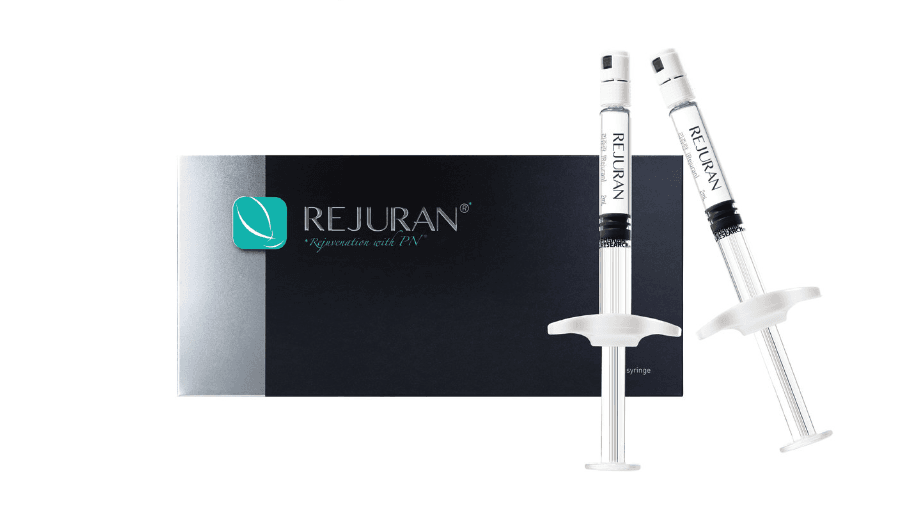
Rejuran® Healer is a professional injectable skin-quality product made with purified polynucleotides derived from salmon DNA. Licensed clinics and healthcare professionals can order Rejuran® Healer for treatment-room protocols focused on texture, tone, barrier support, and post-procedure skin maintenance. The product is positioned as a non-volumizing Rejuran skin booster, so clinics typically integrate it alongside, rather than in place of, fillers or neuromodulators.
Med Wholesale Supplies serves licensed clinics, med spas, and healthcare professionals that need authentic, brand-name aesthetic products through verified supply channels. Clinic teams can use their account to view current Rejuran Healer price information, align purchasing with inventory cycles, and maintain documentation for lot and expiration tracking. Only trained, authorized professionals should administer injectable products according to manufacturer instructions, clinic protocols, and applicable professional standards.
Rejuran Healer Price and Clinic Ordering
Rejuran Healer cost depends on the quantity selected, account status, and any contract or volume structure available to the clinic. Sign in with a verified professional account to view current pricing and purchasing terms. Because treatment plans often require scheduled sessions or multi-room inventory, many practices review projected use before placing a replenishment order.
Ordering is intended for licensed clinics and healthcare professionals rather than consumer self-use. Before fulfillment, account details and professional-use requirements may be reviewed to support appropriate B2B supply. Product documentation, lot numbers, and expiration dates should be recorded in the clinic’s purchasing and treatment records when stock is received.
Quick tip: Match purchasing quantities to booked protocols, expected maintenance visits, and storage capacity.
| Ordering factor | Clinic relevance |
|---|---|
| Account verification | Supports professional-use supply for licensed facilities. |
| Current price view | Allows purchasing staff to evaluate Rejuran Healer price before ordering. |
| Lot and expiry records | Helps maintain traceability across inventory and treatment-room use. |
| Protocol planning | Assists with scheduling and avoids understocking during treatment cycles. |
| US distribution | Supports inventory planning for clinics purchasing through reliable US logistics. |
What Rejuran Is and How It Works
Rejuran® Healer contains highly purified polynucleotides, often shortened to PN. Polynucleotides are DNA fragments used in aesthetic medicine for skin-quality support, where the intended role is to help create a favorable tissue environment for repair processes. In clinical discussion, the PN component may be described as Rejuran PN.
This product is used by trained clinicians to support dermal regeneration pathways, extracellular matrix renewal, and epidermal barrier resilience. It is not a filler designed to build facial volume. That distinction matters for consultation, charting, and product selection because a Rejuran Healer treatment is usually framed around skin texture, hydration quality, fine-line appearance, and post-procedure recovery support rather than structural contouring.
Within aesthetic workflows, the Rejuran Healer injection can complement technique-driven treatment plans. Clinics may schedule it as a periodic skin-maintenance intervention or use it as an adjunct after device-based procedures when the supervising clinician considers that appropriate. For broader product class planning, the Skin Boosters category can help teams evaluate adjacent injectable skin-quality products.
Professional Applications in Aesthetic Practice
Rejuran® Healer is commonly selected for skin-quality programs where the clinic’s goal is visible refinement rather than lift or volume. Typical professional applications include facial rejuvenation protocols, fine-line softening strategies, pore-appearance management, tone support, texture improvement, and scar-focused aesthetic plans. The precise technique, treatment area, and scheduling interval should be determined by qualified clinical staff.
Many practices describe the product as a Rejuran Healer skin booster when explaining its role inside a broader aesthetic menu. That language can be useful operationally because it separates PN-based tissue-support products from hyaluronic acid fillers, botulinum toxin products, and thread-based procedures. For clinics building cross-category protocols, Mesotherapy products may be reviewed for compatible professional workflows and staff training needs.
The product may be paired with micro-deposit techniques, energy-based devices, or micro-needling protocols according to the clinic’s standards and clinician judgment. When used with devices or other injectables, staff should document product sequence, treatment area, lot number, aftercare instructions, and any observed reaction. A separate educational discussion of skin-quality positioning is available in Rejuran skin booster therapy.
Key Features for Treatment-Room Use
Rejuran® Healer fits clinics that want a PN-based injectable with a non-volumizing role. Its value is largely operational: one product line can support several skin-quality aims while remaining distinct from contouring fillers. For multi-provider practices, clear internal protocols help keep patient selection, technique, consent language, and documentation consistent.
- PN composition: purified polynucleotides sourced from salmon DNA.
- Skin-quality focus: supports tissue environment and matrix renewal.
- Professional injectable use: intended for trained clinical administration.
- Non-volumizing role: complements filler and device programs without replacing them.
- Sterile presentation: use aseptic handling from receipt through administration.
- Barrier support: aligns with hydration and epidermal resilience protocols.
- Traceability: lot and expiration details support clinic records.
- Workflow flexibility: can fit maintenance, seasonal, or adjunctive plans.
Why it matters: Clear product positioning reduces mismatched expectations during consultation and helps staff select the right product class.
Composition and Ingredients
The primary active component is polynucleotide material of salmon DNA origin. In aesthetic medicine, PN products are discussed for their biocompatibility and potential to support the dermal environment. The formulation is prepared in an injectable carrier suitable for professional administration, with supporting ingredients used to maintain solution characteristics.
- Polynucleotides (PN), salmon DNA origin.
- Water for injection.
- Buffer salts and pH adjusters.
Clinics comparing PN-based products may also consider related products such as Rejuran I, Rejuran HB, or other polynucleotide injectable options. Product selection should account for intended area, treatment objective, clinician experience, patient history, and the clinic’s written protocol.
Storage, Handling, and Supply Documentation
Rejuran® Healer should be stored and handled according to the manufacturer’s carton, leaflet, and clinic policy. Staff should inspect external packaging at receipt, record lot and expiration information, and keep stock segregated from expired or quarantined products. Sterile injectable products require controlled handling, clean preparation areas, and appropriate sharps management during treatment-room use.
Supply is supported through medical distribution processes, including temperature-controlled handling when required and tracked US delivery. Receiving staff should document arrival, storage transfer, and any discrepancy according to internal purchasing procedures. These steps protect inventory integrity and support traceability if a product inquiry or adverse-event review is ever needed.
Reference SKU: 89439. Clinic procurement teams can use SKU, brand name, lot number, and expiration data to standardize ordering across locations. For practices that manage multiple PN products, consistent nomenclature in inventory software helps prevent selection errors and supports accurate treatment charting.
Safety, Contraindications, and Monitoring
Rejuran® Healer is an injectable product for professional use, so safety depends on patient selection, aseptic technique, product handling, and post-treatment monitoring. Clinics should review medical history, allergies, skin condition at the treatment site, active infection, pregnancy or lactation considerations, immune status, and prior aesthetic procedures before administration. The supervising professional should determine whether treatment is appropriate for each individual case.
Expected local reactions after injectable skin-quality procedures may include temporary redness, swelling, tenderness, bruising, pinpoint bleeding, or small injection-site marks. More serious concerns can include infection, hypersensitivity reaction, persistent inflammation, nodules, or unexpected tissue response. Patients should be instructed to contact the clinic promptly for worsening pain, spreading redness, fever, drainage, visual symptoms, or other concerning changes.
Product compatibility also requires clinical judgment. When Rejuran® Healer is used near fillers, neuromodulators, threads, peels, lasers, or micro-needling, the practitioner should plan spacing, sequence, and aftercare to reduce avoidable irritation or confusion about the source of a reaction. Staff should document all products used in the same session, including device settings when applicable.
How It Differs from Botox, Fillers, and Other Skin Boosters
Rejuran® Healer is not the same type of product as botulinum toxin. Botox-type products target muscle activity to soften dynamic wrinkles, while PN-based skin boosters are used to support the skin environment and visible quality. The categories may be used in the same practice, but they answer different aesthetic problems.
It also differs from dermal fillers. Fillers are generally selected for volume replacement, contouring, or structural support, depending on the product and technique. Rejuran® Healer is positioned for texture, tone, hydration quality, barrier support, and regeneration-focused protocols. This distinction helps clinics explain why a patient may need a skin booster, a filler, a neuromodulator, or a combination plan.
For non-PN skin-quality alternatives, practices can evaluate composition and workflow fit across adjacent products. The Rejuran brand area supports brand-level browsing, while PN alternatives such as Plinest and Nucleofill Medium may be relevant for clinicians comparing tissue-support injectables.
Comparable Products and Protocol Planning
Clinics often build PN protocols around treatment area, desired handling characteristics, and whether the plan is restorative, maintenance-focused, or adjunctive after procedures. Rejuran Eye is commonly discussed as an area-specific variant for periocular work, while Rejuran S may be considered in scar-focused conversations. Exact product choice should come from clinical assessment and the manufacturer’s professional-use instructions.
Related PN and regenerative-aesthetic products can support different workflows. Plinest One may be reviewed when practices are comparing polynucleotide options, and Plinest injection therapy provides additional class context for dermal-repair positioning. Clinics that use autologous regenerative treatments may also find PRP therapy for skin regeneration useful when training staff on how different regenerative approaches fit into the service menu.
When deciding between Rejuran® Healer and a comparable product, consider the intended treatment area, injector training, storage requirements, patient tolerance for injection marks, aftercare expectations, and planned combination treatments. A consistent consent and documentation template can help providers explain that PN products support skin quality rather than provide immediate volume or neuromodulation.
Availability and Inventory Planning
Rejuran® Healer is available for professional clinic ordering through Med Wholesale Supplies. Practices should sign in to view current account pricing and purchase quantities suited to their workflow. Because aesthetic scheduling can fluctuate by season, appointment type, and campaign volume, purchasing staff often coordinate orders with provider calendars and planned treatment packages.
Inventory planning should account for lead time, storage space, rotation of older stock, and usage across multiple rooms or locations. Use first-expiry-first-out rotation, and avoid opening or staging sterile products until the treatment team is ready to prepare according to protocol. If a substitute is considered, the supervising clinician should approve it before appointments are scheduled around the replacement.
Authoritative Sources
This content is for informational purposes only and is not a substitute for professional medical advice.
Frequently Asked Questions
What does Rejuran® Healer do in clinic protocols?
Rejuran® Healer is used by trained professionals as a PN-based injectable skin booster. Clinics typically position it for skin-quality support, including texture, tone, barrier resilience, fine-line appearance, and post-procedure maintenance rather than volume replacement.
How can clinics view Rejuran Healer price information?
Licensed clinics and healthcare professionals can sign in with a verified account to view current Rejuran Healer price information. Cost may vary by order quantity, account terms, and purchasing structure.
Is Rejuran® Healer the same as Botox or dermal filler?
No. Botox-type products act on muscle activity, and dermal fillers are generally used for volume or contouring. Rejuran® Healer is a polynucleotide injectable used in skin-quality and regenerative aesthetic protocols.
Who should administer Rejuran® Healer injection treatments?
Only trained, authorized healthcare professionals should administer Rejuran® Healer. Clinics should follow manufacturer instructions, aseptic technique, internal protocols, and appropriate patient assessment before treatment.
What documentation should clinics keep for Rejuran® Healer?
Clinics should record product name, SKU when useful, lot number, expiration date, storage transfer, treatment area, administration details, and any observed reaction. These records support traceability and inventory control.
Can Rejuran® Healer be used with devices or other aesthetic products?
It may be incorporated into multi-modality protocols when the supervising clinician considers it appropriate. Sequence, spacing, treatment area, device settings, and aftercare should be planned and documented by the clinic.
How should clinics store and handle Rejuran® Healer?
Store and handle Rejuran® Healer according to the manufacturer’s carton, leaflet, and clinic policy. Staff should inspect packaging at receipt, record lot and expiration details, and maintain sterile handling procedures before administration.
Specifications
- Main Ingredient: Polynucleotides
- Manufacturer: Pharma Research Products
- Drug Class: Cosmetic Injectable
- Generic Name: Polynucleotides
- Package Contents: 2 mL x 2Pre-Filled Syringes
- Storage Requirements: Room Temperature (2℃~25℃)
- Main Usage: Volume Filler, Anti Ageing
About the Brand
Rejuran
Rejuran is a coveted medical brand celebrated for its regenerative properties. Crafted with a distinctive combination of ingredients, Rejuran effectively enhances the overall skin appearance, diminishing aging symptoms and fostering a vibrant, youthful allure. Suitable for addressing various skin issues such as wrinkles, fine lines, and pigmentation problems; it is an adaptable choice for individuals seeking to enhance their skin aesthetics. At medwholesalesupplies.com, we take pride in featuring Rejuran in our comprehensive collection of medical supplies. We recognize the critical role of offering top-quality goods to our clients, prompting our collaboration with Rejuran. By procuring Rejuran via our online platform, you acquire the assurance of securing a legitimate product, procured straight from the producer. Moreover, procuring Rejuran via medwholesalesupplies.com delivers convenience and easy reach. Our customer-friendly website empowers you to explore and acquire Rejuran from your home's comfort; doing away with the necessity to wander around multiple brick-and-mortar stores. Besides, we assure swift shipping and distribution services, making certain you receive your Rejuran promptly. Choose medwholesalesupplies.com for all your medical supply requirements, including Rejuran.
Browse Rejuran Products
Here to help
Questions about ordering, delivery or products? You can email our team here or call now at 1-800-630-9757 and be connected with your dedicated Account Manager
Related Products
Prolia® (International English)
Prescription Medication
$529.00 - $549.00
You save
You save
Evenity® (English Alternative)
Injectable Medication
$1,229.00 - $1,299.00
You save
You save
Intraline® For Men
Dermal Filler
$59.00 - $79.00
You save
You save
RejuvaNAD+ Pro
Injectable Medication
$237.00 - $249.00
You save
You save
Related Articles
Prednisone in Clinical Care: Uses, Risks, and Monitoring
Prednisone is a prescription systemic corticosteroid used to reduce inflammation or suppress immune activity in…
Lip Fillers Swelling Stages: Timeline, Safety, and Follow-Up
Lip fillers swelling stages usually follow a short inflammatory course: swelling appears soon after injection,…
Hypopigmentation of the Skin: Assessment and Care
Hypopigmentation of the skin means one or more areas look lighter than the surrounding skin.…
Radiesse vs Sculptra: Selection Factors for Clinics
Radiesse vs Sculptra is best understood as a comparison between two collagen-stimulating injectables with different…
Hyaluronic Acid Under-Eye Filler: Safety and Workflow
Hyaluronic acid under-eye filler is an injectable soft-tissue filler used by trained aesthetic clinicians to…
Dermal Filler Types: Materials, Uses, and Clinic Fit
Dermal filler types are usually grouped by their base material, tissue behavior, and expected role…
What Is Dysport? Clinical Uses, Safety, and Workflow
For clinic teams asking what is Dysport, the short answer is simple: Dysport is a…
Biostimulators in Aesthetic Care: Selection and Safety
Biostimulators are injectable aesthetic products used to encourage a controlled tissue response, often involving new…