

- You must be logged in to add items to the cart.
Description
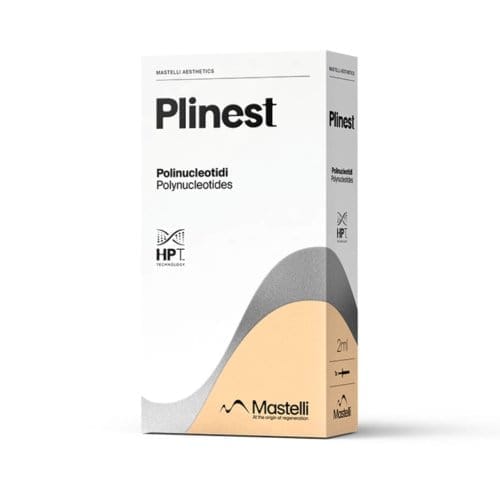
Plinest® is a sterile polynucleotide injectable from the Mastelli line for professional aesthetic workflows. Licensed clinics and healthcare professionals can order Plinest® in a 2ml prefilled syringe format for treatment-room use, inventory planning, and documented clinic protocols. The product contains purified polynucleotides at 20 mg/ml and is supplied for precision placement by trained professionals.
In aesthetic practice, Plinest® is used as a Plinest skin booster within skin-quality, biostimulatory, and scalp-support programs. It is commonly planned for face, neck, décolletage, hands, and scalp workflows where clinics want a non-volumizing injectable option that supports texture, tone, and hydration-focused treatment planning.
Plinest® Price, Pack Size, and Clinic Ordering
Clinics can sign in to view current Plinest price details, quantity tiers, and account-specific purchasing terms. Pricing may vary by order volume, contract status, and supply program, so the live account view is the most practical reference for procurement teams planning series-based injectable schedules.
Each box is supplied as one Plinest 2ml syringe with two 30G 1/2 inch needles. The 2ml fill can help clinics plan full-face or multi-zone mapping without frequent syringe changes, depending on the injector’s protocol, treatment area, and professional training. Lot number and expiration date appear on the unit carton for intake documentation and traceability.
Account verification is required before checkout because this is a professional-use clinic supply. Med Wholesale Supplies serves licensed clinics, med spas, and healthcare professionals with brand-name medical products sourced through vetted distributors and verified supply channels. Orders use reliable US logistics, with temperature-controlled handling when required and tracked US delivery.
What Plinest® Is and How It Works
Plinest® is an injectable preparation containing purified polynucleotides, often abbreviated as PN. Polynucleotides are long-chain nucleotide fragments used in aesthetic medicine as biostimulatory ingredients; in practical clinic terms, they are selected for skin-quality programs rather than for adding facial volume.
The formulation is designed for professional intradermal or superficial placement techniques according to the clinic’s training and protocol. Common approaches include microdepot, microdroplet, or linear techniques, with fine-gauge needle use determined by the injector and the treatment area. The product’s ready-to-inject presentation supports consistent room setup and reduces preparation variation between staff members.
Plinest polynucleotide protocols are often positioned alongside mesotherapy and booster workflows. Clinics building a broader regenerative aesthetics menu can browse mesotherapy products and skin booster supplies to align injectable PN products with complementary categories.
Professional Applications and Treatment-Room Fit
Typical professional use includes full-face rejuvenation strategies, periorbital refinement when an appropriate product is selected, lip and peri-oral finesse work, neck and décolletage maintenance, hand rejuvenation planning, and scalp-focused biostimulation programs. Plinest® is generally selected when the clinic’s goal is skin quality rather than contouring or structural lift.
For under-eye or delicate periorbital planning, clinics may evaluate Plinest Eye as a companion product in the same brand family. For practices that separate facial, hair, and body workflows, related options such as Plinest Hair, Plinest Fast, and Plinest One can help standardize inventory by treatment area and protocol type.
Quick tip: Keep product selection, treatment zone, lot number, expiry, injection map, and practitioner notes together in the same treatment record for easier follow-up comparison.
Key Features for Clinic Procurement
- Active composition: purified polynucleotides for professional injection.
- Concentration: 20 mg/ml polynucleotides, as indicated in the current product details.
- Pack format: one prefilled Plinest 2ml syringe per box.
- Included accessories: two 30G 1/2 inch needles.
- Workflow fit: face, neck, décolletage, hands, and scalp-support protocols.
- Technique fit: suitable for fine-gauge microdepot, microdroplet, or linear placement by trained professionals.
- Traceability: lot and expiry information are shown on unit packaging.
- Supply context: Mastelli Plinest line distributed through verified professional channels.
Composition, Ingredients, and Documentation
Plinest® contains polynucleotides at 20 mg/ml in a sterile injectable vehicle, according to the product information currently provided. No fragrances or dyes are indicated in typical labeling for this class, but clinics should rely on the unit carton and manufacturer materials for the final ingredient list used in facility documentation.
For procurement teams, the most important documentation points are product name, concentration, fill volume, lot number, expiry date, intake date, and storage location. Keeping the carton until point of care preserves the complete traceability trail and helps reconcile treatment records with inventory logs.
| Clinic detail | Practical use |
|---|---|
| Polynucleotides 20 mg/ml | Supports protocol alignment and internal formulary notes. |
| 2ml prefilled syringe | Helps staff plan room setup and multi-zone session supply. |
| Two 30G 1/2 inch needles | Provides included needles for professional microinjection workflows. |
| Lot and expiry on carton | Supports intake checks, documentation, and product traceability. |
Handling, Storage, and Inventory Control
Store and handle Plinest® according to the manufacturer’s labeling and your facility’s standard operating procedures. Because the preparation is sterile and intended for injection, staff should maintain packaging integrity, avoid unnecessary handling, and keep the unit protected until it is prepared for professional administration.
Inventory teams should rotate stock by expiry, document receipt conditions, and separate PN injectables from other aesthetic products when that improves stock control. Treatment-room staff should confirm the correct product, lot, expiry, and carton integrity before setup. If storage instructions on the carton differ from internal assumptions, the manufacturer’s labeling should guide handling.
Professional injection-safety practices remain essential with any sterile injectable. The CDC emphasizes aseptic technique, appropriate needle and syringe handling, and single-patient injection practices to reduce contamination and infection risk.
Benefits in Practice
The ready-to-inject syringe format streamlines room setup and can reduce variation between appointments. A consistent presentation also helps coordinators plan supply needs for staged protocols, especially when practitioners repeat the same treatment map across a series.
Clinics often value Plinest® because it fits programs where subtle skin-quality support is the objective. It does not replace volumizing dermal fillers, thread-based lifting, resurfacing devices, or topical maintenance; instead, it can sit within a broader plan that separates PN sessions from hyaluronic acid boosters or energy-based treatments when the clinician wants clearer endpoints.
Search interest often asks whether Plinest® works. In clinic-facing terms, outcomes depend on patient selection, baseline skin quality, treatment spacing, technique, aftercare, and objective assessment methods such as standardized photography. Avoid guaranteeing visible results in consent discussions, and document realistic goals before treatment.
Comparison With Other Skin Boosters
Plinest® is best compared by ingredient class, treatment objective, treatment zone, and injector experience. Rejuran vs Plinest discussions usually center on polynucleotide-based skin-quality protocols, but clinics should review each product’s labeling, concentration, presentation, and handling requirements before adding either to a formulary.
Profhilo comparisons are different because hyaluronic acid skin boosters and PN injectables are not identical product categories. Hyaluronic acid boosters are commonly selected for hydration-focused protocols, while Plinest® is positioned as a polynucleotide injectable for biostimulatory skin-quality planning. One is not automatically better; the appropriate choice depends on the assessment, target area, contraindication review, and treatment objective.
Clinics evaluating adjacent PN products may also consider Rejuran I for delicate-area planning. For broader clinical reading, the article on Plinest injection therapy discusses dermal repair concepts, while Rejuran skin booster therapy provides context for another polynucleotide category.
Safety, Contraindication Checks, and Professional Use
Plinest® should be administered only by appropriately trained healthcare professionals working within clinic protocols and local professional standards. Before treatment, clinicians should assess medical history, prior aesthetic procedures, allergy history, active infection, inflammatory skin conditions, pregnancy or breastfeeding status when relevant to clinic policy, and any factors that may increase bruising or delayed healing.
Common injection-related effects for sterile aesthetic injectables may include transient redness, swelling, tenderness, bruising, pinpoint bleeding, or temporary lumps at injection sites. Serious complications are uncommon but can include infection, persistent inflammatory reaction, hypersensitivity, or tissue injury if technique and patient selection are inappropriate. Clinics should provide clear escalation instructions and document any adverse event review.
Polynucleotides are not a substitute for surgical lifting, and they should not be represented as a treatment that lifts jowls in the way surgery or structural contouring may. They may be included in skin-quality programs for laxity-adjacent concerns, but practitioner assessment should distinguish texture, hydration, firmness, volume loss, and true tissue descent.
Ordering Workflow for Licensed Clinics
Sign in to view live account pricing and order quantities. Procurement staff should match the quantity ordered to scheduled treatment series, expected consultation conversion, storage capacity, and expiry management. For multi-provider practices, it can help to standardize protocol naming so coordinators know when Plinest 2ml is planned rather than a zone-specific companion product.
Before approving a purchase, confirm the clinic’s internal requirements for professional-use injectables, staff training, adverse event documentation, and supply chain records. If your practice is consolidating PN products with mesotherapy supplies or skin boosters, align order timing so products arrive before staff training, consultation blocks, or launch campaigns begin.
Related Education and Adjacent Products
Clinic teams building a regenerative aesthetics menu often combine PN education with broader collagen-support and biostimulation topics. Articles such as Croma PhilArt introduction, Nucleofill Medium skin regeneration, and PRP therapy for skin regeneration can support internal discussion about where PN injectables fit beside other modalities.
When selecting alternatives, compare concentration, syringe volume, treatment zone, manufacturer labeling, practitioner familiarity, and how the product will be documented in the patient record. Avoid treating product names as interchangeable unless the clinical lead has reviewed composition, training requirements, and protocol fit.
Authoritative Sources
This content is for informational purposes only and is not a substitute for professional medical advice.
Frequently Asked Questions
What is Plinest®?
Plinest® is a sterile injectable preparation containing purified polynucleotides. Clinics use it in professional skin-quality, biostimulatory, and scalp-support aesthetic protocols rather than as a volumizing filler.
What comes in one box of Plinest®?
The current pack includes one prefilled Plinest 2ml syringe and two 30G 1/2 inch needles. The concentration is listed as 20 mg/ml polynucleotides.
Who can order Plinest® from Med Wholesale Supplies?
Plinest® is supplied for licensed clinics, med spas, and healthcare professionals after account verification. It is intended for professional-use workflows and clinic documentation practices.
How should clinics store and handle Plinest®?
Follow the manufacturer’s labeling and your facility SOPs. Keep packaging intact until point of care, document lot and expiry, rotate stock by expiration date, and maintain sterile handling practices during setup.
Is Plinest® the same as Profhilo or Rejuran?
No. Plinest® is a polynucleotide injectable. Profhilo is generally discussed as a hyaluronic acid skin booster, while Rejuran products are separate PN-based products. Clinics should compare labeling, treatment zone, presentation, and protocol fit.
Can Plinest® lift jowls?
Plinest® should not be positioned as a surgical lifting or structural contouring product. It may be used in skin-quality programs, but true jowl laxity requires professional assessment and may need other modalities.
Specifications
- Main Ingredient: Polynucleotides
- Manufacturer: Mastelli
- Drug Class: Dermal Filler
- Generic Name: Polynucleotides
- Package Contents: 2 ml x 1 syring. 2 30G ½ needles.
- Storage Requirements: Store at 2ºC to 25ºC
- Main Usage:
Here to help
Questions about ordering, delivery or products? You can email our team here or call now at 1-800-630-9757 and be connected with your dedicated Account Manager
Related Products
JALUPRO® PLUS 4ML
Skin Rejuvenation Treatment
$86.00 - $89.00
You save (%)
You save (%)
$339.00
You save (%)
You save (%)
Select options
This product has multiple variants. The options may be chosen on the product page
Juvéderm® SKINVIVE
Dermal Filler
$339.00 - $359.00
You save (%)
You save (%)
$86.00 - $119.00
You save (%)
You save (%)
Related Articles
Lip Fillers Swelling Stages: Timeline, Safety, and Follow-Up
Lip fillers swelling stages usually follow a short inflammatory course: swelling appears soon after injection,…
Hypopigmentation of the Skin: Assessment and Care
Hypopigmentation of the skin means one or more areas look lighter than the surrounding skin.…
Radiesse vs Sculptra: Selection Factors for Clinics
Radiesse vs Sculptra is best understood as a comparison between two collagen-stimulating injectables with different…
Hyaluronic Acid Under-Eye Filler: Safety and Workflow
Hyaluronic acid under-eye filler is an injectable soft-tissue filler used by trained aesthetic clinicians to…
Dermal Filler Types: Materials, Uses, and Clinic Fit
Dermal filler types are usually grouped by their base material, tissue behavior, and expected role…
What Is Dysport? Clinical Uses, Safety, and Workflow
For clinic teams asking what is Dysport, the short answer is simple: Dysport is a…
Biostimulators in Aesthetic Care: Selection and Safety
Biostimulators are injectable aesthetic products used to encourage a controlled tissue response, often involving new…
Do You Ovulate on an IUD? Clinic Counseling Points
Clinicians hear the shorthand question do you ovulate on iud, but the practical answer depends…