

- You must be logged in to add items to the cart.
Description
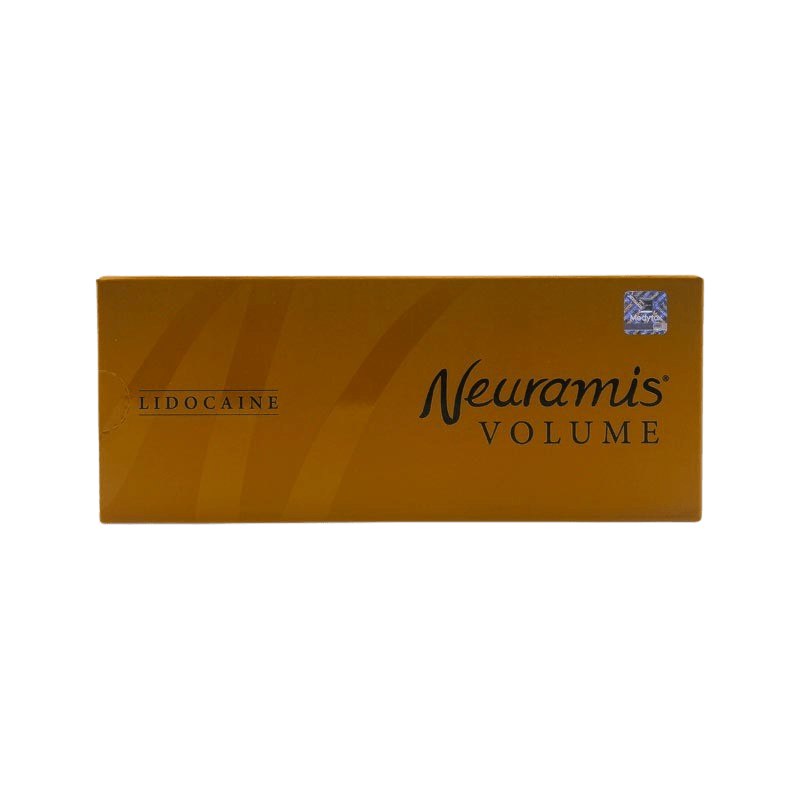
Neuramis® Volume is a cross-linked hyaluronic acid dermal filler supplied as a sterile 1 mL prefilled syringe for professional aesthetic use. Licensed clinics, med spas, and healthcare professionals can order Neuramis Volume for deep-tissue facial augmentation, contour support, and wrinkle-softening protocols. The formulation includes lidocaine, which may support procedural comfort during injection by trained providers.
The product is designed for clinic workflows that require a cohesive HA gel, clear unit identification, and treatment-room ready packaging. Med Wholesale Supplies serves professional purchasers with brand-name medical products sourced through vetted distributors and verified supply channels for licensed clinics.
What Neuramis® Volume Is Used For
Neuramis Volume filler is used by qualified aesthetic providers for facial volume restoration and structural contouring in appropriate candidates. Common professional applications include midface support, chin projection, jawline definition, and correction of prominent folds when deeper tissue placement is indicated by anatomy and clinic protocol.
The gel contains cross-linked hyaluronic acid, a water-binding polysaccharide used in many dermal filler products. Cross-linking helps create a more durable, cohesive gel matrix than non-cross-linked HA. In practice, injectors consider cohesivity, viscosity, tissue mobility, treatment depth, and desired projection before selecting a filler for a specific facial zone.
Some clinics also discuss Neuramis Volume for lips, but volume products are generally evaluated differently from softer gels intended for highly mobile or superficial areas. Lip use, if considered, should follow injector training, local protocols, patient assessment, and manufacturer labeling. Practices that want broader category planning can browse professional dermal filler selection guidance for gel-characteristic considerations.
1 mL Syringe, Lidocaine Formulation, and Handling Fit
Each unit is supplied as Neuramis Volume 1ml in a sterile, prefilled syringe. The single-syringe format supports predictable stock counts, lot traceability, and efficient treatment-room setup. Labels should be retained or recorded according to clinic documentation standards, especially when treatment records require lot and expiry details.
Neuramis Volume with Lidocaine combines the HA filler matrix with a local anesthetic. Lidocaine does not remove the need for appropriate patient screening, aseptic technique, or individualized comfort planning, but it can reduce the need for separate anesthetic steps in some professional protocols. Clinics should follow the package insert for storage, preparation, and administration guidance.
Quick tip: Match syringe allocation to booked procedures and maintain lot-level records before the product enters the treatment room.
Ordering, Price, and Clinic Procurement
Licensed purchasers can sign in to view current Neuramis Volume price information and available units. Pricing may vary by order size, account terms, and current supply conditions, so live account pricing is the appropriate reference for purchasing decisions. The 1 mL syringe format makes it straightforward to align procurement with appointment volume and treatment-area planning.
Clinic accounts may use this product as part of a broader dermal filler formulary. Many practices keep multiple HA gels on hand so injectors can choose products by tissue depth, lift requirement, and facial mobility rather than relying on a single filler for every indication. For Neuramis-specific portfolio context, review the professional Neuramis filler overview.
Order processing follows professional-use account requirements. Shipment timing depends on order size, timing, carrier conditions, and product handling needs. When required, we use temperature-controlled handling when required and tracked US delivery.
Professional Applications and Treatment Planning
Clinics deploy this preparation where deeper support and projection are desired. Typical use cases include restoring cheek volume, improving contour transitions, supporting the chin, refining the lower-face profile, and softening deeper folds. Final selection should reflect patient anatomy, tissue quality, procedure goals, and the injector’s training with the chosen technique.
Needle or cannula selection depends on plane, mobility, risk assessment, and clinic protocol. Providers should use aseptic technique and observe standard precautions for injectable medical products. Treatment documentation should capture product name, quantity used, lot number, expiry, injection sites, device choice, and any immediate observations relevant to follow-up.
Layered correction may involve combining a deep volumizing gel with other products that have different rheology. For example, a firm product may support projection in one zone while a more elastic or superficial gel addresses fine contour transitions elsewhere. Clinics can use broader facial volume filler guidance when building internal protocols for volume-loss cases.
Key Features for Aesthetic Practices
- Cross-linked HA gel designed for deeper placement and contour work.
- 1 mL sterile prefilled syringe format for clinic inventory control.
- Lidocaine-containing formulation to support procedural comfort.
- Cohesive gel behavior suited to structural support protocols.
- Clear labeling for lot, expiry, and treatment-record traceability.
- Compatible with routine professional injection workflows when used by trained providers.
- Useful alongside other dermal fillers in multi-product facial planning.
- Suitable for formulary review by clinics that prioritize volumizing HA products.
Composition and Ingredient Review
The clinically relevant Neuramis Volume ingredients are cross-linked hyaluronic acid and lidocaine. Hyaluronic acid provides the volumizing gel matrix. Lidocaine is included as a local anesthetic component intended to improve comfort during injection.
Inactive excipients and complete handling instructions should be confirmed from the current manufacturer labeling supplied with the unit. Clinics should use the most recent package insert for contraindications, precautions, storage conditions, and any device-specific preparation steps. Ingredient review is especially important for patients with known hypersensitivity to local anesthetics or prior reactions to injectable filler materials.
| Attribute | Clinic relevance |
|---|---|
| Cross-linked hyaluronic acid | Supports a cohesive volumizing gel matrix for deeper placement decisions. |
| Lidocaine | May improve tolerability during professional injection procedures. |
| 1 mL prefilled syringe | Helps with stock counts, procedure planning, and lot tracking. |
| Sterile unit format | Supports treatment-room workflow when handled according to labeling. |
Benefits in Clinic Workflow
Neuramis Volume fits practices that need a treatment-room ready HA filler for deeper structural work. The prefilled syringe reduces preparation steps and supports consistent setup between injectors. For busy clinics, unit-level packaging also simplifies rotation of stock by expiry date.
From a procedural standpoint, a cohesive volumizing gel can help maintain contour in areas that require projection. Smooth extrusion and predictable handling are important because they support controlled placement under established techniques. These characteristics do not replace training or anatomical assessment, but they can help experienced injectors standardize their approach.
- Efficient setup before appointments.
- Simple unit counts for recurring inventory checks.
- Lot traceability for treatment documentation.
- Useful in protocols requiring deeper support.
- Adaptable to needle or cannula technique as trained.
- Compatible with competency-based staff education.
Safety, Contraindications, and Professional Precautions
Dermal fillers should be administered only by trained healthcare professionals with knowledge of facial anatomy, injection depth, vascular risk, aseptic technique, and management of complications. Patients should be screened for prior filler reactions, infection or inflammation at the treatment site, relevant allergy history, bleeding risk, and current medications or supplements that may increase bruising.
Expected local reactions can include swelling, redness, tenderness, bruising, firmness, itching, or temporary discomfort at injection sites. Serious complications are uncommon but can include infection, vascular compromise, tissue injury, nodules, delayed inflammatory reactions, or visual symptoms after inadvertent vascular injection. Clinics should maintain protocols for urgent evaluation and escalation when severe pain, blanching, skin color change, vision change, or neurologic symptoms occur.
Lidocaine-containing products require additional caution in patients with known sensitivity to amide-type local anesthetics or relevant cardiac, hepatic, or medication considerations. Providers should follow current labeling and professional standards before using any HA filler. The FDA’s general safety information on dermal fillers emphasizes that products should be injected by licensed professionals familiar with risks and appropriate use.
Storage, Packaging, and Inventory Control
Each pack contains one sterile 1 mL prefilled syringe. Ancillary devices such as needles or cannulas should be selected according to the clinic’s protocol and the manufacturer’s supplied components. Do not assume accessories are included unless the physical pack states they are present.
Clinics should store units according to the product labeling, protect packaging integrity, and avoid using syringes with damaged seals, compromised sterility, unclear labeling, or expired dates. Inventory logs should capture receiving date, lot number, expiry, storage location, and removal for use. These steps support recall readiness, documentation quality, and consistent treatment-room preparation.
For clinics consolidating procedural procurement, compatible supplies may be managed alongside related medical device categories when appropriate for the practice’s workflow.
How Neuramis Volume Compares With Other Fillers
Neuramis Volume vs Deep is a common clinic comparison because both names are associated with HA filler planning, but the practical decision should be based on target tissue plane, desired projection, gel firmness, and facial-zone mobility. A volumizing filler is typically assessed for structural support, while other products may be selected for moderate folds, fine contour transitions, or softer areas.
Clinics comparing volumizing HA fillers often evaluate alternatives such as Juvéderm Voluma with Lidocaine, FILLMED Art Filler Volume with Lidocaine, and Elravie Premier Ultra Volume-L. These products should not be treated as interchangeable without clinical review, because concentration, rheology, labeling, injection behavior, and intended use may differ.
For mid-depth or adjacent contour work, practices may also assess Perfectha Deep Lidocaine or other HA fillers within a broader formulary. A general discussion of facial-zone selection is available in common dermal filler placement patterns.
Related Neuramis and Dermal Filler Planning
Practices that use Neuramis products often keep a brand-level reference for staff training, reordering, and protocol updates. The Neuramis brand category can help teams locate related items from the same family when evaluating formulary fit.
Selection should never rely on brand name alone. A practical filler review includes treatment depth, tissue thickness, movement in the target area, desired lift, syringe volume, anesthetic content, and the injector’s familiarity with the product. Clinics treating age-related volume loss may also use facial volume restoration planning to frame internal consultations and training discussions.
Authoritative Sources
Ready to add Neuramis Volume to your clinic formulary? Sign in to view current account pricing, confirm available units, and align purchasing with your treatment schedule.
This content is for informational purposes only and is not a substitute for professional medical advice.
Frequently Asked Questions
How many mL is Neuramis® Volume?
Neuramis® Volume is supplied as a 1 mL prefilled syringe. Clinics should record the lot number, expiry date, and quantity used in treatment documentation.
What is Neuramis® Volume used for in clinics?
Clinics use Neuramis® Volume for professional facial volume restoration, contour support, and deeper wrinkle or fold correction when a trained injector determines that a volumizing HA filler is appropriate.
Does Neuramis® Volume contain lidocaine?
Yes. The formulation includes lidocaine, a local anesthetic component that may support comfort during injection. Providers should still screen for anesthetic sensitivity and follow current labeling.
How should clinics choose between Neuramis Volume and other fillers?
Selection should be based on treatment depth, tissue mobility, desired projection, gel characteristics, labeling, and injector training. Products with similar goals may differ in handling and intended use.
Can licensed clinics view Neuramis Volume price before ordering?
Licensed account holders can sign in to view current pricing and available units. Pricing may vary by account terms, order size, and current supply conditions.
What documentation should be kept after using a 1 mL syringe?
Treatment records should capture product name, lot number, expiry date, quantity used, treatment sites, device choice, injector details, and any immediate observations required by clinic protocol.
Specifications
- Main Ingredient: Hyaluronic Acid Of 20 Mg Per Ml, Lidocaine Of 3 Mg Per Ml
- Manufacturer: Medytox Inc., Ltd., South Korea
- Drug Class: Dermal Filler
- Generic Name: Hyaluronic Acid
- Package Contents: 1mL x 1 Pre-Filled Syringe
- Storage Requirements: Room Temperature (2℃~25℃)
- Main Usage: Volume Filler
About the Brand
Neuramis
Neuramis stands as a distinguished healthcare brand specializing in cutting-edge dermal filler solutions aimed at rectifying an assortment of beauty-related issues. Through unwavering dedication to creating safe and efficient remedies, Neuramis has established itself as a credible option for both healthcare givers and their patients. Their diverse product line caters to several distinct needs, from increasing facial fullness, minimizing signs of aging to enhancing lip definition. Making purchases from medwholesalesupplies.com lets healthcare providers conveniently buy online Neuramis's superior quality dermal fillers. Recognizing the crucial aspect of procuring dependable and genuine medical supplies, medwholesalesupplies.com has joined hands with Neuramis, allowing our platform to showcase their products. With a safe internet-based order system and swift delivery, medwholesalesupplies.com ensures the easy and trustworthy accessibility of Neuramis for healthcare professionals. By choosing to buy Neuramis from medwholesalesupplies.com, you can trust in receiving authentic products directly from its manufacturer. We only associate with esteemed brands to guarantee the security and gratification of our clients. Armed with competitive pricing and an extensive stockpile, medwholesalesupplies.com stands as the perfect hub for healthcare providers intending to invest in Neuramis treatments to provide their patients with superior aesthetic procedures. Never settle for less when you can opt for Neuramis and medwholesalesupplies.com for all your dermal filler requisites.
Browse Neuramis Products
Here to help
Questions about ordering, delivery or products? You can email our team here or call now at 1-800-630-9757 and be connected with your dedicated Account Manager
Related Products
JALUPRO® PLUS 4ML
Skin Rejuvenation Treatment
$86.00 - $89.00
You save (%)
You save (%)
$339.00
You save (%)
You save (%)
Select options
This product has multiple variants. The options may be chosen on the product page
Juvéderm® SKINVIVE
Dermal Filler
$339.00 - $359.00
You save (%)
You save (%)
$86.00 - $119.00
You save (%)
You save (%)
Related Articles
Hypopigmentation of the Skin: Assessment and Care
Hypopigmentation of the skin means one or more areas look lighter than the surrounding skin.…
Radiesse vs Sculptra: Selection Factors for Clinics
Radiesse vs Sculptra is best understood as a comparison between two collagen-stimulating injectables with different…
Hyaluronic Acid Under-Eye Filler: Safety and Workflow
Hyaluronic acid under-eye filler is an injectable soft-tissue filler used by trained aesthetic clinicians to…
Dermal Filler Types: Materials, Uses, and Clinic Fit
Dermal filler types are usually grouped by their base material, tissue behavior, and expected role…
What Is Dysport? Clinical Uses, Safety, and Workflow
For clinic teams asking what is Dysport, the short answer is simple: Dysport is a…
Biostimulators in Aesthetic Care: Selection and Safety
Biostimulators are injectable aesthetic products used to encourage a controlled tissue response, often involving new…
Do You Ovulate on an IUD? Clinic Counseling Points
Clinicians hear the shorthand question do you ovulate on iud, but the practical answer depends…
Vascular Occlusion: Early Signs, Risks, and Clinic Response
A vascular occlusion is a partial or complete blockage of blood flow in a vessel.…