
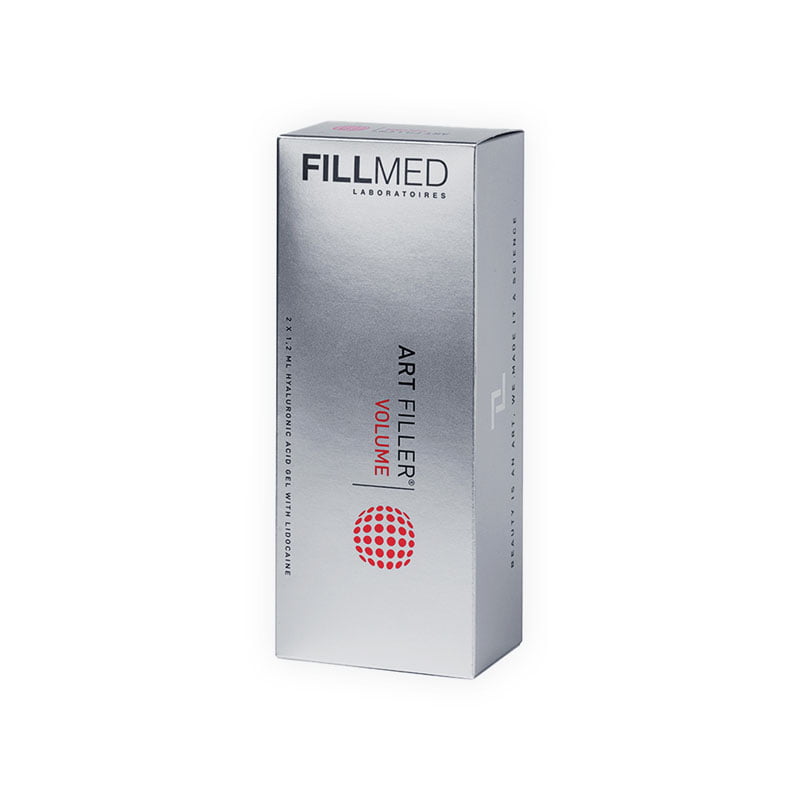
Fillmed® Art Filler Volume w/ Lidocaine
Order Fillmed® Art Filler Volume w/ Lidocaine for Clinics
Derma Filler
$179.00
You save
Description
Fillmed® Art Filler Volume w/ Lidocaine is a sterile, cross-linked hyaluronic acid injectable gel for professional facial volumizing and contour refinement. Licensed clinics, med spas, and healthcare professionals can order the 2 x 1.2 ml prefilled syringe box for treatment-room use and inventory planning. Each formulation contains hyaluronic acid 25 mg/ml with lidocaine hydrochloride 3 mg/ml to support handling and procedural comfort during trained administration.
Clinic Price, Pack Size, and Ordering Details
Fillmed Art Filler Volume with Lidocaine is supplied as 2 x 1.2 ml prefilled syringes per box. The prefilled format helps reduce preparation steps, supports consistent room setup, and gives purchasing teams a clear unit for forecasting usage across scheduled aesthetic services. Sign in to view current clinic pricing, quantity options, and account-specific purchasing details.
This product is intended for professional use by qualified injectors following manufacturer instructions and clinic protocols. Account verification and professional-use ordering requirements may apply. Med Wholesale Supplies serves licensed clinics and healthcare professionals with brand-name medical products sourced through vetted distributors and verified supply channels.
Quick tip: Match reorder quantities to scheduled volumizing procedures, injector preferences, and the mix of HA fillers already stocked in each treatment room.
What Fillmed Art Filler Volume Is
Fillmed Art Filler Volume injectable gel is a viscoelastic, sterile, non-pyrogenic hyaluronic acid filler produced from non-animal sources. Hyaluronic acid is a water-binding polysaccharide used in aesthetic medicine to support volume and soft-tissue contour when implanted by trained professionals. The gel is transparent, colorless, and saline-based, aligning with common expectations for modern HA dermal fillers used in clinical settings.
The Volume presentation is positioned for facial areas where structure, shape, and lift are priorities. In clinic workflows, practitioners may use it for midface volumization, cheek support, jawline contour refinement, and broader harmonization plans where three-dimensional support is required. Treatment planning, injection depth, technique, and patient selection should remain under the responsibility of an appropriately trained healthcare professional.
Lidocaine is included at 3 mg/ml. Its role is to aid comfort during administration as part of a wider clinical comfort plan. The presence of lidocaine does not replace screening, aseptic technique, pain assessment, or post-procedure monitoring, but it can help streamline patient-facing treatment-room workflows when the injector has selected an appropriate product for the planned procedure.
Key Features for Treatment-Room Use
- Cross-linked hyaluronic acid matrix designed for cohesive, sculptable handling.
- Hyaluronic acid concentration of 25 mg/ml.
- Lidocaine hydrochloride concentration of 3 mg/ml.
- Box contains 2 x 1.2 ml prefilled syringes.
- Sterile, transparent, colorless, non-pyrogenic, saline-based gel.
- Non-animal origin hyaluronic acid.
- Professional injectable filler with lidocaine for trained aesthetic use.
The viscoelastic profile supports controlled extrusion and tactile feedback under trained hands. For clinics managing several filler types, this makes the product easier to position as a higher-structure HA option alongside softer, finer, or more superficial formulations. Consistent prefilled presentation also helps standardize handoff between clinical support staff and injectors.
Practices evaluating the broader range can view the Fillmed product family for adjacent professional-use options. Category browsing through Dermal Fillers can also help purchasing teams organize HA fillers by intended treatment role, rheology profile, and room-level stocking needs.
Professional Applications and Protocol Fit
Fillmed Art Filler Volume hyaluronic acid filler is commonly selected when a clinic needs a filler suited to volumizing and contour definition rather than very superficial line correction. Typical protocol fit may include midface support, cheek contour, jawline shaping, and facial balancing strategies where structural support is emphasized. The product should be used only by professionals trained in facial anatomy, injection technique, complication recognition, and appropriate emergency response.
Many clinics keep Volume within a portfolio that includes softer or more versatile HA gels. For medium-to-broad correction needs, Fillmed Art Filler Universal with Lidocaine may support different technique preferences. For lip-focused contouring and shape work, clinics may also evaluate Fillmed Art Filler Lips with Lidocaine or Fillmed Art Filler Lips Soft with Lidocaine.
Product selection should reflect the treatment goal, tissue characteristics, prior aesthetic history, and injector assessment. A filler that performs well for structural support is not automatically the best choice for fine etched lines, delicate lip hydration, or superficial texture refinement. Maintaining a balanced shelf set helps clinics avoid forcing one gel profile into every indication.
Composition and Mechanism
The formulation contains cross-linked hyaluronic acid, which provides a gel network designed to resist rapid breakdown while remaining gradually resorbable over time. Cross-linking helps influence firmness, cohesivity, and durability of handling characteristics. Viscoelasticity refers to the way a gel shows both fluid-like movement and elastic resistance during extrusion, molding, and tissue integration.
| Attribute | Clinic-relevant detail |
|---|---|
| Active matrix | Cross-linked hyaluronic acid gel |
| HA concentration | 25 mg/ml |
| Anesthetic | Lidocaine hydrochloride 3 mg/ml |
| Pack | 2 x 1.2 ml prefilled syringes |
| Gel description | Transparent, colorless, sterile, non-pyrogenic, saline-based |
| Origin | Non-animal hyaluronic acid |
Because the gel is an implantable dermal filler, clinical judgment is required before use. Screening should address contraindications, allergy history, active skin conditions, recent procedures, anticoagulant or antiplatelet considerations, and any history that may increase risk of bruising, inflammation, infection, or vascular events. Follow the manufacturer’s instructions and your clinic’s adverse-event protocol.
Safety, Reactions, and Professional Precautions
Dermal fillers can cause local injection-site reactions. Reported or expected reactions may include redness, oedema, erythema, itching, tenderness, bruising, skin erosion, inflammatory response, or other local effects. Most routine reactions are managed according to clinical assessment and established protocols, but persistent, worsening, or unusual symptoms require prompt professional evaluation.
Serious complications from soft-tissue fillers are uncommon but clinically important. Vascular compromise, tissue necrosis, infection, nodules, delayed inflammatory reactions, hypersensitivity, and visual symptoms require urgent recognition and appropriate intervention. Injectors should understand facial vascular anatomy, use aseptic technique, avoid unsuitable injection sites, and maintain access to clinic policies for escalation and emergency management.
Lidocaine-containing fillers require attention to anesthetic sensitivity. Clinics should screen for known lidocaine allergy or relevant anesthetic reactions before use. The integrated lidocaine is intended to aid procedural comfort; it does not eliminate the need for appropriate counseling, consent, monitoring, and post-care instructions.
For broader regulatory and safety context on dermal fillers, the FDA dermal fillers guidance explains general risks, expected reactions, and warning signs associated with soft-tissue fillers. Manufacturer information is also available through the Fillmed manufacturer website.
Storage, Handling, and Traceability
Store and handle the product according to the manufacturer’s instructions on the carton and accompanying documentation. Before use, staff should inspect the outer carton, syringe integrity, batch number, expiry date, and any required documentation. Do not use compromised packaging, expired product, or a syringe that does not meet your clinic’s acceptance criteria.
The 2-syringe box supports lot-level tracking in clinics that document product use by patient encounter, injector, treatment area, and batch. Clear traceability is especially important for injectable implants because it supports recall management, adverse-event follow-up, and internal quality review. Standardizing how staff record batch and expiry details can reduce administrative errors during busy treatment days.
Orders are supported by US distribution with temperature-controlled handling when required and tracked US delivery. Receiving staff should follow internal intake procedures on arrival, including carton inspection, documentation capture, and storage placement based on the product’s labeled requirements.
Inventory Planning for Aesthetic Practices
Clinics that run high-volume filler schedules often separate inventory by treatment role: volumizing support, versatile correction, lip shaping, fine-line work, and skin-quality adjuncts. Fillmed Art Filler Volume w/ Lidocaine fits the volumizing and contour category. This helps providers select a gel profile that aligns with the planned tissue plane, treatment objective, and patient-specific assessment.
Inventory teams can reduce waste by aligning order cycles with booked treatment days, injector utilization, and expiry management. Prefilled syringes simplify room turnover, but each clinic should still maintain consistent receiving, storage, and treatment-room sign-out procedures. If a multi-site practice standardizes Fillmed products, central purchasing should coordinate batch tracking and formulary rules across locations.
For skin quality and hydration-oriented protocols, some practices also stock Fillmed NCTF 135 HA. For education on how this line may support hydration, volume, and glow-focused protocols, see Fillmed filler for clinics.
How It Compares Within a Filler Portfolio
Volume fillers are not interchangeable with every HA gel. A higher-structure product may be preferred when contour support is the goal, while softer gels may be better suited for delicate lines, superficial smoothing, or fine lip work. The best filler for mature or volume-depleted skin depends on anatomy, tissue quality, treatment history, injector technique, and the desired correction rather than age alone.
Clinics building a complete shelf set may use Fillmed Art Filler Fine Lines with Lidocaine for different line-focused priorities. For a broader explanation of filler categories and selection logic, types of dermal fillers for facial volume rejuvenation can support staff education and purchasing discussions.
When substituting products, keep technique preferences and product behavior in mind. Rheology, lidocaine content, syringe volume, and intended correction depth can differ between brands and presentations. Substitutions should be approved by the injector or clinical lead before they are added to a protocol.
Authoritative Sources
Ready to align supply with your procedure schedule? Sign in to view current clinic pricing, confirm the 2 x 1.2 ml syringe box configuration, and plan replenishment for professional aesthetic use.
This content is for informational purposes only and is not a substitute for professional medical advice.
Frequently Asked Questions
What is Fillmed Art Filler Volume with Lidocaine?
Fillmed Art Filler Volume with Lidocaine is a sterile, cross-linked hyaluronic acid dermal filler for professional facial volumizing and contour refinement. It contains hyaluronic acid 25 mg/ml and lidocaine hydrochloride 3 mg/ml in prefilled syringes.
What comes in each Fillmed Art Filler Volume box?
Each box contains 2 x 1.2 ml prefilled syringes. Clinics should verify the carton, batch number, expiry date, and syringe condition before use and record product traceability according to internal protocol.
Who can order Fillmed Art Filler Volume w/ Lidocaine?
This product is intended for licensed clinics, med spas, and healthcare professionals. Account verification and professional-use ordering requirements may apply before clinic purchasing details are shown.
How much lidocaine is in Fillmed Art Filler Volume?
The formulation contains lidocaine hydrochloride 3 mg/ml. Lidocaine is included to aid procedural comfort during professional administration, but clinics should still screen for relevant anesthetic sensitivity and follow safety protocols.
How should clinics choose between Fillmed Volume and other Fillmed fillers?
Volume is typically positioned for structural support and contour-focused protocols. Softer or more targeted Fillmed presentations may be selected for lips, fine lines, or different tissue requirements based on injector assessment and clinic protocol.
What safety precautions matter for this HA filler?
Use should be limited to trained professionals familiar with facial anatomy, aseptic technique, complication recognition, and filler-specific emergency procedures. Screen for contraindications, active skin issues, allergy history, and factors that may raise bruising or inflammation risk.
Specifications
- Main Ingredient: Hyaluronic Acid
- Manufacturer: Fillmed Laboratoires
- Drug Class: Dermal Filler
- Generic Name: Hyaluronic acid and Lidocaine
- Package Contents: 1.2 mL x 2 Pre-Filled Syringes
- Storage Requirements: Room Temperature (2℃~25℃)
- Main Usage: Volume Filler, Medium - Deep Wrinkle Filler, Fine Lines
About the Brand
Fillmed
Fillmed is a prestigious medical brand distinguished for supplying a broad spectrum of superior-quality products crafted exclusively for an array of cosmetic and aesthetic treatments. Offerings from Fillmed range from dermal fillers to skincare products and peels, earning the brand a reliable reputation among global medical practitioners. At medwholesalesupplies.com, we provide a seamless and dependable platform for procuring Fillmed products online. Our website features a secure and easy-to-navigate interface that enables medical professionals to sift through and purchase Fillmed products with a few simple clicks. Procuring from our platform allows professionals to access the latest Fillmed products while enjoying convenient home delivery. One primary reason for choosing Fillmed via medwholesalesupplies.com is the expansive variety of Fillmed products available. We house an exhaustive collection of Fillmed offerings, including in-demand dermal fillers such as Fillmed NCTF 135HA and the Fillmed Art Filler line. With an array of options at hand, professionals can identify the perfect Fillmed product aligning with their specific needs. Moreover, our platform provides comprehensive product details, including components, application instructions and specs, empowering professionals to make knowledgeable decisions when selecting the appropriate Fillmed product for their clientele. An additional benefit of acquiring Fillmed from medwholesalesupplies.com is the guarantee of product authenticity and excellence. We secure our Fillmed inventory directly from authorized makers and distributors, confirming their genuineness and conformity to the most rigorous quality and safety benchmarks. Our stringent quality assurance practices and adherence to industry norms ensure that professionals can rely on the Fillmed products procured from our platform. With a credible and dependable source like medwholesalesupplies.com, professionals can confidently incorporate Fillmed into their regime, providing their clientele with exceptional care and outcomes.
Browse Fillmed Products
Here to help
Questions about ordering, delivery or products? You can email our team here or call now at 1-800-630-9757 and be connected with your dedicated Account Manager
Related Products
Evenity® (English Alternative)
Injectable Medication
$1,229.00 - $1,299.00
You save
You save
Intraline® For Men
Dermal Filler
$59.00 - $79.00
You save
You save
RejuvaNAD+ Pro
Injectable Medication
$237.00 - $249.00
You save
You save
Teosyal® RHA 4
Aesthetic Surgery Product
$259.00 - $279.00
You save
You save
Related Articles
Prednisone in Clinical Care: Uses, Risks, and Monitoring
Prednisone is a prescription systemic corticosteroid used to reduce inflammation or suppress immune activity in…
Lip Fillers Swelling Stages: Timeline, Safety, and Follow-Up
Lip fillers swelling stages usually follow a short inflammatory course: swelling appears soon after injection,…
Hypopigmentation of the Skin: Assessment and Care
Hypopigmentation of the skin means one or more areas look lighter than the surrounding skin.…
Radiesse vs Sculptra: Selection Factors for Clinics
Radiesse vs Sculptra is best understood as a comparison between two collagen-stimulating injectables with different…
Hyaluronic Acid Under-Eye Filler: Safety and Workflow
Hyaluronic acid under-eye filler is an injectable soft-tissue filler used by trained aesthetic clinicians to…
Dermal Filler Types: Materials, Uses, and Clinic Fit
Dermal filler types are usually grouped by their base material, tissue behavior, and expected role…
What Is Dysport? Clinical Uses, Safety, and Workflow
For clinic teams asking what is Dysport, the short answer is simple: Dysport is a…
Biostimulators in Aesthetic Care: Selection and Safety
Biostimulators are injectable aesthetic products used to encourage a controlled tissue response, often involving new…