

- You must be logged in to add items to the cart.
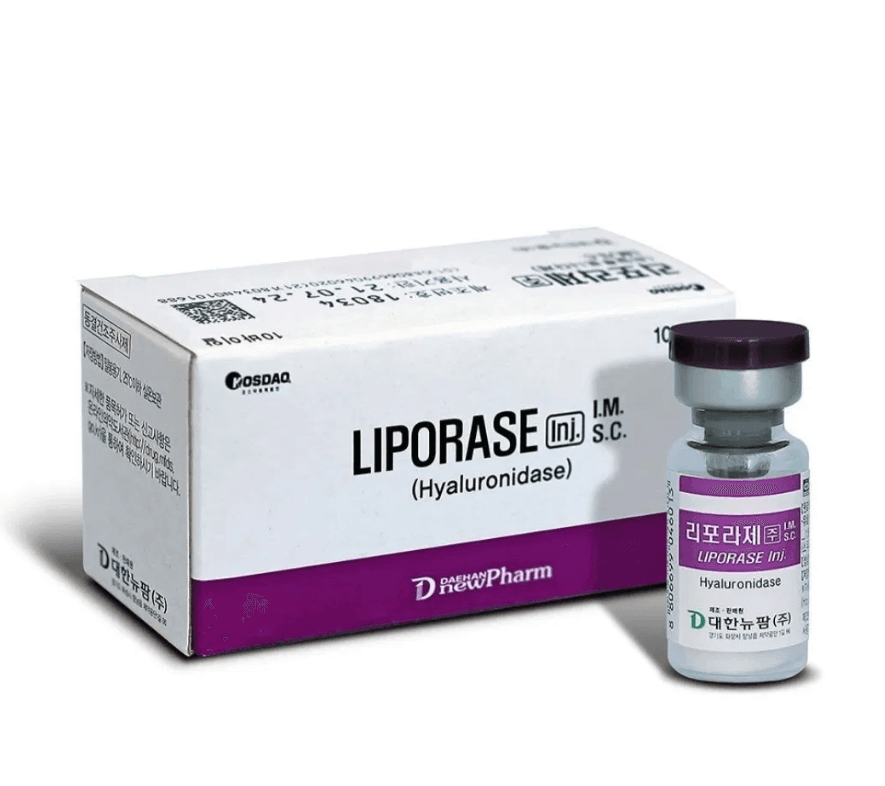
Liporase (Hyaluronidase) 1500 U
Liporase Hyaluronidase for Clinic Ordering and Use
Enzyme-Based Injectable
$129.00
Description
Clinics reviewing Liporase (Hyaluronidase) 1500 U can use this page to assess practice ordering requirements, packaging, reconstitution considerations, and key safety points before adding stock for hyaluronic acid filler correction or urgent reversal workflows. It is a wholesale product page for clinics and healthcare professionals evaluating how to buy the product for practice use, what documentation may be needed, and whether trained injectors, allergy-risk procedures, and emergency protocols are already in place. For licensed clinics and healthcare professionals.
How to Order Liporase Hyaluronidase for Clinics
Before adding this product to routine stock, confirm that the practice has a documented filler-reversal pathway, access to emergency medicines, and a clear route for adverse-event escalation. This page is intended for licensed practices and verified healthcare professionals. In many clinic workflows, account review may include business identity, professional credentials, billing details, and a compliant receiving address so supply can be matched to regulated professional use.
Ordering decisions are usually easiest when the clinical need is defined first. Many practices keep hyaluronidase on hand for unwanted hyaluronic acid filler placement, overcorrection, delayed irregularity management, or urgent response pathways when vascular compromise is suspected. Internal documentation should cover who may reconstitute the product, who may inject it, where lot numbers are recorded, and how follow-up is documented after use.
What matters most before stock is added is fit with existing systems: filler brand mix, typical treatment areas, on-site supervision, storage capacity, and whether staff are trained to distinguish hyaluronic acid filler from non-hyaluronic acid products. A clinic that performs lip, tear trough, and midface correction regularly may need a different stocking approach from a practice that uses the product only for occasional complication management.
Product Overview and Indications
Liporase contains hyaluronidase, an enzyme that breaks down hyaluronic acid. In aesthetics, Liporase (Hyaluronidase) 1500 U is generally evaluated for correction of unwanted hyaluronic acid filler placement, management of persistent fullness or asymmetry, and use within urgent complication protocols directed by a qualified injector.
This product is not a general dissolver for every filler type. It is relevant to hyaluronic acid-based materials and should not be assumed to work for calcium hydroxylapatite, poly-L-lactic acid, silicone, or other non-HA products. Clinics handling mixed filler portfolios may find it useful to review Types Of Dermal Fillers, Exploring Options For Dermal Filler Removal, and Lip Filler Workflow when building protocols.
Why it matters: Accurate filler identification helps avoid ineffective treatment and unnecessary tissue trauma.
Clinically, the product is valued for targeted correction rather than routine aesthetic enhancement. Use cases can include small-area refinement, staged reversal, or broader emergency response, depending on the presentation, treatment goal, and injector judgment. In urgent settings, it should be viewed as one part of a wider clinical protocol rather than a stand-alone substitute for assessment and monitoring.
Prescription, Pricing and Access
Access to hyaluronidase products can vary by market, account status, and practice policies. Liporase (Hyaluronidase) 1500 U should be assessed as a professional-use clinic supply, not a consumer self-use item. Practices often review whether a medical director, prescriber, or supervising clinician must be linked to the account, and whether internal SOPs require pharmacy or governance oversight for storage or reconstitution.
For clinics comparing supply options, packaging format, label language, vial count, storage requirements, and documentation standards usually matter more than headline unit cost alone. Products are sourced through vetted distributors and verified supply channels. Relevant navigation pages include the Liporase Brand Page and the Dermal Filler Removal category for broader workflow planning.
Where institutional controls are strict, substitution review may also involve excipient checks, recall procedures, and receiving-log requirements. These operational details can affect real practice cost through wastage, retraining, and documentation burden, even when two products appear similar at first glance.
Forms, Strengths, and Packaging
Liporase (Hyaluronidase) 1500 U is commonly presented as a lyophilized powder for reconstitution before use in clinic. The best-known aesthetic presentation is a 1500 U vial, and many professional listings describe a carton of 10 vials, though pack configuration and included diluent should always be confirmed on the current label and listing.
| Attribute | Typical presentation | Practice note |
|---|---|---|
| Active ingredient | Hyaluronidase | Used in filler-correction workflows involving hyaluronic acid |
| Strength | 1500 U per vial | Confirm unit expression and label language before stocking |
| Form | Lyophilized powder | Reconstitution is required before administration |
| Pack size | Often listed as 10 vials | Availability may vary by supplier batch and listing |
| Diluent | May vary by presentation | Do not assume inclusion; verify before use |
Practices that standardize emergency kits often prefer a presentation that aligns with existing documentation templates and training materials. Even small packaging differences can matter when urgent reversal is being prepared under time pressure.
Administration and Use in Practice
Before administration, the injector should confirm the filler type, treatment history, anatomic site, and indication for reversal. Reconstitution should follow the current product instructions and clinic protocol, using aseptic technique and clearly labeled syringes or trays. Specific reconstitution volumes are product- and protocol-dependent, so clinics should rely on current instructions rather than generalized online ratios.
In routine correction work, a staged approach is often preferred over aggressive one-session removal. This helps limit unintended overcorrection and gives the clinic a cleaner basis for reassessment. Practices refining their SOPs may also reference Filler Injection Protocols for workflow context.
Quick tip: Record the original filler brand, treatment date, area treated, and pre-reversal images before reconstitution.
For lip correction specifically, tissue edema can make early assessment difficult. A planned review point, rather than immediate repeated treatment, may support cleaner documentation and more conservative tissue management.
Storage, Handling, and Clinic Logistics
Storage should follow the current labeling for unopened vials and any clinic policy governing reconstituted preparations. Keep cartons dry, protected from excessive heat, and segregated by lot and expiry so first-expiry-first-out rotation is easy to manage. If the product is stored with complication kits, access controls should still prevent unauthorized handling.
Once reconstituted, handling rules become more time-sensitive. Practices usually define who may prepare the solution, how it is labeled, how long it may be held under protocol, and when unused material must be discarded. Separate documentation for adverse-event stock, elective correction stock, and training stock can reduce confusion during urgent use.
Compatibility checks also matter. Clinics should verify whether approved diluent is stocked consistently, whether syringes and needles are standardized across teams, and whether local pharmacy or governance policies apply to enzyme storage in procedure rooms.
Contraindications, Warnings, and Monitoring
Known hypersensitivity to hyaluronidase or any listed excipient is a key contraindication. Liporase (Hyaluronidase) 1500 U should also be used cautiously when the filler identity is uncertain, when active infection or marked inflammation is present at the site, or when anatomy cannot be assessed clearly because of severe swelling or prior intervention.
Monitoring needs depend on the reason for use. For planned aesthetic correction, clinics typically watch for disproportionate swelling, urticaria, unexpected tissue loss, or progressive asymmetry. In urgent pathways, worsening pain, blanching, dusky discoloration, or visual symptoms demand immediate escalation under established emergency protocols rather than routine follow-up.
Because this enzyme increases tissue permeability, the clinical effect may extend beyond the exact point of injection. Conservative mapping, small-area reassessment, and careful consent language are often important when the treatment target is close to structures where overcorrection would be difficult to camouflage.
Adverse Effects and Safety
Common short-term effects can include redness, swelling, tenderness, bruising, itching, and temporary contour change at the treatment site. These findings may reflect both the enzyme and the underlying inflammatory response around the original filler. Clinics usually document whether these effects are expected local reactions, signs of hypersensitivity, or evidence that the filler has dispersed unevenly.
Less common but more serious concerns include allergic reactions, significant unintended volume loss, prolonged inflammation, and incomplete correction that leads to repeated procedures. When lip filler is being dissolved, final aesthetic assessment can be delayed by edema, so early judgments may overestimate the need for additional treatment.
Risk management is strongest when the practice has a standard observation window, a documented escalation pathway, and clear instructions for after-hours reporting of severe or evolving symptoms. Those operational steps often matter as much as the product choice itself.
Drug Interactions and Cautions
Hyaluronidase can alter tissue dispersion of other injected agents, so concurrent local anesthetics or nearby injectable medicines should be reviewed as part of the plan. If multiple products are used in the same session, records should show sequence, site, and rationale clearly enough for later review.
Medication and excipient review remains important when there is a history of allergy, previous unexpected reaction to dissolving agents, or planned treatment in highly vascular areas. Where local policy requires it, consult the product insert and institutional medicines guidance before combining preparations in the same field or procedure session.
Compare With Alternatives
Clinics comparing Liporase (Hyaluronidase) 1500 U with other professional-use hyaluronidase presentations should look beyond unit strength. Label language, excipients, pack size, training familiarity, and documentation burden all affect day-to-day suitability.
| Option | What to compare | When it may be considered |
|---|---|---|
| Hynidase 1500IU Alternative | Packaging language, vial count, excipients, and protocol fit | Useful when the clinic wants a different presentation or training format |
| Hyaluronidase 1500 UI | Pack size, storage workflow, and substitution policy | Relevant when smaller packs better match low-volume reversal use |
| Observation and staged review | Urgency, filler age, and aesthetic goals | Sometimes chosen for conservative correction when no emergency signs exist |
No alternative should be treated as automatically interchangeable. Even when the active ingredient class is similar, clinics should confirm labeling, reconstitution steps, stability instructions, and traceability procedures before switching routine stock.
Availability and Substitutions
Availability can shift with distributor inventory, label-market differences, and batch documentation, so practices should avoid assuming a specific pack will always be on hand. When a substitution is necessary, Liporase (Hyaluronidase) 1500 U should be reviewed against the proposed alternative for active ingredient, stated units, excipients, carton size, instructions for reconstitution, and storage requirements.
Practices that manage several filler families may also find it useful to review HA Vs Non HA Fillers so reversal planning matches the products most often used in clinic. A substitution decision is usually strongest when clinical governance, nursing workflow, and injector training all align with the replacement product rather than focusing on stock continuity alone.
Authoritative Sources
For current regulatory label language, review DailyMed hyaluronidase product listings.
For indexed clinical literature, review PubMed articles on hyaluronidase and dermal filler correction.
For broader drug-safety context, review FDA drug information resources.
Clinic supply coordination should account for temperature-controlled handling when required and tracked US delivery, along with internal receiving and lot-traceability procedures.
This content is for informational purposes only and is not a substitute for professional medical advice.
Frequently Asked Questions
What is hyaluronidase 1500 IU used for?
In aesthetic practice, a 1500 IU hyaluronidase presentation is commonly evaluated for reducing or reversing unwanted hyaluronic acid dermal filler. Clinics may use it for overcorrection, asymmetry, persistent fullness, certain nodules related to HA filler, or urgent complication pathways directed by trained injectors. It is not a universal dissolver for every filler material. Suitability depends on filler type, treatment goal, local regulation, the product instructions, and the clinic’s protocol for documentation, monitoring, and escalation.
Who should not use hyaluronidase?
Hyaluronidase should generally be avoided when there is a known hypersensitivity to hyaluronidase or a listed excipient. Extra caution is also needed when the filler type is unknown, when there is active infection or significant inflammation at the site, or when the product would be used outside a trained clinical setting. It should not be assumed to dissolve non-hyaluronic acid fillers. Final suitability should be assessed by a qualified clinician using the current labeling and the clinic’s complication protocol.
Is hyaluronidase safe for lip filler dissolving?
It is commonly used in aesthetic practice for lip filler correction, but safety depends on the injector’s experience, correct identification of a hyaluronic acid filler, conservative technique, and structured follow-up. Common local effects can include swelling, tenderness, bruising, and temporary asymmetry. More serious concerns include hypersensitivity reactions and unintended overcorrection. Because post-treatment edema can affect early assessment, clinics often use staged review and documented monitoring rather than making immediate repeat-treatment decisions.
What should a clinic confirm before reconstituting it?
Before reconstitution, the clinic should confirm the current label instructions, the exact unit strength, vial count, expiry date, lot number, storage status, and whether the intended diluent is appropriate for that presentation. Aseptic preparation standards, syringe labeling, and segregation of emergency stock from routine correction stock should also be clear. Many practices confirm in advance who is authorized to prepare the solution, who may administer it, and how the procedure and follow-up will be documented in the patient’s record.
What should be discussed with the supervising clinician before use?
Key points include the original filler brand and type, area treated, time since injection, reason for reversal, urgency of the situation, prior exposure to dissolving agents, and any history of allergy or unexpected treatment reactions. The supervising clinician should also review whether the goal is partial correction, full reversal, or management within an urgent complication pathway. Monitoring plans, consent language, documentation standards, and the threshold for escalation should be agreed before the product is reconstituted or administered.
Specifications
- Main Ingredient: Hyaluronidase
- Manufacturer: Medytox Inc.
- Drug Class: Enzyme
- Generic Name: Hyaluronidase
- Package Contents: 5 mL x 10 Vials
- Storage Requirements: Room Temperature (2℃~25℃)
- Main Usage:
About the Brand
Liporase
Known for its role in optimising the absorption and distribution of certain medications, Liporase is a highly coveted injectable enzyme. Its breakthrough effect of breaking down excessive dermal filler amounts to achieve accurate medical results, has garnered mainstream appeal among healthcare professionals. We take pride at Liporase for presenting this remarkable medical aid, which significantly boosts patients' ease and fulfilment during cosmetic procedures. Acquiring Liporase directly from our digital storefront, medwholesalesupplies.com, secures effortless access for healthcare practitioners to this superior product. We stand as a trusted medical supplies firm, having built robust alliances with leading manufacturers and providers in the sector. This empowers us to procure authentic Liporase injectable enzyme straight from the origin, thereby assuring top-grade quality and authenticity. To add, our intuitive website delivers a hassle-free shopping experience, facilitating healthcare professionals to smoothly place their order for Liporase with just a few keystrokes. At medwholesalesupplies.com, we value customer satisfaction and stand behind extending competitive pricing to medical practitioners. When you choose to buy Liporase from our site, healthcare professionals can enjoy cost benefits without sacrificing the product excellence. We acknowledge the criticality of timeliness in the medical landscape, thus, we extend quick and trustworthy shipping solutions. Manifesting our dedication to equip healthcare professionals with reliable and reasonably priced supplies, opting for Liporase via medwholesalesupplies.com is an optimum decision for those in search of a dependable resource for their medical requisites.
Browse Liporase Products
Here to help
Questions about ordering, delivery or products? You can email our team here or call now at 1-800-630-9757 and be connected with your dedicated Account Manager
Related Products
$116.00 - $119.00
$96.00
Select options
This product has multiple variants. The options may be chosen on the product page
$66.00
Select options
This product has multiple variants. The options may be chosen on the product page
$120.00 - $123.00
Related Articles
Restylane Skinboosters Clinical Overview and Protocol Planning
Key Takeaways Positioning: Often planned for hydration and texture goals. Planning: Align product choice, area,…
How Long Does Chin Filler Last for Clinic Counseling
Key Takeaways Duration varies: how long does chin filler last depends on product, anatomy, and…
Does Semaglutide Need To Be Refrigerated for Clinics
Key Takeaways Check the label: Storage limits vary by product and presentation. Control excursions: Track…
Topical Numbing Cream for Microneedling: Clinic Guide
Key Takeaways Match product to procedure: formulation, occlusion, and surface area change risk. Prioritize labeling…
Dysport Aftercare: Clinic Checklists for Safe Follow-Up
Key Takeaways Dysport aftercare is mainly about consistency: reduce avoidable bruising, limit mechanical pressure, and…
How Long Does It Take To See Results From Botox Timeline
Key Takeaways Onset varies: early change can appear in days. Peak assessment: many clinics reassess…
What Are The Layers Of The Epidermis: Clinician Guide
Key Takeaways Clinicians often ask, what are the layers of the epidermis, when reviewing barrier…
What Not To Do Before Botox: Clinic Pre-Treatment Checklist
Key Takeaways Screen for infection, neuromuscular history, and prior toxin exposure. Standardize medication and supplement…