

- You must be logged in to add items to the cart.
$249.00
You save (%)
Description
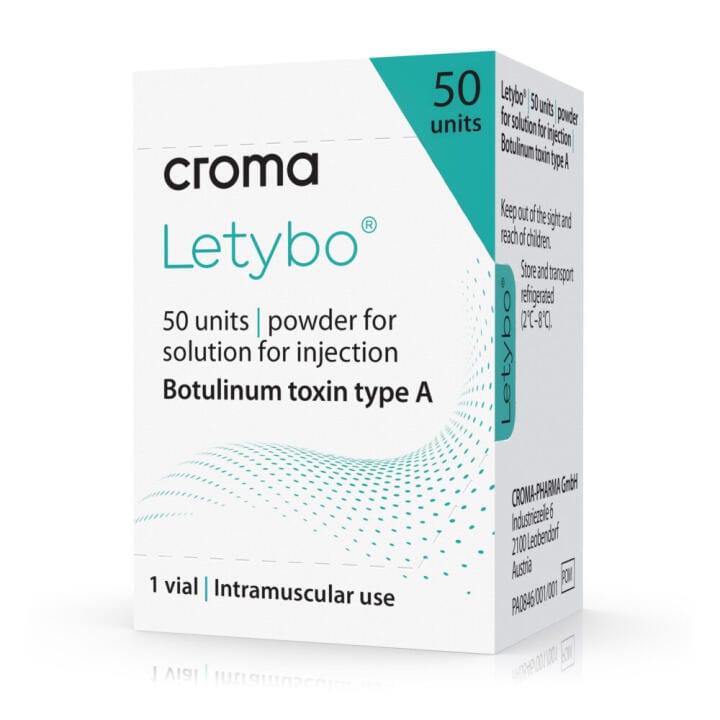
LETYBO® 50u (English) is a botulinum toxin type A preparation supplied as a sterile, lyophilized powder for reconstitution and intramuscular administration by trained professionals. Licensed clinics, med spas, and healthcare professionals can order the 50 Unit vial for aesthetic treatment-room workflows that require English labeling, lot documentation, and controlled vial handling. The single-vial format supports precise receiving, storage rotation, preparation, and reconciliation in professional inventory systems.
Med Wholesale Supplies serves B2B clinic accounts with authentic brand-name medical products sourced through vetted distributors and verified supply channels. LETYBO® belongs to the botulinum toxin class, so staff should handle, reconstitute, and administer it only under appropriate clinical protocols, labeling, and professional supervision.
LETYBO® 50u Price, Vial Format, and Ordering
Clinics can sign in to view current LETYBO® 50u price information, packaging details, and account-specific ordering options. The product is identified as LETYBO® 50u (English), with English-language carton and insert materials intended to support staff clarity during receiving, preparation, and documentation.
The labeled strength is LetibotulinumtoxinA 50 Units in a single vial of lyophilized powder. This configuration can help clinics standardize vial counts for procedure-day planning, room assignment, and controlled waste records. Match any ordering quantity to your clinic’s injector schedule, internal formulary, and established reconstitution procedure.
Quick tip: Record the lot number and expiry date during receiving, then verify the same details again before treatment-room preparation.
What LETYBO Is and How It Works
LETYBO is a prescription-class neurotoxin preparation used by trained injectors for localized chemodenervation. Botulinum toxin type A acts at the neuromuscular junction by inhibiting acetylcholine release, which temporarily reduces targeted muscle activity. In aesthetic practice, this mechanism can support improvement in dynamic facial lines when the patient, injection pattern, and treatment plan are clinically appropriate.
The product is supplied as a sterile freeze-dried powder that must be reconstituted before intramuscular injection. Reconstitution, dilution, dose selection, injection sites, and treatment intervals should follow the approved labeling and the clinic’s medical protocols. Staff should not substitute dilution practices or dosing assumptions from other toxin products unless the supervising clinician has approved the protocol.
Because botulinum toxin products are not automatically interchangeable unit-for-unit, clinics should maintain product-specific training materials. A 50 Unit vial of LETYBO should be documented as LetibotulinumtoxinA 50 Units rather than converted casually to another brand’s unit system. For related neurotoxin options used in professional settings, clinics may also evaluate BOTOX® as part of their internal product review.
Professional Aesthetic Use Context
Clinics integrate LETYBO 50u injection into facial aesthetics workflows when a qualified injector determines that botulinum toxin type A is appropriate. Common aesthetic planning areas for this class include the glabellar complex, frontalis patterns, and lateral canthal lines, depending on labeling, assessment, and treatment goals. The clinical plan should account for facial anatomy, muscle strength, prior toxin exposure, contraindications, and the patient’s risk profile.
Search interest often asks whether Letybo is similar to Botox. Both products are botulinum toxin type A medicines used by trained professionals to temporarily reduce targeted muscle activity, but each product has its own formulation, labeling, dosing guidance, handling instructions, and clinical documentation requirements. Clinics should train staff on the exact product stocked rather than treating all neurotoxins as operationally identical.
Duration questions should also be handled with product-specific counseling. Clinical effect and retreatment timing can vary by treatment area, dose, anatomy, metabolism, prior exposure, and injector technique. Many botulinum toxin treatment plans are scheduled in months rather than days, but clinics should avoid promising a fixed duration for every patient. If your practice carries multiple toxin brands, Azzalure® may be reviewed as another botulinum toxin option under separate clinic protocols.
Key Features for Clinic Inventory
- Botulinum toxin type A preparation for professional intramuscular administration after reconstitution.
- Labeled strength of LetibotulinumtoxinA 50 Units.
- Single-vial format for item-level inventory control and treatment-session planning.
- Sterile, lyophilized powder designed for reconstitution before injection.
- English carton, vial label, and insert to support staff training and documentation.
- Lot number and expiry details for traceability during receiving and preparation.
- Professional-use presentation suited to aesthetic medicine, dermatology, and med spa workflows.
Composition and Reconstitution Considerations
The LetibotulinumtoxinA 50u vial contains botulinum toxin type A with stabilizing components used in this product class. Based on the current product information, the composition includes botulinum toxin type A 50 units, human serum albumin, and sodium chloride. Ingredient review matters for patients with relevant history, product sensitivities, or contraindications identified during medical screening.
Reconstitution should be performed by trained staff using the clinic’s approved sterile technique and product-specific instructions. Labeling should guide diluent selection, final concentration, storage after reconstitution, beyond-use timing, and administration technique. To reduce handling errors, keep reconstitution references at the preparation station and separate LETYBO materials from protocols for other neurotoxins.
Why it matters: Product-specific units, dilution, and injection patterns help reduce preventable preparation and documentation mistakes.
Handling, Documentation, and US Logistics
Professional toxin inventory requires tight receiving and storage discipline. On arrival, staff should inspect the carton, confirm the English label, record lot and expiry data, and place the vial into the clinic’s approved storage workflow. The product should remain under conditions required by the labeling and clinic policy until preparation.
Med Wholesale Supplies supports clinic procurement through US distribution with temperature-controlled handling when required and tracked US delivery. This logistics wording does not replace the clinic’s responsibility to inspect incoming product, maintain storage records, and document any receiving concern through its internal quality process.
For multi-room practices, English packaging can simplify quick visual verification before preparation. It also helps rotating staff follow the same product name, strength, lot, and expiry references across room setup sheets, inventory logs, and treatment notes. When standardizing across locations, keep one approved product reference file so training remains consistent for every injector and assistant.
Safety, Side Effects, and Precautions
Botulinum toxin products can cause local and systemic adverse effects. Common treatment-area reactions may include injection-site pain, bruising, swelling, redness, headache, eyelid or brow ptosis, facial asymmetry, dry eye, or temporary muscle weakness. Clinics should document baseline anatomy and provide patient instructions that match the supervising clinician’s protocol.
Serious risks can occur if toxin effects spread beyond the injection site. Symptoms may include swallowing difficulty, speaking difficulty, breathing problems, generalized weakness, or vision changes. These reactions require urgent medical attention. Staff should be trained to recognize warning signs and escalate concerns promptly, especially in patients with neuromuscular disorders or other risk factors.
Contraindication and precaution screening should occur before treatment. Review history of hypersensitivity to botulinum toxin products or formulation components, infection at the proposed injection site, neuromuscular disease, prior adverse toxin response, pregnancy or breastfeeding considerations, and medicines that may affect neuromuscular transmission. Aminoglycoside antibiotics, muscle relaxants, and other agents that interfere with neuromuscular function may increase risk and should be assessed by the clinician.
Clinics should also avoid casual brand switching without medical review. Different botulinum toxin products have distinct potency units and labeling, so a dose from one brand should not be copied directly to another. The supervising injector should approve any protocol change and update consent language, training references, and treatment records accordingly.
Packaging and Supply Details
The package includes one vial of lyophilized neurotoxin powder for reconstitution prior to intramuscular use. The carton, vial label, and insert are in English, with standard lot number and expiry information for traceability. The stocked configuration supports counting, rotation, and reconciliation within common clinic inventory systems.
Clinics seeking a clear item description can reference SKU 100147. The description aligns with Letybo 50 Units vial and Letybo 50u English packaging for internal ordering notes. The labeled strength is visible on the carton and vial, helping staff verify the item during receiving and before treatment-room preparation.
Comparable Products for Professional Review
Clinics comparing toxin options may review other botulinum toxin type A products based on clinical protocols, patient mix, injector training, and documentation needs. Liztox® 100U and Meditoxin® 100U are examples of related vial presentations that may be considered separately by qualified professionals. The correct choice depends on labeling, dosing guidance, reconstitution requirements, clinical goals, and supply planning.
Product comparison should focus on practical and medical differences rather than brand familiarity alone. Review approved indications, unit strength, formulation, storage conditions, reconstitution steps, expected treatment cadence, adverse-event profile, and staff training requirements. If a clinic changes its neurotoxin formulary, update consent forms, procedure templates, photography protocols, and adverse-event escalation instructions before the first treatment session.
Authoritative Sources
For clinical and regulatory context, review the FDA-approved prescribing information for LETYBO and the UK Summary of Product Characteristics for Letybo 50 units. Manufacturer background is available from Hugel.
Ready to align clinic inventory? Sign in to source LETYBO® 50u (English), view current account pricing, and add the 50 Unit vial to your professional formulary planning.
This content is for informational purposes only and is not a substitute for professional medical advice.
Frequently Asked Questions
Who can order LETYBO® 50u (English)?
LETYBO® 50u (English) is intended for licensed clinics, med spas, and healthcare professionals using professional botulinum toxin protocols. Account requirements and facility information may apply before ordering.
What is included with the LETYBO® 50u English vial?
The package includes one vial of sterile lyophilized powder labeled as LetibotulinumtoxinA 50 Units. The carton, vial label, and insert are in English for clinic documentation and staff reference.
Is LETYBO similar to BOTOX®?
Both are botulinum toxin type A products used by trained professionals to temporarily reduce targeted muscle activity. They are not automatically interchangeable, and each product has its own labeling, dosing guidance, and handling requirements.
What side effects should clinics discuss before treatment?
Potential effects include injection-site reactions, bruising, headache, eyelid or brow ptosis, asymmetry, dry eye, and temporary weakness. Serious spread-of-toxin symptoms such as swallowing, speaking, or breathing difficulty require urgent medical attention.
How should clinics handle LETYBO® 50u inventory?
Clinics should inspect incoming product, record lot and expiry data, maintain labeled storage conditions, and use product-specific reconstitution references. Documentation should follow the clinic’s inventory and treatment protocols.
Specifications
- Main Ingredient: Botulinum Toxin A
- Manufacturer: Hugel Inc.
- Drug Class: Aesthetic Dermatology
- Generic Name: Botulinum Toxin Type A
- Package Contents: 1 vial
- Storage Requirements: Cool Temperature (2℃~8℃)
- Main Usage: Fine Lines
Here to help
Questions about ordering, delivery or products? You can email our team here or call now at 1-800-630-9757 and be connected with your dedicated Account Manager
Related Products
JALUPRO® PLUS 4ML
Skin Rejuvenation Treatment
$86.00 - $89.00
You save (%)
You save (%)
$339.00
You save (%)
You save (%)
Select options
This product has multiple variants. The options may be chosen on the product page
Juvéderm® SKINVIVE
Dermal Filler
$339.00 - $359.00
You save (%)
You save (%)
$86.00 - $119.00
You save (%)
You save (%)
Related Articles
Lip Fillers Swelling Stages: Timeline, Safety, and Follow-Up
Lip fillers swelling stages usually follow a short inflammatory course: swelling appears soon after injection,…
Hypopigmentation of the Skin: Assessment and Care
Hypopigmentation of the skin means one or more areas look lighter than the surrounding skin.…
Radiesse vs Sculptra: Selection Factors for Clinics
Radiesse vs Sculptra is best understood as a comparison between two collagen-stimulating injectables with different…
Hyaluronic Acid Under-Eye Filler: Safety and Workflow
Hyaluronic acid under-eye filler is an injectable soft-tissue filler used by trained aesthetic clinicians to…
Dermal Filler Types: Materials, Uses, and Clinic Fit
Dermal filler types are usually grouped by their base material, tissue behavior, and expected role…
What Is Dysport? Clinical Uses, Safety, and Workflow
For clinic teams asking what is Dysport, the short answer is simple: Dysport is a…
Biostimulators in Aesthetic Care: Selection and Safety
Biostimulators are injectable aesthetic products used to encourage a controlled tissue response, often involving new…
Do You Ovulate on an IUD? Clinic Counseling Points
Clinicians hear the shorthand question do you ovulate on iud, but the practical answer depends…