

- You must be logged in to add items to the cart.
Description
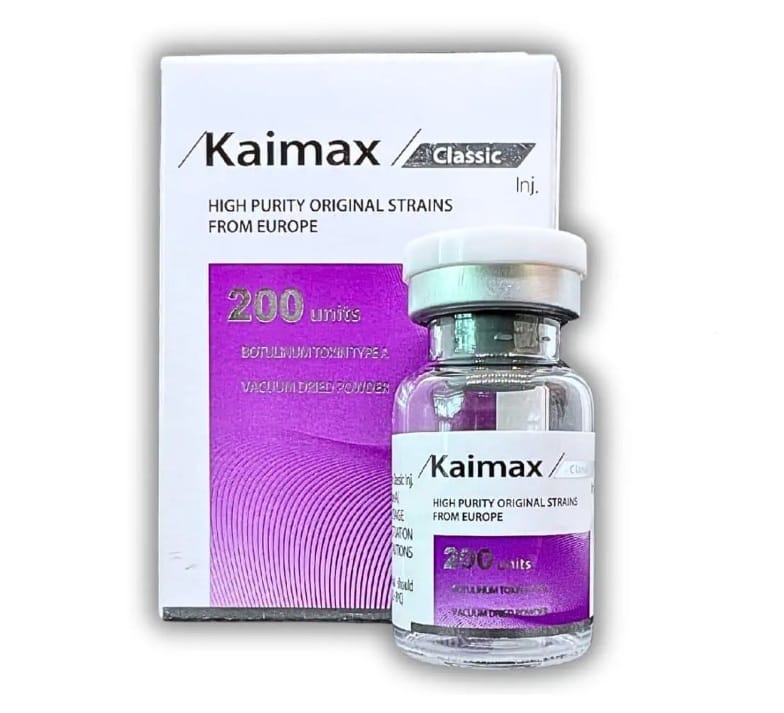
Kaimax® 200U is a botulinum toxin type A injectable supplied for professional use in licensed clinical settings. Clinics can order Kaimax® 200U as a 200-unit vial for neuromodulator protocols that require clear documentation, controlled handling, and trained administration. The single-vial format supports treatment-room planning, unit allocation, and inventory tracking across aesthetic and selected therapeutic workflows.
Med Wholesale Supplies serves licensed clinics, med spas, and healthcare professionals with authentic medical products sourced through vetted distributors. This preparation is intended for intramuscular or intradermal administration by trained professionals, with storage, handling, and use following the manufacturer label and clinic protocol. Account verification is required before wholesale purchasing and contract pricing are displayed.
Kaimax® 200U Price, Vial Format, and Account Ordering
Clinic teams can sign in to view current Kaimax® 200U price information for their verified account. Pricing may depend on contract terms, order volume, and distributor allocation, so the displayed account price is the best reference for purchasing decisions. Practices that plan recurring neuromodulator volume can use the 200-unit vial size to forecast utilization by provider, service line, and appointment mix.
The supplied presentation is 200 U x 1 vial. Each vial should be recorded by lot number and expiry date in the clinic’s inventory system before use. This documentation supports chain-of-custody records, recall readiness, and internal quality review. Teams ordering for more than one location should align reorder timing with credentialed injector schedules and anticipated treatment demand rather than holding excess product without a defined use plan.
Quick tip: Keep the purchase record, lot number, expiry date, and treatment-room use log together for easier reconciliation.
Facilities can also browse the broader Pharmaceuticals category when consolidating clinic procurement for injectable and treatment-support products. For neuromodulator planning, product selection should be based on provider training, clinic protocol, patient assessment, and the exact presentation approved for use by the facility.
What This Botulinum Toxin Type A Product Does
Botulinum toxin type A temporarily reduces activity at the neuromuscular junction by limiting acetylcholine release. In practical terms, it causes targeted muscle relaxation when injected into selected muscles by a trained professional. That pharmacologic effect is why neuromodulators are used in aesthetic protocols for dynamic facial lines and in selected medical protocols involving focal muscle overactivity or sweating, subject to local regulations and clinical training.
In aesthetic medicine, treatment plans commonly address areas such as the glabella, forehead, and periocular region. Some practices also use neuromodulators in lower-face balancing or masseter-focused protocols when assessment and training support that use. Kaimax® botulinum toxin 200U should be integrated into a documented clinical plan that specifies treatment area, dilution approach when applicable, injection technique, unit allocation, patient counseling, and follow-up expectations.
Many search comparisons refer to a “Botox alternative,” but units, formulation characteristics, approved uses, and dosing conventions are not automatically interchangeable across brands. Botox, Dysport, Xeomin, Nabota, Meditoxin, and other botulinum toxin products have distinct labeling and clinical experience. If your clinic evaluates Kaimax® 200U alongside established options, review brand-specific training materials and avoid converting units without an appropriate professional basis.
Clinic Workflow and Treatment-Room Fit
The Kaimax® 200 Units vial format is useful for practices that schedule multiple neuromodulator visits in defined treatment blocks. A 200-unit vial can support standardized allocation while giving injectors flexibility to adjust treatment plans to individual assessment. It may be especially practical for clinics that separate consultation, consent, preparation, administration, and post-treatment documentation into repeatable steps.
Staff should verify the product name, strength, lot number, expiry date, storage status, and assigned treatment-room use before administration. Any reconstitution, draw-up, dilution, or preparation step must follow the manufacturer label and the clinic’s approved procedure. Do not use informal online dilution charts as a substitute for training, labeling, and facility policy. The amount of diluent and final concentration should be determined by the authorized professional protocol for the specific product and intended treatment plan.
Good workflow also includes separation of duties when possible. One team member may receive and log the vial, while the treating professional confirms the preparation and clinical plan. Documentation should capture the product used, units administered, treatment areas, patient response notes, and any relevant follow-up instructions. For injector education and broader class context, the article Botox compared with other botulinum toxins may help teams frame product differences without treating brands as directly identical.
Key Features for Professional Supply
- Botulinum toxin type A presentation supplied as 200 U x 1 vial.
- Professional-use injectable intended for trained intramuscular or intradermal administration.
- Single-vial format that supports lot tracking and controlled inventory records.
- Composition includes botulinum toxin type A, human serum albumin, and sodium chloride.
- Useful for clinic workflows requiring standardized neuromodulator planning.
- Clear labeling supports batch, expiry, receiving, and treatment documentation.
- Wholesale ordering is structured for licensed clinics and healthcare professionals.
These features are operational rather than promotional. They help clinics decide whether the vial size, documentation requirements, and professional-use handling expectations fit their existing neuromodulator program. Final product selection should remain tied to provider training, facility policy, and the patient-specific clinical plan.
Composition, Handling, and Storage
Kaimax® 200U contains botulinum toxin type A as the active ingredient, with human serum albumin and sodium chloride as listed components. Human serum albumin is commonly used in biologic preparations as a stabilizing excipient. Sodium chloride supports the formulation environment. Clinics should record excipient information in formulary notes so staff can screen for relevant contraindications, sensitivities, or product-specific concerns before treatment.
Biologic injectables require disciplined handling from receiving through administration. Store and handle Kaimax® 200U according to the manufacturer label, and keep the product within the required conditions specified by that labeling. Receiving staff should inspect the shipment, record arrival details, and transfer the vial to the appropriate storage location promptly. When required for the product, we support temperature-controlled handling when required and tracked US delivery.
Preparation areas should be clean, organized, and limited to trained personnel. Use appropriate sterile technique, compatible syringes and needles, and facility-approved sharps procedures. Clinics reviewing procedure supplies may find liquid botulinum toxin handling context useful for understanding how presentation differences can affect workflow, although each product still requires its own label-based process.
Safety, Contraindications, and Monitoring
Botulinum toxin products can cause local and systemic adverse effects. Common treatment-area reactions may include injection-site discomfort, bruising, swelling, headache, temporary weakness near the treated muscle, or eyelid or brow position changes depending on injection site. Serious effects are uncommon but can include difficulty swallowing, breathing problems, speech changes, generalized weakness, allergic reactions, or toxin effects spreading beyond the injection area. Clinics should have escalation procedures for urgent symptoms.
Patient screening should include neuromuscular disorders, prior botulinum toxin exposure, current medications, infection at the proposed injection site, pregnancy or breastfeeding status when relevant to clinic policy, and history of hypersensitivity to any component. Caution is especially important for people with conditions that may increase susceptibility to muscle weakness or breathing and swallowing complications. Concomitant aminoglycoside antibiotics, muscle relaxants, or other agents affecting neuromuscular transmission may increase risk and should be evaluated by the treating clinician.
Monitoring begins before the injection. Confirm identity, consent, target areas, product, lot number, and treatment plan. After administration, provide clear post-procedure instructions consistent with clinic policy and advise patients when to contact the clinic or seek urgent care. Follow-up documentation should note onset expectations, response, adverse events, and any plan for future treatment intervals. For general patient-facing drug safety language, see NIH MedlinePlus information on botulinum toxin injection.
Comparing Related Neuromodulator Options
Clinics often carry more than one neuromodulator to align provider preference, patient assessment, appointment flow, and formulary strategy. Kaimax® toxin A 200U may be evaluated against other botulinum toxin type A products, but brand-specific labeling, unit behavior, onset expectations, storage conditions, and preparation steps can differ. A product comparison should never rely on vial size alone.
For nearby product planning, practices may review Nabota 200U, another 200-unit botulinum toxin presentation, or Meditoxin 100U when a smaller vial size better matches clinic volume. Teams interested in alternative neuromodulator formats can also look at Re N Tox or Letybo 50U as part of a broader formulary review.
Educational content can support staff discussion without replacing product labeling. The article on Meditoxin in aesthetic and medical use explains another Korean botulinum toxin product, while Liztox and Korean botulinum toxin treatment planning offers additional context for practices comparing products in the same class.
Ordering, Documentation, and Supply Continuity
To buy Kaimax® 200U wholesale, licensed clinics should use a verified account and follow the ordering requirements shown during checkout. Account access allows your team to view current cost, available quantity, and applicable purchasing terms. Because neuromodulators are professional-use biologics, procurement should be coordinated with clinical leadership, inventory control, and the staff responsible for treatment documentation.
Supply continuity depends on practical forecasting. Estimate vial needs from historical appointment volume, provider schedules, planned service promotions, and expected unit utilization. Avoid over-ordering beyond documented clinical demand. If your facility operates multiple sites, assign responsibility for receiving, storing, transferring, and documenting each vial so the chain of custody remains clear from arrival through use.
If a preferred vial is temporarily limited by distributor allocation, your representative may suggest comparable botulinum toxin presentations already used in professional aesthetic settings. Any substitution should be reviewed against your clinic formulary, provider training, storage capacity, consent documents, and patient communication process before deployment. Substitution decisions should not be made on price alone.
Authoritative Sources
The following sources provide general safety and clinical context for botulinum toxin medicines. They do not replace product-specific labeling, professional training, or facility policy for Kaimax® 200U.
- NIH MedlinePlus: Botulinum toxin injection
- NCBI Bookshelf: Botulinum toxin mechanism and clinical use review
This content is for informational purposes only and is not a substitute for professional medical advice.
Frequently Asked Questions
Who can order Kaimax® 200U wholesale?
Kaimax® 200U wholesale ordering is intended for licensed clinics, med spas, and healthcare professionals with verified accounts. Account verification is required before current pricing and purchasing terms are displayed.
What is included in the Kaimax® 200U vial presentation?
The supplied presentation is 200 U x 1 vial. The preparation contains botulinum toxin type A, human serum albumin, and sodium chloride, with manufacturer labeling for lot and expiry documentation.
How should clinics handle Kaimax® 200U before use?
Clinics should store and handle the vial according to the manufacturer label and internal biologic-injectable procedures. Receiving records should include product name, lot number, expiry date, arrival details, and storage transfer.
Can Kaimax® 200U be used like Botox?
Kaimax® 200U and Botox are both botulinum toxin type A products, but brands are not automatically interchangeable. Units, preparation steps, approved uses, and clinical behavior can differ, so clinics should follow product-specific training and protocol.
How much should Kaimax® 200U be reconstituted with?
Reconstitution or preparation should follow the manufacturer label and the clinic’s approved professional protocol. Online dilution charts should not replace product-specific instructions, injector training, or facility policy.
What safety checks are important before administration?
Clinics should screen for neuromuscular disorders, infection at the injection site, hypersensitivity history, relevant medications, prior toxin exposure, and other factors that may increase risk. The treating professional should document consent, product details, units used, and follow-up instructions.
Specifications
- Main Ingredient: Botulinum Toxin A
- Manufacturer: JETEMA Co.
- Drug Class: Aesthetic
- Generic Name: Botulinum Toxin Type A
- Package Contents: 1 Vial
- Storage Requirements: Cool Temperature (2℃~8℃)
- Main Usage: Volume Filler
Here to help
Questions about ordering, delivery or products? You can email our team here or call now at 1-800-630-9757 and be connected with your dedicated Account Manager
Related Products
JALUPRO® PLUS 4ML
Skin Rejuvenation Treatment
$86.00 - $89.00
You save (%)
You save (%)
$339.00
You save (%)
You save (%)
Select options
This product has multiple variants. The options may be chosen on the product page
Juvéderm® SKINVIVE
Dermal Filler
$339.00 - $359.00
You save (%)
You save (%)
$86.00 - $119.00
You save (%)
You save (%)
Related Articles
Lip Fillers Swelling Stages: Timeline, Safety, and Follow-Up
Lip fillers swelling stages usually follow a short inflammatory course: swelling appears soon after injection,…
Hypopigmentation of the Skin: Assessment and Care
Hypopigmentation of the skin means one or more areas look lighter than the surrounding skin.…
Radiesse vs Sculptra: Selection Factors for Clinics
Radiesse vs Sculptra is best understood as a comparison between two collagen-stimulating injectables with different…
Hyaluronic Acid Under-Eye Filler: Safety and Workflow
Hyaluronic acid under-eye filler is an injectable soft-tissue filler used by trained aesthetic clinicians to…
Dermal Filler Types: Materials, Uses, and Clinic Fit
Dermal filler types are usually grouped by their base material, tissue behavior, and expected role…
What Is Dysport? Clinical Uses, Safety, and Workflow
For clinic teams asking what is Dysport, the short answer is simple: Dysport is a…
Biostimulators in Aesthetic Care: Selection and Safety
Biostimulators are injectable aesthetic products used to encourage a controlled tissue response, often involving new…
Do You Ovulate on an IUD? Clinic Counseling Points
Clinicians hear the shorthand question do you ovulate on iud, but the practical answer depends…