

- You must be logged in to add items to the cart.
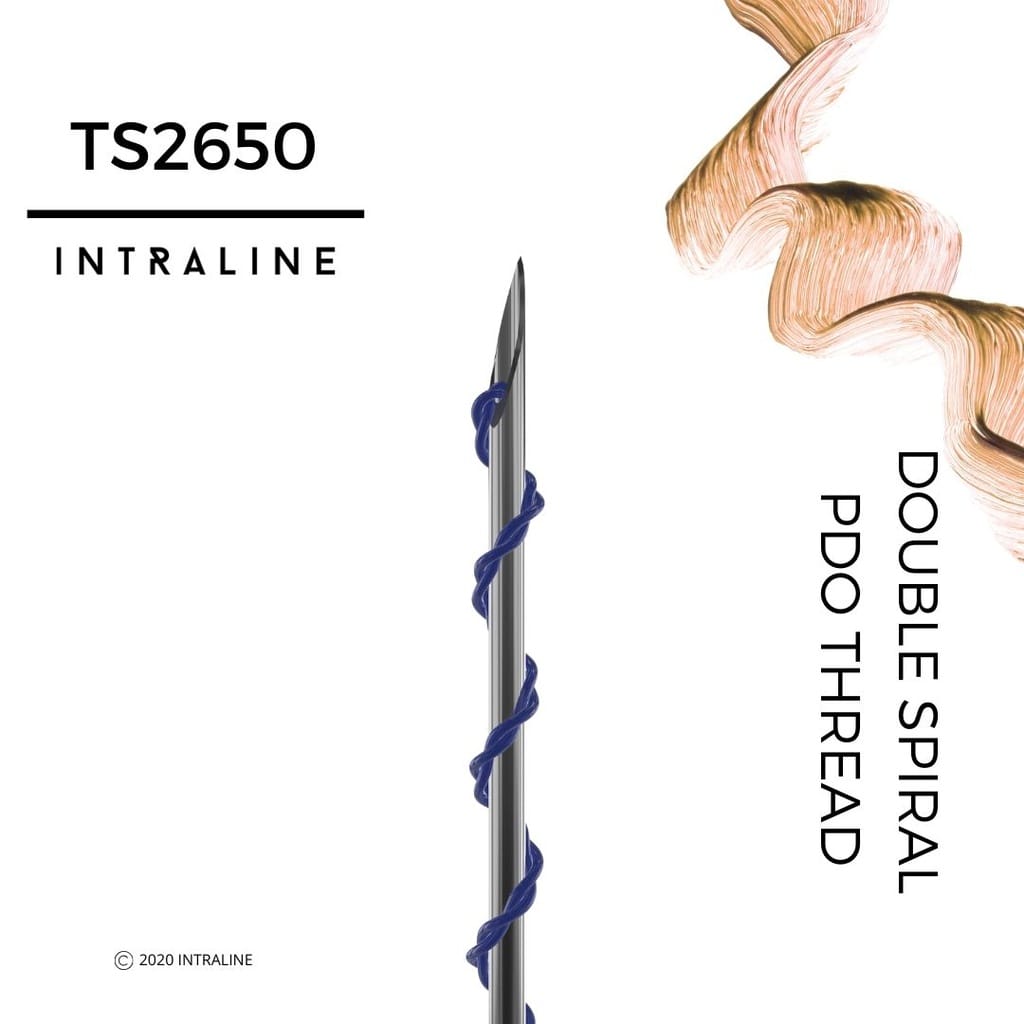
INTRALINE® PDO Threads TS2650- Double Spiral 26G 50/70mm 7-0x2 (20 pack)
Order INTRALINE® TS2650 PDO Threads for Clinics
Medical Device
$89.00
You save (%)
Description
INTRALINE® PDO Threads TS2650- Double Spiral 26G 50/70mm 7-0x2 (20 pack) is a sterile absorbable PDO thread configuration for trained aesthetic clinicians. Licensed clinics and healthcare professionals can order this 20-pack for professional treatment-room use when the 26G, 50/70mm double spiral specification fits the planned thread technique. The practical clinic decision is whether the thread style, gauge, length designation, sterile handling requirements, and documentation workflow match the operator’s protocol.
Clinic Ordering, Price, and Professional Fit
Clinics can buy INTRALINE® PDO Threads TS2650 for practice inventory and view current pricing during ordering. This is a professional-use medical device supply, so purchasing should be tied to staff training, scope of practice, treatment-area planning, and stock traceability. We may review order details and clinic documentation before supply is completed for wholesale accounts.
The TS2650 double spiral format should not be treated as a generic replacement for every 26G PDO thread. Thread design affects tissue engagement, insertion planning, and the endpoint the clinician is trying to achieve. Before adding the 20-pack to routine inventory, match the item to the operator’s preferred technique, anatomical target, entry-point plan, and post-procedure review process.
- Confirm the intended procedural user is trained in PDO thread placement.
- Match double spiral design to the treatment objective.
- Record lot numbers, expiry dates, and receiving location.
- Keep the sterile pack protected until the procedure setup.
- Separate spiral threads from smooth, cog, and triple designs.
For broader brand browsing, the Intraline range groups related aesthetic products, while the medical devices category helps purchasing teams place this item within professional clinic supply planning.
TS2650 Double Spiral Specifications
INTRALINE® PDO Threads TS2650- Double Spiral 26G 50/70mm 7-0x2 (20 pack) is listed as a double spiral polydioxanone thread presentation. PDO, or polydioxanone, is an absorbable suture material used in aesthetic thread procedures. In aesthetic practice, spiral or screw-style threads are commonly selected when the clinician wants more local tissue engagement than a straight mono thread may provide.
The listed specification matters because small differences in gauge, length, and thread configuration can change procedural handling. A clinic that usually works with a shorter thread, a different spiral format, or a different insertion device should not assume the same tray setup will apply. Confirm the outer packaging and directions for use on receipt, then align the item with the internal protocol before it reaches the treatment room.
| Attribute | Listed specification |
|---|---|
| Brand | INTRALINE® |
| Model | TS2650 |
| Thread style | Double spiral PDO thread |
| Gauge | 26G |
| Length designation | 50/70mm |
| Suture size | 7-0x2 |
| Pack size | 20 pack |
Why it matters: A double spiral PDO thread supports thread-based tissue engagement rather than syringe-style volume replacement.
Professional Use and Treatment-Room Planning
PDO thread placement is technique sensitive and should be performed only by clinicians trained in facial anatomy, sterile field preparation, and complication recognition. High-level planning usually includes baseline assessment, treatment vector marking, review of previous procedures in the same area, and confirmation that the thread design suits the patient’s tissue thickness and laxity pattern. The manufacturer’s directions for use should guide insertion technique, handling, and disposal.
Thread-based rejuvenation differs from filler placement. A filler is placed as a gel for volume, contour, or hydration goals, while a PDO thread is inserted as a filament that can provide mechanical support and may contribute to collagen-focused response along the thread path as it absorbs. Clinics that want a broader explanation of this procedure category can use what PDO threads are and how they work as background for staff education, while keeping final procedural choices tied to training and anatomy.
Common workflow steps include marking vectors, preparing the skin, maintaining aseptic technique, checking symmetry, and documenting the procedure. Practices often record pre- and post-treatment images when appropriate, because baseline asymmetry can otherwise be confused with a new contour issue. If threads are combined with fillers, neuromodulators, microneedling, resurfacing, or energy-based treatments, timing should be deliberate so swelling and tissue response can be interpreted clearly.
Questions such as how long a PDO thread lift lasts are best answered clinically rather than by a fixed promise. Duration can vary with thread type, placement technique, treatment area, tissue quality, metabolism, and aftercare. For procurement purposes, the important point is that a double spiral thread is selected for a defined treatment plan, not because it guarantees a uniform lift duration across all cases.
Storage, Sterile Handling, and Inventory Control
Store INTRALINE® TS2650 according to the manufacturer’s labeled conditions and keep each unit in its original packaging until use. Clinic teams should inspect outer packaging, expiry date, lot information, and sterile barrier status before releasing the item to a procedure room. Any pack that is punctured, wet, opened unexpectedly, visibly damaged, or otherwise compromised should be removed from usable stock.
Inventory control is especially important when a practice stocks several thread families. Smooth, spiral, screw, cog, double, and triple designs can look similar to non-clinical staff during restocking. Use shelf labels that show thread style, gauge, length designation, and pack identity, then keep allocated treatment trays separate from unopened stock.
Receiving teams should maintain lot-level records at the clinic location that will use the product. If inventory moves between treatment rooms or branches, the transfer should preserve lot, expiry, and responsible clinician records. Orders are prepared with temperature-controlled handling when required and tracked US delivery, subject to the product’s labeled storage needs.
Quick tip: Check gauge, length designation, and thread style before accepting any substitute into a standardized tray.
Contraindications, Warnings, and Monitoring
Contraindications and warnings should follow the current directions for use and local clinical standards. As a practical screening framework, clinicians often defer thread placement when there is active infection or inflammation at the treatment site, uncontrolled systemic illness, impaired wound healing, known hypersensitivity to product materials, or tissue quality that makes safe placement unlikely. Extra caution may be appropriate for very thin soft tissue coverage, previous scarring, marked laxity beyond what threads can address, or recent procedures in the same plane.
Short-term effects after thread placement can include tenderness, bruising, swelling, erythema, tightness, mild asymmetry, and temporary puckering. These findings should be interpreted in relation to the insertion plane, thread vector, treatment area, and immediate tissue response. Written aftercare instructions help patients distinguish expected recovery effects from findings that need earlier clinical review.
More significant complications can include infection, persistent dimpling, thread palpability or visibility, extrusion, migration, contour irregularity, and injury to nearby structures. Symptoms such as intense pain, blanching, rapidly worsening swelling, visible thread ends, fever, drainage, or neurological symptoms require prompt assessment under the clinic’s escalation protocol. Keep lot information with the clinical record so any device-specific question can be investigated cleanly.
Some public discussion asks why certain surgeons criticize PDO threads or what the downside may be. The clinical answer is that thread outcomes depend heavily on case selection, anatomy, technique, and realistic expectations. Threads may be inappropriate when surgical correction is needed, when laxity is too advanced, or when the risk of contour irregularity outweighs the likely benefit.
Medication Review, Interactions, and Procedural Cautions
PDO threads do not have classic drug-drug interactions like many medicines, but medication review still matters. Anticoagulants, antiplatelet agents, chronic corticosteroids, immunosuppressive therapies, and medicines that affect healing or infection risk may change procedural planning or the threshold for deferral. The relevance of any medicine depends on indication, treatment area, operator technique, and the clinic’s protocol.
Non-prescription products and supplements can also influence bruising risk, so many practices include them in consultation and consent workflows. Recent filler placement, resurfacing, microneedling, or energy-based treatment can complicate plane selection and post-treatment assessment. Documenting product type, treatment date, anatomical area, and previous response helps the clinician decide whether the session should proceed, be adjusted, or be delayed.
Monitoring should begin before the first entry point. Note baseline asymmetry, prior filler distribution, vascular risk areas, skin thickness, and bruising tendency. After placement, define the review threshold for pain, asymmetry, thread visibility, infection signs, and persistent contour change so staff know when routine reassurance is not enough.
Related INTRALINE® Thread Options
TS2650 is one double spiral option within a broader professional thread family. Clinics that use multiple thread designs should document when each design is preferred, which clinicians are trained to use it, and whether tray layouts differ. Adjacent specifications may be useful for practices that treat different anatomical areas or prefer alternate length and thread configurations.
Related INTRALINE® thread products include INTRALINE® T2650 Double, INTRALINE® TS2638 Double Spiral 26G 38/50mm, and INTRALINE® Triple TR2650 26G 50mm/70mm. These products should be evaluated by specification and procedural fit rather than name similarity alone.
For technique comparisons, PDO threads versus Botox explains how thread procedures differ from neuromodulator treatment, and thread lift risks and challenges provides a practical safety perspective. For Intraline-specific aesthetic context, Intraline applications in anti-aging treatments may help teams discuss how thread products fit alongside other professional modalities.
When to Consider Alternatives
A double spiral PDO thread is not a universal substitute for fillers, neuromodulators, surgical lifting, or skin-quality treatments. It is generally considered when the clinical objective includes localized support, tissue engagement, or a collagen-oriented response along a defined path. When the main need is volume replacement, surface texture improvement, or muscle relaxation, another modality may be more appropriate.
Within thread procedures, selection depends on anatomy and operator preference. Smooth threads, spiral threads, cog threads, and triple threads may each serve different roles in a clinic’s treatment menu. If a substitute is considered because of inventory planning or protocol changes, update consent language, tray setup, staff training, and aftercare instructions before the product is used.
Questions about celebrity use or social-media examples should not guide procurement. Professional selection should be based on device specification, facial anatomy, tissue quality, safety screening, and the clinician’s documented competence. This approach also helps keep patient expectations grounded when they ask about lift duration, recovery, and visible improvement.
Authoritative Sources
Use primary and peer-reviewed references to support product-family details and clinical safety discussions. Manufacturer information can help confirm material and thread-family context, while peer-reviewed literature helps frame technique sensitivity and complication patterns.
- For manufacturer thread-family information, see Intraline Rejuvenation Threads.
- For a peer-reviewed clinical review of PDO thread lifting techniques and complications, see Polydioxanone thread lift review.
This content is for informational purposes only and is not a substitute for professional medical advice.
Frequently Asked Questions
Who can order INTRALINE® TS2650 PDO Threads?
INTRALINE® TS2650 is intended for licensed clinics, aesthetic practices, med spas, and healthcare professionals using professional thread procedures. Clinic documentation and trained-user confirmation may be part of the wholesale ordering process.
What is the TS2650 double spiral specification used for in clinic planning?
The TS2650 specification identifies a 26G, 50/70mm, 7-0x2 double spiral PDO thread in a 20-pack. Clinics use those details to match the thread style, length designation, and handling workflow to a trained clinician’s technique.
How should clinics store and handle this 20-pack?
Keep the threads in the original packaging and follow the manufacturer’s labeled storage conditions. Inspect expiry, lot information, packaging integrity, and sterile barrier status before releasing any unit to the treatment room.
Can another 26G PDO thread replace TS2650?
Not automatically. A substitute should match the clinical requirement for thread style, length designation, gauge, insertion format, and operator familiarity. Protocols, trays, and consent language may need updating if the clinic changes thread designs.
What are common safety concerns with PDO thread procedures?
Expected short-term effects can include bruising, swelling, tenderness, tightness, mild asymmetry, and temporary puckering. More serious concerns include infection, thread visibility, extrusion, migration, contour irregularity, and injury to nearby structures, which require clinician assessment.
Specifications
- Main Ingredient: Polydioxanone (Pdo)
- Manufacturer: Mecobi Co. Ltd.
- Drug Class: Medical Device
- Generic Name: Polydioxanone (Pdo) Thread
- Package Contents: 20 threads
- Storage Requirements: Room Temperature (2℃~25℃)
- Main Usage:
About the Brand
Intraline
Counted among the cream of the crop in the medical sphere, Intraline is famed for its extensive array of groundbreaking, top-notch products tailored for the health sector. From cutting-edge dermal fillers to industry-leading PDO threads, Intraline has carved out a niche for itself as a credible entity within aesthetic medicine. A major distinguishing factor for Intraline lies in its unwavering dedication to delivering safe and result-oriented solutions for both health practitioners and patients. We, at medwholesalesupplies.com, take pride in featuring Intraline products for sale. Our digital platform is crafted to simplify the procurement process, providing a convenient shopping experience for medical professionals. Be it dermal fillers or PDO threads you're in search of, you can confidently rely on our platform to bring you the finest Intraline products, competitively priced. Thanks to our secure payment gateway and dependable shipping options, we offer you the peace of mind that comes with knowing you're investing wisely in the finest products for your practice. Shopping for Intraline products via medwholesalesupplies.com presents numerous advantages. First off, you're guaranteed authentic Intraline products, directly sourced from the manufacturer, attesting to their quality and safety. Furthermore, our compelling prices coupled with bulk buying options equate to significant cost savings while ensuring a consistent inventory of Intraline products for your practice. With our speedy, trusted shipping methods, you can comfortably expect to receive your Intraline items promptly. Choose medwholesalesupplies.com, your trusted source for premier Intraline solutions tailored to your health requirements.
Browse Intraline Products
Here to help
Questions about ordering, delivery or products? You can email our team here or call now at 1-800-630-9757 and be connected with your dedicated Account Manager
Related Products
JALUPRO® PLUS 4ML
Skin Rejuvenation Treatment
$86.00 - $89.00
You save (%)
You save (%)
$339.00
You save (%)
You save (%)
Select options
This product has multiple variants. The options may be chosen on the product page
Juvéderm® SKINVIVE
Dermal Filler
$339.00 - $359.00
You save (%)
You save (%)
$86.00 - $119.00
You save (%)
You save (%)
Related Articles
Dermal Filler Types: Materials, Uses, and Clinic Fit
Dermal filler types are usually grouped by their base material, tissue behavior, and expected role…
What Is Dysport? Clinical Uses, Safety, and Workflow
For clinic teams asking what is Dysport, the short answer is simple: Dysport is a…
Biostimulators in Aesthetic Care: Selection and Safety
Biostimulators are injectable aesthetic products used to encourage a controlled tissue response, often involving new…
Do You Ovulate on an IUD? Clinic Counseling Points
Clinicians hear the shorthand question do you ovulate on iud, but the practical answer depends…
Vascular Occlusion: Early Signs, Risks, and Clinic Response
A vascular occlusion is a partial or complete blockage of blood flow in a vessel.…
Wrinkles Around the Mouth: Causes and Treatment Options
Wrinkles around the mouth can be softened, not always permanently erased, by matching the line…
Are Knee Gel Injections Painful? Counseling and Safety
Most patients do not describe knee gel injections as severely painful. Clinic teams should set…
Hooded Eyes From Botox: Ptosis Risk and Clinic Response
Hooded eyes from Botox usually reflect temporary upper-face muscle imbalance, not a single diagnosis. The…