
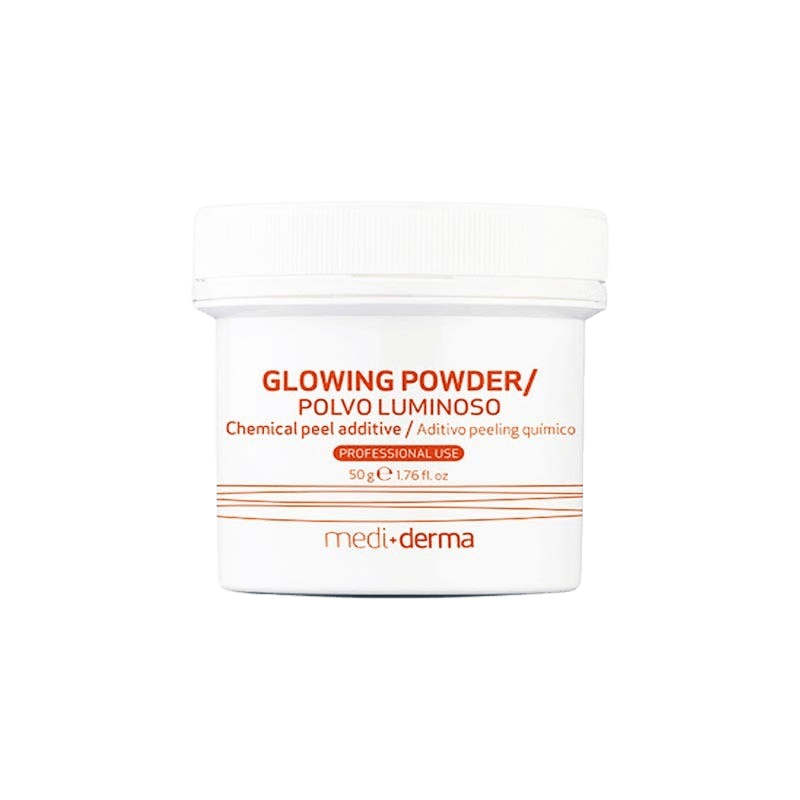
MEDIDERMA® GLOWING POWDER – CHEMICAL PEEL ADDITIVES
Order MEDIDERMA® Glowing Powder for Clinics
Skin Care
$72.00
You save
Description
MEDIDERMA® Glowing Powder is a professional chemical peel additive powder used during in-clinic peel preparation. Licensed clinics, med spas, and healthcare professionals can order it for chairside mixing with compatible peel protocols where a brightening, hydrating, and exfoliating additive fits the treatment plan. Its single-use format helps standardize preparation across providers while supporting practical inventory control.
This cosmetic peel additive powder is intended for trained professional use, not home application. It is dispersed into an appropriate peel base immediately before treatment, allowing clinics to incorporate vitamin C, hyaluronic acid, and alpha hydroxy acids into selected light to medium peel workflows without adding a separate mask or ampoule step.
Clinic Ordering, Price, and Supply Details
MEDIDERMA® Glowing Powder price details are available after sign-in for licensed clinic accounts. Contract options, volume considerations, and bulk purchasing needs can be handled according to your account profile, training schedule, and projected appointment volume. Reference SKU: 89861.
Each order should be matched to the number of planned peel sessions and the way your team structures services. Solo practices may keep limited on-hand stock for seasonal peel appointments, while multi-room or multi-site clinics often plan replenishment around provider schedules, promotional treatment blocks, and staff training. The unit-dose approach makes forecasting easier because each packet corresponds to one chairside additive preparation.
Med Wholesale Supplies serves licensed clinics and healthcare professionals with brand-name medical and aesthetic products sourced through vetted distributors and verified supply channels. Orders placed through a clinic account receive tracking details when dispatched, with temperature-controlled handling when required and tracked US delivery.
What MEDIDERMA® Glowing Powder Is
MEDIDERMA® Glowing Powder is an adjunct powder designed to be mixed with compatible chemical peel bases at the time of application. Within the broader family of professional peels and masks, it functions as a modular additive rather than a standalone peel service. That distinction matters for protocol planning: the powder supports a selected peel base, but it does not replace clinical assessment, acid selection, contact-time decisions, or post-peel care instructions.
The formulation includes vitamin C, hyaluronic acid, and alpha hydroxy acids. Vitamin C provides antioxidant support within radiance-focused services. Hyaluronic acid is a moisture-binding ingredient that can help maintain surface hydration during the treatment window. AHAs contribute exfoliating activity that supports controlled cell turnover when used within a professional peel system.
Clinics typically position this type of Mediderma peel additive powder for dull-looking, uneven, or photoaged-looking skin concerns where a trained provider has selected an appropriate peel intensity. It can be used across face, neck, and décolletage protocols when the base peel, skin condition, and clinic standards support that use.
How It Fits Professional Peel Workflows
MEDIDERMA chemical peel additives powder can help clinics keep preparation consistent across treatment rooms. The powder is dispersed into the chosen peel base immediately before application, then applied according to the clinic’s protocol and manufacturer guidance for the peel system being used. Because it is premeasured for single-use handling, it reduces guesswork during busy schedules and helps teams train around a repeatable sequence.
Many practices use chemical peel booster powder formats to refine service menus without creating an entirely separate procedure category. For example, a clinic may offer a maintenance peel, a radiance-focused peel series, and a progressive program for visible discoloration, then use compatible additives to adjust texture, glide, or ingredient emphasis. Internal education can be supported with product-family context such as Mediderma peel range insights when building staff familiarity across related protocols.
For best operational control, assign responsibility for mixing, timing, neutralization or removal steps if required by the peel base, and post-treatment documentation. The additive should be prepared only when the provider is ready to proceed, and any unused portion should be discarded after the session. This supports clean handling and avoids improvised reuse.
Key Features for Licensed Practices
- Professional-use chemical peel additive for in-office protocols.
- Single-use packet format supports consistent chairside preparation.
- Designed for mixing with compatible peel bases immediately before application.
- Includes vitamin C for antioxidant support in radiance-focused services.
- Contains hyaluronic acid to support surface hydration and treatment glide.
- Includes alpha hydroxy acids used in controlled exfoliation programs.
- Useful for light to medium-strength peel workflows when clinically appropriate.
- Helps standardize provider technique across rooms or locations.
- Unit-dose packaging supports inventory planning and reduced waste.
- Professional assessment and patch testing remain important for reactive skin.
Benefits in Practice
The main benefit of MEDIDERMA® Glowing Powder is workflow flexibility. Clinics can add a defined powder component to selected peel services without building a separate multistep add-on. This can shorten setup time, support consistent mixing, and help providers maintain a predictable texture during application across curved facial areas.
The formulation also supports patient-facing service goals that many clinics already address in peel programs: smoother-looking texture, a brighter-looking surface, and improved hydration feel during the application window. These are cosmetic goals, and results depend on the base peel, skin condition, pre-treatment preparation, aftercare, and provider technique. For practices designing pigmentation-focused care pathways, the educational article chemical peels for hyperpigmentation can help frame staged care discussions in a professional setting.
Operationally, the single-dose format helps managers connect supply levels to appointment volume. Counting upcoming peel visits and matching sachets on hand is simpler than estimating partial-use bulk quantities. This can reduce waste, simplify room turnover, and support consistent staff training for seasonal promotions or recurring treatment series.
Composition and Ingredient Role
This skin peel additive powder from Mediderma contains a blend intended to complement exfoliation, hydration, and cosmetic brightening within professional services. The ingredients are familiar in aesthetic practice, but they should still be used within the limits of the selected peel system and the clinic’s standard operating procedures.
| Ingredient | Practical role in peel protocols |
|---|---|
| Vitamin C | Supports antioxidant and radiance-focused protocols. |
| Hyaluronic Acid | Binds moisture and helps maintain surface suppleness. |
| Alpha Hydroxy Acids | Support controlled exfoliation and surface renewal. |
The powder format helps protect the blend until use, with preparation performed at the treatment chair. Providers should avoid treating the additive as an independent corrective treatment; its role is to support a compatible peel base and a broader professional protocol.
Compatibility and Protocol Selection
Selection starts with the skin assessment and the base peel. MEDIDERMA® Glowing Powder may be considered when a provider wants a chemical peel additive powder for sale that supports radiance, hydration feel, and controlled exfoliation within light to medium protocols. It should not be added indiscriminately to every peel, and compatibility should be confirmed against manufacturer guidance and clinic training.
Practices that already work with Mediderma systems can browse adjacent products under the Mediderma brand range. Related peel choices such as Ferulac Peel Classic, Ferulac Peel Plus, and Melases TRX Booster Peel may be evaluated separately when building a broader menu. Product selection should reflect training, intended intensity, client history, and the clinic’s written protocols.
Quick tip: Keep a protocol sheet near the peel station that lists approved pairings, mixing sequence, contact-time ranges, and post-peel instructions for each service.
Safety, Patch Testing, and Professional Precautions
Chemical peels and peel additives require professional judgment. Mild temporary redness, dryness, tightness, stinging, or irritation may occur after exfoliating procedures, especially in sensitive or reactive skin. Patch testing is advisable for first-time recipients, those with a history of reactivity, or clients whose barrier appears compromised during intake.
Do not use the additive on skin that is visibly irritated, broken, infected, recently aggressively exfoliated, or otherwise unsuitable for a peel procedure. Providers should review recent cosmetic treatments, topical retinoids or exfoliants, photosensitizing products, allergies, pregnancy-related clinic policies, and prior peel response before selecting a protocol. The base peel’s contraindications and aftercare requirements remain controlling.
After a peel, clients are typically instructed to avoid unnecessary exfoliation, picking, harsh scrubs, and unprotected sun exposure while the skin is recovering. Many clinics also recommend pausing strong actives until the provider’s aftercare plan allows them. The article on chemical peel workflow and safety essentials offers additional clinic-oriented context for organizing assessment, documentation, and post-procedure instructions.
Packaging, Storage, and Handling
The product is supplied as a box containing individual, single-use packets for chairside mixing. Each packet provides one session’s additive dose. Packaging typically includes product identification, manufacturer information, lot details, and expiry information to support clinic record-keeping and rotation.
Store unopened packets as directed on the label and protect them from moisture. Keep packets in an organized supply area away from treatment-room contamination risk, then bring the needed quantity to the room for the scheduled procedure. Open only when ready to mix, and discard any remainder after use.
For inventory control, document lot and expiry according to your clinic’s policy. Multi-provider practices may also assign a minimum stock threshold for peel additives so staff can reorder before planned treatment blocks. This helps avoid last-minute substitutions that could affect training consistency or service descriptions.
Related Products and Menu Planning
MEDIDERMA® Glowing Powder works best when it is considered as one part of a structured professional peel menu. Clinics may pair additive planning with the broader professional skincare category when coordinating pre-peel and post-peel retail guidance, room supplies, and service bundles.
For practices comparing additive formats, Ferulac Nano Additive Mist offers a different delivery approach for layering within compatible protocols. Clinics that want glow-focused supportive care outside a peel service may also evaluate Natuvalia Glowing Effect Ampoules as a separate professional skincare choice.
When building a menu, avoid choosing products solely by the desired marketing outcome. Match each peel, additive, and aftercare recommendation to the client’s skin condition, Fitzpatrick-related risk considerations, treatment history, seasonal sun exposure, and provider training. Consistency protects both results and documentation.
Professional Documentation and Training
Good documentation helps clinics use MEDIDERMA® Glowing Powder consistently. Record the base peel, additive use, treated area, contact time, skin response, aftercare instructions, and lot information according to your internal standards. This is especially useful when several providers perform the same service or when clients complete a treatment series.
Training should cover mixing order, texture expectations, application pattern, timing, signs of excessive response, and the point at which a provider should stop or modify a procedure. Staff should also understand what products to avoid after a chemical peel so aftercare instructions remain consistent from consultation through checkout.
For client education, keep language measured. The additive may support a brighter-looking and smoother-looking surface within an appropriate peel program, but it does not guarantee a specific outcome. Photography, consent forms, and follow-up notes can help clinics evaluate response over a series.
Authoritative Sources
Ready to equip professional peel protocols? Sign in through your clinic account to request MEDIDERMA® Glowing Powder, view current account pricing, and plan supply for upcoming treatment schedules.
This content is for informational purposes only and is not a substitute for professional medical advice.
Frequently Asked Questions
What is MEDIDERMA® Glowing Powder used for in clinics?
MEDIDERMA® Glowing Powder is a professional chemical peel additive mixed with compatible peel bases immediately before application. Clinics use it to support radiance-focused, hydrating, and exfoliating peel protocols when the client assessment and base peel selection make it appropriate.
Can MEDIDERMA® Glowing Powder be used alone?
No. It is positioned as an additive for compatible professional chemical peel systems, not as a standalone home-use or independent treatment. Follow manufacturer guidance and your clinic’s protocol for mixing, application, timing, and aftercare.
How should clinics store and handle the packets?
Store unopened packets as directed on the label and protect them from moisture. Open a packet only when ready to mix for a procedure, document lot and expiry according to clinic policy, and discard any unused portion after the session.
Is patch testing recommended?
Yes. Patch testing is advisable for first-time recipients, sensitive skin, reactive histories, or any situation where the provider has concern about tolerance. Do not apply peel products to visibly irritated, broken, infected, or otherwise compromised skin.
How can clinics plan bulk ordering?
Estimate usage by counting planned peel appointments, staff trainings, and seasonal service blocks. The single-use packet format helps align stock levels with expected procedures and supports consistent preparation across providers or locations.
Specifications
- Main Ingredient: Hyaluronic Acid, Vitamin C, Alpha Hydroxy Acids (Ahas)
- Manufacturer: Mediderma
- Drug Class: Skin Care
- Generic Name: Glowing Powder
- Package Contents: 50 g x 1 Box
- Storage Requirements: Room Temperature (2℃~25℃)
- Main Usage: Hydration, Skin Pigmentation, Fine Lines
About the Brand
Mediderma
BUY MEDIDERMA PRODUCTS ONLINE AT WHOLESALE PRICES ON MedWholesaleSupplies Mediderma is a reliable brand within the medical sector, delivering top-of-the-line skincare products. These can now be conveniently procured directly from our online platform, medwholesalesupplies.com. Buy MEDIDERMA® skincare products at wholesale prices – register an account on Med Wholesale Supplies today! What is MediDerma? Mediderma's commitment to research and invention ensures that their offerings cater effectively and safely to diverse dermatological needs. Whether you're a medical professional or an individual seeking superior skincare options, Mediderma stands as the brand of choice. MEDIDERMA® Product Range By availing Mediderma's range on medwholesalesupplies.com, we make it easy for you to access world-class skincare solutions without any hassles. As a highly-reputed online medical store, we offer a broad gamut of medical offerings, including Mediderma, satisfying an array of customer requirements. Our focus is consistently on customer satisfaction which is reflected in our competitive pricing, timely delivery, and unmatched customer assistance. With medwholesalesupplies.com, buying Mediderma skincare products is a breeze. ARGIPEEL Exfoliant gel for sensitive skin; contains arginine for hydration, antioxidant effects, and collagen stimulation, plus lactic acid for gentle exfoliation. AZELAC Skin-brightening line for inflamed, hypersensitive skin and rosacea; includes creams, serums, and peels for redness, swelling, hyperpigmentation, inflammation, and acne. C-DEFENSE Vitamin C and peptide-based products for tired, dull skin; brightens, firms, and protects against pollution and free radicals. FERULAC Anti-aging line with ferulic acid, vitamins, and retinoids; targets wrinkles, fine lines, and sun damage, stimulating collagen production. FR-ANTIOX Ferulic acid-based line with additional antioxidants; combats oxidative stress, sun damage, and aging, suitable for mature skin. HYLANSES Products with various types of hyaluronic acid; hydrates and addresses firmness and elasticity, ideal for sensitive, dry, and mature skin. MELA 360 Targets hyperpigmentation with products like the MELA 360 SPOT CORRECTOR; contains kojic acid, arbutin, and licorice extract for brightening dark spots. MELASES TRX Focuses on melasma and hormonal dark spots; tranexamic acid chemical peel reduces sun damage, inflammation, and aging effects. Where Can I Buy MEDIDERMA®? MEDIDERMA® Laboratories offer a wide range of products tailored to various patient needs. If you wish to order MEDIDERMA® online, our team can assist you in finding the best deals. Dermatological clinics should purchase MEDIDERMA® at wholesale prices to offer their patients the most affordable rates while ensuring product authenticity and quality. Contact our agents today to supply your clinic with genuine MEDIDERMA® products from trusted distributors.
Browse Mediderma Products
Here to help
Questions about ordering, delivery or products? You can email our team here or call now at 1-800-630-9757 and be connected with your dedicated Account Manager
Related Products
Prolia® (International English)
Prescription Medication
$529.00 - $549.00
You save
You save
Evenity® (English Alternative)
Injectable Medication
$1,229.00 - $1,299.00
You save
You save
Intraline® For Men
Dermal Filler
$59.00 - $79.00
You save
You save
RejuvaNAD+ Pro
Injectable Medication
$237.00 - $249.00
You save
You save
Related Articles
Prednisone in Clinical Care: Uses, Risks, and Monitoring
Prednisone is a prescription systemic corticosteroid used to reduce inflammation or suppress immune activity in…
Lip Fillers Swelling Stages: Timeline, Safety, and Follow-Up
Lip fillers swelling stages usually follow a short inflammatory course: swelling appears soon after injection,…
Hypopigmentation of the Skin: Assessment and Care
Hypopigmentation of the skin means one or more areas look lighter than the surrounding skin.…
Radiesse vs Sculptra: Selection Factors for Clinics
Radiesse vs Sculptra is best understood as a comparison between two collagen-stimulating injectables with different…
Hyaluronic Acid Under-Eye Filler: Safety and Workflow
Hyaluronic acid under-eye filler is an injectable soft-tissue filler used by trained aesthetic clinicians to…
Dermal Filler Types: Materials, Uses, and Clinic Fit
Dermal filler types are usually grouped by their base material, tissue behavior, and expected role…
What Is Dysport? Clinical Uses, Safety, and Workflow
For clinic teams asking what is Dysport, the short answer is simple: Dysport is a…
Biostimulators in Aesthetic Care: Selection and Safety
Biostimulators are injectable aesthetic products used to encourage a controlled tissue response, often involving new…