
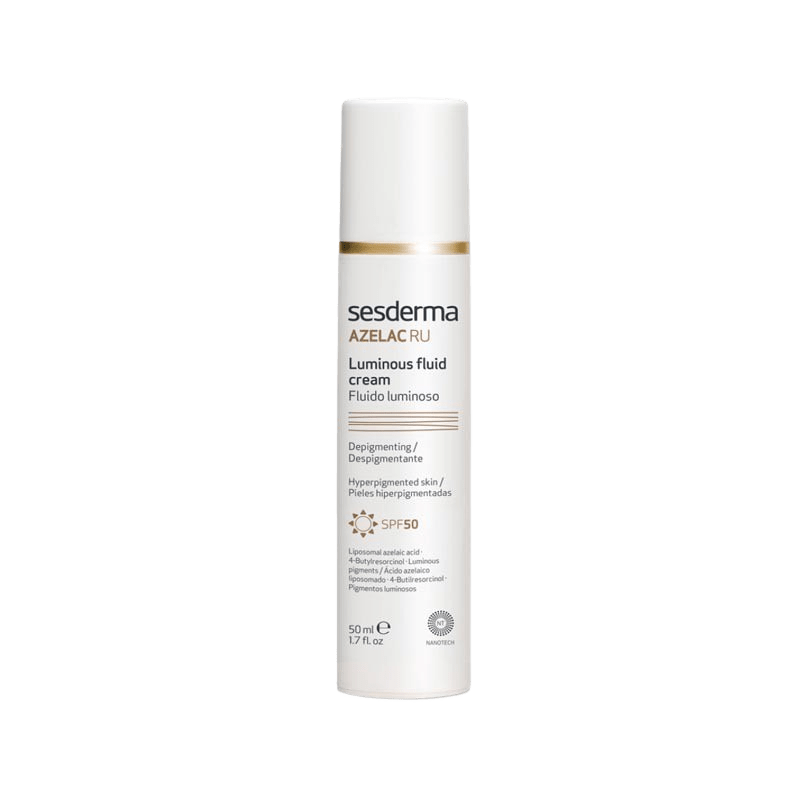
MEDIDERMA® AZELAC®RU LUMINOUS FLUID CREAM
Order MEDIDERMA® AZELAC®RU LUMINOUS FLUID CREAM for Clinics
Depigmenting And Illuminating Fluid Cream
$50.00
You save
Description
MEDIDERMA® AZELAC®RU LUMINOUS FLUID CREAM is an SPF50 pigment-care fluid cream used in clinician-directed routines for uneven tone, visible dark spots, and hyperpigmentation support. Licensed clinics and healthcare professionals can order MEDIDERMA® AZELAC®RU LUMINOUS FLUID CREAM for professional retail, home-care protocols, and aesthetic maintenance programs. The key clinic decision is whether its lightweight daytime texture, SPF50 positioning, and pigment-support role fit the practice’s documented skin-care workflow.
This product is most relevant when a clinic needs a daily maintenance step that combines cosmetic acceptability with sun-protection support. It should be selected after staff consider skin type, barrier condition, recent procedures, tolerance to active products, and the full ingredient panel. MedWholesaleSupplies serves licensed clinics and healthcare professionals through vetted distributor and verified supply channels for brand-name products.
Clinic Ordering, Price, and Protocol Fit
Clinic buyers can order MEDIDERMA® AZELAC®RU LUMINOUS FLUID CREAM as a professional-use pigment-care item and view current account pricing during procurement. Pricing may vary by account status, distributor route, batch availability, and quantity requested, so teams should align the order with actual clinic demand rather than shelf expansion alone. For inventory planning, the product is commonly marketed as AZELAC RU luminous fluid cream SPF50 in a 50 mL presentation.
The main commercial choice is not dose escalation; it is whether this fluid cream belongs in the clinic’s daytime pigment-management pathway. A practice may stock it for patients who need a lighter SPF50 fluid in a dark-spot routine, while another protocol may require a more intensive depigmenting pathway or a separate sunscreen step. Clinics building a broader maintenance range can browse professional skincare and creams and serums to place this product beside adjacent topical formats.
- Daytime pigment-care routine placement
- SPF50 requirement within the same step
- 50 mL retail and backbar planning
- Ingredient screening before recommendation
- Lot, expiry, and shelf rotation workflow
Why it matters: Pigment routines are easier to maintain when the texture, SPF step, and active-product load match the clinic’s counseling plan.
What AZELAC RU Luminous Fluid Cream Is Used For
AZELAC RU luminous fluid cream is positioned as a depigmenting or pigment-correcting fluid cream with SPF50. In clinic practice, it is used as a daily maintenance product for uneven tone, visible dark spots, and hyperpigmentation, which means excess pigment causing darker patches. It is not a procedure and should not replace professional assessment of the underlying pigment pattern.
Common professional contexts include melasma-prone skin, post-inflammatory hyperpigmentation, and recurring dyschromia after sun exposure or irritation. The American Academy of Dermatology describes melasma as a condition that causes brown or gray-brown patches, often on the face. DermNet describes post-inflammatory hyperpigmentation as darker marks that follow inflammation or skin injury. These patterns can look similar in retail conversations, so clinics should document the suspected cause and avoid treating all dark spots as interchangeable.
The fluid texture may suit daytime routines that need lighter layering than a dense cream. Its SPF50 positioning also helps clinics reinforce daily photoprotection, a major practical factor in pigment management. Even so, sunscreen-containing pigment products still require correct use, adequate application, and ongoing sun-avoidance counseling according to clinic policy and manufacturer directions.
Forms, Presentation, and Ingredient Review
MEDIDERMA® AZELAC®RU LUMINOUS FLUID CREAM is a topical fluid cream. The product name identifies SPF50, and market materials commonly describe a 50 mL presentation. Packaging artwork, distributor labeling, and ingredient-panel layout may differ between channels, so receiving staff should match the unit to the ordered description before front-desk sale or treatment-room recommendation.
| Attribute | Clinic detail |
|---|---|
| Product type | Topical pigment-care fluid cream |
| Sun protection | SPF50 as named |
| Common presentation | 50 mL presentation is commonly marketed |
| Use setting | Clinician-directed daily maintenance and clinic retail |
| Inventory note | Confirm received labeling, lot, and expiry before shelf placement |
Ingredient review matters because pigment-care products are often layered with other active products. Staff should screen for known allergies, fragrance or preservative sensitivity, and intolerance to brightening or exfoliating ingredients. Clinics receiving ingredient questions should rely on the product carton, manufacturer literature, or official brand information rather than assumptions based on the AZELAC RU line name.
How Clinics Place It in Daily Use
Use should follow the manufacturer’s directions and the clinic’s written protocol. In most professional routines, a fluid cream with SPF50 is positioned for daytime use on intact skin when the goal is ongoing tone support and sun protection. Staff should avoid recommending it over broken, acutely inflamed, or recently over-exfoliated skin unless the supervising clinician has assessed suitability.
Operationally, clinics should decide where the product sits among cleansing, antioxidant or brightening layers, moisturizers, and sunscreen steps. If the clinic uses stronger products such as retinoids, exfoliating acids, or other depigmenting agents, the full routine should be assessed before adding another active daytime layer. Teams can use Azelac RU skin-health context to train staff on category positioning without turning daily maintenance into a procedural treatment.
Results with pigment routines are usually gradual and depend on the cause of discoloration, photoprotection, adherence, and irritation control. Clinics should set expectations around consistency and follow-up rather than promise a fixed timeline. If discoloration worsens, spreads, or appears unusual, staff should route the patient back to medical evaluation instead of escalating retail products.
Storage, Handling, and Receiving Checks
Store MEDIDERMA® AZELAC®RU LUMINOUS FLUID CREAM in its original container and follow the label’s temperature instructions. Routine clinic handling typically means a clean, dry storage area away from excessive heat, direct light, and treatment-room contamination. The container should remain closed when not in use to help protect product quality and presentation.
Receiving checks should include seal condition, packaging match, lot number, expiry date, and any distributor label information. First-expiring-first-out rotation helps reduce waste and prevents staff from placing short-dated units in patient-facing retail areas without awareness. If testers are used, they should be clearly separated from sellable stock and handled under the clinic’s infection-prevention policy.
For logistics planning, orders may involve temperature-controlled handling when required and tracked US delivery. This wording should be treated as a handling standard, not a substitute for reading the label on arrival. Any leaking container, damaged seal, or labeling discrepancy should be quarantined until the clinic resolves the issue through normal account communication.
Safety, Contraindications, and Monitoring
This fluid cream may be unsuitable for individuals with known hypersensitivity to any listed ingredient. Clinics should use caution with acutely inflamed skin, fissures, active eczema, recent sunburn, or skin that has not recovered after aggressive exfoliation. Extra care is also reasonable in rosacea-like reactivity or in patients who report frequent stinging with pigment-correcting products.
Expected tolerability issues with products in this category may include transient tingling, mild stinging, dryness, tightness, or light peeling, especially when the routine already includes strong active ingredients. These symptoms do not automatically mean the product is inappropriate, but they should prompt staff to review layering, frequency allowed by labeling, and barrier-support steps. Persistent erythema, worsening scale, or discomfort that does not settle should be escalated according to clinic policy.
More concerning reactions include marked swelling, blistering, intense burning, widespread rash, or ongoing inflammation after stopping the product. Those findings warrant medical review and inspection of the full ingredient list. Eye contact should be avoided, and staff should not recommend use on compromised skin unless official labeling and clinician assessment support that decision.
Interactions With Procedures and Active Products
Systemic drug interactions are not usually the central issue for a topical pigment-care fluid. The more practical clinic concern is cumulative irritation when it is layered with retinoids, alpha hydroxy acids, beta hydroxy acids, benzoyl peroxide, other depigmenting agents, or frequent exfoliating treatments. Staff should look at the whole regimen before adding AZELAC RU luminous fluid cream SPF50.
Procedure timing is equally important. Clinics offering peels, resurfacing, or intense exfoliation should distinguish recovery care from long-term maintenance. The content on chemical peels for hyperpigmentation can help teams separate in-office pigment work from daily topical support. For rosacea-prone or reactive patients, Azelac M therapy context may support internal discussion about adjacent product roles.
If a patient uses medicines or treatments associated with photosensitivity, the supervising clinician should guide the overall plan. An SPF50 fluid can support daytime protection, but it does not remove the need for sun-behavior counseling, protective clothing, or reassessment when inflammation is driving pigment changes.
Clinic Workflow and Staff Counseling Points
MEDIDERMA® AZELAC®RU LUMINOUS FLUID CREAM works best in practices that clearly define who selects the product, who explains use, and who answers follow-up questions. Estheticians, nurses, and front-desk staff may each touch the recommendation workflow, but the clinic should decide which skin concerns require clinician review before retail dispensing. Documenting these roles reduces inconsistent guidance.
Staff counseling should be concise and repeatable: apply according to manufacturer directions, avoid irritated or broken skin, use within the full routine provided by the clinic, and report persistent irritation. Teams should also explain that dark-spot improvement depends heavily on photoprotection and trigger control. A product recommendation should never become a substitute for evaluating changing, irregular, or medically concerning pigmentation.
Quick tip: Attach the product to a protocol sheet before staff begin recommending it from the retail shelf.
Related MEDIDERMA and Pigment-Care Choices
Clinics often compare this SPF50 fluid cream with other Azelac or brightening products when building a pigment-care range. AZELAC RU Liposomal Serum 30 mL may be considered when the protocol needs a serum format. AZELAC RU 60 mL can be reviewed for line continuity, while Azelac M 60 mL may be relevant when clinics are assessing adjacent concerns such as reactive or redness-prone skin.
For daytime finish and photoprotection planning, practices may also evaluate Repaskin Fluid Invisible SPF or C-Defence MD Cskin Bright Moisturizing Facial Fluid. These products are not automatic substitutes. The deciding factors are SPF role, active blend, texture, sensitivity profile, and whether the product belongs in pigment care, general sun care, or brightening maintenance.
Broader brand context is available through the Sesderma brand range and the clinic-facing discussion of Mediderma skin care. Range review can help teams avoid overstocking similar textures and instead build a shelf that maps to common clinical scenarios.
Availability and Substitution Planning
MEDIDERMA® AZELAC®RU LUMINOUS FLUID CREAM is available for clinic ordering through professional supply channels. Substitution decisions should not be based on brand proximity alone. SPF level, ingredient profile, finish, bottle size, and protocol position all affect adherence and tolerability.
If a temporary alternative is used, staff should label the substitute clearly and document the change in the clinic’s recommendation workflow. That avoids describing two products as identical when their active blend, cosmetic feel, or sun-protection role differs. Practices should also update shelf cards, protocol sheets, and staff scripts when a substitute replaces the intended product.
Good substitution planning protects both clinical consistency and retail clarity. It also helps new staff understand why one product is used after procedures, another is used as daily maintenance, and another is reserved for patients who need a different texture or sensitivity profile.
Authoritative Sources
For manufacturer presentation details, see Sesderma AZELAC RU Luminous Fluid.
For clinical background on melasma, review the American Academy of Dermatology melasma overview.
For pigment changes after inflammation, see DermNet on post-inflammatory hyperpigmentation.
This content is for informational purposes only and is not a substitute for professional medical advice.
Frequently Asked Questions
What is MEDIDERMA® AZELAC®RU LUMINOUS FLUID CREAM?
It is a topical SPF50 pigment-care fluid cream used in clinic-directed routines for uneven tone, visible dark spots, and hyperpigmentation support. Clinics commonly position it as a daytime maintenance product rather than an in-office procedure.
Can licensed clinics order AZELAC RU luminous fluid cream SPF50?
Yes. Licensed clinics and healthcare professionals can order it for professional retail or clinician-directed home-care protocols. Clinic documentation, account review, and professional-use ordering requirements may apply.
What pack size is commonly associated with this product?
Market materials commonly describe a 50 mL presentation for AZELAC RU luminous fluid cream SPF50. Receiving staff should still match the delivered unit to the ordered description, lot, expiry, and label information before shelf placement.
Does AZELAC RU luminous fluid cream contain retinol?
Do not assume retinol content from the product family name or search terms. Clinics should answer ingredient questions from the carton, dispenser labeling, manufacturer literature, or official ingredient panel supplied with the unit.
How should clinics store and handle this fluid cream?
Store it in the original container according to label directions, away from excessive heat, unnecessary light exposure, and treatment-room contamination. Record lot and expiry information, rotate stock first-expiring-first-out, and separate testers from sellable units.
How long before pigment-care results are visible?
Pigment routines are usually gradual, and visible change depends on the cause of discoloration, sun exposure, irritation control, and routine consistency. Clinics should avoid promising a fixed timeline and should reassess persistent or worsening discoloration.
What safety checks should staff make before recommending it?
Staff should screen for known ingredient hypersensitivity, active irritation, recent aggressive exfoliation, eczema flares, sunburn, and sensitivity to active brightening products. Persistent burning, swelling, blistering, rash, or worsening inflammation should be referred for medical review.
Specifications
- Main Ingredient: Azelaic Acid, 4-Butylresorcinol, Tranexamic Acid, Niacinamide, Etc.
- Manufacturer: Sesderma
- Drug Class: Depigmenting And Illuminating Fluid Cream
- Generic Name: Azelac Ru Depigmenting Luminous Fluid Cream Spf50
- Package Contents: 50 mL
- Storage Requirements: Room Temperature (2℃~25℃)
- Main Usage: Skin Pigmentation
About the Brand
Sesderma
Boasting a coveted position in the medical skincare market, Sesderma is a revered brand that delivers state-of-the-art solutions for a spectrum of skin-related concerns. With a history of over three decades in the sector, the respect for Sesderma stretches from health professionals to everyday consumers. Its products are conceived with avant-garde components and solidified by rigorous scientific research, enhancing their efficacy when treating varied skin complications. We, at medwholesalesupplies.com, take immense pride in making Sesderma's esteemed products available to our clientele. It is our conviction to offer access to first-rate medical provisions and skincare essentials, and in this regard, Sesderma aligns impeccably with our goal. When health professionals order Sesderma items through our portal, they are guaranteed authentic products straight from the creators themselves. Collaborating with Sesderma paves the way for an uncomplicated shopping experience, courtesy of competitive pricing structures and an extensive product lineup. Moreover, opting to purchase Sesderma through medwholesalesupplies.com lets health professionals effectually replenish their skincare stockpile. Our digital platform provides an intuitive user interface, simplifying browsing and placing orders in a matter of clicks. Combined with our expedient shipping procedure, health professionals will always have their prized Sesderma products on hand, receiving them speedily to use them effectively on their patients. Lean on Sesderma and medwholesalesupplies.com for all your skincare requisites.
Browse Sesderma Products
Here to help
Questions about ordering, delivery or products? You can email our team here or call now at 1-800-630-9757 and be connected with your dedicated Account Manager
Related Products
Prolia® (International English)
Prescription Medication
$529.00 - $549.00
You save
You save
Evenity® (English Alternative)
Injectable Medication
$1,229.00 - $1,299.00
You save
You save
Intraline® For Men
Dermal Filler
$59.00 - $79.00
You save
You save
RejuvaNAD+ Pro
Injectable Medication
$237.00 - $249.00
You save
You save
Related Articles
Prednisone in Clinical Care: Uses, Risks, and Monitoring
Prednisone is a prescription systemic corticosteroid used to reduce inflammation or suppress immune activity in…
Lip Fillers Swelling Stages: Timeline, Safety, and Follow-Up
Lip fillers swelling stages usually follow a short inflammatory course: swelling appears soon after injection,…
Hypopigmentation of the Skin: Assessment and Care
Hypopigmentation of the skin means one or more areas look lighter than the surrounding skin.…
Radiesse vs Sculptra: Selection Factors for Clinics
Radiesse vs Sculptra is best understood as a comparison between two collagen-stimulating injectables with different…
Hyaluronic Acid Under-Eye Filler: Safety and Workflow
Hyaluronic acid under-eye filler is an injectable soft-tissue filler used by trained aesthetic clinicians to…
Dermal Filler Types: Materials, Uses, and Clinic Fit
Dermal filler types are usually grouped by their base material, tissue behavior, and expected role…
What Is Dysport? Clinical Uses, Safety, and Workflow
For clinic teams asking what is Dysport, the short answer is simple: Dysport is a…
Biostimulators in Aesthetic Care: Selection and Safety
Biostimulators are injectable aesthetic products used to encourage a controlled tissue response, often involving new…