PDO Threads vs Botox: Choosing the Right Clinic Approach starts with anatomy, not preference. Botulinum toxin fits movement-driven lines caused by repeated muscle activity. PDO threads fit selected cases of mild skin laxity, early tissue descent, or soft contour support. The right choice depends on the dominant finding during consultation, the patient’s risk profile, and the clinic’s ability to support consent, aftercare, documentation, and escalation.
Why this matters: using the wrong tool can increase procedural burden while leaving the main concern unresolved. A patient asking for facial rejuvenation may describe wrinkles, sagging, hollowing, and jawline changes as one problem. Clinically, those findings often need different interventions.
Key Takeaways
- Botulinum toxin targets muscle-driven facial lines.
- PDO threads support selected mild laxity or descent.
- Fillers may be better suited to volume loss.
- Threads usually need more procedural consent and aftercare.
- Selection should follow anatomy, contraindications, and workflow fit.
Thread Lift vs Botox: Start With the Mechanism
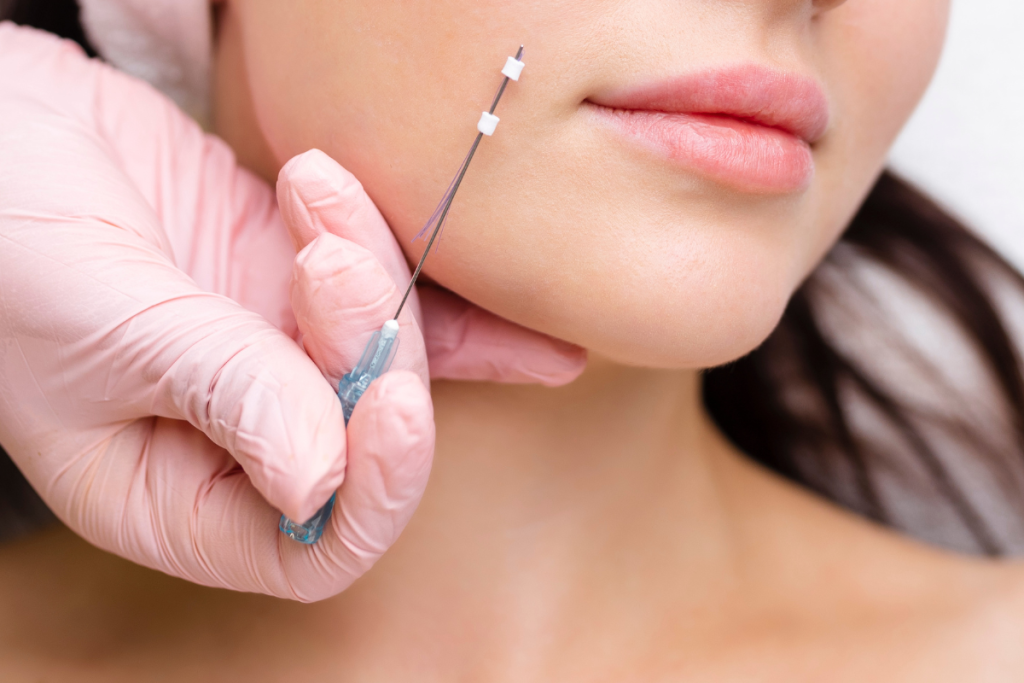
A useful thread lift vs Botox comparison begins with what each procedure changes. Botulinum toxin reduces targeted muscle activity for a temporary period. PDO threads place absorbable sutures in tissue to provide support, tension, or subtle repositioning. During healing, threads may also contribute to local collagen remodeling, but the clinical plan should not rely on that as a substitute for proper candidate selection.
These options are not interchangeable, even when patients group both under non-surgical facial rejuvenation options. One acts mainly on muscle movement. The other acts mainly on soft-tissue support. That distinction should shape the exam, consent, procedure room workflow, and follow-up plan.
Where neuromodulators fit
Botulinum toxin is usually the clearer fit when the concern appears or worsens with expression. Common examples include glabellar frown lines, forehead animation, crow’s feet, and lower-face movement patterns that change contour during motion. Botox is the best-known brand in this class, but clinics should separate class selection from brand selection.
For teams comparing toxin options after candidacy is established, the Botulinum Toxins Category provides a browseable collection of related content. For brand-level distinctions, see the clinic-focused Botox vs Dysport vs Xeomin comparison.
Where PDO threads fit
PDO threads fit a different problem set. In carefully selected patients, they may support mild jawline laxity, early jowling, soft tissue descent, or brow position changes linked more to tissue support than muscle pull. They do not replace a surgical lift when descent is advanced. They also do not reliably erase movement-driven lines on their own.
Why it matters: Treating muscle-driven wrinkles with lifting threads usually misses the main cause.
| Clinical factor | Botulinum toxin | PDO threads |
|---|---|---|
| Main target | Muscle-driven facial movement | Mild tissue descent or laxity |
| Primary effect | Softens dynamic lines | Supports or repositions tissue |
| Commonly assessed areas | Forehead, glabella, periocular animation | Early jowls, soft jawline, selected brow support |
| Visit complexity | Often shorter and more standardized | More procedural and set-up dependent |
| Recovery burden | Often lower visible downtime | More bruising, swelling, or tenderness risk |
| Where it may fall short | Does not lift lax tissue | Does not treat expression-driven lines |
Match the Procedure to the Dominant Finding
The dominant finding should drive the plan. Dynamic wrinkles, static etched lines, skin laxity, and volume loss are related but separate issues. A strong consultation separates what moves, what has descended, and what has deflated before discussing brands, thread type, or procedure counts.
If the complaint is forehead creasing or crow’s feet that appear mainly with expression, toxin usually matches the mechanism better than threads. If the complaint is early lower-face sagging, jowling, or a softened jawline from mild tissue descent, threads may be more aligned. If hollowing in the cheeks, temples, tear trough, or perioral area is the main issue, fillers or a broader plan may matter more than either option.
This is where PDO threads vs fillers vs Botox becomes a practical consultation framework. Toxin addresses movement. Threads address selected support concerns. Fillers address volume deficits. Device-based treatment, skin-quality procedures, or surgical referral may also enter the plan when the exam shows advanced laxity, heavy tissue descent, or expectations that exceed minimally invasive treatment.
Age should not be used as a shortcut. There is no universal reason to avoid botulinum toxin after a specific birthday. What changes with age is the pattern of aging itself. Older patients more often present with laxity, volume loss, deeper static lines, and tissue descent. That means toxin-only treatment may be incomplete even when it remains clinically appropriate.
Common edge cases need a careful mechanism check:
- Movement first: lines worsen during expression.
- Support second: tissue sits lower at rest.
- Volume separately: hollowing needs different tools.
- Jawline context: jowls and masseter activity differ.
- Brow concerns: muscle balance and tissue descent can overlap.
For broader treatment planning beyond this comparison, Facial Aesthetic Planning covers consultation structure, documentation, and workflow concepts for clinic teams.
Downtime, Consent, and Clinic Workflow
PDO Threads vs Botox: Choosing the Right Clinic Approach also depends on operational fit. Toxin appointments often use standardized mapping, short procedure times, product-handling discipline, and concise follow-up pathways. Thread procedures generally require more room preparation, sterile technique, procedural time, local aftercare instructions, and documentation of expected recovery patterns.
Downtime expectations differ. Botulinum toxin treatments often have a lower visible recovery burden, though bruising and injection-site effects can still occur. Threads more often create swelling, bruising, tenderness, puckering, dimpling, or palpable thread areas during early recovery. That does not make one option inherently better. It changes scheduling, informed consent, photography timing, and escalation planning.
For clinics, the comparison should include practical readiness, not only patient interest. A thread service requires training, sterile-field consistency, complication pathways, and staff fluency with aftercare calls. A toxin workflow requires careful storage, reconstitution when applicable, unit documentation, lot tracking, and product-specific handling according to the current label and clinic protocol.
Use a repeatable clinic comparison checklist:
- Primary concern: document rest and motion findings.
- Anatomy split: separate movement, laxity, and volume.
- Medical screen: review relevant history and prior procedures.
- Consent scope: match risks to the planned modality.
- Photography plan: standardize baseline and follow-up views.
- Product records: capture lot, source, and traceability details.
- Aftercare pathway: define routine and urgent follow-up triggers.
On the toxin side, pre-treatment planning and handling habits should be standardized. The Botox Pre-Treatment Checklist addresses clinic-facing preparation points. When stocked products are used, sourcing records and supply-path verification should support internal compliance review. MedWholesaleSupplies serves licensed clinics and healthcare professionals through vetted distributor and verified supply channels.
When Combination Treatment Makes Sense
Combination treatment can make sense when aging is layered. A patient may present with glabellar animation, mild brow descent, early jawline laxity, and midface volume loss at the same visit. In that setting, toxin, PDO threads, and fillers may each address different contributors.
The key is to avoid using one modality as a workaround for another’s limitations. Threads do not correct muscle-driven crow’s feet. Toxin does not physically lift lax tissue. Filler does not replace proper neuromodulator planning when repeated expression drives the line pattern. A good plan explains which finding each procedure is meant to address.
Sequencing also matters. Clinics may choose staged treatment when swelling, photography, assessment, or patient education would be clearer over more than one visit. Staging can also help teams evaluate response before adding another modality. The approach should follow clinical judgment, product labeling, training, and clinic protocol rather than a fixed package.
If the mechanism decision has narrowed to a toxin pathway, teams can browse the Botulinum Toxins Hub for a product-category view. If the plan involves suture-based lifting materials, the Threads Category offers a related content collection for further reading.
Risks, Contraindications, and Escalation Planning
Risk assessment should be explicit before scheduling either option. Botulinum toxin and PDO threads have different adverse-event profiles, and that affects consent, monitoring, and escalation.
For toxin products, clinics commonly counsel around bruising, injection-site discomfort, headache, unintended weakness, eyelid or brow ptosis (drooping), smile imbalance, and product-specific warnings. Medical history matters. Extra review may be needed when neuromuscular conditions, swallowing problems, respiratory concerns, prior adverse reactions, pregnancy status, medication interactions, or other clinical factors are relevant. Contraindications and precautions are product specific, so current prescribing information should drive final screening.
For threads, the discussion is more procedural. Common issues include swelling, bruising, tenderness, puckering, dimpling, asymmetry, palpable or visible thread segments, infection, extrusion, and dissatisfaction when laxity exceeds what a minimally invasive lift can reasonably address. This context also explains why some surgeons criticize thread lifts. The concern is often poor candidate selection, overpromised lift, difficult revisions, or inadequate complication planning rather than a blanket rejection of all thread procedures.
Prior thread placement is relevant facial history. Even absorbable threads can leave tracks or fibrosis, meaning scar-like tissue, for a period of time. That may matter if a patient later seeks facelift, neck lift, or another dissection-based procedure. Document prior threads clearly during consultation and before later facial interventions.
Quick tip: Record previous thread placement as procedural history before future lifting procedures.
Escalation language should be clear in aftercare materials. After toxin treatment, difficulty swallowing, speaking, or breathing warrants urgent clinical review. After thread placement, fever, drainage, severe worsening pain, expanding swelling, suspected infection, thread extrusion, worsening asymmetry, or tissue compromise should prompt timely assessment. Clinics should align escalation instructions with local standards, product labeling, and scope of practice.
For a deeper risk-focused discussion, see Thread Lift Risks. For broader toxin background, Botox Clinical Background gives additional context on botulinum toxin use without replacing current labels.
How to Answer Common Patient-Facing Questions Clinically
Patients often ask which option is “better.” The clinic-facing answer should be simple: better depends on the finding. PDO threads vs Botox is not a contest between two anti-aging products. It is a mechanism match between tissue support and muscle relaxation.
For jowls or jawline concerns, examine whether the issue is tissue descent, volume distribution, mandibular contour, masseter activity, or skin laxity. A toxin-first plan may make sense for muscle-driven lower-face patterns, such as selected masseter concerns. It does not create a true lift for jowls. Threads may support mild descent, but they are not a substitute for surgery when laxity is advanced.
For brow concerns, decide whether the visible issue is caused by muscle imbalance, tissue descent, eyelid position, or forehead compensation. A neuromodulator may influence selected muscle patterns. Threads may be considered when support is the main concern. Surgical or ophthalmic referral may be more appropriate when anatomy, safety, or expectations fall outside minimally invasive treatment.
For younger patients asking about prevention, avoid generation-based assumptions. Some patients prefer to delay elective cosmetic procedures. Others seek subtle treatment earlier. The clinic’s role is to assess anatomy, discuss realistic expectations, screen for contraindications, and avoid unnecessary intervention when the clinical finding does not support treatment.
If a Toxin Is the Right Mechanism
Once the anatomy points clearly toward a neurotoxin, the next question becomes operational rather than comparative. Clinics then evaluate labeling, handling requirements, staff familiarity, documentation habits, and how each product fits room flow and follow-up expectations.
Teams should not assume that brand units are interchangeable or that storage and workflow steps match across products. Standardize around the current label, clinic protocol, and practical training needs. For product-specific navigation, clinics may review individual product pages such as Botox, Dysport, and Bocouture only when those products are directly relevant to stocked lines and local practice requirements.
Authoritative Sources
- For FDA safety communication on botulinum toxin products, review the boxed warning announcement.
- For a medical-society summary of thread lifts, see the ASPS thread lift page.
- For background on cosmetic botulinum toxin use, review the ASPS botulinum toxin overview.
For most clinics, PDO Threads vs Botox: Choosing the Right Clinic Approach is best handled as a structured assessment pathway. Confirm the mechanism, screen for contraindications, match consent to the procedure, document product and procedural details, and set follow-up expectations before treatment begins.
This content is for informational purposes only and is not a substitute for professional medical advice.