
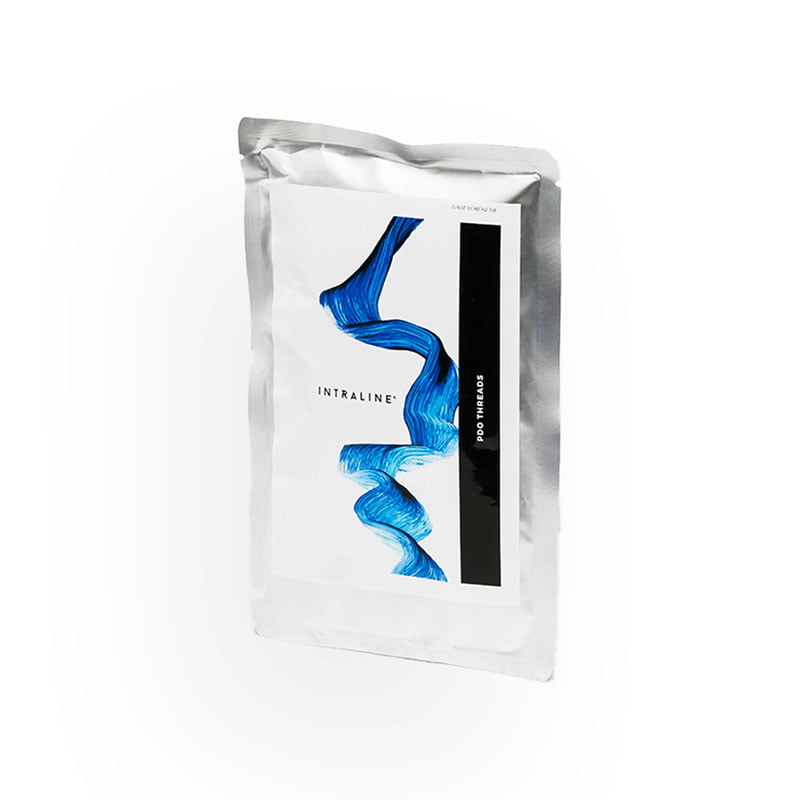
Intraline® PDO Threads Cog Dimension 360 C19100M-C-19G
Order Intraline® PDO Threads Cog Dimension 360 19G for Clinics
Derma Filler
$399.00
You save
Description
Intraline® PDO Threads Cog Dimension 360 C19100M-C-19G is a sterile, single-use polydioxanone thread system for trained aesthetic professionals. Licensed clinics and healthcare providers can order this 19G cog-thread configuration for subdermal tissue support, facial contouring protocols, and procedure-room inventory planning. The Dimension 360 design uses multidirectional cogs to help engage tissue during professional thread-lift placement.
This configuration is used in clinic-led aesthetic workflows where handling, gauge selection, thread profile, and sterile presentation matter. It is intended for qualified users who can assess anatomy, tissue thickness, insertion approach, consent requirements, and aftercare before treatment. US distribution and reliable US logistics support routine replenishment for practices that maintain thread-lift supplies across one or more treatment rooms.
Clinic Ordering, Price, and Configuration Selection
Clinics sourcing Intraline® PDO Threads Cog Dimension 360 C19100M-C-19G can sign in to view current account terms, volume options, and configuration availability. Public pages do not display a retail price because clinic pricing may depend on account status, ordering volume, and contract arrangements. For procurement planning, use the SKU code, 19G gauge designation, and Dimension 360 cog profile to align purchasing with provider technique.
The C19100M-C-19G configuration identifies this product within the Intraline Dimension 360 family. The product title indicates a 19G cog-thread format and the current ordering context references a 100mm/150mm configuration. Confirm the exact configuration shown during ordering against your internal procedure cards, tray setup, and provider preference before scheduling cases.
Account teams can help with cross-references when a practice is standardizing thread profiles across multiple injectors or locations. For broader sourcing, clinics can browse the medical devices category or the Intraline brand range to keep related professional-use items organized under one purchasing workflow.
What the 19G Dimension 360 Cog Design Does
Intraline® PDO Threads Cog Dimension 360 is a barbed PDO thread designed to provide mechanical purchase within subdermal tissue when placed by a trained professional. The 360-degree cog pattern is intended to engage tissue from multiple directions, supporting controlled repositioning during thread-lift procedures. PDO, or polydioxanone, is an absorbable polymer widely used in suture applications.
The Dimension 360 format is valued in aesthetic practices because cog geometry influences anchoring, handling, and lift support. A triple-thread configuration intertwines three filaments, distributing tension across the thread structure and improving purchase under load compared with simpler thread profiles. As PDO gradually hydrolyzes and resorbs, a localized fibrotic response may contribute to structural support over time.
Thread selection is not interchangeable across every case. Gauge, thread length, cog direction, needle or cannula compatibility, and tissue characteristics all affect procedural planning. For a clinical explanation of how PDO threads are used in aesthetic medicine, see the professional background article on PDO thread lifting mechanisms.
Professional Applications and Treatment-Room Fit
This 19G cog-thread configuration fits aesthetic protocols focused on lifting, contouring, and soft-tissue repositioning. Providers may incorporate it into staged facial rejuvenation plans that also include neuromodulators, hyaluronic acid fillers, skin-quality treatments, or energy-based devices. Treatment planning should remain clinician-led and based on facial anatomy, tissue mobility, skin thickness, patient history, and realistic procedural goals.
Common clinic use areas for cog-thread planning include lower-face refinement, jawline definition, midface support, and areas where mechanical anchoring is required. The product is not a substitute for training, anatomical knowledge, or case selection. Practices should maintain documented protocols for patient assessment, photography, consent, antisepsis, insertion technique, post-care instructions, and follow-up.
Quick tip: Keep procedure cards updated with the thread code, gauge, intended placement pattern, and any provider-specific tray preferences.
For practices refining treatment selection, the clinic article on thread-lift risks and challenges can support staff education around case planning, patient counseling, and complication awareness. A separate comparison of PDO threads and Botox may help teams explain why structural repositioning and neuromodulation serve different aesthetic roles.
Key Features for Procedure Planning
The PDO Threads Cog 19G Dimension 360 configuration offers a practical balance of grip, strength, and handling for experienced thread-lift users. Its defining attributes relate to tissue engagement, sterile presentation, and predictable inventory identification. These points help clinics match the device to established protocols rather than treating all PDO threads as equivalent.
- 360-degree cog pattern: Multidirectional barbs support tissue engagement and anchoring during professional placement.
- 19G configuration: The gauge designation helps providers align the thread with technique, insertion pathway, and ancillary instruments.
- Triple-thread design: Three intertwined filaments distribute forces and provide reinforced mechanical hold.
- Absorbable PDO material: Polydioxanone gradually resorbs after placement through hydrolysis.
- Sterile, single-use presentation: The device supports treatment-room hygiene when opened and used according to protocol.
- Clear SKU identification: C19100M-C-19G assists purchasing teams with reorder accuracy and inventory control.
These features are most useful when a clinic has standardized training and consistent procedural documentation. Thread handling can vary by provider, so internal technique alignment is important when multiple clinicians share the same stock. If a substitution is needed, confirm gauge, profile, and length against the intended placement plan before use.
Composition, Absorption, and Tissue Response
The primary material is polydioxanone, an absorbable and biocompatible polymer used in medical suture applications. In aesthetic thread-lift procedures, PDO provides temporary mechanical support while the implanted material gradually breaks down. The cogs are cut or formed to create tissue purchase, while the thread body provides the tensile element that supports repositioning during the early phase after treatment.
The triple-filament format is intended to strengthen the lifting characteristics of the thread relative to a single smooth filament. The 360-degree barb layout creates multidirectional contact points, which can help resist migration when placement, tissue selection, and tensioning are appropriate. As the PDO resorbs, collagen-related remodeling and a localized fibrotic response may contribute to the longer-term support clinicians consider when planning maintenance intervals.
Material behavior should be discussed within the limits of professional judgment. PDO absorption does not remove the need for careful placement, aseptic technique, or appropriate follow-up. Bruising, swelling, tenderness, dimpling, asymmetry, infection, thread visibility, and contour irregularities are among the issues clinicians should address in consent and aftercare protocols.
Packaging, Storage, and Sterile Handling
Intraline® PDO Threads Cog Dimension 360 C19100M-C-19G is supplied sterile for single-use procedures. The current content references protective foil packaging and a clinic supply format used to support tray preparation. Keep units in their protective packaging until the treatment room is ready and follow the manufacturer’s storage guidance for moisture protection, packaging integrity, and expiry control.
Before a procedure, staff should inspect packaging, verify the SKU, confirm sterility indicators where applicable, and match the thread profile to the case plan. Opened or compromised packaging should not be returned to inventory. Used threads, sharps, and contaminated materials should be discarded according to clinical waste procedures and local facility policy.
Tracked US delivery can support predictable receiving workflows for clinics that schedule thread-lift sessions in advance. Build reorder thresholds around procedure volume, preferred configurations, and lead time for internal approval. Maintaining a small range of thread types can help providers adapt to different anatomical needs without overstocking a single profile.
Benefits in Clinic Workflow
This product fits best in practices that already have defined thread-lift training, insertion methods, and follow-up routines. Predictable cog geometry and clear labeling can reduce setup uncertainty and help staff identify the intended thread quickly. When stored with related aesthetic devices, the C19100M-C-19G code gives purchasing and clinical teams a shared reference for replenishment.
The 19G Dimension 360 profile may be selected when the provider wants a cog thread with robust tissue engagement. Its use should be based on the treatment area, degree of tissue mobility, insertion route, and provider comfort with the device. Clinics should not rely on thread profile alone to drive outcomes; careful case selection and technique consistency remain central.
Why it matters: Standardizing thread codes across ordering, storage, and procedure notes reduces avoidable setup errors.
Practices evaluating broader minimally invasive lifting strategies may also find context in the article on MINT PDO threads and contouring techniques. Use educational content to support internal training discussions, while relying on manufacturer instructions and clinical protocols for actual device use.
Safety, Precautions, and Professional Responsibilities
PDO thread procedures should be performed only by trained, licensed professionals who understand facial anatomy and complication management. Standard precautions include patient history review, contraindication screening, informed consent, antiseptic preparation, sterile handling, appropriate insertion technique, and post-procedure instructions. Clinicians should assess whether thread lifting is suitable for the individual case rather than using the same thread plan for every patient.
Expected short-term effects may include bruising, edema, tenderness, tightness, and localized discomfort at insertion points. Other potential issues can include asymmetry, dimpling, puckering, palpable or visible threads, infection, inflammatory reactions, extrusion, nerve irritation, or unsatisfactory contour. Any worsening pain, spreading redness, fever, drainage, sudden asymmetry, or concerning neurologic symptoms should be evaluated promptly by a qualified clinician.
Contraindication and precaution screening should reflect your clinic’s medical protocols and the manufacturer’s instructions. Consider relevant factors such as active skin infection near the treatment area, poor wound healing history, bleeding risk, anticoagulant use, immune status, pregnancy or lactation policies, prior procedures, and patient expectations. Documentation should include lot information, placement plan, adverse event notes when applicable, and follow-up recommendations.
Related Thread Profiles and Alternatives
Clinics often carry more than one thread profile because facial anatomy and lifting goals vary. If this 19G cog format does not match the intended insertion plan, review nearby Intraline configurations before substituting. The Dimension 360 C19100 19G configuration may be relevant when a similar gauge profile is needed with a different referenced configuration.
For providers who prefer a smaller gauge in selected cases, the Dimension 360 B2190 21G configuration offers a related Dimension 360 option. Practices that want to keep cog-thread choices grouped can also review the Intraline cog thread range for compatible planning across technique preferences.
Alternative cog styles may be considered when provider training, handling preference, or case requirements differ. The 3D Cog 21G thread is one adjacent product to evaluate as part of a broader thread inventory. Confirm each alternative against the manufacturer’s instructions and your clinical protocol before replacing one configuration with another.
Inventory Planning and Substitution Control
Thread inventory should reflect actual procedure volume, provider preference, and the range of cases your clinic accepts. High-turnover practices may benefit from setting reorder points by thread family, gauge, and length rather than by brand alone. Keep unopened sterile stock separated from opened procedure supplies, and rotate inventory according to expiry dates.
If a specific configuration is temporarily unavailable within your ordering workflow, your team should evaluate substitutions clinically rather than relying only on a similar name. Gauge, thread length, cog pattern, insertion tool, and tensile behavior can all affect handling. Document approved alternates so front-desk, purchasing, and clinical staff do not make last-minute substitutions without provider confirmation.
For clinics building a complete PDO thread inventory, combine cog threads with other thread categories only when the providers are trained to use them. Smooth mono threads, spiral threads, and barbed cogs serve different procedural purposes. Related Intraline products such as Intraline B-2390-C can be evaluated when a different profile is needed for a defined protocol.
Professional Education and Documentation
Safe use of cog PDO threads depends on training, anatomy knowledge, and repeatable documentation. Clinics should maintain records for consultation findings, treatment rationale, thread type, lot number, placement map, post-care instructions, and adverse event follow-up. These records help providers evaluate outcomes and support quality improvement across the practice.
Patient-facing counseling should explain the intended lifting or contouring goal, expected early swelling or bruising, aftercare limitations, and the possibility that adjunctive treatments may be needed. Avoid promising a fixed duration or guaranteed degree of lift. Individual outcomes vary with anatomy, skin quality, age-related tissue changes, technique, and aftercare adherence.
Internal education can include product in-service sessions, treatment-room checklists, complication drills, and periodic photo review. When new providers join the practice, align them with existing thread selection rules before they use shared inventory. This helps preserve consistency across treatment rooms and improves communication between clinical and purchasing staff.
Authoritative and Practical Reading
Product use should always follow the manufacturer’s instructions, professional training, and your clinic’s policies. For practical background on treatment roles and patient communication, clinics can use the internal PDO thread resources linked throughout this content. These articles are not substitutes for product instructions or hands-on training, but they can help teams organize discussion around mechanisms, risks, and adjacent treatments.
When evaluating Intraline Cog Dimension 360 19G cost, include more than the unit price. Account for procedure demand, staff training, storage controls, waste from expired stock, and whether multiple providers will use the same configuration. A lower per-unit cost may not benefit a clinic if the thread profile is rarely used or does not match established technique.
Ready to stock this configuration for your clinic program? Sign in to view account-specific purchasing details, confirm the 19G Dimension 360 configuration, and coordinate replenishment for your treatment schedule.
This content is for informational purposes only and is not a substitute for professional medical advice.
Frequently Asked Questions
Who can order Intraline® PDO Threads Cog Dimension 360 C19100M-C-19G?
This product is intended for licensed clinics, med spas, and healthcare professionals using PDO threads within professional aesthetic protocols. Account requirements and clinic documentation may apply before purchase.
What does the 19G Dimension 360 configuration mean for clinics?
The 19G designation identifies the gauge, while Dimension 360 refers to the multidirectional cog design. Clinics should match the configuration to provider technique, insertion approach, and the procedure plan.
How should sterile PDO threads be handled before use?
Keep threads in intact protective packaging until the procedure setup is ready. Staff should verify the SKU, packaging integrity, expiry controls, and sterile handling steps according to clinic policy and manufacturer guidance.
Can this cog thread be substituted with another PDO thread?
Substitution should be clinician-approved. Gauge, length, cog pattern, insertion method, and tissue-engagement characteristics can differ between thread profiles, even within the same product family.
What short-term effects should clinics discuss during consent?
Common short-term effects may include bruising, swelling, tenderness, tightness, and localized discomfort. Clinics should also discuss less common complications and provide clear instructions for follow-up if symptoms worsen.
How can clinics plan inventory for this thread configuration?
Track usage by provider, treatment area, gauge, and thread profile. Set reorder thresholds based on scheduled procedures, expiry rotation, and approved alternatives for cases where a different configuration is needed.
Specifications
- Main Ingredient: Polydioxanone (Pdo)
- Manufacturer: Intraline
- Drug Class: Medical Device
- Generic Name: Pdo Thread Lift
- Package Contents: 20 pcs
- Storage Requirements: Room Temperature (2℃~25℃)
- Main Usage:
About the Brand
Intraline
Counted among the cream of the crop in the medical sphere, Intraline is famed for its extensive array of groundbreaking, top-notch products tailored for the health sector. From cutting-edge dermal fillers to industry-leading PDO threads, Intraline has carved out a niche for itself as a credible entity within aesthetic medicine. A major distinguishing factor for Intraline lies in its unwavering dedication to delivering safe and result-oriented solutions for both health practitioners and patients. We, at medwholesalesupplies.com, take pride in featuring Intraline products for sale. Our digital platform is crafted to simplify the procurement process, providing a convenient shopping experience for medical professionals. Be it dermal fillers or PDO threads you're in search of, you can confidently rely on our platform to bring you the finest Intraline products, competitively priced. Thanks to our secure payment gateway and dependable shipping options, we offer you the peace of mind that comes with knowing you're investing wisely in the finest products for your practice. Shopping for Intraline products via medwholesalesupplies.com presents numerous advantages. First off, you're guaranteed authentic Intraline products, directly sourced from the manufacturer, attesting to their quality and safety. Furthermore, our compelling prices coupled with bulk buying options equate to significant cost savings while ensuring a consistent inventory of Intraline products for your practice. With our speedy, trusted shipping methods, you can comfortably expect to receive your Intraline items promptly. Choose medwholesalesupplies.com, your trusted source for premier Intraline solutions tailored to your health requirements.
Browse Intraline Products
Here to help
Questions about ordering, delivery or products? You can email our team here or call now at 1-800-630-9757 and be connected with your dedicated Account Manager
Related Products
Evenity® (English Alternative)
Injectable Medication
$1,229.00 - $1,299.00
You save
You save
Intraline® For Men
Dermal Filler
$59.00 - $79.00
You save
You save
RejuvaNAD+ Pro
Injectable Medication
$237.00 - $249.00
You save
You save
Teosyal® RHA 4
Aesthetic Surgery Product
$259.00 - $279.00
You save
You save
Related Articles
Prednisone in Clinical Care: Uses, Risks, and Monitoring
Prednisone is a prescription systemic corticosteroid used to reduce inflammation or suppress immune activity in…
Lip Fillers Swelling Stages: Timeline, Safety, and Follow-Up
Lip fillers swelling stages usually follow a short inflammatory course: swelling appears soon after injection,…
Hypopigmentation of the Skin: Assessment and Care
Hypopigmentation of the skin means one or more areas look lighter than the surrounding skin.…
Radiesse vs Sculptra: Selection Factors for Clinics
Radiesse vs Sculptra is best understood as a comparison between two collagen-stimulating injectables with different…
Hyaluronic Acid Under-Eye Filler: Safety and Workflow
Hyaluronic acid under-eye filler is an injectable soft-tissue filler used by trained aesthetic clinicians to…
Dermal Filler Types: Materials, Uses, and Clinic Fit
Dermal filler types are usually grouped by their base material, tissue behavior, and expected role…
What Is Dysport? Clinical Uses, Safety, and Workflow
For clinic teams asking what is Dysport, the short answer is simple: Dysport is a…
Biostimulators in Aesthetic Care: Selection and Safety
Biostimulators are injectable aesthetic products used to encourage a controlled tissue response, often involving new…