

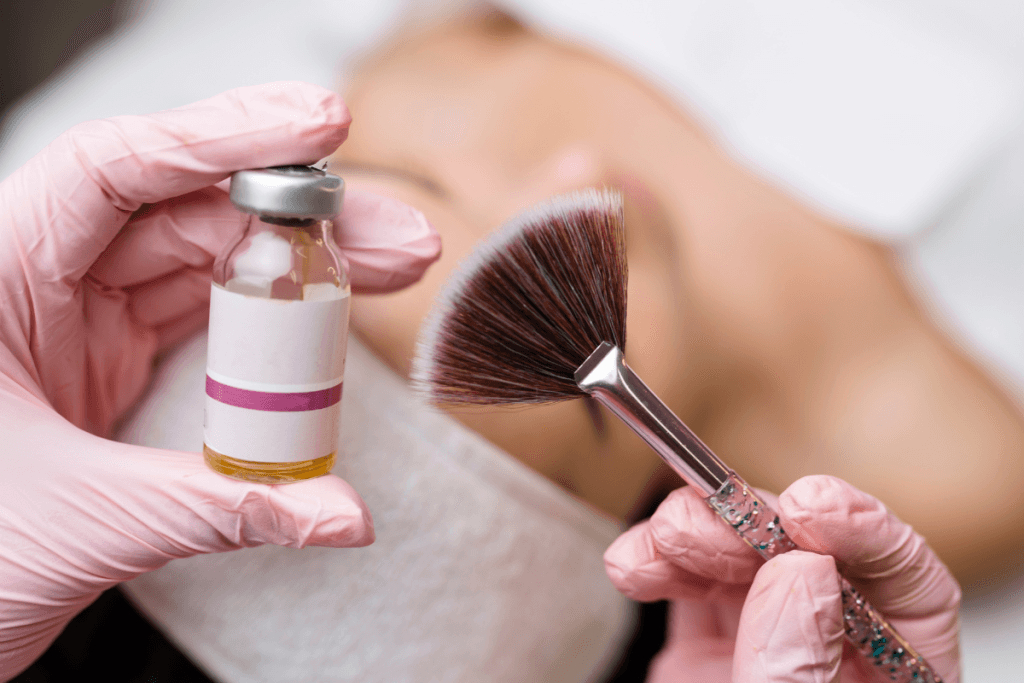
PRX-T33 treatment is a professional topical biorevitalization procedure used in aesthetic clinics to support skin texture, tone, and radiance with less visible peeling than many traditional chemical peels. It still requires careful screening, plain-language consent, controlled application, and written aftercare. For clinic teams, the main task is not just explaining the “no-peel” concept. It is building a repeatable workflow that reduces avoidable irritation, pigment concerns, and expectation mismatch.
Patients often arrive after seeing PRX-T33 before and after photos, treatment reviews, or social media discussions about downtime. Your response should stay consistent with the product instructions for use, your local scope-of-practice rules, and the protocol approved by your medical director. MedWholesaleSupplies serves licensed clinics and healthcare professionals, so this resource keeps the focus on practice operations rather than consumer marketing.
Key Takeaways
- Position it accurately: “No-peel” does not mean no reaction.
- Screen the barrier: recent actives, inflammation, and pigment risk matter.
- Standardize consent: use the same terms across staff and records.
- Plan aftercare early: give stop, restart, and escalation instructions in writing.
- Control sourcing: log lot, expiry, and product documentation on receipt.
Where PRX-T33 Treatment Fits in a Clinic Menu
PRX-T33 treatment is usually positioned as a clinic-administered, TCA-based resurfacing option with reduced visible exfoliation for many patients. That makes it attractive for people who want a lighter-looking recovery period. It also makes expectation-setting harder, because patients may interpret “no peel” as “no redness, no stinging, and no aftercare.”
In practice, teams may hear it called a PRX peel, PRX facial treatment, or biorevitalization peel. Pick one primary name for your consent forms, treatment notes, booking templates, and patient education handouts. Consistent language reduces confusion when patients compare your instructions with influencer posts or clinic advertisements.
The broader category matters too. PRX-style systems sit alongside other peel and skin-quality services, not apart from them. Clinics building a resurfacing pathway can compare PRX-T33 with protocols such as BioRePeel Workflow Essentials or other professional peel options. The goal is not to rank brands. It is to define which patient factors, visit timing, and aftercare requirements make one pathway more appropriate than another.
Ingredients and “no-peel” language
Teams commonly describe PRX-T33 ingredients as including trichloroacetic acid, hydrogen peroxide, and kojic acid. Trichloroacetic acid, often shortened to TCA, is a chemical peel agent. Kojic acid is often discussed in pigmentation-focused cosmetic formulations. Exact composition, handling steps, application details, and regional labeling should be confirmed in the current instructions for use and safety data sheet.
The “no-peel” label usually refers to less obvious epidermal shedding compared with some traditional chemical peels. It does not remove the need to discuss transient erythema (redness), stinging, dryness, tightness, sensitivity, or mild flaking. Clinics should also avoid promising no downtime. Downtime can mean different things to different patients, including social events, exercise, makeup use, or visible redness on camera.
Why it matters: Clear positioning reduces complaints driven by unrealistic recovery expectations.
How to explain the mechanism without overclaiming
A practical explanation is enough for most consultations. Chemical resurfacing creates a controlled skin response. The intensity of that response depends on the product, application technique, skin barrier status, concurrent home care, and patient-specific risk factors. Even when visible peeling is limited, sensitivity can still occur.
That framing helps staff answer common questions such as “Does PRX-T33 really work?” without making unsupported promises. A balanced answer is that results depend on baseline skin condition, treatment goals, technique, and the complete care plan. Document the concern being treated, the expected response range, and the review point for deciding whether to continue, pause, or change the plan.
Candidate Screening Before Scheduling
Good screening identifies patients whose current skin status may not match the intended procedure. Start with recent treatments, current home products, medical history, and sun exposure. Patients often forget to mention retinoids, exfoliating acids, benzoyl peroxide, recent waxing, depilatories, or self-directed peels unless staff ask directly.
Document baseline findings in plain language and clinical terms. Note xerosis (dryness), active dermatitis, impaired barrier, open lesions, recent sunburn, or visible inflammation. For patients with higher pigment risk, discuss post-inflammatory hyperpigmentation, often shortened to PIH, before treatment. Avoid presenting pigment risk as rare or irrelevant simply because the procedure is marketed as minimal-peel.
Common screening discussion points include pregnancy or breastfeeding status, known reactions to peel ingredients, active skin infection or dermatitis, recent isotretinoin exposure, and herpes simplex history if your clinic has a resurfacing protocol for antiviral referral or clinician review. Policies vary by jurisdiction, training, and product labeling. Keep your intake conservative, and do not rely on PRX-T33 treatment reviews as safety evidence.
Questions to build into intake
- Recent procedures: lasers, microneedling, injectables, waxing, or peels.
- Home actives: retinoids, acids, exfoliants, benzoyl peroxide, or brighteners.
- Barrier symptoms: burning, scaling, itching, cracking, or unusual sensitivity.
- Pigment history: melasma, PIH, tanning, or recent high sun exposure.
- Reaction history: dermatitis, allergies, cold sores, or strong peel responses.
If your clinic also offers skin boosters or injectable skin-quality services, keep screening pathways distinct. A topical resurfacing visit is not the same workflow as an injectable appointment. For broader service planning, teams may compare topical resurfacing with resources such as Skin Boosters Injections and the browsable Skin Boosters Category.
Consent, Photography, and Treatment Expectations
Consent should translate clinical risk into language the patient can understand. Explain what the procedure is, why it is being selected, what short-term reactions may occur, and what would trigger follow-up. The consent discussion should also cover alternatives, including delaying treatment when the skin barrier is not ready.
Patients frequently ask how long results last or how many visits they may need. Avoid fixed promises. Instead, set measurable goals and review points. For example, a clinic might track texture, brightness, tolerance, patient-reported sensitivity, and whether the home routine supports barrier recovery. This turns the conversation away from vague “glow” claims and toward observable change.
Photography deserves a formal process. Treat before-and-after images as clinical documentation, not just marketing content. Standardize lighting, distance, camera angle, facial expression, skin preparation, and timing. Record the date, product or protocol used, number of sessions, home care changes, and confounders such as tanning, illness, medication changes, or recent procedures.
Patients may bring screenshots from social platforms and ask whether they will look the same. Staff should explain that online images rarely disclose skin type, camera settings, editing, concurrent services, or recovery timing. Your photo protocol creates a more reliable internal comparison and protects the practice if a patient later compares clinic outcomes with edited or selective images.
Quick tip: Use one approved phrase for “downtime” across booking, consent, and aftercare materials.
Aftercare Planning and Side Effect Escalation
Aftercare should focus on barrier support, irritation avoidance, and sun protection. Keep instructions short enough that patients can follow them. Long product lists can create confusion, especially if irritation occurs and the team must determine which factor caused it.
Typical short-term effects discussed in clinics include stinging during application, erythema, tightness, dryness, mild flaking, and temporary sensitivity. Less common problems may include prolonged irritation, contact dermatitis, unexpected swelling, or pigment alteration. Your protocol should define what staff can document independently, what requires clinician review, and how follow-up is scheduled after a concern.
Write home-care stop and restart dates clearly. If patients use retinoids, exfoliating acids, acne products, or pigment-focused actives, document when those products should be paused and when a clinician or approved staff member may review reintroduction. Avoid stacking multiple irritating products around the same appointment unless the protocol specifically supports that sequence.
Patients may also search for PRX-T33 treatment at home. Keep the boundary direct. Procedures involving caustic or strongly active agents should remain within trained, controlled professional settings according to product instructions and local rules. A patient’s interest in self-application should be documented as an education point, not handled as casual retail advice.
When staff should escalate
- Prolonged redness: symptoms last beyond the expected clinic protocol range.
- Worsening pain: discomfort increases rather than settles.
- Blistering or crusting: visible skin breakdown appears.
- Pigment change: darkening or lightening develops after treatment.
- Infection concern: warmth, pus, fever, or spreading tenderness occurs.
Patients sometimes raise phrases such as “PRX-T33 side effects cancer” after reading forums. Do not argue with social media threads. Acknowledge the concern, explain that online claims often lack clinical context, and return to product documentation, ingredient safety information, contraindications, and clinician review. If a patient has a cancer history, immunosuppression, active dermatologic disease, or complex medical concerns, follow your clinic’s medical escalation pathway.
Comparing PRX-T33 With Microneedling and Other Resurfacing Options
Patients often ask whether PRX-T33 is better than microneedling. The more useful clinical answer is that they are different modalities with different workflows, risk profiles, and recovery considerations. PRX-T33 is a topical chemical resurfacing approach. Microneedling creates controlled mechanical injury with needles. Neither should be presented as universally better.
Compare options by patient selection, barrier condition, pigment risk, desired recovery profile, staff training, device or product requirements, and documentation burden. Also consider whether the patient’s concern is texture, dullness, acne scarring, laxity perception, pigment, or general skin quality. Some concerns may require staged or combined planning, but combined protocols should follow manufacturer guidance and the medical director’s written policy.
For clinics offering several skin-quality services, internal education helps staff describe each modality consistently. Relevant background may include Mesotherapy Injections or Benefits Of Mesotherapy. These services are not interchangeable with a chemical resurfacing procedure, but they may appear in the same consultation conversation.
Keep comparisons neutral. Avoid telling patients that one named treatment is superior based on reviews, short videos, or single-photo examples. Instead, document the reason for the selected path and the factors that would prompt a different approach. That protects clinical reasoning and helps the team handle follow-up questions consistently.
Clinic Workflow and Procurement Controls
A reliable resurfacing service depends on more than technique. It involves purchasing, receiving, product verification, storage, staff training, treatment documentation, and adverse-event review. MedWholesaleSupplies provides brand-name medical products through vetted distributors and verified supply channels for licensed clinics, but each practice still needs its own internal controls.
Start by defining authorized roles. Decide who may select products, who may accept deliveries, who logs lot and expiry details, and who updates clinical documents when manufacturer instructions change. If your practice operates across locations, use the same item names and document templates wherever possible.
Product pages can support inventory matching, but they should not replace the current instructions for use. For example, a listing such as PRX-T33 WIQO 4 mL can help staff reconcile a catalog item with purchasing records. Clinical use should still follow the manufacturer’s current labeling, safety documentation, and your approved protocol.
Workflow snapshot for peel programs
- Verify authorized users and training records.
- Maintain current instructions, SDS files, and consent templates.
- Receive products and log lot, expiry, and condition.
- Store items according to label and local policy.
- Confirm candidate screening before treatment.
- Record application details and any protocol deviations.
- Provide written aftercare and escalation instructions.
- Track outcomes, complaints, and adverse reactions.
Some clinics keep a smaller peel formulary to reduce variation. That can help with staff training and reduce the chance of using an unintended protocol. If another product is added, such as Fillmed Bright Peel, update intake prompts, consent language, storage checks, and aftercare documents before offering it routinely.
Handling Reviews, Cost Questions, and Scheduling Pressure
Reviews can reveal patient concerns, but they should not drive treatment selection. PRX-T33 treatment reviews rarely disclose skin type, Fitzpatrick classification, exact technique, concurrent procedures, home care, or photo conditions. They also tend to overrepresent extreme outcomes, both positive and negative.
Cost questions should be handled through clinic policy, not social media claims. Staff can explain that fees may reflect clinician time, consultation, consumables, facility overhead, documentation, aftercare, and follow-up processes. Avoid language that implies guaranteed results, especially when discussing treatment packages or series planning.
Scheduling pressure is another operational risk. Patients may want treatment immediately before an event because they expect no downtime. Build a policy for event timing, recent sun exposure, and current skin irritation. When the barrier looks compromised, delaying care can be the more defensible choice. Document the reason, the education provided, and any revised plan.
For deeper protocol alignment, teams can review PRX-T33 Peel Protocol Basics. Keep that type of internal reading separate from patient-facing marketing so staff can focus on screening, workflow, and safety controls.
Authoritative Sources
Clinic protocols should be anchored to the manufacturer’s current instructions for use, safety data sheet, and your medical director’s policy. Neutral clinical references can also help staff explain chemical peel concepts and expected recovery themes.
For procedural background and risks, review the Mayo Clinic chemical peel overview. For dermatology-focused context on peel depth, risks, and aftercare, see DermNet NZ on chemical peels. For product-specific instructions, use the manufacturer’s current professional documentation rather than third-party summaries.
PRX-T33 and similar minimal-peel concepts can fit well in a resurfacing menu when the clinic controls screening, consent, aftercare, and documentation. The safest operational approach is consistent language, conservative candidate selection, clear escalation pathways, and traceable product handling. When patients cite reviews or online claims, bring the conversation back to risk factors, treatment goals, and the approved protocol.
This content is for informational purposes only and is not a substitute for professional medical advice.




