
$49.00
You save
Description
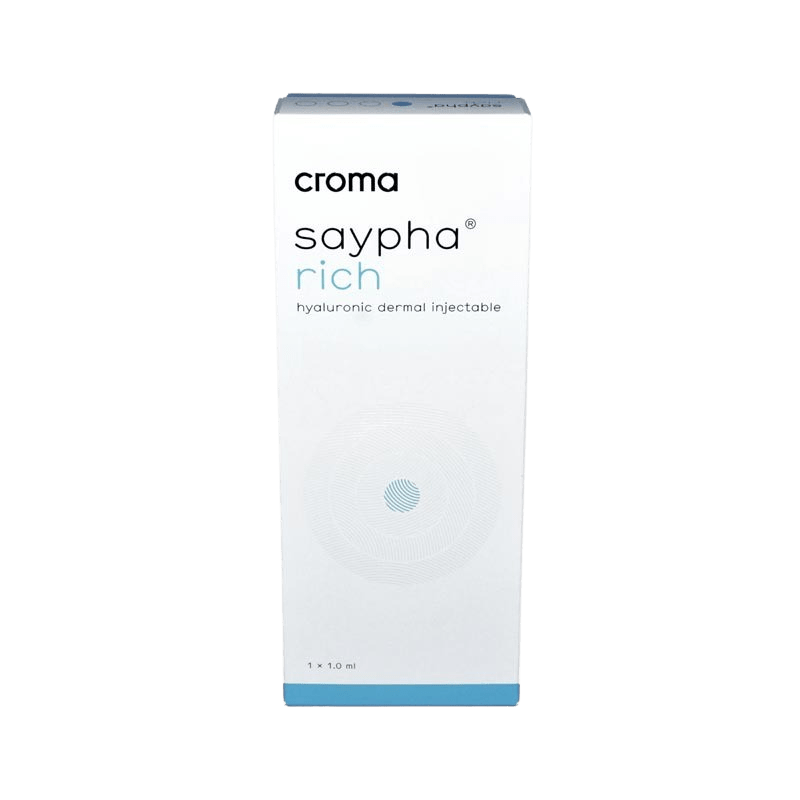
Saypha® Rich is a sterile hyaluronic acid skin booster with glycerol for intradermal microinjection protocols in professional aesthetic settings. Licensed clinics and healthcare professionals can order Saypha Rich 1ml for hydration-focused skin quality work, treatment-room allocation, and documented inventory control. Its pre-filled syringe format supports controlled superficial placement during mesotherapy-style procedures.
What Saypha® Rich Is
Saypha® Rich is a hyaluronic acid gel designed for intradermal administration. The formulation combines hyaluronic acid at 18 mg/mL with glycerol at 20 mg/mL, giving clinics a water-binding HA-glycerol matrix for superficial tissue hydration protocols. It is commonly positioned as a skin booster rather than a volumizing filler, so its practical role is skin quality support instead of deep contour correction.
Croma Saypha Rich is used in professional aesthetic workflows where clinicians want predictable handling for fine-texture, radiance, and hydration-led treatment plans. Teams may use it across the face, neck, perioral area, or dorsal hands when appropriate for the individual protocol and injection technique. Clinical judgment remains important because placement depth, injection pattern, session spacing, and combination treatments affect how the product fits into a broader plan.
For category planning, clinics can browse related skin boosters and mesotherapy supplies to align product selection with technique, staff training, and appointment flow. Saypha® Rich can also sit near lighter injectable services, resurfacing treatments, and skin-quality maintenance programs when the clinical lead approves the sequence.
Saypha Rich 1ml Composition and Pack Details
Each Saypha Rich 1ml unit is supplied as one sterile, single-use, pre-filled syringe. This format helps reduce setup time, supports room-by-room allocation, and limits waste when teams schedule single-patient sessions. Receiving staff should record the lot and expiry details from manufacturer labeling as part of routine inventory documentation.
| Attribute | Clinic reference |
|---|---|
| Product type | Hyaluronic acid skin booster for intradermal use |
| Format | Sterile pre-filled syringe |
| Unit size | 1 mL |
| Hyaluronic acid | 18 mg/mL |
| Glycerol | 20 mg/mL |
| Typical workflow | Superficial microinjection or compatible mesotherapy delivery methods |
The HA component helps bind water in superficial tissues, while glycerol supports hydration-focused handling characteristics in the gel matrix. The clear, uniform presentation supports precise extrusion and controlled superficial placement. Use should remain within professional scope, with aseptic technique and appropriate sharps disposal after administration.
Saypha Rich Price, Account Access, and Ordering
Clinics can sign in to view the current Saypha Rich price, available quantities, and account-specific supply options. Contract or volume structures may be available for eligible facilities that run recurring skin-quality programs or multi-room aesthetic schedules. Pricing should be matched with expected treatment volume, staff utilization, and expiry management rather than judged by unit cost alone.
Ordering is restricted to verified medical accounts. Med Wholesale Supplies serves licensed clinics, med spas, and healthcare professionals with brand-name medical products sourced through vetted distributors and verified supply channels. Your team can use account access to organize recurring purchases, standardize clinic formulary choices, and coordinate internal demand for upcoming sessions.
For broader brand planning, the Saypha portfolio includes related HA injectables with different roles. Reviewing the portfolio helps procurement teams keep skin booster, filler, and volumizing products separated by indication, tissue plane, and injector preference.
Professional Applications and Protocol Fit
Clinics deploy Saypha® Rich for hydration-led skin quality protocols, fine-texture support, and superficial glow-focused treatment plans. It is commonly used with microinjection approaches, including manual syringe techniques or compatible mesotherapy pens and pistols used by trained professionals. The product is not a substitute for structural volume correction when the treatment objective requires projection, lifting, or deep fold support.
Common professional-use areas may include the face, neck, perioral region, and backs of the hands, depending on assessment and clinic protocol. Teams often schedule skin booster sessions as part of a series, then maintain results with periodic visits based on clinician judgment. When combining treatments, sequence and recovery planning matter; energy devices, peels, biostimulatory products, and HA injectables should be scheduled with attention to tissue response and local practice standards.
The product can complement services listed within skin booster education and updates and broader dermal filler topics. These resources can help teams distinguish hydration boosters from contouring fillers when building patient-facing treatment menus and internal injector training materials.
Key Features for Treatment Rooms
- Sterile, single-use, pre-filled syringe for efficient room setup.
- Hyaluronic acid concentration of 18 mg/mL for hydration-focused protocols.
- Glycerol concentration of 20 mg/mL within the HA-glycerol matrix.
- Clear gel presentation that supports visual inspection before use.
- Designed for intradermal administration by trained professionals.
- Suitable for microinjection workflows and compatible mesotherapy devices.
- Compact unit size that simplifies allocation across treatment rooms.
- Traceable manufacturer labeling with lot and expiry information.
- Practical adjunct to skin quality regimens when clinician-selected.
Quick tip: Keep Saypha® Rich inventory separated from volumizing fillers so staff select the correct product for each protocol.
Handling, Storage, and Inventory Planning
Store and handle Saypha® Rich according to the manufacturer’s packaging and clinic policy. Staff should inspect the syringe and labeling before use, verify the lot and expiry during room preparation, and maintain sterile handling until administration. Any unit with compromised packaging, unclear labeling, or visible integrity concerns should be set aside for internal review rather than used in a procedure.
Inventory teams should forecast Saypha Rich 1ml demand around booked treatment series, staff injector capacity, and seasonal aesthetic campaigns. Because skin booster protocols may involve repeated visits, standardized unit tracking helps prevent under-ordering for follow-up sessions. Temperature-controlled handling when required and tracked US delivery can support logistics planning for facilities that coordinate product movement across treatment calendars.
For technique-adjacent planning, clinics may review mesotherapy injection considerations alongside internal medical direction. Training, informed consent, sterile field practice, and post-procedure instructions should be consistent across all providers who administer skin boosters.
Safety, Side Effects, and Clinical Cautions
As with other injectable HA products, transient local reactions can occur after administration. Expected effects may include mild irritation, redness, swelling, tenderness, bruising, or small injection-site marks. These reactions are usually related to needle entry, superficial placement, or local tissue response, but the clinic should provide appropriate aftercare instructions and escalation steps.
Clinicians should evaluate suitability before treatment, including skin condition at the injection site, infection risk, allergy history, prior injectable complications, and planned combination procedures. Avoid injecting through inflamed, infected, or compromised skin. Patients with unusual swelling, worsening pain, signs of infection, vascular symptoms, or other concerning reactions should be assessed promptly by a qualified clinician.
Professional administration also requires careful documentation. Record product name, lot number, expiry, treatment area, technique, volume used, and any immediate reaction according to clinic policy. The FDA provides general safety information for dermal filler devices, including risks and the importance of trained administration, in its dermal filler safety overview.
How It Differs From Saypha Fillers
Saypha® Rich is best understood as a hydration-oriented skin booster, while other Saypha products may be selected for wrinkle correction, contouring, or volume work depending on the gel characteristics and treatment objective. That distinction helps staff avoid substituting products only by brand name. The clinical question is whether the treatment goal is superficial skin quality support or structural correction.
For HA filler workflows, clinics may evaluate Saypha® Filler or Saypha® Filler with Lidocaine when the protocol requires a different filler role. Volume-oriented cases may lead teams to review Saypha® Volume or other products within the dermal fillers category. Product selection should remain tied to tissue plane, desired correction, injector training, and patient-specific assessment.
Some clinics also compare Saypha Rich skin booster with biostimulatory or polynucleotide approaches. Those categories are not identical: HA-glycerol boosters focus on hydration and superficial skin quality, while other technologies may be chosen for different tissue-support objectives. Documenting the intended role before ordering helps procurement avoid stocking several products for the same appointment type without clear clinical reason.
Comparable Products and Portfolio Decisions
Clinics often compare Croma Saypha Rich with adjacent HA fillers because the names sit within the same brand family. The safer operational approach is to build a matrix by role: skin booster, fine-line filler, lidocaine-containing filler, and volume product. This keeps purchasing decisions aligned with injector preference and reduces the risk of using a product outside the planned protocol.
When selecting related Saypha items, consider whether the clinic needs lidocaine-containing formats, firmer gels, or deeper correction tools. The article Saypha filler considerations for aesthetic clinics can support internal discussions about brand positioning and workflow. Product-level decisions should still be made by the clinical lead based on indications, anatomy, and technique.
For procurement, the strongest comparison points are unit format, intended placement, handling feel, inventory turnover, and staff familiarity. Price matters, but it should be weighed with documentation requirements, expected appointment volume, and the ability to maintain consistent protocols across multiple injectors.
Authoritative Sources
- Croma Saypha HA filler information – manufacturer portfolio information, including Saypha® Rich positioning.
- FDA dermal filler safety overview – general safety information for injectable dermal filler devices.
Order Saypha® Rich through a verified professional account and align quantities with scheduled skin booster sessions, clinic storage procedures, and staff administration protocols.
This content is for informational purposes only and is not a substitute for professional medical advice.
Frequently Asked Questions
What is Saypha® Rich used for in clinics?
Saypha® Rich is used as a hyaluronic acid skin booster for intradermal microinjection protocols focused on superficial hydration and skin quality support. It is typically selected for fine-texture and glow-focused aesthetic workflows rather than deep volume correction.
What is in Saypha Rich 1ml?
Each 1 mL pre-filled syringe contains hyaluronic acid at 18 mg/mL and glycerol at 20 mg/mL. The sterile single-use format is intended for professional intradermal administration.
How can a clinic view the Saypha Rich price?
Verified medical accounts can sign in to view current Saypha Rich pricing and available purchasing quantities. Volume or contract structures may be available for eligible facilities that run recurring skin booster programs.
Is Saypha® Rich the same as Saypha® Volume?
No. Saypha® Rich is positioned as a hydration-oriented skin booster, while Saypha® Volume is selected for different volumizing workflows. Clinics should choose by treatment objective, tissue plane, injector training, and product characteristics.
What side effects should clinics discuss before treatment?
Common local reactions may include redness, swelling, tenderness, irritation, bruising, or injection-site marks. Clinics should screen for infection, skin compromise, relevant history, and unusual reaction risk before administration.
How should Saypha® Rich be documented after use?
Clinic records should include product name, lot number, expiry, treatment area, technique, volume used, and any immediate reaction according to internal policy. Traceability is important for professional injectable inventory control.
Specifications
- Main Ingredient: Hyaluronic Acid
- Manufacturer: Croma Pharma
- Drug Class: Aesthetic Surgery Product
- Generic Name: Cross-Linked Hyaluronic Acid
- Package Contents: 1 mL x 1 Pre-Filled Syringe
- Storage Requirements: Room Temperature (2℃~25℃)
- Main Usage: Volume Filler, Hydrating Filler
About the Brand
Saypha
Saypha has made a dependable name for itself in medical aesthetics, providing a broad spectrum of superior-quality dermal fillers for enhancing physical appearance. Enjoying decades of industry dominance, Saypha has positioned itself as the go-to brand for healthcare professionals aiming to augment their patients’ allure. Saypha is synonymous with products that are not only superior in quality but also guarantee enduring results, facilitating the attainment of a younger, refreshed look. At Med Wholesale Supplies, we appreciate the importance of availing top-notch products to our clientele. Thus, we delightfully present Saypha’s range of dermal fillers through our online exchange. By choosing Med Wholesale Supplies as your provider, you acquire authentic, trustworthy merchandise directly from the original manufacturer. Our platform not only assures reasonable rates but also streamlined shipping mechanisms, thereby simplifying access for healthcare professionals to the necessary resources for delivering excellent patient care. Selecting dermal fillers for your practice calls for choosing a brand that exudes trust. Saypha, due to its consistent performance and efficacy, emerges as an excellent choice for healthcare specialists aspiring to boost their patients’ appeal. Your acquisition of Saypha products from Med Wholesale Supplies guarantees peace of mind derived from the knowledge of sourcing superior-quality products straight from the manufacturing center. Opt for Saypha and make your purchases from Med Wholesale Supplies, for the sake of your patients' well-being. Don't compromise on quality - make the wise choice today.
Browse Saypha Products
Here to help
Questions about ordering, delivery or products? You can email our team here or call now at 1-800-630-9757 and be connected with your dedicated Account Manager
Related Products
Evenity® (English Alternative)
Injectable Medication
$1,229.00 - $1,299.00
You save
You save
Intraline® For Men
Dermal Filler
$59.00 - $79.00
You save
You save
RejuvaNAD+ Pro
Injectable Medication
$237.00 - $249.00
You save
You save
Teosyal® RHA 4
Aesthetic Surgery Product
$259.00 - $279.00
You save
You save
Related Articles
Prednisone in Clinical Care: Uses, Risks, and Monitoring
Prednisone is a prescription systemic corticosteroid used to reduce inflammation or suppress immune activity in…
Lip Fillers Swelling Stages: Timeline, Safety, and Follow-Up
Lip fillers swelling stages usually follow a short inflammatory course: swelling appears soon after injection,…
Hypopigmentation of the Skin: Assessment and Care
Hypopigmentation of the skin means one or more areas look lighter than the surrounding skin.…
Radiesse vs Sculptra: Selection Factors for Clinics
Radiesse vs Sculptra is best understood as a comparison between two collagen-stimulating injectables with different…
Hyaluronic Acid Under-Eye Filler: Safety and Workflow
Hyaluronic acid under-eye filler is an injectable soft-tissue filler used by trained aesthetic clinicians to…
Dermal Filler Types: Materials, Uses, and Clinic Fit
Dermal filler types are usually grouped by their base material, tissue behavior, and expected role…
What Is Dysport? Clinical Uses, Safety, and Workflow
For clinic teams asking what is Dysport, the short answer is simple: Dysport is a…
Biostimulators in Aesthetic Care: Selection and Safety
Biostimulators are injectable aesthetic products used to encourage a controlled tissue response, often involving new…