

- You must be logged in to add items to the cart.
$59.00
You save (%)
Description
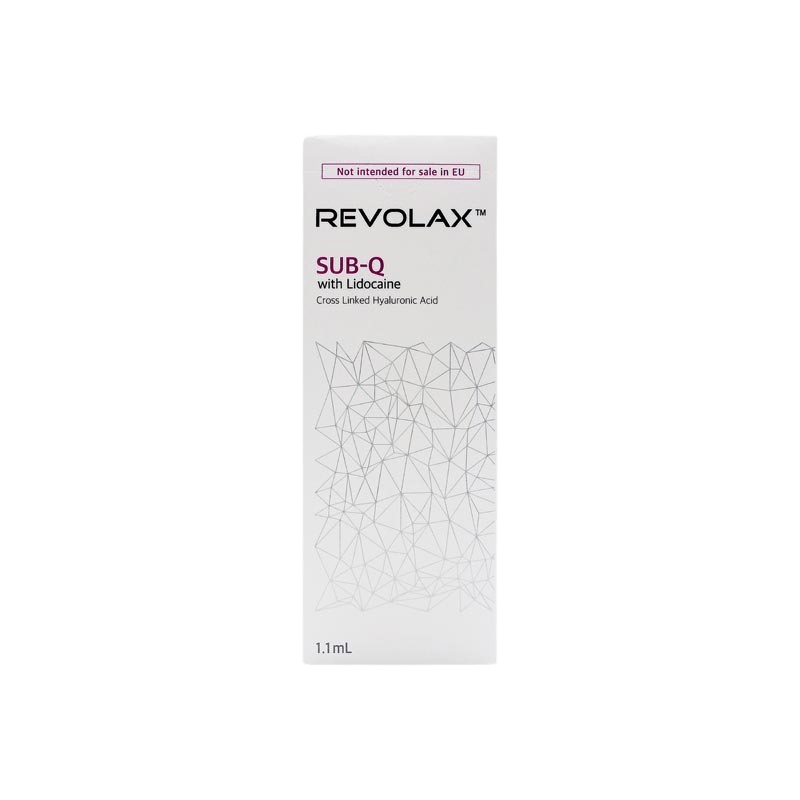
Revolax™ SubQ is a sterile injectable hyaluronic acid dermal filler supplied for professional aesthetic use in licensed clinics and healthcare practices. Clinics can order Revolax SubQ for deep contouring workflows where a firm, cohesive gel and single-syringe stock format support treatment-room planning. Its high-viscosity profile makes it suitable for trained injectors who need structural support, controlled molding, and consistent handling in advanced facial contour procedures.
This product is intended for qualified professional administration only. It should be selected within a clinic protocol that accounts for anatomy, injection plane, patient assessment, contraindications, informed consent, and post-treatment monitoring. Med Wholesale Supplies supports B2B purchasing for licensed clinics with brand-name products sourced through vetted distributors and verified supply channels.
Clinic Price, Pack Format, and Ordering Details
Revolax SubQ price access is available after account sign-in for licensed clinic buyers. Procurement teams can use the signed-in catalog view to align current clinic cost, quantity planning, and reorder timing with scheduled treatment demand. If your practice manages multiple injectors or treatment rooms, single-unit ordering can help allocate inventory by provider, appointment type, or internal formulary code.
Each unit contains 1 x 1 mL pre-filled syringe. The syringe format supports unit-of-use tracking and helps reduce ambiguity when staff prepare trays for professional aesthetic procedures. Before scheduling use, verify the outer carton, syringe label, lot details, and expiry date against your clinic’s receiving and treatment-room documentation process.
New accounts complete professional account verification before purchasing. After sign-in, your team can request current pricing, submit product quantities, and coordinate standard documentation for purchasing records. Orders may use temperature-controlled handling when required and tracked US delivery.
What Revolax SubQ Is Used For in Professional Practice
Revolax SubQ dermal filler is used by trained injectors for deep volumizing, contour definition, and structural augmentation where a thicker hyaluronic acid gel is appropriate. In practice, clinics may consider it for facial harmonization plans that require projection, shape retention, and firm tissue support. Product selection should always follow the injector’s assessment of anatomy, treatment goals, tissue quality, prior procedures, and safety risk.
The gel has the highest viscosity within the Revolax line referenced in the current product information. Higher viscosity can support firmer projection and more defined molding when placed by qualified professionals in suitable planes. That makes the product more relevant for robust contour work than for superficial correction or fine-line refinement.
Clinics often build dermal filler protocols around different rheology profiles. A thicker product may be selected for deep contour support, while softer gels may be used for more delicate transitions. For a wider brand view, browse the Revolax brand assortment. For additional background on the line, see the clinic-focused article on Revolax fillers.
Handling Characteristics and Treatment-Room Fit
Revolax SubQ hyaluronic acid filler is positioned for clinic workflows that need a cohesive, moldable gel. Cohesion refers to the gel’s tendency to stay integrated rather than dispersing easily. In practical terms, that can assist trained injectors when they are building shape, maintaining contour boundaries, and managing transitions between treated and untreated regions.
Consistent extrusion is important during injectable aesthetic procedures because it supports controlled placement and reduces interruptions. A pre-filled syringe also simplifies tray preparation and helps staff identify the correct unit before use. Clinics should follow their own aseptic handling standards, manufacturer instructions, and professional training requirements for preparation, administration, and disposal.
Quick tip: Assign syringe units to a documented treatment plan only after label, lot, and expiry details have been checked by the responsible clinical team.
Key Features for Clinic Purchasing
- High-viscosity HA gel: supports stable projection in appropriate deep contour workflows.
- Moldable consistency: helps trained professionals sculpt defined contours.
- Purified non-animal hyaluronic acid: aligns with the supplied product composition information.
- Sterile pre-filled syringe: supplied as a single-use unit for professional administration.
- 1 mL pack format: supports unit-level receiving, storage, allocation, and documentation.
- Thickest profile in the line: useful when a firmer structural filler is preferred.
- Professional-use positioning: intended for trained injectors in licensed clinical settings.
- Inventory clarity: single-syringe purchasing helps teams forecast demand by procedure type.
Composition and Mechanism
This preparation contains high-purity, non-animal hyaluronic acid. Hyaluronic acid is a naturally occurring polysaccharide that binds water and contributes to tissue hydration and volume. In dermal fillers, cross-linked HA gels are used by qualified injectors to provide temporary volume, contour support, or wrinkle correction depending on the product’s rheology and placement technique.
The current product information does not list additional excipients in this description. Always use the product packaging, manufacturer literature, and clinic protocol as the controlling references for full composition, lot-specific labeling, handling requirements, and professional administration instructions.
Safety, Contraindications, and Monitoring
Dermal fillers require careful patient assessment, sterile technique, and injector training. Adverse reactions reported for this product category and the supplied product information may include pain or itching at the injection site, swelling, sensitivity, tenderness, and nodules. Clinics should document baseline assessment, consent, product details, injection approach, and follow-up instructions according to internal policy.
Contraindications: Do not use this product in patients prone to hypertrophic scars. Do not combine treatment with laser therapy, chemical peeling, or skin abrasion. Do not use in areas with inflammatory or infectious skin problems. The responsible clinician should also consider patient history, medication use, allergies, prior filler treatment, and any condition that may raise procedural risk.
Important post-procedure monitoring includes assessment for unexpected pain, blanching, discoloration, visual symptoms, increasing swelling, infection signs, nodules, or other concerning changes. Clinics should have a protocol for escalation and patient communication after injectable treatments. For general regulatory context on dermal fillers, consult authoritative professional sources listed below.
Packaging, Storage, and Inventory Documentation
Each unit includes 1 x 1 mL pre-filled syringe. The unit-of-use format supports receiving checks, treatment-room allocation, and stock reconciliation. Staff should inspect packaging integrity before use and avoid using any unit with compromised sterile packaging, unclear labeling, or concerns raised during receiving.
Inventory records should capture product name, lot number, expiry date, supplier documentation, storage location, and assigned clinical use when applicable. Clinics may also maintain standardized photography, consent forms, and treatment maps to support continuity across visits. These operational details are especially useful when a practice uses multiple dermal fillers with different textures and intended placement depths.
For clinics refining procurement controls, the article on wholesale filler sourcing standards offers relevant considerations for aesthetic practices. Use it alongside your clinic’s own purchasing, receiving, and quality assurance procedures.
How It Compares Within the Revolax Range
Revolax SubQ is generally chosen when the treatment design calls for the firmest gel profile within the Revolax range. A clinic comparing Revolax SubQ vs Deep should focus on gel firmness, intended placement depth, contour objective, and transition planning rather than choosing by brand name alone. The correct product depends on injector judgment, patient anatomy, and the role each filler plays in the overall treatment plan.
Revolax Deep with Lidocaine may be considered when a different profile within the same brand family fits the protocol. Revolax Fine with Lidocaine may be relevant for clinics evaluating lighter textures in the line. Product comparisons should include labeling, clinical training, treatment area, injection depth, patient-specific risk, and expected handling characteristics.
Practices sometimes ask whether Revolax is better than another filler brand. A responsible comparison should be product-specific and protocol-specific. Dermal fillers vary by HA concentration, cross-linking, viscosity, elasticity, extrusion force, lidocaine status, needle or cannula approach, and intended tissue plane. No single filler is universally better for every treatment plan.
Professional Applications and Protocol Planning
Clinics may use Revolax SubQ filler for structured contour work when a thick, moldable hyaluronic acid gel suits the professional treatment design. Search demand often mentions cheeks, lips, severe folds, and facial contouring, but the product should not be assigned to any area without injector assessment and appropriate training. Deep structural work and delicate areas require different judgment, technique, and risk controls.
Protocol planning should account for consultation findings, prior aesthetic procedures, contraindications, consent, sterile preparation, injection method, and follow-up. Standardized photography can help teams document baseline anatomy and post-treatment changes. Product logs also support traceability if the patient returns for maintenance, adjustment, or evaluation of a delayed reaction.
Why it matters: A clear protocol helps separate product selection from technique decisions and keeps documentation consistent across providers.
Ordering Workflow for Licensed Clinics
Licensed clinics, med spas, and healthcare professionals can order Revolax SubQ through a verified professional account. After sign-in, purchasing staff can view current clinic pricing, select quantities, and align the order with scheduled procedures or inventory par levels. If your practice uses internal formularies, reference the product name and single-syringe format to support accurate picking and receiving.
For recurring demand, establish reorder points based on appointment volume, injector preference, and expiry management. Avoid overstocking products that may expire before use, and separate received inventory from treatment-room stock until documentation is complete. For brand-level planning, the Revolax brand category can help buyers evaluate adjacent products without mixing them into the same clinical role.
Authoritative Sources
Next steps: Sign in to confirm professional account access, view current clinic pricing, and add Revolax SubQ to your clinic purchasing cycle.
This content is for informational purposes only and is not a substitute for professional medical advice.
Frequently Asked Questions
What is Revolax SubQ used for in clinics?
Revolax SubQ is used by trained injectors for deep contouring, structural augmentation, and volumizing workflows where a firm hyaluronic acid gel is appropriate. Use should follow professional assessment, product labeling, clinic protocol, and injector training.
How is Revolax SubQ supplied?
The supplied pack information states 1 x 1 mL pre-filled syringe. Clinics should verify the carton, syringe label, lot number, and expiry date during receiving and before treatment-room use.
Is Revolax SubQ the same as Revolax Deep?
No. They are products within the Revolax range with different handling profiles and intended workflow roles. Revolax SubQ is described as the highest-viscosity option in the line, while Revolax Deep may fit different mid-to-deep applications depending on protocol and injector judgment.
What adverse reactions should clinics monitor after use?
Reported reactions may include injection-site pain or itching, swelling, sensitivity, tenderness, and nodules. Clinics should also monitor for unexpected or worsening symptoms and follow their escalation procedures for concerning post-procedure changes.
Who can order Revolax SubQ from Med Wholesale Supplies?
Med Wholesale Supplies serves licensed clinics and healthcare professionals. Professional account verification is required before clinic buyers can view current pricing and place orders.
Specifications
- Main Ingredient: Cross-Linked Hyaluronic Acid 20Mg / Ml
- Manufacturer: Across Co Ltd.
- Drug Class: Medical Device
- Generic Name: Cross-Linked Hyaluronic Acid
- Package Contents: 1.1 mL x 1 Pre-Filled Syringes
- Storage Requirements: Room Temperature (2℃~25℃)
- Main Usage:
About the Brand
Revolax
Revolax stands as a well-reputed and widely preferred medical brand, supplying top-tier dermal fillers. Renowned for its commendable track record in spurring exemplary results, Revolax is a preferred choice among healthcare providers and owners of aesthetic clinics. Revolax presents an array of products tailored to mitigate diverse skin issues. Medical professionals wishing to purchase Revolax products can effortlessly navigate and place orders through our dedicated website, medwholesalesupplies.com. As a respected distributor in the medical wholesale realm, we provide an expansive collection of Revolax fillers at affordable rates. Our user-friendly digital platform ensures a fluid shopping journey, enabling medical professionals to promptly identify and order the products they require, delivered directly to their premises. By choosing to purchase Revolax from medwholesalesupplies.com, healthcare providers can conserve their energy and time while upholding superior quality standards. We promise that all our merchandise is procured directly from licensed distributors, which ensures you get authentic and dependable products. With our expedited and safe shipping methods, healthcare providers can be confident about receiving original Revolax products in an efficient manner, serving them to offer optimum patient care.
Browse Revolax Products
Here to help
Questions about ordering, delivery or products? You can email our team here or call now at 1-800-630-9757 and be connected with your dedicated Account Manager
Related Products
JALUPRO® PLUS 4ML
Skin Rejuvenation Treatment
$86.00 - $89.00
You save (%)
You save (%)
$339.00
You save (%)
You save (%)
Select options
This product has multiple variants. The options may be chosen on the product page
Juvéderm® SKINVIVE
Dermal Filler
$339.00 - $359.00
You save (%)
You save (%)
$86.00 - $119.00
You save (%)
You save (%)
Related Articles
Dermal Filler Types: Materials, Uses, and Clinic Fit
Dermal filler types are usually grouped by their base material, tissue behavior, and expected role…
What Is Dysport? Clinical Uses, Safety, and Workflow
For clinic teams asking what is Dysport, the short answer is simple: Dysport is a…
Biostimulators in Aesthetic Care: Selection and Safety
Biostimulators are injectable aesthetic products used to encourage a controlled tissue response, often involving new…
Do You Ovulate on an IUD? Clinic Counseling Points
Clinicians hear the shorthand question do you ovulate on iud, but the practical answer depends…
Vascular Occlusion: Early Signs, Risks, and Clinic Response
A vascular occlusion is a partial or complete blockage of blood flow in a vessel.…
Wrinkles Around the Mouth: Causes and Treatment Options
Wrinkles around the mouth can be softened, not always permanently erased, by matching the line…
Are Knee Gel Injections Painful? Counseling and Safety
Most patients do not describe knee gel injections as severely painful. Clinic teams should set…
Hooded Eyes From Botox: Ptosis Risk and Clinic Response
Hooded eyes from Botox usually reflect temporary upper-face muscle imbalance, not a single diagnosis. The…