
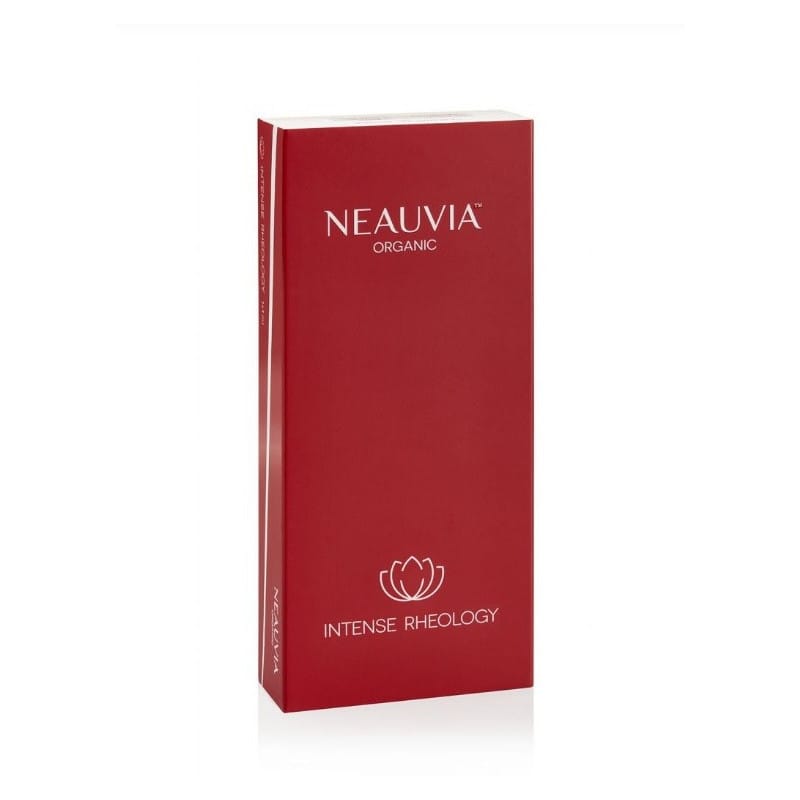
Neauvia™ Organic Intense Rheology
Order Neauvia™ Organic Intense Rheology for Clinics
Dermal Filler
$79.00
You save
Description
Neauvia™ Organic Intense Rheology is a cross-linked hyaluronic acid dermal filler formulated for superficial facial lines and delicate contour refinement. Licensed clinics, med spas, and healthcare professionals can order it for professional intradermal injection workflows, with a 22 mg/mL HA concentration and amino acid enrichment noted in the supplied product information. Its lightweight rheology supports precise, low-volume placement in thin or expressive facial areas where subtle correction matters more than projection.
This preparation is intended for trained injectors using aseptic technique and clinic-specific treatment protocols. Practices typically evaluate it for fine rhytids, superficial perioral lines, crow’s feet, and early under-eye textural concerns when the patient assessment supports HA filler use. Med Wholesale Supplies supports B2B ordering for licensed healthcare businesses through documented product sourcing, lot traceability, and US distribution.
Clinic Pricing, Strength, and Ordering Details
Qualified professional buyers can view the current Neauvia Intense Rheology price after account approval. Pricing may vary by purchasing volume, product allocation, and clinic procurement terms, so approved accounts should use the ordering dashboard for current cost information before scheduling replenishment. The supplied strength for this formulation is 22 mg/mL cross-linked hyaluronic acid, which helps staff verify the product during intake and match it to the planned treatment-room protocol.
Because prescription status is not specified for this product record, clinics should follow their internal medical-director requirements, state rules, and professional-use policies for injectable aesthetic products. During onboarding, your team may need to provide clinic and professional credentials before purchasing. Once approved, authorized staff can manage reorders, documentation, and product intake records for inventory control.
For broader planning across filler categories, the article on types of dermal fillers for facial volume and rejuvenation can help staff frame HA fillers against other material classes. It is useful for internal education, but individual product choice should remain tied to the injector’s assessment, anatomy, and technique.
What the Filler Is and How It Works
Neauvia® Organic Intense Rheology is a cross-linked HA injectable designed for precise correction in superficial dermal tissue. Rheology describes how a gel flows and responds to force; in a filler, that handling profile affects extrusion, spread, and shape control. This product’s lightweight consistency supports controlled micro-deposits and smooth transitions in areas where overcorrection can be noticeable.
The formulation uses hyaluronic acid produced by Bacillus subtilis fermentation and includes glycine and L-proline. These amino acids are naturally present in skin structure, and their inclusion aligns with the matrix-friendly positioning described for the product family. The gel is not positioned as a heavy lifting filler; its practical role is conservative refinement, soft flow, and fine-line detailing.
When placed correctly by a trained professional, hyaluronic acid can support hydration in the treated tissue while the cross-linked matrix provides structure. For a deeper discussion of HA and non-HA material differences, see hyaluronic acid versus non-hyaluronic acid fillers. That comparison can help clinics explain why product class and tissue depth matter during aesthetic planning.
Professional Applications in Aesthetic Workflows
Clinicians may select Neauvia Organic Intense Rheology filler for thin-skin regions and early superficial wrinkles. Common professional-use contexts include crow’s feet, superficial perioral lines, and early under-eye fine lines when the anatomy, medical history, and treatment goal support filler placement. The soft gel profile helps preserve natural contour in dynamic zones where expression and surface texture must be balanced.
This product can complement broader treatment plans that include neuromodulators, skin quality procedures, or other HA fillers, but sequencing should be directed by the treating clinician. The injector should consider tissue thickness, vascular anatomy, prior filler history, and the degree of correction required. Conservative placement is especially important around the eyes and mouth, where swelling, visibility, or irregularity can be more apparent.
For clinics building Neauvia treatment menus, Neauvia filler treatment planning offers context on product-family positioning. Practices should still choose the exact filler based on labeled use, training, and patient-specific anatomy rather than relying on a brand family alone.
Key Features for Inventory and Treatment Rooms
- Lightweight HA gel profile suitable for superficial correction and delicate refinement.
- Cross-linked hyaluronic acid concentration of 22 mg/mL.
- HA source described as Bacillus subtilis derived.
- Contains glycine and L-proline.
- Soft extrusion profile that can support controlled, low-volume delivery.
- Designed for professional intradermal injection by trained practitioners.
- Manufacturer-sealed packaging with lot and expiry information for traceability.
- Clinic-facing SKU reference: 89453.
- Useful for practices that need a low-projection filler for fine-line workflows.
Quick tip: Record lot number, expiration date, intake date, and assigned treatment room before moving product into active inventory.
Composition and Ingredient Profile
The product information identifies Neauvia Organic Intense Rheology as a cross-linked hyaluronic acid filler at 22 mg/mL. Cross-linking helps HA persist as a structured gel rather than behaving like unmodified HA solution. The formulation is supplemented with glycine and L-proline, two amino acids associated with skin matrix structure.
| Attribute | Clinic-relevant detail |
|---|---|
| Product class | Cross-linked hyaluronic acid dermal filler |
| HA concentration | 22 mg/mL |
| Added components | Glycine and L-proline |
| HA origin | Bacillus subtilis derived hyaluronic acid |
| Typical workflow fit | Superficial correction and subtle refinement |
The ingredient profile should be reviewed alongside the manufacturer’s current instructions and any clinic policies for injectable products. Staff should not substitute technique guidance from general educational content for hands-on injector training, anatomical knowledge, and product-specific instructions.
Handling, Documentation, and US Logistics
Neauvia Organic Intense Rheology should remain in its manufacturer-sealed packaging until clinical use. Intake staff should inspect the outer carton, confirm the product name and strength, and document the lot and expiration date. Clear traceability supports recall readiness, reordering, and patient chart documentation when the product is used during a procedure.
Injectable fillers require strict aseptic handling and single-patient procedural discipline according to clinic protocol. Treatment teams should confirm the planned area, product selection, consent documentation, and emergency supplies before injection. Temperature-controlled handling when required and tracked US delivery can support predictable receiving workflows for clinics coordinating procedure blocks.
For clinics reviewing post-procedure evaluation standards, dermal filler result assessment provides helpful documentation context. Photographs, standardized lighting, and consistent timing help practices evaluate outcomes without overstating immediate swelling-related changes.
Safety, Risks, and Professional Precautions
Dermal fillers can cause expected local reactions such as tenderness, swelling, bruising, redness, itching, firmness, or temporary unevenness. More serious complications can occur, including infection, nodules, hypersensitivity reactions, vascular compromise, skin necrosis, visual symptoms, or tissue injury if material enters or compresses a vessel. Clinics should use appropriate patient screening, anatomical training, sterile technique, and complication-management protocols.
Before treatment, clinicians should evaluate contraindications and cautions such as active skin infection at the planned site, known hypersensitivity to relevant components, recent procedures in the same area, bleeding risk, anticoagulant use, immune considerations, pregnancy or breastfeeding policies, and prior filler history. The under-eye and perioral regions require careful assessment because thin tissue and complex vascular anatomy can increase the importance of technique and conservative volume selection.
Staff should know when to escalate concerns after injection. Severe or increasing pain, blanching, mottled discoloration, vision changes, neurological symptoms, fever, spreading redness, or rapidly worsening swelling requires urgent clinical evaluation. The FDA’s dermal filler safety information emphasizes that these products should be used by trained healthcare professionals and that patients should understand potential risks before treatment.
How It Compares Within the Neauvia Range
Neauvia Organic Intense Rheology is best viewed as a delicate-correction filler rather than a broad volumizing product. If a clinic needs a different balance of lift, spread, or projection, nearby Neauvia formulations may be more appropriate. Product selection should account for treatment depth, tissue support, anatomical zone, and injector preference.
For deeper or more structural needs, Neauvia Organic Intense may be evaluated as a related option within the same product family. For a different lift profile, Neauvia Organic Intense LV may fit procedures requiring altered mechanical behavior. Clinics planning lip-focused services can also review Neauvia Organic Intense Lips when the treatment goal is specific to lip contour or hydration.
Rheology should not be simplified into a single “stronger” or “softer” ranking. A product that performs well for superficial lines may be inappropriate for deep structural support, while a firmer filler may be too visible in thin tissue. Staff training should emphasize matching the gel to the anatomical plane and endpoint.
Comparable Products and Substitution Planning
Substitution planning matters when clinics operate multiple injectors, schedule procedure blocks, or maintain limited on-hand inventory. If Neauvia Intense Rheology cost, allocation, or timing affects a purchasing plan, select a substitute only after reviewing the desired tissue plane, correction strength, and clinician familiarity. A nearby formulation is not automatically interchangeable in every facial zone.
Clinics that want a different flow or integration profile may review Neauvia Organic Intense Flux as part of product-family planning. For male facial contour protocols, Neauvia Organic Intense Man may be considered when the treatment plan calls for a different product position. The article on advancements in dermal fillers can also help teams discuss how filler technology, handling, and procedural planning continue to evolve.
When substituting, document the reason for the change and verify the injector’s comfort with the new gel. Update treatment templates, consent discussions, and aftercare instructions if the formulation or intended treatment depth changes.
Clinic Ordering and Replenishment Workflow
Licensed clinics and healthcare professionals can order Neauvia Organic Intense Rheology online after account approval. Your purchasing team should keep credential records current, assign authorized staff, and coordinate replenishment with scheduled aesthetic consultations. This reduces last-minute product changes and helps protect treatment consistency across providers.
During receiving, confirm the product name, carton condition, lot number, expiration date, and quantity against the purchase record. Store the item according to the manufacturer’s instructions and internal inventory policy. Assigning a single staff role for intake documentation can reduce errors when multiple injectables arrive during the same week.
For multi-location practices, standardized naming in inventory software helps avoid confusion between Intense Rheology and other Neauvia fillers. Use the full product name, strength, lot, and expiry date in records rather than relying on abbreviated notes. This supports traceability when reviewing patient charts or planning a product recall response.
Authoritative Sources
- FDA: Dermal Fillers and Soft Tissue Fillers
- Manufacturer: Neauvia Official Site
- American Society of Plastic Surgeons: Dermal Fillers Overview
Ready to replenish this filler for your aesthetic workflow? Sign in with an approved clinic account to view current professional pricing, confirm product details, and coordinate tracked US delivery for your practice.
This content is for informational purposes only and is not a substitute for professional medical advice.
Frequently Asked Questions
Who can order Neauvia™ Organic Intense Rheology?
This product is intended for licensed clinics, med spas, and healthcare professionals using dermal fillers in professional treatment settings. Account approval and clinic documentation may be required before purchasing.
What is Neauvia Organic Intense Rheology used for in clinics?
Clinicians may use it for superficial facial lines and delicate refinements, including areas such as crow’s feet, superficial perioral lines, and early under-eye fine lines when the patient assessment supports HA filler use.
What is the HA concentration of this filler?
The supplied product information lists cross-linked hyaluronic acid at 22 mg/mL, with glycine and L-proline included in the formulation.
How should clinics document this product on intake?
Receiving staff should record the full product name, lot number, expiration date, intake date, and quantity. They should also inspect manufacturer-sealed packaging and follow internal storage procedures.
Is Intense Rheology the same as other Neauvia fillers?
No. It belongs to the Neauvia HA filler range, but each formulation has a distinct handling profile and intended workflow fit. Selection should reflect tissue depth, correction goal, and injector training.
Specifications
- Main Ingredient: Hyaluronic Acid
- Manufacturer: Matex Lab
- Drug Class: Dermal Filler
- Generic Name: Hyaluronic Acid
- Package Contents: 1 x 1mL Pre-Filled Syringe
- Storage Requirements: Room Temperature (2℃~25℃)
- Main Usage: Volume Filler
Here to help
Questions about ordering, delivery or products? You can email our team here or call now at 1-800-630-9757 and be connected with your dedicated Account Manager
Related Products
Evenity® (English Alternative)
Injectable Medication
$1,229.00 - $1,299.00
You save
You save
Intraline® For Men
Dermal Filler
$59.00 - $79.00
You save
You save
RejuvaNAD+ Pro
Injectable Medication
$237.00 - $249.00
You save
You save
Teosyal® RHA 4
Aesthetic Surgery Product
$259.00 - $279.00
You save
You save
Related Articles
Prednisone in Clinical Care: Uses, Risks, and Monitoring
Prednisone is a prescription systemic corticosteroid used to reduce inflammation or suppress immune activity in…
Lip Fillers Swelling Stages: Timeline, Safety, and Follow-Up
Lip fillers swelling stages usually follow a short inflammatory course: swelling appears soon after injection,…
Hypopigmentation of the Skin: Assessment and Care
Hypopigmentation of the skin means one or more areas look lighter than the surrounding skin.…
Radiesse vs Sculptra: Selection Factors for Clinics
Radiesse vs Sculptra is best understood as a comparison between two collagen-stimulating injectables with different…
Hyaluronic Acid Under-Eye Filler: Safety and Workflow
Hyaluronic acid under-eye filler is an injectable soft-tissue filler used by trained aesthetic clinicians to…
Dermal Filler Types: Materials, Uses, and Clinic Fit
Dermal filler types are usually grouped by their base material, tissue behavior, and expected role…
What Is Dysport? Clinical Uses, Safety, and Workflow
For clinic teams asking what is Dysport, the short answer is simple: Dysport is a…
Biostimulators in Aesthetic Care: Selection and Safety
Biostimulators are injectable aesthetic products used to encourage a controlled tissue response, often involving new…