

- You must be logged in to add items to the cart.
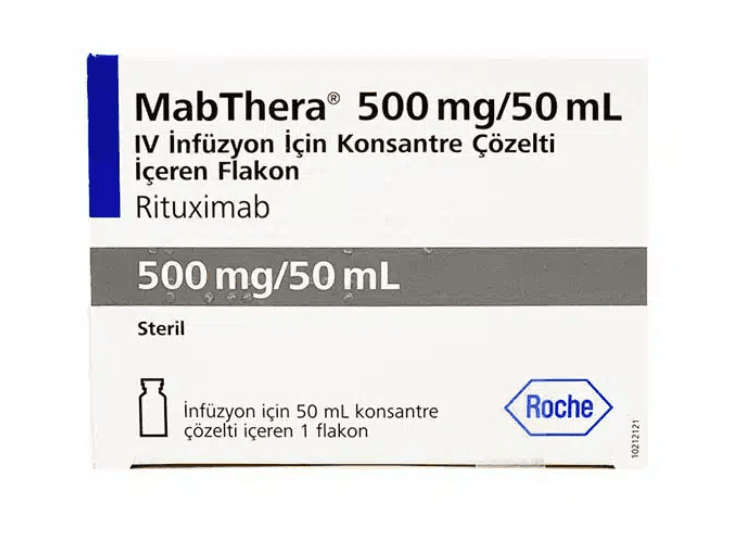
Mabthera®(Non-English)
Order Mabthera 500mg for Clinics
Prescription Medication
$2,199.00
You save (%)
Description
MabThera®(Non-English) is a rituximab monoclonal antibody concentrate prepared for intravenous infusion in specialist clinical settings. Licensed clinics and healthcare professionals can order Mabthera 500mg online for B-cell-directed infusion protocols, with practical pack identification through the carton, vial label, lot number, and expiry date. The Non-English designation refers to packaging language, so pharmacy teams should align the received pack with formulary records, barcode workflows, and local documentation requirements.
MabThera is used in professional oncology, hematology, and rheumatology services that already manage infusion scheduling, aseptic preparation, observation, and post-infusion documentation. It is not a self-administered medicine. Administration belongs in trained infusion environments that can manage pre-infusion checks, IV access, monitoring, and adverse reaction response procedures.
Mabthera 500mg Price and Clinic Ordering
Clinics can view the current Mabthera 500mg price after account approval and select the vial presentation that matches the internal purchase request. Pricing may depend on institutional terms, order frequency, and volume planning, so pharmacy buyers should align demand with expected treatment cycles and chair capacity. Unit-level information should be reconciled against the product name, strength, lot, and expiry before stock is released for clinical use.
For procurement teams, the key ordering decision is not only cost per vial. MabThera concentrate for infusion affects pharmacy preparation time, cold-chain receiving, medication-use documentation, and scheduling across oncology day units or designated infusion suites. Facilities that centralize biologic purchasing can use the broader Pharmaceuticals category to coordinate inventory planning for other regulated clinic medicines.
Quick tip: Match each purchase request to the formulary name, active ingredient, strength, and packaging language before routing the order for approval.
What MabThera Is and How Rituximab Works
MabThera contains rituximab, a chimeric monoclonal antibody that targets CD20, a protein found on many B lymphocytes. Binding to CD20 helps deplete B cells through immune-mediated mechanisms. In clinic workflows, this pharmacology supports protocols in hematologic oncology and immune-mediated disease programs where B-cell activity is clinically relevant.
Rituximab is the active ingredient in MabThera. In some markets, rituximab is also associated with other brand names, including Rituxan. Brand naming, approved indications, label language, and biosimilar availability can differ by country, so professional teams should use the manufacturer leaflet and local formulary monograph when mapping MabThera to an EHR medication record.
The medicine is supplied as a concentrate for intravenous infusion and requires preparation under controlled pharmacy procedures. It should be handled by trained staff using the facility’s aseptic technique, medication verification, and infusion-monitoring standards. For Roche-specific product browsing within the store, see MabThera Roche.
Professional Use Context
MabThera is used in specialist protocols for certain B-cell malignancies and immune-mediated conditions. Authoritative product information describes use across settings such as non-Hodgkin lymphoma, chronic lymphocytic leukemia, and rheumatoid arthritis, with indication details depending on the country-specific label. These uses require clinician-directed selection, patient assessment, and protocol-specific administration rather than routine retail medication handling.
Infusion teams typically coordinate premedication procedures, line access, vital-sign monitoring, observation periods, and documentation before each administration. Pharmacy teams prepare the infusion according to internal protocols and the manufacturer’s instructions. Nursing and medical staff should be prepared for infusion-related reactions, particularly during initial exposure or when a patient has risk factors requiring closer observation.
Rheumatology services that operate infusion programs may also manage other biologic therapies. For adjacent professional-use inventory planning, the Rheumatology category includes clinic-focused products used across inflammatory and musculoskeletal care pathways.
Key Features for Inventory and Verification
- Active ingredient: rituximab, an anti-CD20 monoclonal antibody.
- Clinical format: concentrate prepared for intravenous infusion by trained personnel.
- Strength focus: Mabthera 500mg vial for clinic procurement and inventory planning.
- Packaging note: Non-English pack language may differ from standard US-facing materials.
- Traceability: carton and vial labels include lot and expiry information.
- Workflow fit: supports infusion-suite, hospital, hematology, oncology, and rheumatology protocols.
- Handling need: pharmacy should follow manufacturer storage and preparation instructions.
- Administration setting: professional infusion monitoring and reaction-management capability are required.
Non-English packaging does not remove the need for rigorous internal checks. Pharmacy should confirm the active ingredient, strength, route, expiry date, and product identity before placement in automated inventory systems. If label language creates uncertainty, quarantine the stock until the responsible pharmacist resolves documentation and equivalence questions.
Packaging, Storage, and Handling
MabThera 500mg Non-English units include manufacturer labeling and identification details that support receiving, stock rotation, and bedside verification. Because carton language may vary by source market, facilities should preserve the outer carton and any leaflet for internal review. Barcode mapping should be updated only after pharmacy confirms that the received unit matches the formulary entry and medication-use policy.
Follow the manufacturer’s storage conditions on the carton and leaflet. Monoclonal antibodies generally require careful temperature management and protection from handling errors, so receiving teams should inspect shipment documentation, product condition, and expiry before acceptance into inventory. We support temperature-controlled handling when required and tracked US delivery for clinic orders.
Do not freeze, shake, relabel, or transfer biologic stock outside facility procedures unless the manufacturer and institutional policy allow it. Prepared infusions should be compounded, labeled, stored, and administered according to the pharmacy-approved protocol. If a lot-specific question arises, document the issue and hold affected units pending clinical and pharmacy review.
Safety, Warnings, and Monitoring
Rituximab can cause infusion-related reactions. These may include fever, chills, rash, itching, low blood pressure, breathing symptoms, or other acute symptoms during or after infusion. Facilities should follow established pre-infusion assessment and monitoring procedures, and staff should have access to emergency response supplies and escalation pathways.
Serious risks described in rituximab product information include severe infusion reactions, serious infections, hepatitis B reactivation, progressive multifocal leukoencephalopathy, severe skin and mucous membrane reactions, tumor lysis syndrome in susceptible oncology patients, cardiac events, renal toxicity, and bowel obstruction or perforation in certain contexts. Screening, laboratory monitoring, vaccination review, and infection history assessment should follow the treating service’s protocol and the applicable label.
Professional teams should review concomitant therapies, immunosuppressive burden, chemotherapy regimens, and infection risk before each cycle. Live vaccines, active infections, prior hepatitis B exposure, pregnancy considerations, and hypersensitivity history may require additional assessment. Any unexpected reaction, medication error, cold-chain excursion, or product-quality concern should be documented under facility policy and escalated promptly.
Clinic Workflow and Documentation
MabThera fits best in services that coordinate purchasing, pharmacy preparation, prescriber orders, and infusion-chair scheduling in one workflow. Buyers should align order quantities with expected cycle timing, cancellation patterns, and lead times for pharmacy receiving. This reduces urgent reorders and helps maintain predictable stock rotation for high-value biologics.
Medication-use documentation should capture product name, active ingredient, strength, lot number, expiry date, route, preparation details, and administration record. Non-English packaging may require an additional internal note or scanned image in the inventory system so staff can verify the product consistently across sites. Multi-site health systems should standardize naming conventions to avoid duplicate EHR entries for the same rituximab product.
Training should cover the distinction between unopened vials, compounded infusion bags, and patient-specific administration records. Staff should also know how to handle returns to stock, partial workflow interruptions, and cold-storage alarms. These operational controls protect traceability and support consistent infusion-suite practice.
Comparable Biologic Options
Clinics evaluating MabThera often manage other biologic agents across rheumatology, immunology, and specialty infusion programs. These products are not interchangeable without clinical review, but they can affect the same staffing, cold-storage, and scheduling resources. Procurement teams may therefore plan them together while keeping prescriber-specific protocols separate.
For related rheumatology biologic inventory, review Actemra, Orencia Non-English 250mg vial, and Cimzia Non-English pre-filled syringes. These medicines have different active ingredients, indications, routes, and monitoring requirements, so pharmacy and clinical leads should evaluate them under their own labels and protocols.
For broader planning around injectable biologic formats and handling considerations, the article on pre-filled syringes in rheumatoid arthritis therapy may help teams think through workflow differences between vial-based infusion products and ready-to-use injection presentations.
Availability, Substitutions, and Biosimilar Review
Rituximab biosimilars and alternative anti-CD20 agents may be available in some markets, but substitution is not a simple purchasing swap. Changes can affect payer rules, formulary status, prescriber orders, patient consent procedures, infusion protocols, premedication practices, and pharmacovigilance documentation. Pharmacy should apply P and T committee guidance before any product change.
If a requested MabThera 500mg vial cannot be matched to the intended formulary entry, the pharmacy lead should resolve the discrepancy before scheduling use. Acceptable alternatives should be reviewed with the responsible clinical service, especially when patients are mid-course or receiving combination therapy. Product name, active ingredient, strength, route, and manufacturer information should be visible in the final medication record.
Authoritative Sources
- EMA MabThera product information
- Medsafe MabThera data sheet
- Peer-reviewed rituximab review in non-Hodgkin lymphoma
Ready to proceed? Sign in to view current clinic pricing, align the MabThera 500mg vial with your facility’s purchase workflow, and add the product to your next professional supply order.
This content is for informational purposes only and is not a substitute for professional medical advice.
Frequently Asked Questions
Are MabThera and rituximab the same?
MabThera is a brand name for rituximab. Rituximab is the active ingredient, an anti-CD20 monoclonal antibody used in specialist oncology, hematology, and rheumatology protocols. Brand names and label details can vary by market.
What does Non-English packaging mean for clinic ordering?
Non-English packaging means the carton or leaflet language may differ from standard US-facing packs. Pharmacy teams should verify the product name, active ingredient, strength, lot, expiry, and route against local formulary and inventory records before use.
How is MabThera administered in clinical practice?
MabThera is prepared as an intravenous infusion and administered by trained healthcare professionals in an appropriate infusion setting. Staff should follow the manufacturer leaflet and institutional procedures for preparation, monitoring, and reaction management.
What should clinics consider when evaluating Mabthera 500mg vial cost?
Clinics should consider current unit price, expected cycle volume, storage requirements, pharmacy preparation time, expiry dating, and documentation needs. Cost review should stay connected to formulary status and the service line’s infusion schedule.
Can a rituximab biosimilar be substituted for MabThera?
Substitution should follow prescriber direction, formulary policy, and P and T committee guidance. Biosimilars may have different ordering records, payer requirements, pharmacovigilance tracking, and protocol implications, so pharmacy review is required before any switch.
Specifications
- Main Ingredient:
- Manufacturer: roche
- Drug Class:
- Generic Name: rituximab
- Package Contents: 50 mL (10 mg/mL) x 1 Vial
- Storage Requirements: Room Temperature (2℃~25℃)
- Main Usage:
About the Brand
Mabthera/Roche
Mabthera is a proprietary medication formulated and manufactured by Roche, primarily utilized for treating specific types of cancers including non-Hodgkin's lymphoma and chronic lymphocytic leukemia. Mabthera functionally targets and eradicates cancer cells, leading to a slowdown in disease progression and an enhancement in the patient's quality of life. At healthcaresupplyexpress.com, we proudly offer Mabthera as part of our extensive product catalog. Our digital platform allows health professionals and medical facilities to conveniently purchase a range of medications, including Mabthera, at cost-effective prices. Opting to buy Mabthera through our portal guarantees healthcare providers that their patients will receive authentic and superior-grade medication expediently. We recognize the crucial role of trustworthy and efficient supply chains in the healthcare sector, which is why we've collaborated with esteemed suppliers to ensure constant availability of Mabthera. Alongside this, our website is designed for ease of use, enabling healthcare professionals to smoothly navigate and order medications, thus saving precious time and energy. With our dedication to quality products and exemplary service, healthcaresupplyexpress.com is the go-to source for healthcare professionals sourcing Mabthera and other medical essentials.
Browse Mabthera/Roche Products
Here to help
Questions about ordering, delivery or products? You can email our team here or call now at 1-800-630-9757 and be connected with your dedicated Account Manager
Related Products
JALUPRO® PLUS 4ML
Skin Rejuvenation Treatment
$86.00 - $89.00
You save (%)
You save (%)
$339.00
You save (%)
You save (%)
Select options
This product has multiple variants. The options may be chosen on the product page
Juvéderm® SKINVIVE
Dermal Filler
$339.00 - $359.00
You save (%)
You save (%)
$86.00 - $119.00
You save (%)
You save (%)
Related Articles
Prednisone in Clinical Care: Uses, Risks, and Monitoring
Prednisone is a prescription systemic corticosteroid used to reduce inflammation or suppress immune activity in…
Lip Fillers Swelling Stages: Timeline, Safety, and Follow-Up
Lip fillers swelling stages usually follow a short inflammatory course: swelling appears soon after injection,…
Hypopigmentation of the Skin: Assessment and Care
Hypopigmentation of the skin means one or more areas look lighter than the surrounding skin.…
Radiesse vs Sculptra: Selection Factors for Clinics
Radiesse vs Sculptra is best understood as a comparison between two collagen-stimulating injectables with different…
Hyaluronic Acid Under-Eye Filler: Safety and Workflow
Hyaluronic acid under-eye filler is an injectable soft-tissue filler used by trained aesthetic clinicians to…
Dermal Filler Types: Materials, Uses, and Clinic Fit
Dermal filler types are usually grouped by their base material, tissue behavior, and expected role…
What Is Dysport? Clinical Uses, Safety, and Workflow
For clinic teams asking what is Dysport, the short answer is simple: Dysport is a…
Biostimulators in Aesthetic Care: Selection and Safety
Biostimulators are injectable aesthetic products used to encourage a controlled tissue response, often involving new…