

- You must be logged in to add items to the cart.
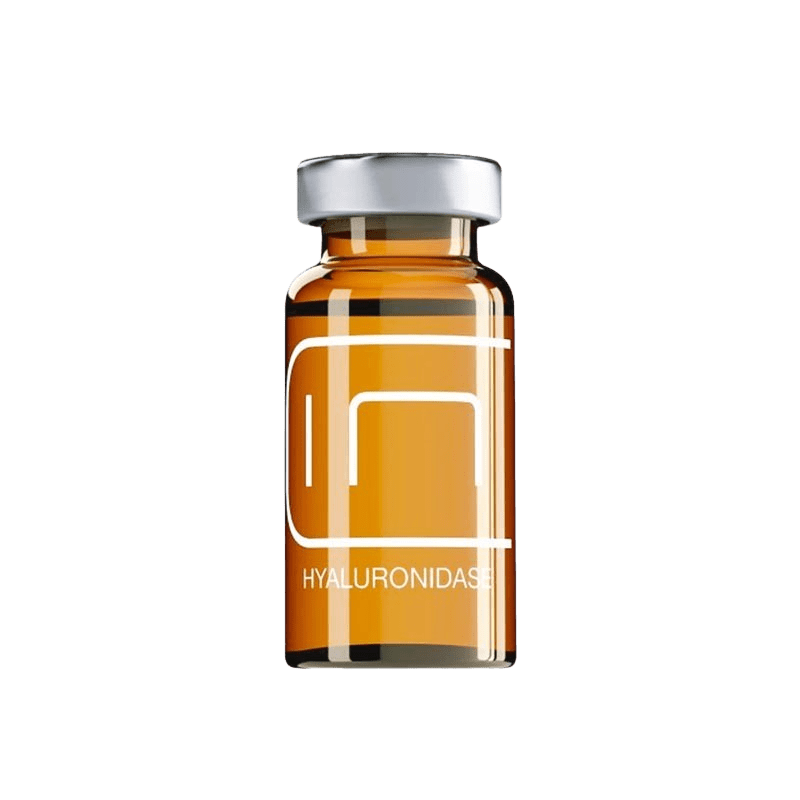
Hyaluronidase 1500 UI
Order Hyaluronidase 1500 UI for Clinics
Ha Disolvant – Fibrotic Cellulite
$99.00
You save (%)
Description
Hyaluronidase 1500 UI is a lyophilized enzyme preparation supplied in sterile single-use vials for professional reconstitution and injection. Licensed clinics, med spas, and healthcare professionals can order Hyaluronidase 1500 IU vials for protocol-driven aesthetic and procedural workflows. Each box contains five vials, with 0.508 mg of lyophilized enzyme per vial, supporting controlled treatment-room handling and inventory planning.
The product is used in licensed clinical settings where controlled enzymatic dispersion is required. It may support hyaluronic-acid filler management, mesotherapy protocols, and infusion-related tissue-permeability workflows when a clinician determines that hyaluronidase is appropriate. Staff should follow facility SOPs for reconstitution, labeling, administration, observation, and documentation.
Clinic Ordering, Price, and Vial Selection
Clinics can order Hyaluronidase 1500 UI through professional purchasing workflows after account verification. Sign in to view current Hyaluronidase 1500 IU price information, available packs, and applicable contract tiers. Because procedure volume can vary by location and provider schedule, facilities often align quantities with correction visits, training days, and upcoming aesthetic-service demand.
This presentation is supplied as Hyaluronidase 1500 IU powder for injection in sterile vials. The lyophilized format helps maintain shelf readiness until reconstitution, which is useful for clinics that need dependable access without preparing solution in advance. Maintain lot and expiration documentation during intake, and rotate stock according to the clinic’s inventory policy.
Med Wholesale Supplies serves licensed clinics and healthcare professionals with medical products sourced through vetted distributors and verified supply channels. For facilities managing broader correction protocols, the dermal filler removal category can help purchasing teams group enzyme products with related aesthetic-correction supplies.
What Hyaluronidase Is and How It Works
Hyaluronidase is an enzyme that hydrolyzes hyaluronic acid, reducing viscosity in the extracellular matrix and increasing tissue permeability. In practical terms, it can act as a spreading enzyme, helping injected fluids disperse through subcutaneous tissue when used according to clinician direction. This mechanism is why hyaluronidase is used in both medical and aesthetic workflows that require controlled dispersion.
In aesthetic practice, the same enzyme activity is relevant to hyaluronic-acid filler management. Hyaluronic acid fillers are built from HA polymers, and hyaluronidase can help break down HA in targeted correction protocols. The decision to use it, the amount selected, and the injection pattern depend on the clinical indication, filler characteristics, anatomic site, treatment urgency, and provider training.
Common questions about “1500 IU powder for injection” usually refer to a vial containing hyaluronidase activity that must be reconstituted before administration. It is not a ready-to-inject cosmetic filler, cream, or home-use product. It belongs in professional SOPs that define who prepares the solution, how it is labeled, how long it may be held after preparation, and how administration is recorded.
Professional Applications in Aesthetic Workflows
Clinics use hyaluronidase when tissue permeability and hyaluronic-acid breakdown need to be controlled by a trained provider. Typical professional-use contexts include filler correction, treatment of unwanted HA filler effects, mesotherapy-related protocols, and support for fluid dispersion when appropriate. The product should be integrated into a defined pathway rather than treated as a general-purpose corrective agent.
For hyaluronic-acid filler correction, clinicians may consider hyaluronidase for overcorrection, asymmetry, nodules, migration, or other HA-related concerns after assessing the patient and the treatment area. It is also part of many emergency preparedness protocols for vascular compromise associated with HA filler injection. The exact approach is determined by clinical judgment, local guidance, and the urgency of the presentation.
Teams building standardized correction workflows may find the aesthetic filler correction discussion useful for staff education and protocol planning. For lip-specific workflows, review hyaluronidase clinical workflow essentials, which focuses on intake, assessment, and treatment-room organization.
Reconstitution, Sterile Handling, and Treatment-Room Use
Hyaluronidase 1500 IU injection vials require reconstitution before use. Per facility protocol, reconstitute with sterile water only and do not co-mix with other products in the same syringe. Prepare the solution under appropriate aseptic technique, label it clearly, and keep administration steps aligned with institutional policy.
Do not use the vial as a multi-patient product. Each vial is intended for single-use sterile handling, which helps reduce contamination risk and simplifies treatment-room accountability. Staff should document the lot number, expiration date, preparation time, provider, and use context according to the clinic’s quality system.
Quick tip: Store hyaluronidase with the clinic’s correction supplies so trained staff can retrieve it quickly during planned or urgent assessments.
Shipping and supply planning should account for product handling requirements, including temperature-controlled handling when required and tracked US delivery. Receiving staff should inspect the package, confirm the presentation, record the lot and expiration, and place the product into approved storage promptly.
Key Features for Licensed Clinics
- 1500 IU lyophilized enzyme format for reconstitution before professional administration.
- Box of five sterile single-use vials for controlled clinic inventory planning.
- Each vial contains 0.508 mg of lyophilized enzyme.
- Designed for sterile preparation with sterile water only under clinic protocol.
- Lot number and expiration date support intake checks and inventory rotation.
- Compatible with aesthetic correction workflows that require hyaluronic-acid breakdown.
- Useful for procedure-room readiness when a hyaluronidase vial kit is maintained.
- Appropriate for licensed clinical environments with trained staff and written SOPs.
Benefits for Staff Workflow and Inventory Control
Standardized vial strength helps clinics keep correction workflows consistent across providers. When staff use the same reconstitution steps, documentation process, and storage location, training becomes easier and cross-coverage improves. This is especially useful for multi-room practices or med spas that schedule both routine aesthetic appointments and urgent reassessments.
The boxed vial format also supports practical stock planning. Facilities can estimate reorder points based on filler volume, correction frequency, provider schedules, and training activity. A designated hyaluronidase kit may include the vials, sterile diluent specified by protocol, appropriate syringes and needles, labels, antiseptic supplies, and a copy of the clinic’s correction pathway.
For clinics evaluating when correction may be appropriate, dermal filler removal options provides broader context. Teams assessing delayed changes after HA filler placement can also review migrated filler recognition and next steps for workflow-focused considerations.
Composition and Ingredients
Each vial contains lyophilized hyaluronidase with supporting excipients. The formulation is intended to dissolve during reconstitution and support controlled administration in professional settings. Use the active ingredient and excipient information during formulary review, allergy screening, and internal documentation.
| Component | Role |
|---|---|
| Hyaluronidase | Active enzyme that hydrolyzes hyaluronic acid |
| Mannitol | Supporting excipient |
| Sodium phosphate | Supporting excipient |
| EDTA | Supporting excipient |
Clinics should evaluate hypersensitivity history before administration. Although adverse events are uncommon, allergic reactions can occur. Any history of significant reaction to hyaluronidase or formulation components should be addressed through the clinic’s medical assessment pathway before use.
Safety, Precautions, and Monitoring
Hyaluronidase should be administered by trained healthcare professionals in settings prepared to assess adverse reactions. Reported reactions may include rash, itching, swelling, periocular swelling, injection-site soreness, bleeding, bruising, or local swelling when used with subcutaneous infusions. Staff should observe patients according to clinic policy and escalate care if signs of systemic allergy occur.
Because hyaluronidase increases tissue permeability, it can alter the local spread of fluids or other injected materials. Do not co-mix it with other products in the same syringe unless a validated protocol specifically supports that practice; the supplied handling direction for this product is sterile water only. Sequence products according to the clinic’s SOP, and document timing when hyaluronidase is used near other injectable treatments.
Questions such as how much hyaluronidase is needed to dissolve 1 mL of filler, what happens after injection, or how deep to inject it require provider-specific clinical assessment. Dose, dilution, plane, and placement depend on the treatment area, filler type, amount of filler, symptom severity, vascular risk, and patient-specific factors. Clinics should rely on training, product labeling, current professional guidance, and emergency protocols rather than fixed public ratios.
Why it matters: A written hyaluronidase protocol helps staff act consistently during both routine correction and time-sensitive filler complications.
Packaging, Supply, and Documentation
Hyaluronidase 1500 UI is supplied as a box of five sterile vials. Each vial contains 0.508 mg of lyophilized enzyme and displays labeling needed for lot tracking and expiration review. This presentation supports procedure-room storage, correction-kit assembly, and formulary oversight by clinical managers.
During receiving, verify the vial count, packaging condition, lot number, and expiration date before adding the product to stock. Maintain documentation according to your facility’s purchasing and clinical-use policies. When product is assigned to a procedure room, staff should ensure that storage conditions, sterile supplies, and reconstitution instructions remain accessible to trained personnel.
Clinics with multiple locations may benefit from a centralized reorder point and a standard intake checklist. Consistent documentation reduces waste, supports traceability, and helps each site maintain readiness for filler-correction pathways. It also makes substitution decisions easier if a preferred enzyme presentation is temporarily replaced by another clinic-approved alternative.
Comparable Products and Formulary Alternatives
Some facilities standardize on one hyaluronidase presentation, while others maintain an approved backup to protect scheduling continuity. When evaluating alternatives, compare vial strength, pack size, language on the packaging, reconstitution workflow, staff familiarity, and documentation requirements. A substitute should only be used after the clinical team confirms protocol compatibility.
- LIPORASE Hyaluronidase 1500U may be considered by clinics that want a comparable enzyme option for aesthetic correction protocols.
- Hynidase 1500IU may be evaluated when a different presentation fits formulary or purchasing needs.
Related products should not be substituted automatically at chairside. Confirm the vial presentation, reconstitution process, labeling, and clinic approval before placing an alternative into use. For practices that combine filler correction with broader injectable planning, category-level review helps keep purchasing, training, and emergency supplies aligned.
Authoritative Sources
The following references support general clinical understanding of hyaluronidase mechanism, injection-route use, and professional safety considerations. They do not replace the product’s packaging, local protocol, or clinician judgment.
- NCBI Bookshelf: Hyaluronidase clinical review
- NIH MedlinePlus: Hyaluronidase Injection
- Mayo Clinic: Hyaluronidase injection description
Ready to proceed? Sign in to confirm clinic account access, view current stock and pricing, and schedule supply for your treatment-room needs.
This content is for informational purposes only and is not a substitute for professional medical advice.
Frequently Asked Questions
What is Hyaluronidase 1500 UI used for in clinics?
Hyaluronidase 1500 UI is a lyophilized enzyme used in licensed clinical settings when controlled hyaluronic-acid breakdown or tissue dispersion is needed. Common aesthetic contexts include HA filler correction, migration assessment, overcorrection management, and protocol-driven emergency preparedness for HA filler complications.
How is Hyaluronidase 1500 IU prepared before injection?
The vial is reconstituted before administration under aseptic technique. For this product, use sterile water only and do not co-mix with other products in the same syringe. Clinics should follow written SOPs for dilution, labeling, timing, administration, and documentation.
How much hyaluronidase is needed to dissolve filler?
There is no universal amount that applies to every filler or treatment area. The clinician determines the amount, dilution, injection plane, and repeat assessment based on filler type, volume, location, clinical urgency, patient factors, and professional guidance.
What adverse reactions should staff monitor after use?
Clinics should monitor for allergic reactions such as rash, itching, swelling, or periocular swelling, as well as injection-site soreness, bleeding, bruising, or local swelling. Staff should escalate care according to clinic policy if systemic symptoms or concerning reactions occur.
What is included in the Hyaluronidase 1500 UI box?
The product is supplied as a box of five sterile single-use vials. Each vial contains 0.508 mg of lyophilized hyaluronidase and should be tracked by lot number and expiration date during receiving and inventory rotation.
Can clinics substitute another hyaluronidase product?
Substitution should be approved by the clinical team before use. Compare vial strength, pack size, labeling, reconstitution process, staff training needs, and protocol compatibility before replacing one hyaluronidase presentation with another.
Specifications
- Main Ingredient: Manitiol, Sodium Phosphate, Edta
- Manufacturer: BCN
- Drug Class:
- Generic Name: Manitiol, Sodium Phosphate, Edta, Sodium Phosphate
- Package Contents: 5 mL x 5 Vials
- Storage Requirements: Room Temperature (2℃~25℃)
- Main Usage:
About the Brand
INSTITUTE BCN
INSTITUTE BCN stands as a respected name in the medical industry, offering a vast assortment of premium medical equipment. Be it bandages, syringes, gauzes, or gloves, BCN's comprehensive selection ensures patient safety and superior care. Apt for healthcare professionals or households requiring medical supplies, INSTITUTE BCN is a trusted brand. BCN's extensive collection can be conveniently accessed and purchased on our online platform, medwholesalesupplies.com. This offers a tailored shopping experience, delivering BCN products directly to your location. Offering not just convenience, our online portal also guarantees the authenticity of BCN products at competitive prices. At medwholesalesupplies.com, we highly value the reliability and quality of medical supplies. This is reflected in our procurement selection, sourcing only from trusted brands such as BCN. By choosing to shop on our website, rest assured you are acquiring superior supplies fit for your needs. We invite you to explore the range of BCN products at medwholesalesupplies.com today.
Browse INSTITUTE BCN Products
Here to help
Questions about ordering, delivery or products? You can email our team here or call now at 1-800-630-9757 and be connected with your dedicated Account Manager
Related Products
JALUPRO® PLUS 4ML
Skin Rejuvenation Treatment
$86.00 - $89.00
You save (%)
You save (%)
$339.00
You save (%)
You save (%)
Select options
This product has multiple variants. The options may be chosen on the product page
Juvéderm® SKINVIVE
Dermal Filler
$339.00 - $359.00
You save (%)
You save (%)
$86.00 - $119.00
You save (%)
You save (%)
Related Articles
Radiesse vs Sculptra: Selection Factors for Clinics
Radiesse vs Sculptra is best understood as a comparison between two collagen-stimulating injectables with different…
Hyaluronic Acid Under-Eye Filler: Safety and Workflow
Hyaluronic acid under-eye filler is an injectable soft-tissue filler used by trained aesthetic clinicians to…
Dermal Filler Types: Materials, Uses, and Clinic Fit
Dermal filler types are usually grouped by their base material, tissue behavior, and expected role…
What Is Dysport? Clinical Uses, Safety, and Workflow
For clinic teams asking what is Dysport, the short answer is simple: Dysport is a…
Biostimulators in Aesthetic Care: Selection and Safety
Biostimulators are injectable aesthetic products used to encourage a controlled tissue response, often involving new…
Do You Ovulate on an IUD? Clinic Counseling Points
Clinicians hear the shorthand question do you ovulate on iud, but the practical answer depends…
Vascular Occlusion: Early Signs, Risks, and Clinic Response
A vascular occlusion is a partial or complete blockage of blood flow in a vessel.…
Wrinkles Around the Mouth: Causes and Treatment Options
Wrinkles around the mouth can be softened, not always permanently erased, by matching the line…