
- You must be logged in to add items to the cart.
$85.00
You save (%)
Description
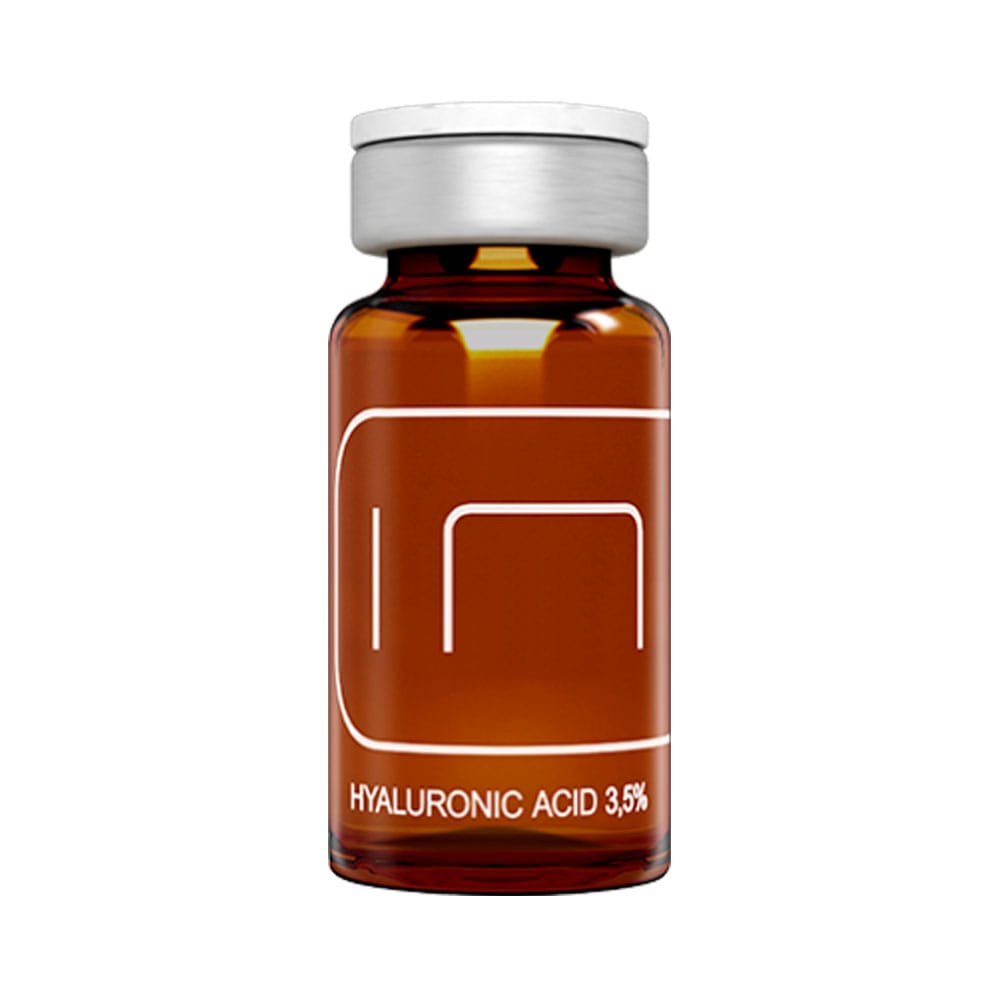
Hyaluronic Acid 3,5% is a sodium hyaluronate topical solution supplied in 5 mL vials for professional aesthetic workflows. Licensed clinics and healthcare professionals can order the box of 5 vials for treatment-room use where a simple, hydration-focused HA medium is preferred. The formula contains sodium hyaluronate in water, supporting predictable handling without added active ingredients.
This clinic format is intended for professional application, including device-assisted hydration protocols and post-procedure skin support as directed by trained staff. It is not a structural dermal filler and should not be used as a volumizing implant. Account users can view current Hyaluronic Acid 3.5% serum price details after professional account verification.
Price, Pack Size, and Clinic Ordering
Hyaluronic Acid 3.5% serum is supplied as 5 mL per vial, with 5 vials per box. The vial format helps clinics allocate product by room, provider, or session and reduces the need to open larger multi-use containers during busy aesthetic schedules. Some packaging may use the notation Hyaluronic Acid 3,5%, which refers to the same stated concentration format.
Current Hyaluronic Acid 3.5% cost appears in your account portal after verification. Contract structures, routine purchasing, and volume planning can be managed through the professional account workflow. If your clinic tracks consumables by protocol, staff can align this box format with device schedules, aftercare steps, and monthly replenishment targets.
Med Wholesale Supplies serves licensed clinics and healthcare professionals with products sourced through vetted distributor channels. Professional-use documentation or account review may apply before ordering, especially when products are intended for clinical treatment environments rather than retail skin care use.
What the 3.5% Sodium Hyaluronate Solution Does
Hyaluronic Acid 3.5% topical solution functions as a concentrated humectant medium. A humectant binds water and helps maintain moisture at the skin surface, which is why sodium hyaluronate is widely used in hydration-focused aesthetic care. In this preparation, the active ingredient is sodium hyaluronate suspended in aqua/water.
The value of this product is its simple composition. Clinics often prefer a clean HA base when layering it into procedures because added botanicals, acids, fragrances, or complex actives may complicate protocol design. A two-component formula also makes staff training easier when multiple providers use the same hydration step across devices or rooms.
Hyaluronic acid is naturally found in connective tissue and extracellular matrices. In topical professional care, sodium hyaluronate supports surface hydration and slip rather than tissue projection. For broader scientific context on the molecule, the NLM PubChem record describes hyaluronan as a polysaccharide associated with connective tissue and biological hydration functions.
Professional Applications and Protocol Fit
Clinics use sodium hyaluronate 3.5% serum as a hydration-forward medium in dermatology, aesthetic medicine, and med spa workflows. It may serve as a glide, conduction, or infusion companion when a protocol calls for a consistent HA solution. Common settings include device-assisted workflows, transdermal protocols, and post-energy hydration routines, when directed by the responsible clinician.
The product can fit alongside clinic-defined mesotherapy supplies and professional skin booster products when the care pathway requires a non-volumizing hydration base. The choice of device, depth, application method, and timing should remain within the clinic’s written protocol and staff training scope.
For practices building a broader HA formulary, background reading on hyaluronic acid in aesthetic medicine can help teams separate topical hydration use from injectable filler use. That distinction matters during consultation, consent documentation, inventory selection, and post-treatment instructions.
Not a Dermal Filler or Volumizing Implant
This product is a topical solution for professional skin workflows, not a crosslinked structural filler. It should not be positioned as a substitute for dermal fillers that are designed for contouring, volume restoration, or tissue projection. Clinics should keep storage locations, training documents, and room setup clearly separated when both HA serums and injectable HA fillers are stocked.
That distinction also helps staff communicate accurately. Hyaluronic Acid 3.5% supports hydration and handling during compatible procedures, while crosslinked fillers have different indications, placement techniques, adverse-event profiles, and professional documentation needs. If a patient needs volume correction, clinicians should evaluate appropriate injectable products through the clinic’s established aesthetic assessment process.
When comparing HA classes, teams may find it useful to review hyaluronic acid and non-hyaluronic acid filler distinctions. The comparison can support staff education, but final product selection should follow clinical judgment, label directions, and applicable professional standards.
Key Features for Treatment Rooms
- Concentration: 3.5% hyaluronic acid format for a robust humectant profile.
- Active ingredient: sodium hyaluronate.
- Excipient: aqua/water.
- Form: serum in vials.
- Pack: 5 mL per vial, box of 5 vials.
- SKU: 89851.
- Protocol role: hydration medium, glide support, or compatible topical step when directed by clinicians.
- Formula profile: no added active ingredients that may complicate common combinations.
- Workflow benefit: small vials support inventory tracking and help limit chairside waste.
Quick tip: Assign vials by protocol or room to make monthly usage easier to reconcile.
Benefits in Daily Clinic Workflow
The vial presentation supports efficient room turnover. Staff can prepare a single unit for the scheduled treatment, document use in the room record, and reduce time spent measuring from bulk containers. The consistent texture also helps providers maintain even spread during device passes, which can support smoother workflow and more predictable product handling.
A minimal sodium hyaluronate base can simplify protocol standardization. Instead of training different rooms around multiple hydrating serums, clinics can use one HA medium across approved internal workflows. This can help with staff onboarding, purchasing controls, and consumable forecasting, especially in practices that run high volumes of energy-based or needling procedures.
For teams comparing HA with other aesthetic building blocks, collagen and hyaluronic acid differences may help frame how hydration support differs from structural or biostimulatory treatment goals. The practical takeaway is to match the product’s role to the endpoint: hydration support, skin quality planning, or volume correction.
Compatibility and Combination Planning
Hyaluronic acid is commonly paired with barrier-supportive and post-procedure products because it has a hydration-focused role. In clinic protocols, pairing decisions should consider the device used, skin condition, treatment intensity, and whether the next step includes occlusion, masking, or a calming topical. Avoid assuming that every retail serum combination translates safely into a professional procedure.
Ceramides, masks, and bland post-procedure products may be considered within clinic aftercare routines when they are appropriate for the patient and procedure. The key is sequencing: a hydrating HA step may be used before or after other products depending on the device manufacturer’s instructions and the clinician’s protocol. Staff should document combinations that are part of standing workflows.
Practices that use broader skin quality programs can browse skin booster categories for adjacent professional options. Category browsing should not replace clinical screening; it is best used to support purchasing discussions after the treatment goal and technique have been defined.
Safety, Sensitivity, and Professional Precautions
For topical or device-assisted use, mild redness, temporary sensitivity, tightness, or erythema may occur depending on the procedure, skin condition, and technique. Clinics should avoid applying professional products to skin that is not suitable for the planned protocol, including areas with active infection, uncontrolled inflammation, or compromised healing unless a clinician has specifically directed the care pathway.
If this serum is used near injectable procedures, keep safety discussions specific to each product category. Adverse events reported with hyaluronic acid fillers can include localized pain, bruising, redness, itching, swelling, nodules, vascular compromise, and other complications that require different training and response protocols. Those risks should not be attributed directly to this topical solution, but they do reinforce why product identification and documentation matter.
Clinicians should assess history of hypersensitivity, recent procedures, active skin disease, and product compatibility before incorporating any topical into a device-assisted treatment. Staff should stop use and follow clinic escalation procedures if unexpected irritation, persistent swelling, worsening redness, or signs of infection occur after a treatment.
Storage, Handling, and Inventory Controls
Store and handle the vials according to the product label and clinic policy. Keep outer cartons and lot information available for traceability, and avoid decanting product into unlabeled containers. Lot tracking is especially useful when multiple rooms use the same HA solution across different protocols.
US distribution and reliable US logistics support predictable procurement planning for clinics that standardize hydration consumables. Shipping details appear during checkout, with temperature-controlled handling when required and tracked US delivery. Receiving staff should inspect packages, record lot details when required by clinic policy, and place units into the appropriate storage area promptly.
Inventory controls should reflect real consumption rather than theoretical treatment volume. A clinic may use one vial for some sessions and less or more in others depending on protocol design, surface area, and device requirements. Tracking actual use by room can improve reordering accuracy and reduce last-minute purchasing.
Comparable HA and Skin Quality Products
Clinics often evaluate Hyaluronic Acid 3.5% alongside other hydration-focused or skin quality products. For a vial-based HA option, RRS HA Long Lasting may be considered when a different HA-based format fits the clinic’s protocol. For broader HA revitalization planning, BCN Revita-HA vials provide another product reference for clinics building mesotherapy-oriented inventories.
Some practices may require a different professional format, such as injectable skin quality products or hydrobooster-style treatments. Viscoderm Hydrobooster belongs in a separate evaluation pathway because its use case, administration approach, and documentation needs differ from a topical HA serum. Product selection should follow the intended treatment goal, staff training, and applicable instructions for use.
For clinics that use the BCN range, the BCN brand category can help purchasing teams review related professional products. Keep comparison decisions focused on formulation, concentration, pack size, clinical role, and handling requirements rather than choosing solely by price.
Composition and Pack Details
| Attribute | Clinic detail |
|---|---|
| Product name | Hyaluronic Acid 3,5% |
| Common notation | Hyaluronic Acid 3.5% |
| Active | Sodium Hyaluronate |
| Excipient | Aqua/Water |
| Form | Serum in vials |
| Pack | 5 mL per vial, box of 5 vials |
| SKU | 89851 |
| Primary role | Professional hydration medium for compatible skin workflows |
The 3.5% concentration is suited to clinics that prefer a high-strength hyaluronic base for procedure-adjacent hydration support. It should be incorporated only into workflows that the clinic has reviewed for technique, device compatibility, patient screening, and staff training.
Authoritative Source
Ready to add this item to your formulary? Sign in to view account pricing, confirm pack details, and place clinic orders through your professional account.
This content is for informational purposes only and is not a substitute for professional medical advice.
Frequently Asked Questions
What is Hyaluronic Acid 3.5% used for in clinics?
Clinics use Hyaluronic Acid 3.5% as a professional hydration medium in compatible aesthetic workflows. It may support glide, conduction, infusion-style steps, or post-procedure hydration routines when directed by trained clinical staff.
Is Hyaluronic Acid 3.5% a dermal filler?
No. This product is a sodium hyaluronate topical solution, not a crosslinked structural filler or volumizing implant. Injectable filler selection, placement, and adverse-event management require a separate clinical pathway.
What is included in each box?
Each box contains 5 vials, with 5 mL per vial. The listed composition is sodium hyaluronate with aqua/water, and the SKU is 89851.
How can clinics view the Hyaluronic Acid 3.5% serum price?
Verified professional account users can view current account pricing in the ordering portal. Pricing may depend on the clinic’s assigned tier or contract structure.
Can this serum be combined with other aesthetic products?
Combination use should follow the clinic’s written protocol, device instructions, and clinician judgment. The simple sodium hyaluronate and water composition may make protocol planning easier, but compatibility should still be assessed for each procedure.
How should clinics handle inventory for these vials?
Store and handle the product according to the label and clinic policy. Track carton, lot, and room-level usage when required so replenishment can be aligned with actual treatment volume.
Specifications
- Main Ingredient: Hyaluronic Acid
- Manufacturer: BCN
- Drug Class: Dermal Filler
- Generic Name: HYALURONIC ACID
- Package Contents: 5 mL x of 5 Vials
- Storage Requirements: Room Temperature (2℃~25℃)
- Main Usage: Anti Ageing
About the Brand
INSTITUTE BCN
INSTITUTE BCN stands as a respected name in the medical industry, offering a vast assortment of premium medical equipment. Be it bandages, syringes, gauzes, or gloves, BCN's comprehensive selection ensures patient safety and superior care. Apt for healthcare professionals or households requiring medical supplies, INSTITUTE BCN is a trusted brand. BCN's extensive collection can be conveniently accessed and purchased on our online platform, medwholesalesupplies.com. This offers a tailored shopping experience, delivering BCN products directly to your location. Offering not just convenience, our online portal also guarantees the authenticity of BCN products at competitive prices. At medwholesalesupplies.com, we highly value the reliability and quality of medical supplies. This is reflected in our procurement selection, sourcing only from trusted brands such as BCN. By choosing to shop on our website, rest assured you are acquiring superior supplies fit for your needs. We invite you to explore the range of BCN products at medwholesalesupplies.com today.
Browse INSTITUTE BCN Products
Here to help
Questions about ordering, delivery or products? You can email our team here or call now at 1-800-630-9757 and be connected with your dedicated Account Manager
Related Products
JALUPRO® PLUS 4ML
Skin Rejuvenation Treatment
$86.00 - $89.00
You save (%)
You save (%)
$339.00
You save (%)
You save (%)
Select options
This product has multiple variants. The options may be chosen on the product page
Juvéderm® SKINVIVE
Dermal Filler
$339.00 - $359.00
You save (%)
You save (%)
$86.00 - $119.00
You save (%)
You save (%)
Related Articles
Prednisone in Clinical Care: Uses, Risks, and Monitoring
Prednisone is a prescription systemic corticosteroid used to reduce inflammation or suppress immune activity in…
Lip Fillers Swelling Stages: Timeline, Safety, and Follow-Up
Lip fillers swelling stages usually follow a short inflammatory course: swelling appears soon after injection,…
Hypopigmentation of the Skin: Assessment and Care
Hypopigmentation of the skin means one or more areas look lighter than the surrounding skin.…
Radiesse vs Sculptra: Selection Factors for Clinics
Radiesse vs Sculptra is best understood as a comparison between two collagen-stimulating injectables with different…
Hyaluronic Acid Under-Eye Filler: Safety and Workflow
Hyaluronic acid under-eye filler is an injectable soft-tissue filler used by trained aesthetic clinicians to…
Dermal Filler Types: Materials, Uses, and Clinic Fit
Dermal filler types are usually grouped by their base material, tissue behavior, and expected role…
What Is Dysport? Clinical Uses, Safety, and Workflow
For clinic teams asking what is Dysport, the short answer is simple: Dysport is a…
Biostimulators in Aesthetic Care: Selection and Safety
Biostimulators are injectable aesthetic products used to encourage a controlled tissue response, often involving new…