

- You must be logged in to add items to the cart.
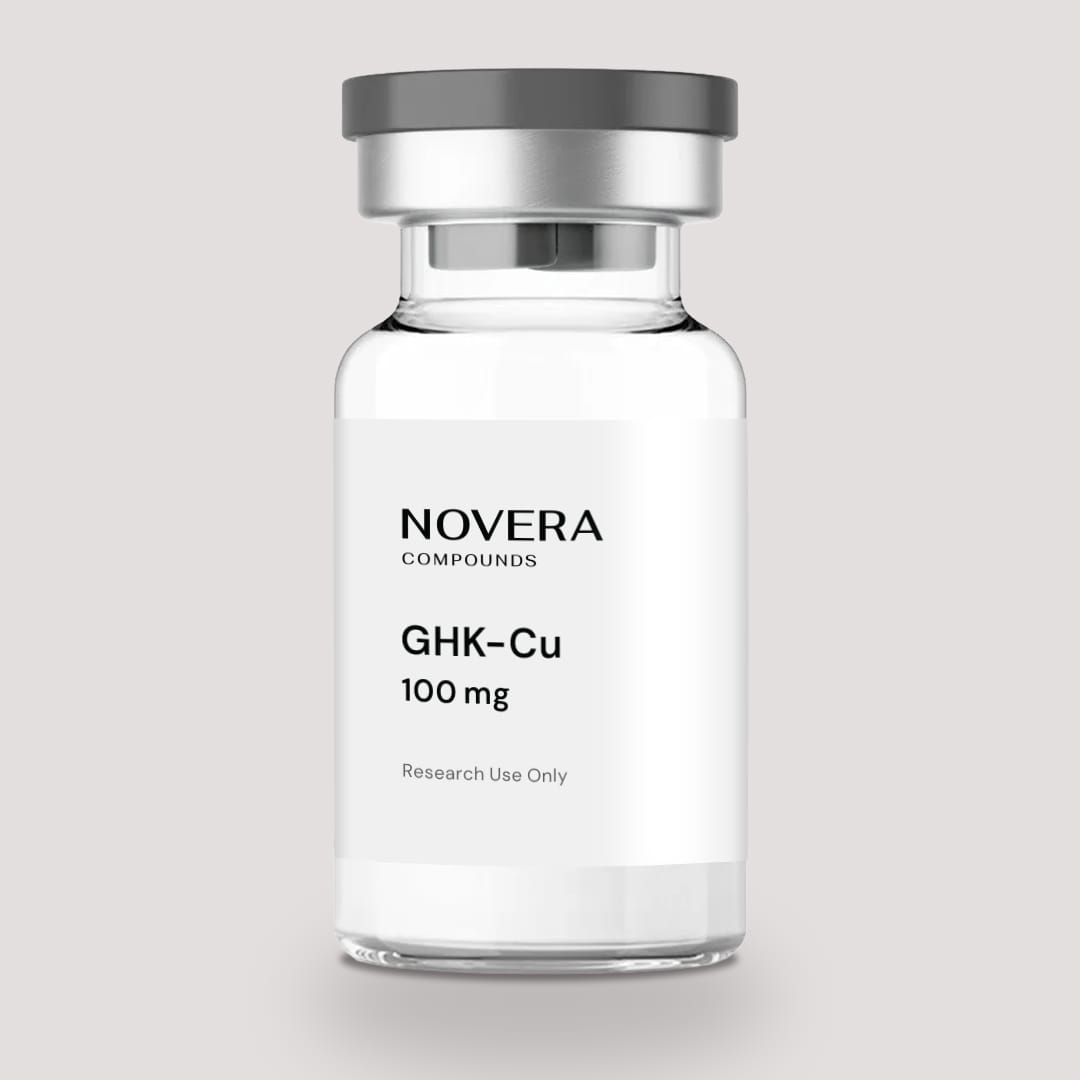
GHK-Cu
Order GHK-Cu for Clinics
Price range: $68.00 through $82.00
You save (%)
Description
GHK-Cu is a copper peptide used by licensed clinics and healthcare professionals in professional skin, aesthetic, or protocol-based workflows. Clinics can order GHK-Cu for practice use while matching the exact form, strength, and handling instructions shown with the item selected during purchasing. The most important operational step is to keep product identity, lot records, storage conditions, and intended treatment-room use aligned with the clinic’s written protocol.
GHK-Cu is commonly described as the copper complex of glycyl-L-histidyl-L-lysine, a tripeptide, meaning three linked amino acids. It appears across the broader market in topical, cosmetic, reconstitutable, and other presentations, but those formats are not interchangeable. A clinic should treat each form as a separate professional-use item with its own quality, documentation, storage, and route-specific requirements.
GHK-Cu Ordering for Professional Use
Clinic purchasing should start with the intended protocol, staff training, and product documentation needed for your setting. MedWholesaleSupplies serves licensed clinics and healthcare professionals, and account-level purchasing may involve professional-use checks before orders are processed. GHK-Cu should be handled as a clinic item rather than a self-directed supplement or casual cosmetic purchase.
Before placing an order, align the active ingredient, form, strength, quantity, storage requirement, and intended route with the supervising professional’s protocol. The peptides category can help teams view related peptide items, while the specific GHK-Cu label and documents should control receiving, inventory, and use decisions.
Why it matters: Copper peptide products can differ materially in sterility expectations, excipients, concentration, and intended route.
Price, Strength, and Product Selection
GHK-Cu price should be reviewed against the current item shown during ordering and any account terms that apply to the clinic. Search demand often includes phrases such as GHK-Cu 50mg or GHK-Cu 100mg, but a search phrase does not verify the strength, quantity, or route of the product being purchased. Choose the strength and quantity displayed during ordering and match it to the clinic protocol.
Clinic teams should avoid using name similarity as a substitute for product verification. GHK-Cu cream, topical GHK-Cu, peptide GHK-Cu, and copper peptide GHK-Cu may refer to different formulations in the broader market. A topical cosmetic preparation, an oral supplement, and a material intended for sterile handling carry different operational risks and documentation needs.
Procurement records should capture item name, quantity, lot number, expiry date, receiving condition, storage placement, and the internal protocol associated with the purchase. If substitutions are considered, the supervising clinician should evaluate the alternative before it enters a treatment workflow.
Professional Use Context and Evidence Boundaries
GHK-Cu is discussed in dermatology and aesthetic literature because copper peptides may be involved in pathways related to skin appearance, extracellular matrix signaling, and tissue repair research. These themes support careful professional evaluation, not broad claims of guaranteed clinical benefit. Clinic protocols should distinguish between evidence, marketing claims, and the exact product being stocked.
Common professional interest includes skin-quality programs, aesthetic-support workflows, and topical or procedure-adjacent planning. For skin-focused purchasing, the skin boosters category provides context for adjacent aesthetic products without implying that any product is interchangeable with GHK-Cu. If GHK-Cu is used near procedures, staff should account for skin integrity, barrier disruption, and irritation risk.
Some online discussions mention injections, creams, scalp solutions, supplements, hair appearance, and facial skin outcomes. Those references should not be treated as universal instructions. A clinic should use only the route supported by the product’s documentation and its own professional protocol.
Forms, Packaging, and Documentation Checks
GHK-Cu products in the wider market may appear as creams, serums, cosmetic preparations, lyophilized materials, or other formats. For clinic purchasing, the practical question is not whether GHK-Cu exists in multiple forms, but whether the exact item received matches the form and use pathway approved for your facility. A topical material should not be repurposed for invasive use.
| Attribute | What clinic teams should verify |
|---|---|
| Form | Identify whether the item is topical, reconstitutable, cosmetic, research-oriented, or otherwise classified by its documentation. |
| Strength | Use the stated mass or concentration shown with the item and any post-reconstitution concentration when relevant. |
| Packaging | Record units per package, closure type, tamper evidence, and whether any accessories are included. |
| Lot control | Capture lot number, expiry date, receiving condition, and certificate records when provided. |
| Use pathway | Match the route and preparation steps to facility protocol and staff training. |
Quick tip: Record the item photograph, lot, and expiry at receipt before stock is moved into treatment inventory.
Administration and Treatment-Room Workflow
Administration should follow the actual product label, facility protocol, and the scope defined by the supervising professional. No dosing schedule is provided here. If the product is topical, staff should consider skin condition, recent procedures, concurrent actives, and irritation history before use within an approved clinic workflow.
If a GHK-Cu item is intended for sterile or invasive use, route-specific training, aseptic technique, and product documentation become critical. Do not convert a topical cream, serum, or cosmetic product for parenteral use. Likewise, do not assume that online discussion of GHK-Cu peptide injection applies to the item being ordered for your clinic.
Documentation should connect product identity to the encounter or protocol file. Useful records include the GHK-Cu item name, lot number, route, staff member, patient assessment, consent process when required, concurrent procedures, and any observed reaction. This helps the clinic investigate adverse events and manage inventory recalls or expiry reviews.
Storage, Handling, and Clinic Logistics
Storage should follow the product label and accompanying documentation. If the item requires refrigeration, protection from light, limited in-use dating, or specific reconstitution conditions, those instructions should appear in receiving, inventory, and treatment-room workflows. Do not infer storage conditions from other peptide products such as BPC-157, TB-500, or KPV.
Unopened stock should be separated from opened, prepared, or reconstituted materials when applicable. Staff should record condition at receipt, review expiry dates during inventory counts, and quarantine any item with damaged packaging, unclear labeling, visible contamination, or temperature concerns. Orders may involve temperature-controlled handling when required and tracked US delivery.
For clinics managing multiple peptide items, avoid storing look-alike vials or containers without clear separation. Color-coded bins, protocol-specific labels, and two-person receiving checks can reduce selection errors. Inventory logs should make it easy to trace which lot was used in a specific protocol.
Safety, Side Effects, and Monitoring
Negative side effects of GHK-Cu depend on formulation, route, concentration, excipients, and the patient’s skin condition or medical history. For topical use, plausible or reported reactions include redness, itching, stinging, burning, dryness, rash, swelling, and delayed irritation. Sensitive skin, barrier disruption, recent lasers, peels, microneedling, or strong exfoliating products may increase tolerability concerns.
For invasive or sterile-use contexts, additional risks can include injection-site pain, bruising, infection, contamination-related events, and reactions to preservatives or other excipients. Systemic copper-related concerns are not well characterized for many nonstandard peptide uses. Clinics should avoid overconfidence when evidence is evolving or when formulation details vary across products.
Screening should include known hypersensitivity to copper-containing products, preservatives, topical vehicles, or related ingredients. Active skin infection, open lesions, dermatitis, complex wound history, pregnancy, lactation, immune compromise, copper metabolism disorders, and extensive concurrent dermatologic therapy may require added clinician evaluation. Monitoring should match the route, procedure intensity, and risk profile.
Interactions and Protocol Cautions
There is no single interaction table that applies to every GHK-Cu product. For topical workflows, common cautions include concurrent retinoids, alpha hydroxy acids, beta hydroxy acids, benzoyl peroxide, peels, laser procedures, microneedling, and other barrier-disrupting treatments. The issue may be irritation or impaired tolerance rather than a classic drug interaction.
For systemic, compounded, or procedure-adjacent workflows, clinics should review the full medication list, supplements, allergies, wound-care products, and relevant laboratory concerns. Oral copper products, topical copper preparations, oxidizing or reducing agents, and intensive dermatologic regimens may deserve attention depending on the protocol. When uncertainty remains, pause use until the supervising professional resolves the concern.
How GHK-Cu Compares With Related Products
GHK-Cu differs from fillers, hyaluronic acid skin boosters, and many cosmetic topicals because product identity, route, sterility expectation, and evidence base may vary. Clinic selection should reflect the treatment objective, staff training, adverse-event readiness, and documentation requirements. A general anti-aging claim is not enough to justify substitution.
| Product type | How it differs | Clinic decision point |
|---|---|---|
| Copper peptide topical products | Usually positioned for surface skin care or appearance support. | Evaluate ingredients, irritation risk, and cosmetic versus medical claims. |
| Hyaluronic acid skin boosters | Often used in aesthetic workflows focused on hydration or skin quality. | Assess labeling, route, training, and patient selection. |
| Dermal fillers | Used for volume, contour, or tissue support when appropriately indicated. | Confirm anatomy training, contraindication screening, and emergency readiness. |
| Multi-peptide combinations | May contain GHK-Cu with other peptides in a combined protocol item. | Review each active ingredient and avoid assuming the same handling as single-ingredient GHK-Cu. |
Clinics evaluating combination peptide protocols may also review Glow BPC-157 10mg/GHK-Cu 50mg/TB500 10mg or Klow BPC-157 10mg/GHK-Cu 50mg/TB500 10mg/KPV 10mg. These products should be assessed as distinct items because added ingredients can change protocol fit, documentation, and safety review.
Skin and Aesthetic Planning Resources
GHK-Cu is often considered in broader skin-quality discussions, especially when clinics are planning multi-step aesthetic care. Treatment plans should account for baseline skin condition, barrier function, recent procedures, and the clinic’s ability to monitor reactions. The article on anti-aging with peptides for skin offers additional context for peptide discussions in aesthetic practice.
For assessment workflows, the skin elasticity planning article may help teams think about baseline evaluation and treatment goals. Clinics incorporating biologic or procedure-based skin approaches can also review PRP therapy for skin regeneration as a separate educational topic. These resources support planning conversations but do not replace product-specific instructions.
Regulatory and Professional Responsibility
The legality and professional use of GHK-Cu depend on product classification, route, sourcing, claims, and local professional rules. Clinics should not rely on informal online protocols to determine whether a product is appropriate for a specific service. The responsible clinician should define the permitted workflow, staff scope, patient screening, consent, and adverse-event escalation process.
Professional responsibility also includes transparent documentation. If the item is used in a delegated workflow, staff should know which protocol applies, when to stop, who to contact, and what reaction details must be recorded. Training should be completed before the product is placed into treatment-room stock.
Authoritative Sources
The following sources provide background context on copper peptide biology and compounding oversight. They do not replace product-specific labeling, certificate records, or professional review.
- For peer-reviewed background on copper peptide biology, see this copper peptide review.
- For additional peer-reviewed discussion of GHK mechanisms, see GHK peptide as a cellular modulator.
- For federal context on compounding oversight, see FDA compounding questions and answers.
This content is for informational purposes only and is not a substitute for professional medical advice.
Frequently Asked Questions
What is GHK-Cu peptide used for in clinics?
GHK-Cu is a copper peptide considered in professional skin, aesthetic, or protocol-based workflows. Clinics should define the intended use, route, staff training, documentation, and monitoring process before placing it into treatment-room stock.
Can clinics order GHK-Cu online?
Licensed clinics and healthcare professionals can order GHK-Cu through MedWholesaleSupplies, with professional-use checks and documentation needs that may apply at the account or item level. The exact form, strength, quantity, and handling instructions should be matched to the clinic protocol.
Is GHK-Cu cream the same as GHK-Cu peptide for other routes?
No. A GHK-Cu cream, serum, supplement, reconstitutable material, or sterile preparation can have different ingredients, sterility expectations, storage needs, and route limitations. A topical product should not be repurposed for injection or invasive use.
What side effects should clinics monitor with GHK-Cu?
For topical use, monitor for redness, itching, stinging, burning, dryness, rash, swelling, or delayed irritation. For invasive-use contexts, also monitor for injection-site reactions, bruising, infection signs, contamination concerns, and reactions to excipients.
How should GHK-Cu be stored in clinic inventory?
Follow the product label and accompanying documentation. Record lot and expiry details, separate unopened stock from opened or prepared materials when applicable, and quarantine any item with damaged packaging, unclear labeling, visible contamination, or temperature concerns.
How much GHK-Cu should be used or injected daily?
No dosing schedule is provided here. Dosing, route, and frequency must come from the product documentation and the supervising professional’s protocol. Clinics should not rely on informal online injection schedules for product use.
What documentation should be kept for GHK-Cu orders?
Keep the item name, strength or concentration shown during ordering, quantity, lot number, expiry date, receiving condition, storage placement, certificate records when provided, protocol file, staff training record, and any use or adverse-event notes.
Specifications
- Main Ingredient:
- Manufacturer:
- Drug Class:
- Generic Name:
- Package Contents:
- Storage Requirements:
- Main Usage:
Here to help
Questions about ordering, delivery or products? You can email our team here or call now at 1-800-630-9757 and be connected with your dedicated Account Manager
Related Products
$339.00
You save (%)
You save (%)
Select options
This product has multiple variants. The options may be chosen on the product page
Juvéderm® SKINVIVE
Dermal Filler
$339.00 - $359.00
You save (%)
You save (%)
$86.00 - $119.00
You save (%)
You save (%)
$72.00
You save (%)
You save (%)
Select options
This product has multiple variants. The options may be chosen on the product page
Related Articles
Hooded Eyes From Botox: Ptosis Risk and Clinic Response
Hooded eyes from Botox usually reflect temporary upper-face muscle imbalance, not a single diagnosis. The…
Wegovy Alternative Options for Obesity Care Workflows
A wegovy alternative is not one single substitute. It may be another prescription anti-obesity medication,…
FDA-Approved Dermal Fillers: Safety and Clinic Use
FDA-approved dermal fillers are soft tissue filler products that the U.S. Food and Drug Administration…
Glabellar Lines: Anatomy, Assessment, and Treatment Planning
Glabellar lines are the vertical frown creases between the eyebrows, often called 11 lines. In…
After Care for Botox: Clinic Instructions and Safety Checks
In clinical practice, after care for botox is the set of written and verbal instructions…
Hyaluronidase in Aesthetic Practice: Safety and Workflow
Hyaluronidase is an enzyme that breaks down hyaluronic acid, a water-binding molecule found in skin,…
Jawline Filler in Aesthetic Care: Safety and Workflow
Jawline filler is a nonsurgical dermal filler approach used to refine lower-face contour, support the…
Dermal Fillers Before and After: Assessing Results
Dermal fillers before and after review should show whether an injectable treatment produced a visible,…