

- You must be logged in to add items to the cart.
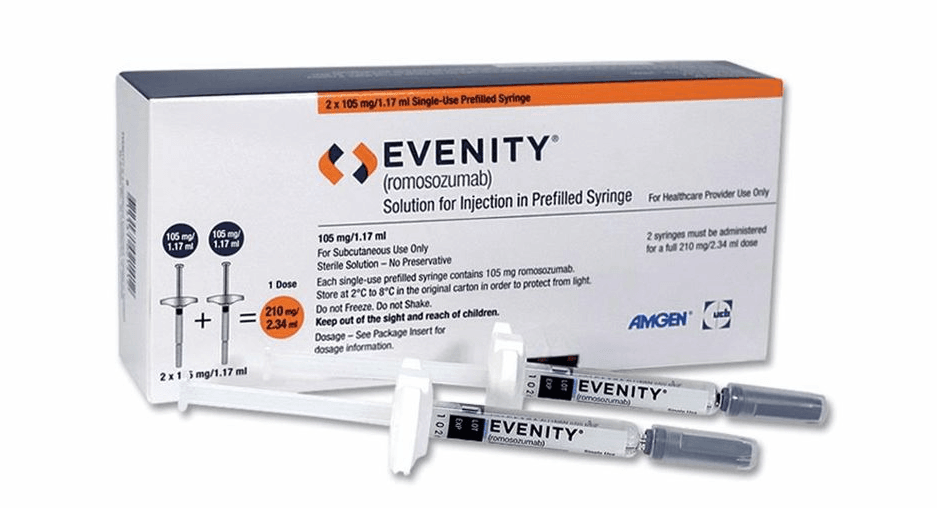
Evenity® (Non-English)
Order Evenity® (Non-English) for Clinics
Injectable Medication
$1,299.00
You save (%)
Description
Evenity® (Non-English) is romosozumab, a humanized monoclonal antibody used in specialist osteoporosis care. Licensed clinics and healthcare professionals can order it for professional administration programs that require documented lot control, manufacturer packaging, and coordinated treatment-room workflow.
This non-English presentation is intended for facilities that accept multilingual cartons and inserts through compliant procurement channels. Clinics should match the item shown during ordering to their protocol, medical director approval, and internal documentation standards before allocating stock to scheduled visits.
Clinic Ordering, Price Access, and Pack Selection
Evenity® (Non-English) can be allocated through verified clinic accounts for osteoporosis programs that manage biologic inventory. Sign in to view current contract tiers, submit purchase orders, and choose the presentation available for your facility. Evenity® injection price may vary with allocation, pack language, and account terms, so procurement teams should use the live account view rather than static market estimates.
Many searches reference Evenity® 210 mg injection, romosozumab 210 mg injection, and 105 mg/1.17 mL prefilled syringe terminology. Use the strength, quantity, and configuration displayed during ordering as the operational source for the lot your clinic receives. Do not substitute a different language presentation, device configuration, or course schedule without internal clinical approval.
Quick tip: Keep product language, lot number, expiry, and invoice records together so nursing, pharmacy, and purchasing teams can reconcile inventory quickly.
What Evenity® Is Used For
Evenity® contains romosozumab, a sclerostin inhibitor used for osteoporosis management in postmenopausal women at high risk for fracture, according to official product information. In clinic practice, it is typically incorporated into specialist bone health pathways rather than used as a casual retail medicine. Common settings include endocrinology clinics, bone density services, rheumatology practices, and fracture liaison programs.
Romosozumab has a dual effect on bone remodeling: it can increase bone formation and, to a lesser extent, decrease bone resorption. Sclerostin is a protein involved in regulating bone formation; inhibiting it helps explain why Evenity® is considered an anabolic osteoporosis therapy. Clinics can explore related care pathways in the osteoporosis product category.
Evenity® is not the same as a bisphosphonate. It belongs to a different drug class and is commonly discussed as a bone-building therapy that may be followed by an antiresorptive medicine. For a focused class explanation, see Evenity® drug class and care context.
How Romosozumab Fits Into Professional Care
Specialist teams use Evenity® within structured visit schedules that include assessment, product verification, administration, and follow-up planning. Treatment decisions should consider baseline calcium status, fracture risk, prior osteoporosis therapy, and cardiovascular risk factors. Many protocols also include education on calcium and vitamin D intake, fall-risk reduction, physical function, and transition planning after the romosozumab course.
The medication is administered by subcutaneous injection in a professional setting. Staff should follow the manufacturer’s current instructions for preparation, administration site selection, observation, and disposal. Because biologic products require consistent handling and documentation, Evenity® is best managed through a clear clinic workflow rather than informal room-by-room stock movement.
For clinical background on mechanism and follow-on care, clinics may use romosozumab mechanism, risks, and follow-on care alongside the official label and local protocols. Internal educational links should support staff orientation, not replace facility-approved medical guidance.
Key Product and Procurement Features
- Active ingredient: romosozumab, a monoclonal antibody that inhibits sclerostin.
- Therapeutic area: osteoporosis management under specialist supervision.
- Route: subcutaneous injection administered in a professional setting.
- Packaging: non-English or multilingual manufacturer labeling may be supplied.
- Traceability: cartons and labels support lot, expiry, and inventory records.
- Use setting: appropriate for clinics with biologic handling and documentation procedures.
- Catalogue placement: part of the pharmaceuticals catalogue.
- Internal reference: SKU 100042 for procurement alignment.
Non-English packaging can be useful for facilities that already accept market-authorized multilingual packs and have staff processes for leaflet review, product verification, and patient-facing communication. Before adding this item to routine stock, confirm whether your medical director, purchasing team, or P and T committee requires an English-language insert, supplemental reference document, or specific storage notation.
Packaging, Label Language, and Documentation
Evenity® (Non-English) may arrive with localized carton text and an insert for the market of origin. The manufacturer identifiers, lot number, and expiry date remain central to inventory control. Images used for reference may differ from the exact lot supplied, so staff should rely on the physical carton and accompanying documentation at receiving.
Clinics should create a receiving process that separates accepted multilingual product from quarantine, return, or substitution workflows. The receiving team should record product name, lot, expiry, quantity, and pack language before stock is released for use. If your facility requires an English-language clinical reference, pair the received carton with the current official prescribing information and store that reference in your medication management system.
When a substitution is proposed, approval should happen before fulfillment. Acceptable substitutions may include another authorized language variant or a comparable presentation that your facility has already approved. Procurement teams should not assume that a different label language, pack layout, or device arrangement is operationally interchangeable without a documented review.
Storage, Handling, and Logistics
Store and handle Evenity® according to the manufacturer’s current instructions for the supplied presentation. Biologic medicines can be sensitive to temperature excursions, light exposure, shaking, and time outside controlled storage. Receiving staff should inspect the shipment, verify the carton, record lot and expiry, and move the product into approved storage promptly.
We support US distribution with temperature-controlled handling when required and tracked US delivery. Shipment records, invoices, and lot documentation should be retained with your clinic’s purchasing files. If a shipment arrives with damaged packaging, a missing identifier, or a condition concern, isolate the product and escalate through your facility process before clinical use.
Why it matters: Consistent receiving and storage records help protect biologic integrity and simplify audits.
Safety, Warnings, and Monitoring
Evenity® has important safety considerations that clinics should evaluate before use. The FDA label includes a boxed warning about the potential risk of myocardial infarction, stroke, and cardiovascular death. Treatment should not be initiated in patients who have had a myocardial infarction or stroke within the preceding year, according to US prescribing information. Clinicians should weigh benefits and risks in patients with other cardiovascular risk factors.
Hypocalcemia can occur, and calcium status should be corrected before initiating therapy. Staff should follow protocol for calcium and vitamin D assessment, patient counseling, and follow-up monitoring. Patients with severe renal impairment or receiving dialysis may be at greater risk of hypocalcemia and need closer evaluation under clinical guidance.
Common adverse reactions described in official information include arthralgia and headache. Injection-site reactions may also occur. Serious risks can include hypersensitivity reactions, osteonecrosis of the jaw, and atypical femoral fracture. Clinics should have escalation procedures for chest pain, shortness of breath, neurologic symptoms, severe allergic symptoms, jaw problems, or new thigh, hip, or groin pain.
For a focused safety review, see Evenity® side effects and serious risks. The official label remains the controlling reference for contraindications, warnings, and administration requirements.
Clinic Workflow and Inventory Planning
Evenity® fits best into a planned injection-visit workflow. Teams often coordinate appointment scheduling, pre-visit clinical checks, product removal from storage, administration documentation, and post-visit planning on the same pathway. Standardizing each step reduces avoidable variation and helps protect high-value biologic inventory.
Purchasing teams should set minimum stock levels based on scheduled clinic volume, expected lead time, and approved substitutions. Because the product is used for a defined treatment pathway, inventory planning should also include transition planning after the romosozumab course. Many clinics coordinate follow-on antiresorptive therapy so gains in bone density are not left unsupported after treatment completion.
Operationally, the most important controls are clear ownership and traceability. Assign receiving responsibility, define who can release the product for administration, and ensure administration records include lot information. If your clinic uses separate purchasing and clinical systems, reconcile them regularly so stock status matches scheduled visits.
Comparison With Prolia® and Other Bone Health Options
Evenity® and Prolia® are both injectable osteoporosis medicines, but they are not interchangeable. Evenity® is romosozumab, a sclerostin inhibitor with bone-building activity. Prolia® is denosumab, an antiresorptive therapy that reduces bone breakdown through a different mechanism. The choice between them depends on treatment sequence, fracture risk, prior therapy, contraindications, and specialist judgment.
Clinics that need denosumab for follow-on or alternative therapy can consider Prolia® English Alternative or Prolia® Non-English, depending on labeling requirements and formulary acceptance. For a practical care comparison, review Evenity® vs Prolia® for bone health.
Another common question is whether Evenity® has another name. The nonproprietary name is romosozumab; in US labeling it may appear as romosozumab-aqqg. Procurement documents should use the brand name, active ingredient, and internal SKU consistently to reduce confusion during receiving and administration.
Authoritative Sources
Official prescribing information – FDA label with indication, boxed warning, dosing, adverse reactions, and safety details.
Manufacturer professional information – Amgen professional information for Evenity®.
NIAMS osteoporosis information – National Institutes of Health condition background for osteoporosis.
Ready to allocate Evenity® (Non-English) to your osteoporosis program? Sign in through your clinic account to view current price tiers, packaging availability, and account-specific ordering documents.
This content is for informational purposes only and is not a substitute for professional medical advice.
Frequently Asked Questions
What is the controversy with Evenity®?
The main concern is cardiovascular safety. US prescribing information includes a boxed warning for potential risk of myocardial infarction, stroke, and cardiovascular death. Clinics should evaluate cardiovascular history and risk factors according to the official label and local protocol before use.
Who should not take Evenity®?
The FDA label states that Evenity® should not be initiated in patients who have had a myocardial infarction or stroke within the preceding year. It is also contraindicated in patients with hypocalcemia or a history of systemic hypersensitivity to romosozumab or product components. Clinical teams should consult the current label for full details.
What is another name for Evenity®?
Evenity® is the brand name for romosozumab. In US labeling, the active ingredient may be written as romosozumab-aqqg. Procurement teams should keep brand name, active ingredient, lot number, expiry, and SKU aligned in receiving records.
What is a good alternative to Evenity® for clinics?
Alternatives depend on the treatment goal and sequence. Prolia® (denosumab) is an antiresorptive option that may be used in osteoporosis care, including after an anabolic course when clinically appropriate. Selection should follow specialist guidance, formulary rules, contraindications, and patient-specific risk assessment.
Can clinics order Evenity® with non-English packaging?
Yes, this item is intended for facilities that accept non-English or multilingual manufacturer packaging. Clinics should confirm internal approval for label language, insert review, receiving documentation, and staff reference materials before adding the product to active inventory.
How should Evenity® be handled after delivery?
Follow the manufacturer’s storage and handling instructions for the supplied presentation. Receiving staff should inspect packaging, record lot and expiry, retain shipment documentation, and move the product into approved storage promptly. Any condition concern should be isolated and escalated before use.
Specifications
- Main Ingredient:
- Manufacturer: Amgen México
- Drug Class:
- Generic Name: romosozumab
- Package Contents: 105 Mg/1.17ml x 2 Prefilled Syringes
- Storage Requirements: Refrigerator at 2°C to 8°C
- Main Usage:
Here to help
Questions about ordering, delivery or products? You can email our team here or call now at 1-800-630-9757 and be connected with your dedicated Account Manager
Related Products
JALUPRO® PLUS 4ML
Skin Rejuvenation Treatment
$86.00 - $89.00
You save (%)
You save (%)
$339.00
You save (%)
You save (%)
Select options
This product has multiple variants. The options may be chosen on the product page
Juvéderm® SKINVIVE
Dermal Filler
$339.00 - $359.00
You save (%)
You save (%)
$86.00 - $119.00
You save (%)
You save (%)
Related Articles
Prednisone in Clinical Care: Uses, Risks, and Monitoring
Prednisone is a prescription systemic corticosteroid used to reduce inflammation or suppress immune activity in…
Lip Fillers Swelling Stages: Timeline, Safety, and Follow-Up
Lip fillers swelling stages usually follow a short inflammatory course: swelling appears soon after injection,…
Hypopigmentation of the Skin: Assessment and Care
Hypopigmentation of the skin means one or more areas look lighter than the surrounding skin.…
Radiesse vs Sculptra: Selection Factors for Clinics
Radiesse vs Sculptra is best understood as a comparison between two collagen-stimulating injectables with different…
Hyaluronic Acid Under-Eye Filler: Safety and Workflow
Hyaluronic acid under-eye filler is an injectable soft-tissue filler used by trained aesthetic clinicians to…
Dermal Filler Types: Materials, Uses, and Clinic Fit
Dermal filler types are usually grouped by their base material, tissue behavior, and expected role…
What Is Dysport? Clinical Uses, Safety, and Workflow
For clinic teams asking what is Dysport, the short answer is simple: Dysport is a…
Biostimulators in Aesthetic Care: Selection and Safety
Biostimulators are injectable aesthetic products used to encourage a controlled tissue response, often involving new…