

- You must be logged in to add items to the cart.
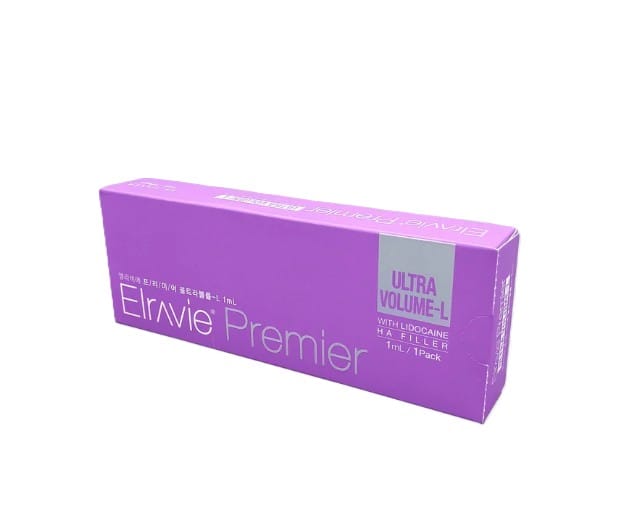
Elravie® Premier Ultra Volume-L
Order Elravie® Premier Ultra Volume-L for Clinics
Dermal Filler
$58.00
You save (%)
Description
Elravie® Premier Ultra Volume-L is a high-viscosity, cross-linked hyaluronic acid dermal filler used by trained healthcare professionals for soft-tissue volume support in aesthetic practice. Licensed clinics, medical spas, and qualified healthcare accounts can order Elravie® Premier Ultra Volume-L for professional inventory, treatment-room use, and lot-level documentation. Clinic teams should match the received carton, sterile syringe presentation, storage statement, and instructions for use to internal protocols before use.
This HA filler belongs in a controlled professional workflow rather than a consumer self-treatment setting. Product selection should reflect the treating clinician’s training, the applicable instructions for use, the intended anatomical area, and the facility’s complication-readiness plan. US distribution and tracked US delivery support routine procurement planning when clinics need reliable supply movement and traceable receiving records.
Clinic Ordering, Price, and Supply Planning
Clinics can order Elravie® Premier Ultra Volume-L through a verified professional account and view current price information during purchasing. Because product configurations can vary by market and carton presentation, receiving staff should use the product name, lot number, expiry date, storage statement, and included instructions to confirm the exact item delivered. That process also helps purchasing teams align inventory records with the treatment log used in patient charts.
Account access is intended for licensed clinics and healthcare professionals. MedWholesaleSupplies supplies brand-name medical products through vetted distributor and verified supply channels for clinic procurement. When an aesthetic practice adds this filler to inventory, the purchasing decision should also consider staff familiarity with HA fillers, consent language, adverse-event pathways, and whether the product fits existing facial volumization protocols.
For broader category planning, clinics can browse dermal fillers and organize stock by filler class, intended tissue plane, and clinician preference. Avoid ordering based only on online shorthand names or informal before-and-after discussions; the final selection should come from the carton, instructions for use, and qualified clinical judgment.
Professional Use Context for Elravie® Premier Ultra Volume-L
Elravie® Premier Ultra Volume-L is part of the Elravie Premier line of injectable HA gels used in medical aesthetics when volume support or contour restoration is clinically appropriate. Hyaluronic acid is a water-binding polysaccharide naturally present in tissue; cross-linking chemically stabilizes the gel so it resists rapid breakdown compared with non-cross-linked HA. In practical terms, high-viscosity HA fillers are commonly evaluated for projection, support, and handling characteristics, although the permitted use area and injection depth must come from the product’s instructions for use.
The product should be administered only by appropriately trained healthcare professionals with knowledge of facial anatomy, aseptic technique, vascular risk, and emergency escalation. Treatment plans should not be inferred from general product descriptions. The clinician should determine patient suitability, injection plane, volume, and technique according to labeling, training, local policy, and the clinical assessment performed before the procedure.
Clinics that want broader context on the brand family can use the Elravie filler overview for background reading, while keeping final product selection anchored to the shipped carton. Teams building a volume-focused injectable program may also find useful class-level context in facial volume restoration treatments.
Forms, Carton Checks, and Receiving Documentation
Dermal fillers in this class are generally supplied as sterile, single-use prefilled syringes for professional injection. Some manufacturer configurations may include needles, peel-off labels, and printed instructions within the carton. Exact carton contents can differ, so clinic receiving teams should verify each shipment against the product packaging and purchase record before transferring the unit into active stock.
Do not assume a strength, volume, lidocaine inclusion, or accessory count from a product nickname or outside comparison table. If the carton identifies lidocaine or another component, that information should be recorded because it affects screening for known hypersensitivity. If the carton does not match the expected order, quarantine the item and resolve the discrepancy before use.
| Receiving item | Clinic action |
|---|---|
| Primary container | Inspect the sterile syringe and external packaging for damage or tamper concerns. |
| Label and carton | Record product name, lot or batch number, expiry date, and storage statement. |
| Instructions for use | Keep the IFU available to clinical staff and confirm it matches the received item. |
| Included accessories | Verify any needles, labels, or inserts before the unit enters treatment-room inventory. |
Quick tip: Record lot and expiry at receiving, not after the procedure, to reduce traceability gaps.
Administration Workflow and Treatment-Room Fit
Use of injectable HA fillers requires professional training and a controlled clinical setting. A typical workflow includes candidate screening, review of relevant medical history, informed consent, skin preparation, aseptic handling, product identification, and post-procedure observation. Elravie® Premier Ultra Volume-L should remain in its original packaging until the clinic is ready to prepare it according to the IFU.
Documentation should connect the product to the individual procedure. Many clinics record the treated area, technique summary, injection sites, clinician name, lot number, expiry date, and any immediate observations. These details support continuity of care, adverse-event follow-up, and quality audits. The same discipline is useful when a clinic carries multiple HA fillers with different handling characteristics.
For teams refining filler selection by anatomy and treatment goals, types of dermal fillers for facial volume offers a practical class-level comparison. A separate clinical inventory conversation may include commonly used products such as Revofil Ultra or Neuramis Volume, but substitutions should be reviewed for labeling alignment, clinician familiarity, and patient-record implications before use.
Storage, Handling, and Clinic Logistics
Storage instructions for Elravie® Premier Ultra Volume-L should be taken from the carton and instructions for use. Many sterile prefilled HA filler syringes are stored at controlled room temperature, protected from excessive heat and direct light, and kept sealed until use; however, the product-specific label is the controlling instruction. Clinics should not freeze the product unless the IFU explicitly allows it and should never use product past the printed expiry date.
Receiving procedures should include inspection of the outer carton, confirmation of the product identity, and inventory-system entry before the unit is placed into stock. If temperature-controlled handling is required, follow the product label, facility policy, and temperature-excursion procedure. Clear quarantine steps help prevent use of any item with uncertain storage history.
Tracked US delivery can support routine clinic logistics, especially when practices coordinate inventory across multiple rooms or providers. Teams managing several aesthetic injectable lines may also use popular dermal filler use areas as a planning reference for category organization, while relying on each product’s IFU for final handling and treatment instructions.
Contraindications, Warnings, and Safety Monitoring
Contraindications and warnings are defined by the product IFU and local authorization. In general, clinics avoid injecting dermal fillers into areas with active infection or inflammation and screen for known hypersensitivity to product components. If the specific presentation contains lidocaine, hypersensitivity to amide-type local anesthetics is relevant and should be documented during pre-procedure screening.
All injectable fillers carry risk. Common local reactions after HA filler procedures can include swelling, redness, tenderness, bruising, itching, and temporary lumpiness at the injection site. These effects are often self-limited, but clinic protocols should define follow-up instructions, documentation standards, and when the treating clinician should reassess the patient.
More serious events can include infection, delayed nodules, granulomatous reactions, vascular occlusion, tissue ischemia, necrosis, and rare visual complications after facial injection. Concerning symptoms may include disproportionate pain, blanching, mottled discoloration, blistering, skin breakdown, or any visual change. Facilities using Elravie® Premier Ultra Volume-L should maintain escalation pathways and emergency supplies consistent with their medical director’s protocol.
- Screen for active infection or inflammation at the planned injection site.
- Document known allergies and prior filler reactions.
- Assess medication history that may increase bruising or bleeding.
- Use conservative technique consistent with training and labeling.
- Record lot and treatment details for adverse-event traceability.
Why it matters: Vascular events are uncommon but require rapid recognition and escalation.
Medication History, Interactions, and Procedure Timing
Dermal filler concerns are often procedural rather than classic drug-to-drug interactions, but medication history still affects risk management. Anticoagulants, antiplatelet agents, frequent NSAID use, and some supplements may increase bruising or bleeding around injection sites. Clinicians should document these factors and decide whether timing changes or additional counseling are appropriate.
Recent or planned procedures in the same anatomical area also matter. Laser treatment, chemical peels, microneedling, dental work, or active dermatologic inflammation may influence skin integrity or infection risk. The treating clinician should determine sequencing based on the individual assessment, facility protocol, and the IFU.
Patients with a history of severe allergies, hypertrophic scarring, immune-mediated skin reactions, or impaired wound healing may require additional caution. These issues do not belong in purchasing copy alone; they should be built into the clinic’s screening form, consent language, and post-procedure instructions.
Comparison With Other HA Filler Choices
Elravie® Premier Ultra Volume-L is typically compared with other HA fillers by gel behavior, clinician handling preference, labeled indication, presence or absence of anesthetic, and the tissue plane described in the IFU. High-viscosity HA fillers are often selected when support and projection are important, but product names alone do not establish equivalent use. A clinician should compare the IFU, training background, and adverse-event plan before using an alternative.
Clinics may also compare HA fillers with biostimulatory injectables used in broader volume programs. Calcium hydroxylapatite and poly-L-lactic acid products have different mechanisms, timelines, and safety considerations, so they should not be treated as simple replacements for HA filler. For a general discussion of filler materials and skin-support goals, collagen and hyaluronic acid differences can help staff frame patient education without replacing product labeling.
Related HA products in professional inventory planning may include Revanesse Ultra Lido, Juvederm Ultra, and Aliaxin EV Essential Volume. These links support catalog navigation only; they do not imply identical indications, syringe configuration, rheology, or substitution suitability.
Availability, Substitutions, and Inventory Controls
Elravie® Premier Ultra Volume-L is offered for professional clinic supply. Availability of a specific manufacturer configuration can be influenced by lot release, carton updates, and distributor allocation, so the received unit should be matched to the order and packaging before clinical use. If a substitution is considered, the change should be approved through the clinic’s internal process and documented in the patient record when used.
Inventory controls should cover receiving, storage, stock rotation, treatment-room release, and adverse-event traceability. First-expiry-first-out rotation helps reduce waste and supports compliance with expiration controls. Damaged, expired, opened, or storage-questionable units should be separated from usable stock until a qualified decision is made under facility policy.
For clinics with multiple injectors, standardized documentation is especially important. A shared inventory log can reduce duplicate ordering, improve recall readiness, and help the medical director evaluate product use patterns across treatment rooms.
Authoritative Sources
Regulatory guidance can support clinic protocols for counseling, consent, and adverse-event readiness. The FDA provides a general safety overview for soft-tissue fillers, including discussion of common reactions and serious risks: FDA dermal fillers safety information.
Always defer to the Elravie® Premier Ultra Volume-L carton, instructions for use, professional training, and local facility policy for final indications, contraindications, injection technique, storage, and handling. General filler education should support, not replace, product-specific labeling and qualified clinical judgment.
Place orders through your professional clinic account with temperature-controlled handling when required and tracked US delivery.
This content is for informational purposes only and is not a substitute for professional medical advice.
Frequently Asked Questions
Who can order Elravie® Premier Ultra Volume-L?
Elravie® Premier Ultra Volume-L is intended for licensed clinics, medical spas, and healthcare professionals using dermal fillers in a professional aesthetic setting. Account verification and clinic documentation may apply before ordering.
What should clinics verify when receiving this HA filler?
Receiving staff should verify the product name, carton integrity, sterile syringe packaging, lot or batch number, expiry date, storage statement, included IFU, and any accessories listed on the carton or packing record.
Does Elravie® Premier Ultra Volume-L contain lidocaine?
Some market presentations of Elravie Premier products may reference lidocaine, but clinics should rely on the received carton and IFU for the exact component profile. If lidocaine is present, screen for relevant anesthetic hypersensitivity.
How should this filler be stored in clinic inventory?
Follow the storage statement on the carton and IFU. Many sterile HA filler syringes are kept in original packaging, protected from excessive heat and direct light, and not frozen unless the product instructions allow it.
What safety risks should injector teams plan for?
Teams should plan for common local reactions such as swelling, redness, tenderness, bruising, itching, and temporary lumpiness, as well as serious risks including infection, nodules, vascular occlusion, tissue injury, and visual symptoms requiring urgent escalation.
Can another HA filler be substituted for Elravie® Premier Ultra Volume-L?
A substitution should be reviewed by qualified clinical leadership before use. Compare the IFU, intended tissue plane, component profile, clinician familiarity, documentation needs, and complication protocol rather than relying on product category alone.
Specifications
- Main Ingredient: Cross-Linked Hyaluronic Acid
- Manufacturer: Humedix Co., Ltd.
- Drug Class: Dermal Filler
- Generic Name: Cross-linked Hyaluronic Acid and Lidocaine
- Package Contents: 1 pre-filled syringe (1.0 mL)
- Storage Requirements: Room Temperature (2℃~25℃)
- Main Usage: Volume Filler
Here to help
Questions about ordering, delivery or products? You can email our team here or call now at 1-800-630-9757 and be connected with your dedicated Account Manager
Related Products
JALUPRO® PLUS 4ML
Skin Rejuvenation Treatment
$86.00 - $89.00
You save (%)
You save (%)
$339.00
You save (%)
You save (%)
Select options
This product has multiple variants. The options may be chosen on the product page
Juvéderm® SKINVIVE
Dermal Filler
$339.00 - $359.00
You save (%)
You save (%)
$86.00 - $119.00
You save (%)
You save (%)
Related Articles
Prednisone in Clinical Care: Uses, Risks, and Monitoring
Prednisone is a prescription systemic corticosteroid used to reduce inflammation or suppress immune activity in…
Lip Fillers Swelling Stages: Timeline, Safety, and Follow-Up
Lip fillers swelling stages usually follow a short inflammatory course: swelling appears soon after injection,…
Hypopigmentation of the Skin: Assessment and Care
Hypopigmentation of the skin means one or more areas look lighter than the surrounding skin.…
Radiesse vs Sculptra: Selection Factors for Clinics
Radiesse vs Sculptra is best understood as a comparison between two collagen-stimulating injectables with different…
Hyaluronic Acid Under-Eye Filler: Safety and Workflow
Hyaluronic acid under-eye filler is an injectable soft-tissue filler used by trained aesthetic clinicians to…
Dermal Filler Types: Materials, Uses, and Clinic Fit
Dermal filler types are usually grouped by their base material, tissue behavior, and expected role…
What Is Dysport? Clinical Uses, Safety, and Workflow
For clinic teams asking what is Dysport, the short answer is simple: Dysport is a…
Biostimulators in Aesthetic Care: Selection and Safety
Biostimulators are injectable aesthetic products used to encourage a controlled tissue response, often involving new…