
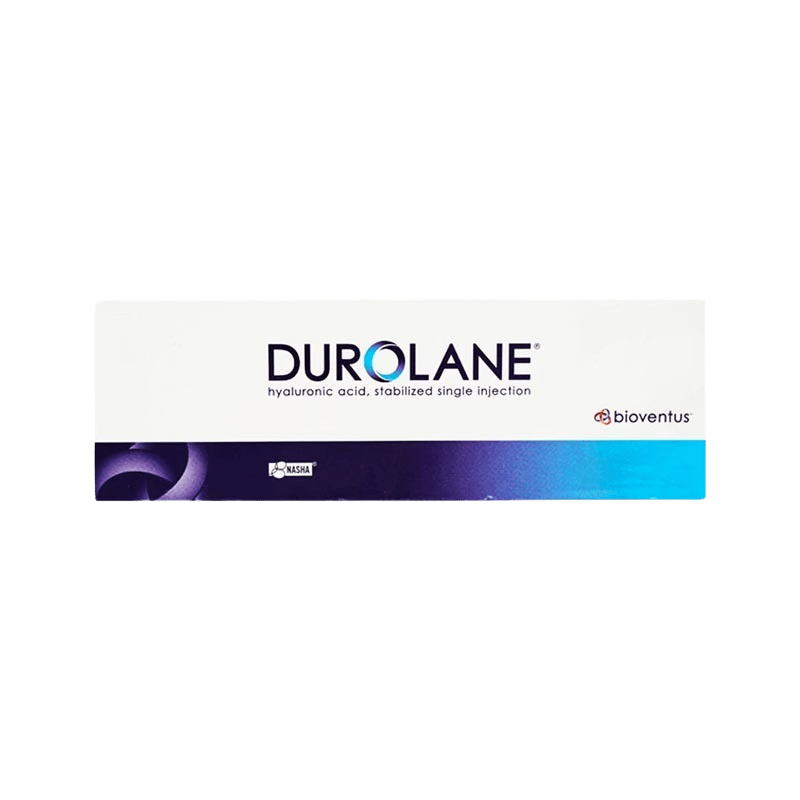
Durolane (English)
Order Durolane Injection for Clinics
Joint Injectable
$259.00
You save
Description
Durolane® is a sterile, non-animal stabilized hyaluronic acid gel supplied as a 60 mg/3 mL prefilled syringe for intra-articular administration by trained clinicians. Licensed clinics and healthcare professionals can order Durolane injection for osteoarthritis care pathways that use a single-injection viscosupplement format. The English-labeled syringe supports treatment-room setup, lot documentation, and professional handling in orthopedic, rheumatology, and ambulatory procedure settings.
Each unit is intended for one patient and one joint, helping clinics standardize procedure supply pulls and reduce repeat-visit scheduling compared with multi-injection courses. Med Wholesale Supplies serves licensed healthcare facilities with brand-name medical products sourced through vetted distributors and verified supply channels.
Durolane 60mg/3ml Injection Details
Durolane is a sodium hyaluronate injection based on NASHA, or non-animal stabilized hyaluronic acid. Hyaluronic acid is a naturally occurring component of synovial fluid, where it contributes to lubrication and shock absorption inside movable joints. In viscosupplementation, the gel is injected into the joint space to supplement the joint’s viscoelastic environment during an osteoarthritis management plan.
The supplied format is a Durolane prefilled syringe containing 3 mL of gel with 60 mg of hyaluronic acid. The syringe is sterile and single-use, so any unused portion should be discarded after administration. Because the product is delivered directly into a joint, aseptic technique, accurate placement, and local clinic protocols are central to safe use.
| Attribute | Clinic-use detail |
|---|---|
| Product type | Intra-articular hyaluronic acid viscosupplement |
| Format | Single-use prefilled syringe |
| Strength and volume | 60 mg/3 mL |
| Technology | Non-animal stabilized hyaluronic acid, or NASHA |
| Label language | English-labeled carton and instructions |
| Administration | For trained healthcare professional use in the joint space |
For category planning, clinics can review related orthopedic injections and rheumatology products used across joint-care service lines.
Ordering, Price, and Clinic Logistics
Sign in to view the current Durolane injection price for your verified clinic account. Pricing may vary by account terms, order quantity, and supply program, so purchasing teams should use the live account view when building procedure cost models. If your team uses standing purchase planning, align quantities with appointment volume, provider schedules, and storage capacity.
Clinic account verification is required before purchase. Our team can support US distribution needs with temperature-controlled handling when required and tracked US delivery. For multi-site practices, consistent ordering records help reconcile lot numbers, expiry dates, procedure charges, and device documentation across locations.
Quick tip: Match each scheduled procedure to a single sealed syringe so staff can prepare trays without partial-use inventory decisions.
How the NASHA Viscosupplement Works
Durolane hyaluronic acid injection uses a cross-linked NASHA gel designed for residence in the joint space. The gel’s viscoelastic properties help supplement the lubrication and cushioning functions normally associated with synovial fluid. This class is commonly used when a clinician determines that viscosupplementation fits a patient’s osteoarthritis care plan.
In knee osteoarthritis programs, a Durolane single injection approach can reduce visit burden compared with multi-week injection series. The single-injection format may simplify scheduling, consent workflow, supply picking, and follow-up planning. Procedure teams may also use imaging guidance when site localization is appropriate under their institutional protocols.
Clinical decision-making should remain patient-specific. Providers typically evaluate the involved joint, symptom pattern, prior conservative measures, medical history, infection risk, and any payer or formulary requirements before selecting a viscosupplement. For additional clinical context, see our professional discussion of Durolane hyaluronic acid for knee OA.
Professional Applications and Workflow Fit
Orthopedic, rheumatology, pain-management, and sports-medicine teams may incorporate Durolane into osteoarthritis injection pathways. Typical use involves intra-articular administration into the affected joint by a trained clinician. The syringe format supports in-office procedures, ambulatory suites, and scheduled injection sessions where sterile setup and documentation are already established.
For knee-focused programs, teams can consolidate patient education, consent, skin preparation, injection, and post-procedure instructions into a single appointment when clinically appropriate. This can reduce rebooking steps and makes inventory forecasting more predictable. Practices that rotate providers across sites may benefit from standardized product presentation, consistent labeling, and familiar syringe handling.
Clinic managers often evaluate viscosupplements by visit count, syringe volume, product technology, staff familiarity, and formulary fit. For broader product selection, our Durolane injection discussion and gel injections for knees article outline practical differences across this category.
Key Features for Procedure Rooms
- Sterile, single-use syringe for one patient and one joint.
- 60 mg/3 mL Durolane syringe presentation for single-injection protocols.
- NASHA technology using non-animal stabilized hyaluronic acid.
- English carton and instructions support staff training and documentation.
- Prefilled format reduces manual preparation steps before administration.
- Visible lot and expiry details support traceability in clinic records.
- Sealed packaging helps maintain sterility until point of use.
- Single-visit format may reduce repeat appointment coordination.
- Compatible with standard professional aseptic preparation workflows.
- Appropriate for trained clinician administration only.
The compact carton fits common procedure-room storage systems and medication bins. Staff should keep the syringe sealed until preparation and follow the manufacturer’s instructions for handling, use, and disposal.
Storage, Handling, and Documentation
Store and handle Durolane according to the manufacturer’s carton and instructions for use. Do not freeze the syringe. Clinics should maintain stock rotation practices that prioritize expiry-date visibility and avoid using any unit with damaged packaging, compromised sterility, or unclear labeling.
Documentation usually includes the product name, strength and volume, lot number, expiry date, joint treated, route, clinician, and any post-procedure observations required by local policy. Barcoding or manual entry can support EMR inventory reconciliation when systems allow device or supply tracking.
After administration, discard unused gel and dispose of sharps through standard medical waste procedures. Staff should not resterilize, reuse, or divide a single syringe between patients. If the clinic maintains multiple viscosupplement brands, store each line clearly to reduce substitution errors during busy injection sessions.
Safety, Side Effects, and Precautions
Durolane is administered directly into the joint, so local reactions are the most relevant day-to-day safety considerations. Expected injection-site reactions may include pain, swelling, warmth, redness, itching, bruising, stiffness, or temporary joint discomfort. These events are generally managed according to clinical judgment and local post-procedure protocols.
Clinicians should avoid intra-articular injection through infected skin or into a joint with active infection. Use caution in patients with relevant hypersensitivity history, bleeding risk, anticoagulant use, or conditions that may increase procedural risk. The care team should review the full instructions for use, screen patients according to clinic policy, and maintain aseptic technique throughout the procedure.
Patients are commonly advised by clinicians to avoid strenuous activity involving the treated joint for a short period after injection, but the exact instruction should follow the provider’s protocol. Worsening pain, marked swelling, fever, significant redness, or symptoms suggesting infection require prompt clinical evaluation. Safety documentation should include counseling given, immediate tolerance, and any adverse event reporting steps required by the facility.
Comparing Viscosupplement Choices
Clinics evaluating Durolane often compare it with other hyaluronic acid products based on dosing schedule, syringe volume, polymer technology, and provider familiarity. A single-injection product can be operationally attractive when the service line aims to limit repeat visits. Multi-injection products may remain useful when a clinician, payer, or formulary pathway calls for a different schedule.
Related options include Synvisc-One prefilled syringe, Orthovisc English, and Hyalgan English syringe. Product selection should be led by labeled use, clinical protocol, stocking requirements, and provider assessment rather than convenience alone.
For a focused comparison of single-injection and other joint-pain injection pathways, see Synvisc-One vs Durolane and orthopedic injection choices for knee pain.
Availability and Substitution Planning
Durolane can be incorporated into clinic formularies as a defined syringe presentation with clear ordering and documentation steps. Supply planning should account for scheduled injection volume, provider preference, and any internal approval process used by the facility. If an alternative is selected, confirm that the replacement matches the intended joint-care pathway, route, visit count, and product instructions.
During transitions, update staff education, consent templates, EMR preference lists, and procedure-room pick lists so the product in stock matches the materials used by the team. The Durolane brand page can help purchasing staff keep line-specific information organized during formulary review.
Authoritative Sources
Ready to add Durolane to your clinic formulary? Sign in to view account pricing and place an order for your licensed healthcare facility.
This content is for informational purposes only and is not a substitute for professional medical advice.
Frequently Asked Questions
What is Durolane used for in a clinic setting?
Durolane is an intra-articular hyaluronic acid viscosupplement used by trained clinicians within osteoarthritis care pathways, commonly for knee osteoarthritis programs. The clinician determines joint selection, technique, and whether the product fits the treatment plan.
How is Durolane supplied?
Durolane is supplied as a sterile, single-use prefilled syringe containing 60 mg/3 mL of non-animal stabilized hyaluronic acid. The English-labeled unit is intended for one patient and one joint only.
How much does Durolane injection cost for clinics?
Verified clinic accounts can sign in to view current Durolane injection pricing. Final purchasing cost may depend on account terms, order quantity, and the current supply program shown during checkout.
What are common Durolane side effects?
Commonly expected reactions are local injection-site effects such as pain, swelling, warmth, redness, itching, bruising, stiffness, or temporary joint discomfort. Clinics should follow the manufacturer’s instructions and local protocols for counseling, monitoring, and adverse event documentation.
What should patients avoid after a Durolane injection?
Post-injection activity advice should come from the treating clinician. Many clinics provide temporary activity limits for the treated joint, especially avoiding strenuous use for a short period, but instructions should follow the provider’s protocol and the patient’s clinical situation.
Can Durolane be substituted with another hyaluronic acid injection?
Substitution should be approved by the clinical lead or treating provider. Confirm the alternative’s labeled route, syringe volume, visit schedule, joint-use context, packaging language, and documentation requirements before changing stocked products.
How should clinics store and document Durolane?
Store Durolane according to the manufacturer’s carton and instructions for use, and do not freeze it. Document the product name, strength and volume, lot number, expiry date, joint treated, route, clinician, and any required post-procedure observations.
Specifications
- Main Ingredient: Non-Animal Stabilized Hyaluronic Acid (Nasha)
- Manufacturer: Smith & Nephew.
- Drug Class: Injectable Joint Lubricant
- Generic Name: Hyaluronic Acid
- Package Contents: 3 mL x 1 Pre-Filled Syringe
- Storage Requirements: Room Temperature (2℃~25℃)
- Main Usage:
About the Brand
Durolane
Renowned for its world-class quality, Durolane is a superior medical brand offering remarkable injectable solutions for osteoarthritis of the knee. Its groundbreaking product offers enduring relief from pain, facilitating patients in reclaiming their mobility and enhancing their lifestyle. Highly esteemed among medical experts, Durolane is celebrated for its potency and longevity. Through medwholesalesupplies.com, Durolane is readily available for easy purchase and is delivered straight to your location. We provide this standout medical brand at competitive rates, making top-grade products accessible to healthcare professionals without straining their finances. Our trustworthy and efficient online platform streamlines the ordering process, offering convenience while saving your resources. For medical supplies, the two key elements are affordability and superior quality. As a brand, Durolane embodies these, emerging as the go-to choice for medical professionals. Purchasing Durolane via medwholesalesupplies.com ensures your patients receive premium care without causing fiscal strain. Rely on us to link you with distinguished medical brands like Durolane, appreciating the critical need of supplying healthcare practitioners with dependable and economically viable choices.
Browse Durolane Products
Here to help
Questions about ordering, delivery or products? You can email our team here or call now at 1-800-630-9757 and be connected with your dedicated Account Manager
Related Products
Evenity® (English Alternative)
Injectable Medication
$1,229.00 - $1,299.00
You save
You save
Intraline® For Men
Dermal Filler
$59.00 - $79.00
You save
You save
RejuvaNAD+ Pro
Injectable Medication
$237.00 - $249.00
You save
You save
Teosyal® RHA 4
Aesthetic Surgery Product
$259.00 - $279.00
You save
You save
Related Articles
Prednisone in Clinical Care: Uses, Risks, and Monitoring
Prednisone is a prescription systemic corticosteroid used to reduce inflammation or suppress immune activity in…
Lip Fillers Swelling Stages: Timeline, Safety, and Follow-Up
Lip fillers swelling stages usually follow a short inflammatory course: swelling appears soon after injection,…
Hypopigmentation of the Skin: Assessment and Care
Hypopigmentation of the skin means one or more areas look lighter than the surrounding skin.…
Radiesse vs Sculptra: Selection Factors for Clinics
Radiesse vs Sculptra is best understood as a comparison between two collagen-stimulating injectables with different…
Hyaluronic Acid Under-Eye Filler: Safety and Workflow
Hyaluronic acid under-eye filler is an injectable soft-tissue filler used by trained aesthetic clinicians to…
Dermal Filler Types: Materials, Uses, and Clinic Fit
Dermal filler types are usually grouped by their base material, tissue behavior, and expected role…
What Is Dysport? Clinical Uses, Safety, and Workflow
For clinic teams asking what is Dysport, the short answer is simple: Dysport is a…
Biostimulators in Aesthetic Care: Selection and Safety
Biostimulators are injectable aesthetic products used to encourage a controlled tissue response, often involving new…